Menu
Site Menu — Find Your Page
Bowrider Boats Mega Website
Comparisons
Outboard vs Stern Drive Resale Value
Resale is rarely the reason people buy a boat, and it is often the reason they regret one. Over the last decade the market has shifted decisively toward outboards, and that shift now shows up clearly in what used bowriders sell for and how quickly.
What the market is doing
Buyer demand for outboard-powered bowriders has grown steadily, driven by simpler maintenance, easier repowering, more cockpit space and quieter, cleaner modern four-strokes. Dealers report faster sales and firmer prices for outboard boats in most markets.
Sterndrive bowriders, once the default, now attract a smaller pool of buyers. They still sell well when priced correctly and presented with good service history, but they typically sit longer and negotiate harder, especially in saltwater regions.
Why buyers discount sterndrives
The concern is maintenance rather than performance. Bellows, gimbal bearings, u-joints, exhaust manifolds and risers all have finite lives, and a neglected sterndrive can present a large bill. Buyers price that risk in even when the specific boat has been maintained impeccably.
Repowering compounds it. Replacing an outboard is essentially a bolt-on job with a known price; replacing a sterndrive engine and leg is more involved, more expensive and often uneconomic on an older hull. That perception caps what older sterndrive boats can fetch.
Where sterndrives still hold up
Freshwater lake markets remain far kinder to sterndrives, because corrosion is a minor issue and buyers value the clean transom, integrated swim platform and larger sun pad that a sterndrive allows.
Tow-sports and premium cruising segments also keep sterndrive demand alive, along with V8 torque and the low-mounted weight that improves wake shape and ride. A well-kept, fresh-water, low-hour sterndrive bowrider from a premium builder can still be a strong-value asset.
Buying with resale in mind
If you may sell within five years, or you boat in salt water, an outboard bowrider from a mainstream brand in a popular size is the low-risk choice. Common colours, a good trailer, a bimini and a complete service history all add real money at sale time.
If you buy a sterndrive, buy it at the right price and keep every receipt. Documented maintenance is worth more on a sterndrive than on any other boat, because it directly answers the exact fear that makes buyers hesitate.
Keep reading
Engines & Drives
Should I Buy a Stern Drive Bowrider?
Engines & Drives
Why Boat Builders Have Moved Away From Stern Drives to Outboards
Buying Advice
What to Check When Buying a Used Bowrider
Comparisons
Bowrider vs Deck Boat
Comparisons
Bowrider vs Cuddy Cabin
Comparisons
Aluminium vs Fibreglass Bowriders
Comparisons
Why Length Matters: How Size and Weight Affect Ride Quality
Featured Boat of the Week
Bayliner Bayliner DX2000 — Our Featured Bowrider This Week

This week we are putting the Bayliner Bayliner DX2000 in the spotlight, and it earns the spot. At 20 ft 2 in (6.16 m) long on a 8 ft (2.44 m) beam, this is a bowrider that reads the water well and still feels roomy enough for a full day out. A 20-foot deck-boat-width bowrider with outboard power and a huge social cockpit. Power comes from 115-150 hp mercury fourstroke outboard through a outboard package, and the fibreglass hull keeps the ride settled when the afternoon breeze puts a chop on the surface.
Seating is rated for 8 people, so there is space for family, friends, towels, eskies and the tow rope without anyone climbing over gear. Owners tend to buy it for family, water ski, leisure — which is exactly where it shines. Fuel is 30 us gal (114 l), and on the second-hand and new market you should expect to land somewhere around US$42,000 - US$58,000 new depending on hours, trailer and options.
Our full deep dive covers the layout in detail: bow lounge comfort, helm ergonomics, the rear entertaining area, storage that actually swallows a weekend, plus standard features, popular options and honest notes on where the boat compromises. If the Bayliner DX2000 is on your shortlist, start there — and check back next week, because the featured boat changes every week as we complete more full model reviews.
Featured Bowrider Article
The Best Bowrider Size for Families
Buying Advice
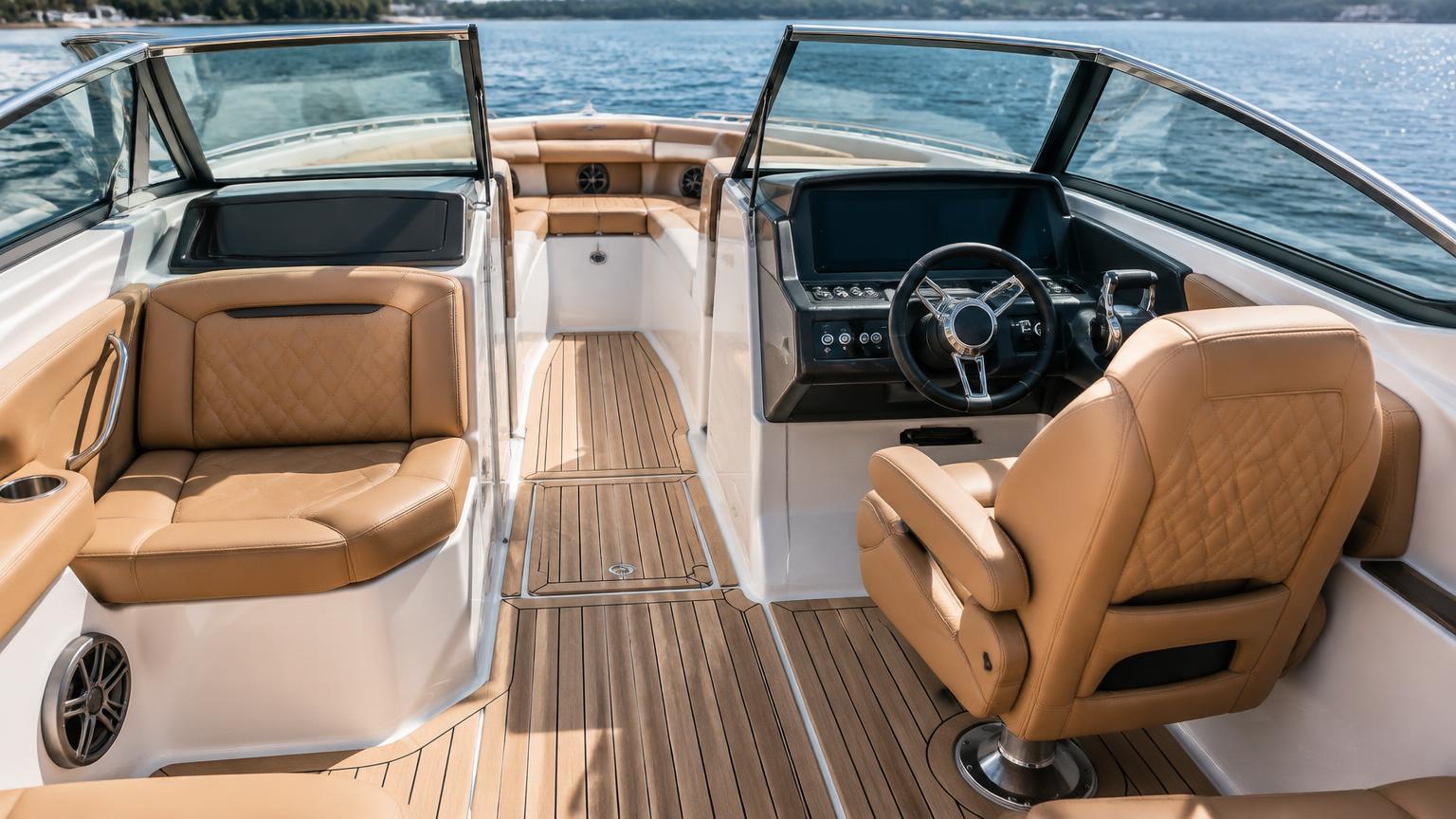
Family boating rewards getting size right more than any other use. Too small and half the family sits uncomfortably; too big and the boat becomes a logistical project you use less often. Here is what each size band actually delivers. This size is the easiest boat to own. It tows behind a family SUV, fits in a garage, launches solo and costs the least to run. Four to six people fit, which suits a family of four with room for a friend. The limits appear in rough water and on longer trips. Light hulls of this length get bounced by a chop, and a full load slows the boat noticeably. For lakes, rivers, calm bays and short outings it is often the most-used boat in a family's history. This is where most families end up, and for good reason. Six to eight people fit comfortably, the hull has enough weight and deadrise to handle a seabreeze chop, and the boat still tows behind a mid-size SUV and fits on a single-axle or light tandem trailer. It is also the deepest part of the used market, which means better choice when buying and easier selling later. Bow lounges are long enough for adults, rear seating usually…
Read the full article