Menu
Site Menu — Find Your Page
Bowrider Boats Mega Website
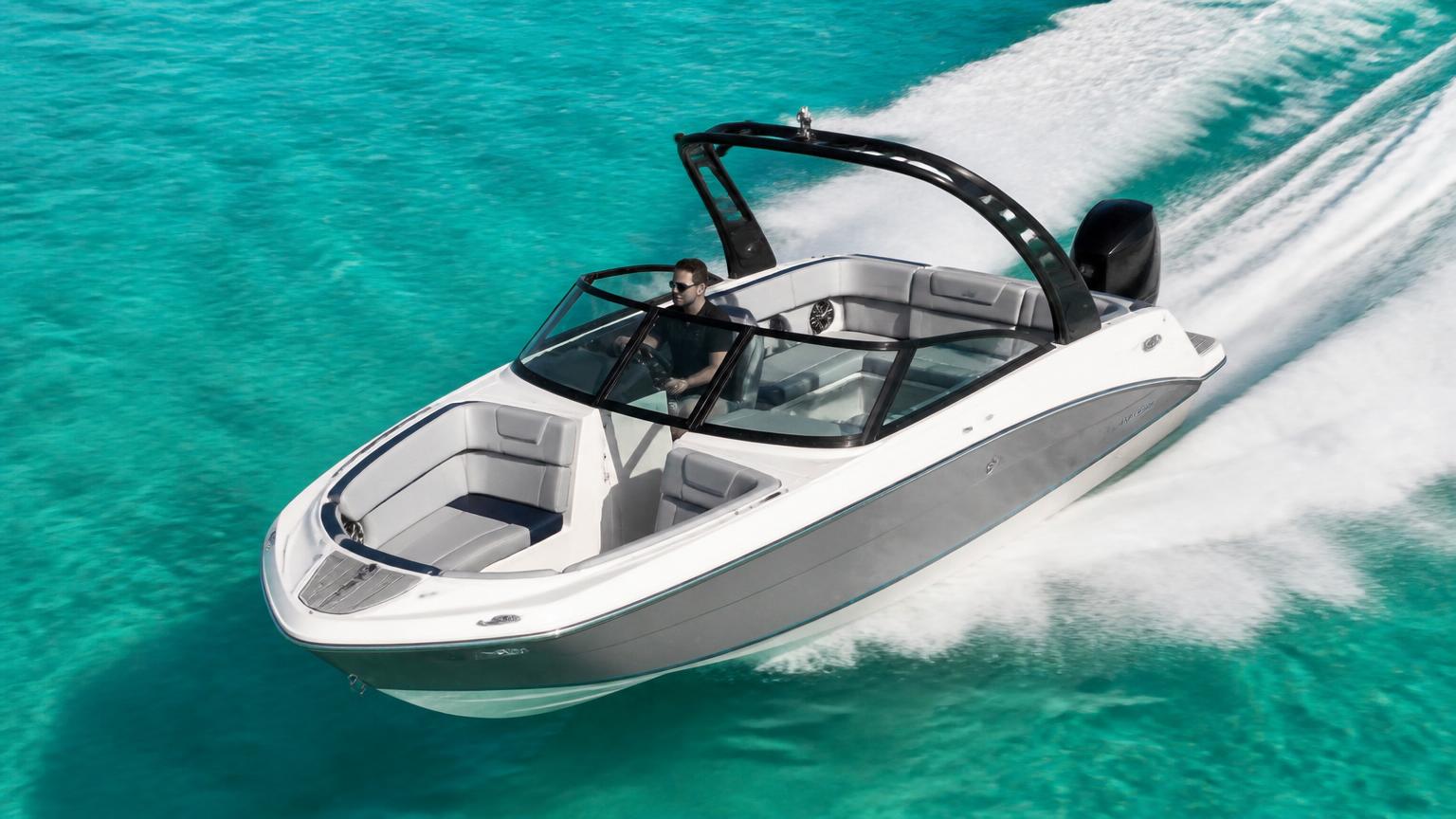
Engines & Drives
Why Boat Builders Have Moved Away From Stern Drives to Outboards
For decades the familiar bowrider formula placed a marinised car-style engine beneath the rear sun pad and connected it through the transom to a MerCruiser Alpha, Bravo or Volvo Penta drive leg. Today many new family bowriders are designed around outboard power instead. The change reflects stronger four-stroke technology, easier ownership, wider engine choice and a market that increasingly rewards boats which are simple to service, repower and resell.
How the sterndrive became the original bowrider standard
Through the 1980s, 1990s and early 2000s, a petrol sterndrive was a logical match for a fibreglass bowrider. A marinised four-, six- or eight-cylinder engine sat low inside the hull, while an articulated outdrive supplied steering, trim and reverse. MerCruiser’s Alpha One became especially common in affordable family boats, with Bravo drives serving higher outputs; Volvo Penta offered its own widely respected single-prop and Duoprop alternatives.
This arrangement produced a clean-looking transom and kept a heavy engine low and close to the boat’s centreline. Builders could cover the machinery with a padded sun lounge, then mould a broad swim platform around the drive. Compared with the smoky two-stroke outboards of the period, an automotive-based four-stroke sterndrive often felt quieter, smoother and more economical. For a family runabout, it was an attractive and proven package.
Why the inboard/outboard system is mechanically complicated
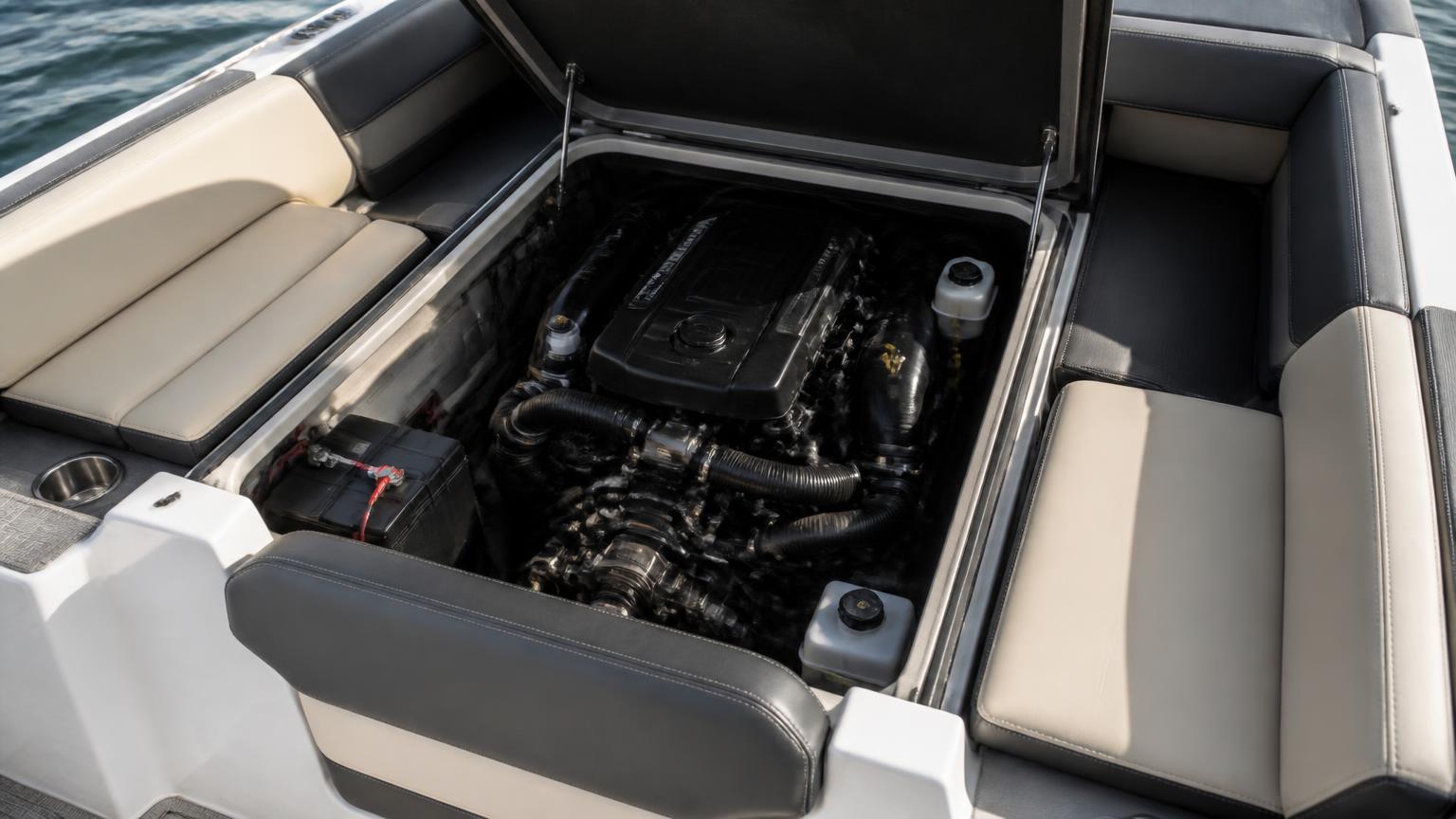
A stern drive, also called an inboard/outboard or I/O, divides the propulsion system across the transom. The engine and many service points remain inside the boat, while the drive leg, propeller and steering mechanism operate outside. Between them sits a gimbal housing, universal joints, drive shaft, shift components, trim rams and flexible bellows that allow the leg to steer and tilt while keeping water out of the hull.
Every part can work reliably when maintained correctly, but the system has more interfaces and potential failure points than its simple appearance suggests. A cooling fault can affect the engine, neglected gear oil can damage the drive and a cracked bellows can admit water to the gimbal bearing, universal joints or boat. A problem that begins as an inexpensive rubber component can become a major repair when inspection is delayed. Owners increasingly understand that the drive leg is not merely a propeller holder; it is half of an integrated powertrain.
Service access is where outboards win immediately
An outboard combines engine, gearbox, steering pivot and propeller into one external unit. A technician can remove the cowling and reach routine service points while standing beside the motor. The engine tilts clear of the water, and the whole unit can be removed from the transom without cutting into moulded seating or extracting machinery from a tight compartment. That access reduces labour time and makes visual inspections easier for owners.
Sterndrive service often requires working around seats, bulkheads and a low engine cover. The leg may need to be removed periodically to inspect alignment, bellows, gimbal bearing and universal joints. Oil changes involve both engine and drive, and winterisation must protect raw-water passages from freezing where relevant. No propulsion system is maintenance-free, but the outboard packages more of its routine work into a visible, reachable unit. For time-poor family owners and high-throughput workshops, that difference is persuasive.
Bellows, transom seals and water intrusion changed buyer attitudes
The flexible bellows around a sterndrive’s universal-joint and shift assemblies are necessary because the leg must move. They also age. Heat, ozone, marine growth, incorrect installation and long periods in the water can cause cracking or loss of sealing. Replacement is normal preventative maintenance, yet used boats frequently arrive with incomplete records. Buyers then face uncertainty about components they cannot fully assess from a quick inspection.
The transom assembly also places a large mechanical opening below the waterline. Correctly installed and maintained equipment remains safe, but leaks or corrosion around this area can become expensive. Outboards do not eliminate transom loading or the need to seal mounting bolts, though they avoid the large articulated drive opening and its bellows. As the used market learned to price the risk of neglected I/O systems, simple external power became increasingly attractive.
Saltwater corrosion strongly favours a tilting engine
An aluminium sterndrive leg exposed to salt water needs effective anodes, bonding, coatings and regular inspection. When dissimilar metals, shore-power faults or neglected anodes create galvanic activity, corrosion can advance quickly. A boat left afloat keeps much of the drive submerged, so flushing alone does not remove every risk. Exhaust passages, cooling components and fasteners also live in a demanding environment.
A modern outboard can tilt its gearbox, propeller and much of the midsection clear after use. Owners can flush the cooling passages through dedicated ports and inspect the gearcase, anodes and propeller without entering the boat. Outboards still corrode when neglected and their mounting hardware needs care, but getting the expensive lower unit out of the water is a powerful advantage for coastal boating. This is one reason the shift has happened faster in saltwater markets than in freshwater lakes.
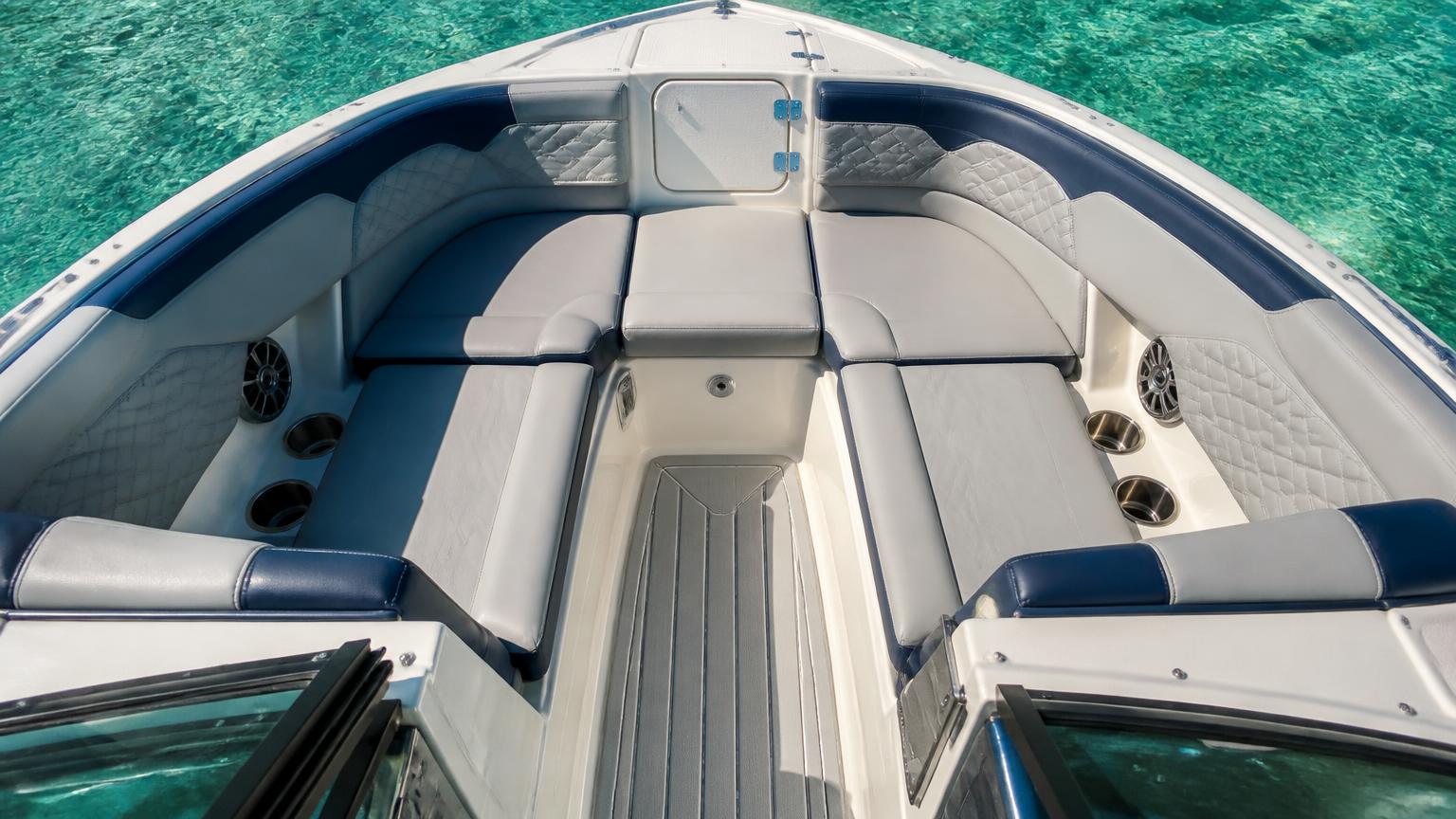
Four-stroke outboards removed the old refinement penalty
The old case against outboards centred on two-stroke smoke, noise, vibration and fuel use. Environmental regulation and engineering investment changed that picture. Yamaha introduced its F100A four-stroke in 1998 and a 225 hp production four-stroke in 2001, showing that clean outboard power could move beyond small fishing boats. Mercury’s supercharged Verado family followed in 2004 with outputs extending to 275 hp, digital controls and a refinement level aimed directly at premium applications.
Modern electronic fuel injection, variable valve timing, precise ignition, improved engine mounts and better gearcase design have transformed normal operation. A current four-stroke can idle quietly during a conversation, start without a carburettor ritual, cruise economically and produce enough torque for a loaded family bowrider. Once noise and smoothness approached sterndrive standards, buyers could choose the easier-to-service package without feeling they had accepted an inferior engine.
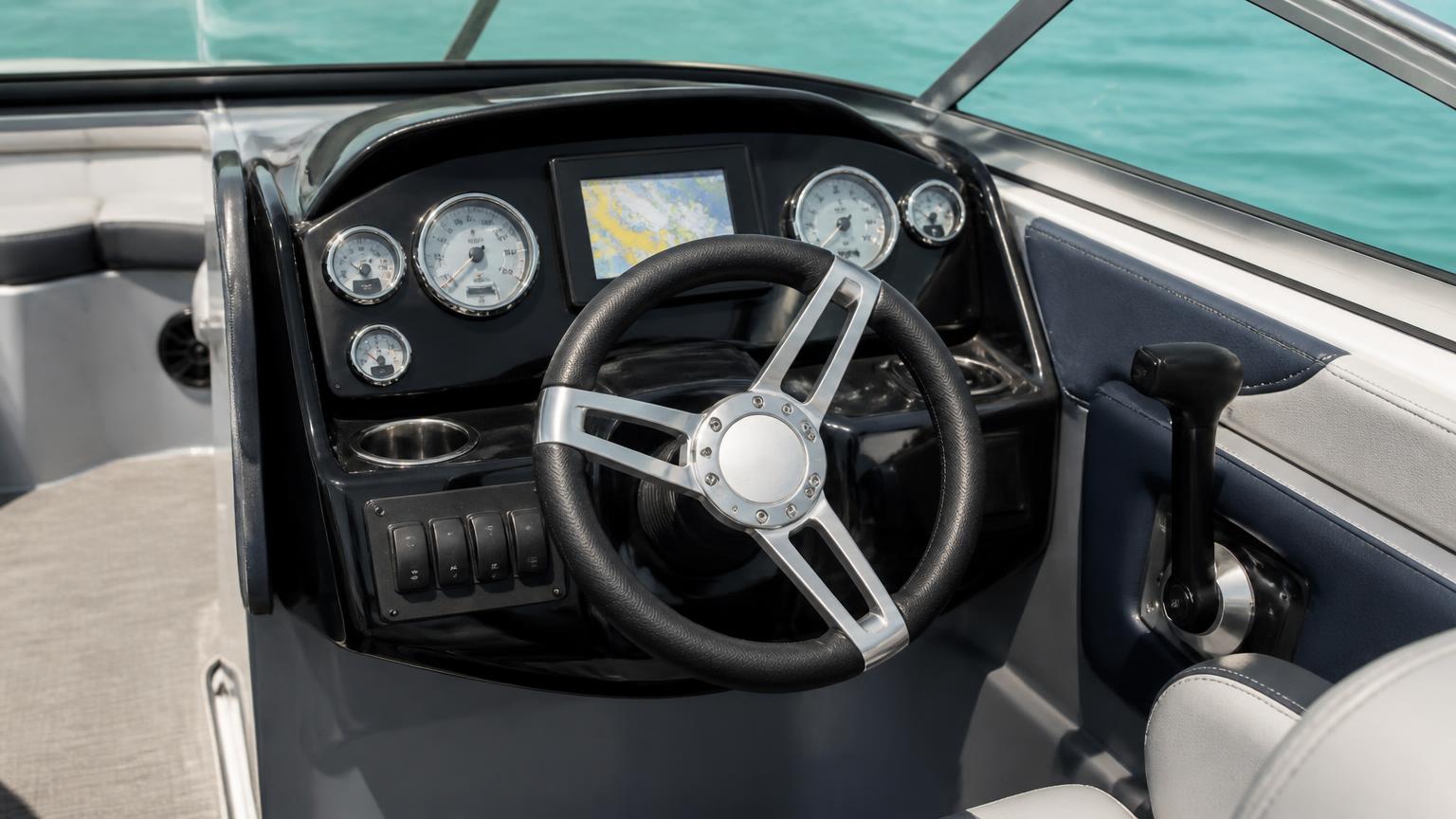
The power gap disappeared — then reversed
In the 1990s, buyers who wanted strong V6 or V8 performance often selected a sterndrive because large four-stroke outboards were heavy, rare or unavailable. That constraint has gone. Family bowriders can now be matched with roughly 70 hp at the compact end, 90, 115 and 150 hp through the high-volume middle, and 200 or 250 hp on larger models. Above that sit powerful V6, V8 and forced-induction engines for premium boats and twin installations.
The broad range lets a builder design one hull with several credible packages rather than engineer an internal bay around one automotive block. A light 17-footer can use an economical four-cylinder, an 18- or 19-footer can choose 115 to 200 hp, and a substantial 22-footer can carry 250 hp or more. Performance is no longer a reason that an ordinary bowrider requires an inboard engine. In many cases, the best power-to-weight choice is now hanging on the transom.
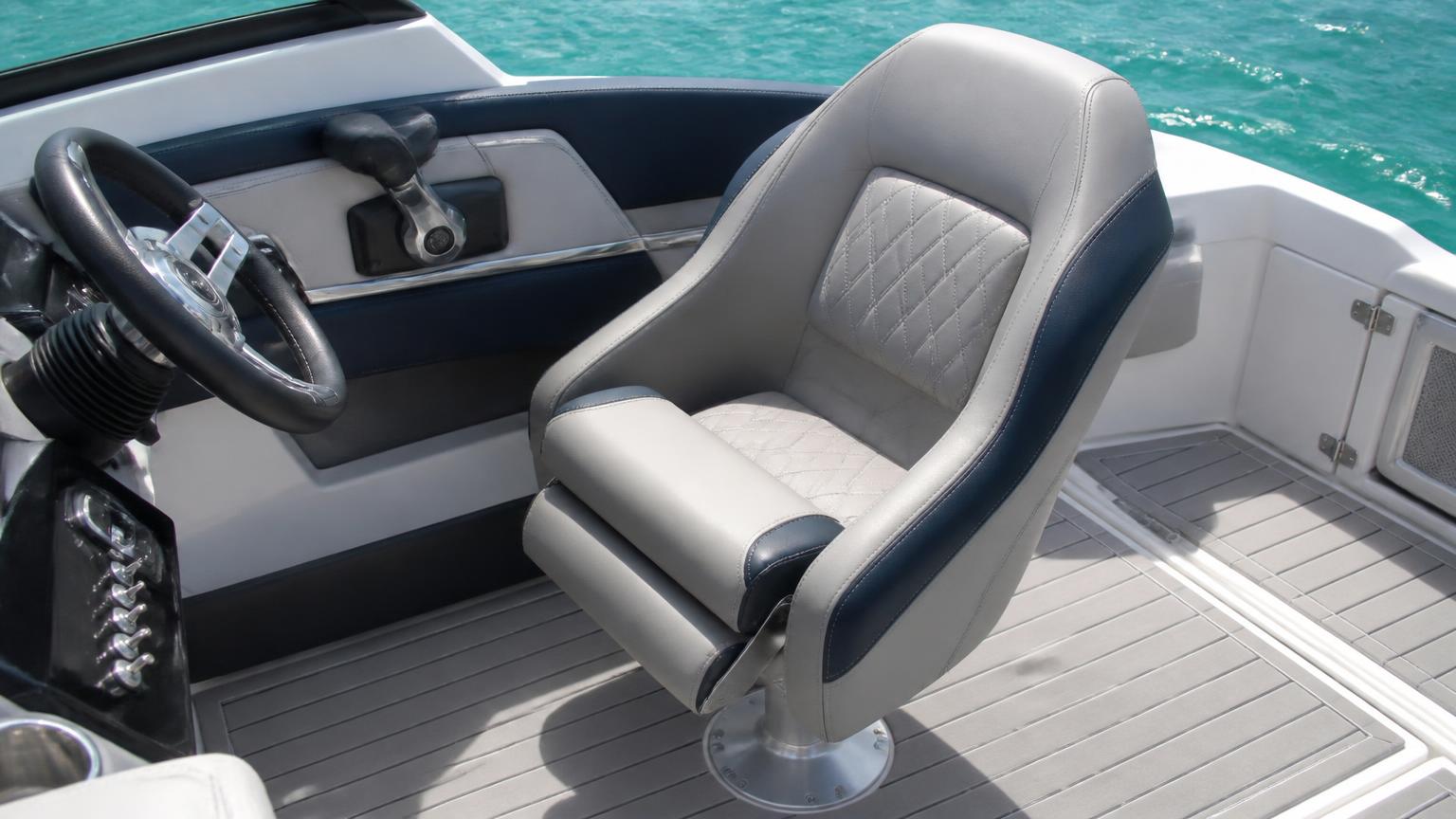
Yamaha, Mercury, Honda and Suzuki give builders real choice
The outboard market gives buyers access to established manufacturers including Yamaha, Mercury, Honda and Suzuki, with additional brands and regional offerings broadening the field. Each supplier competes on weight, displacement, controls, warranty, dealer support and specific power bands. Builders can form preferred partnerships while still offering alternatives in markets where another service network is stronger.
Sterndrive supply became more concentrated as demand declined and some engine families left the market. MerCruiser and Volvo Penta continue to make capable products, but fewer new bowrider platforms are being engineered around them. Outboard competition encourages frequent product updates and gives owners more choices when repowering. The practical recommendation is not to select a badge from reputation alone: choose an engine with competent local service, suitable shaft length and the correct performance for the loaded hull.

Removing the engine box transforms the cockpit
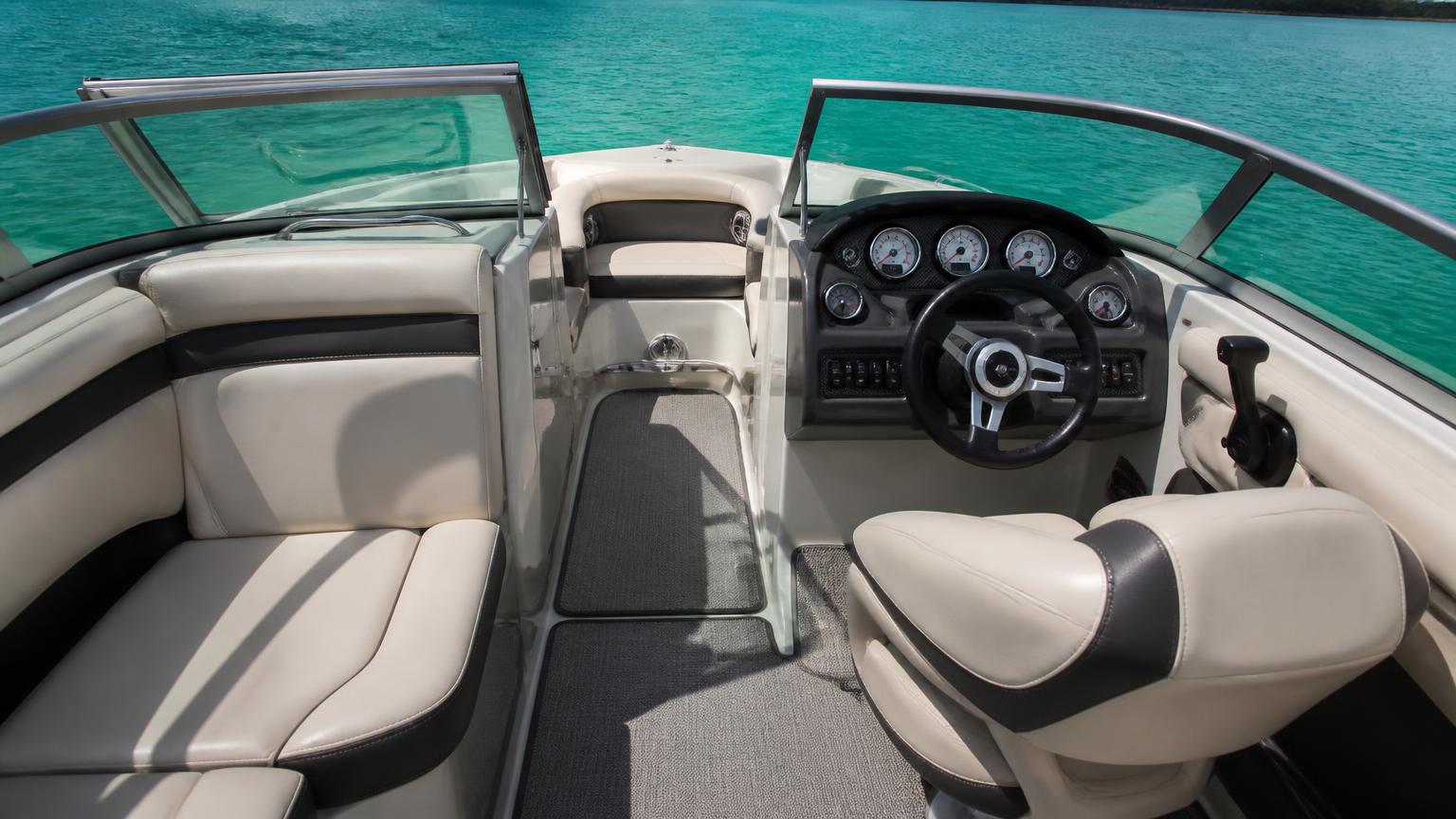
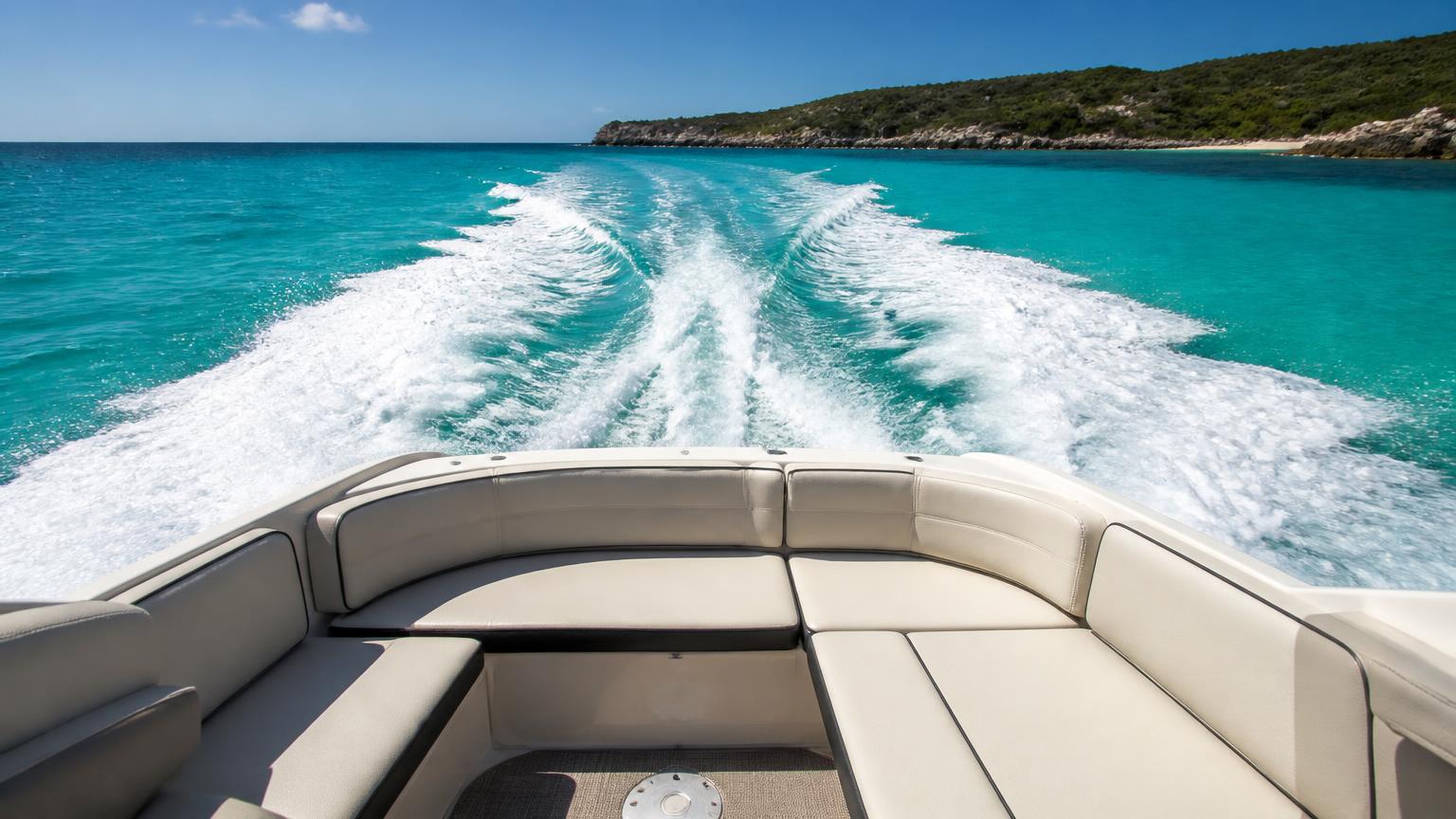
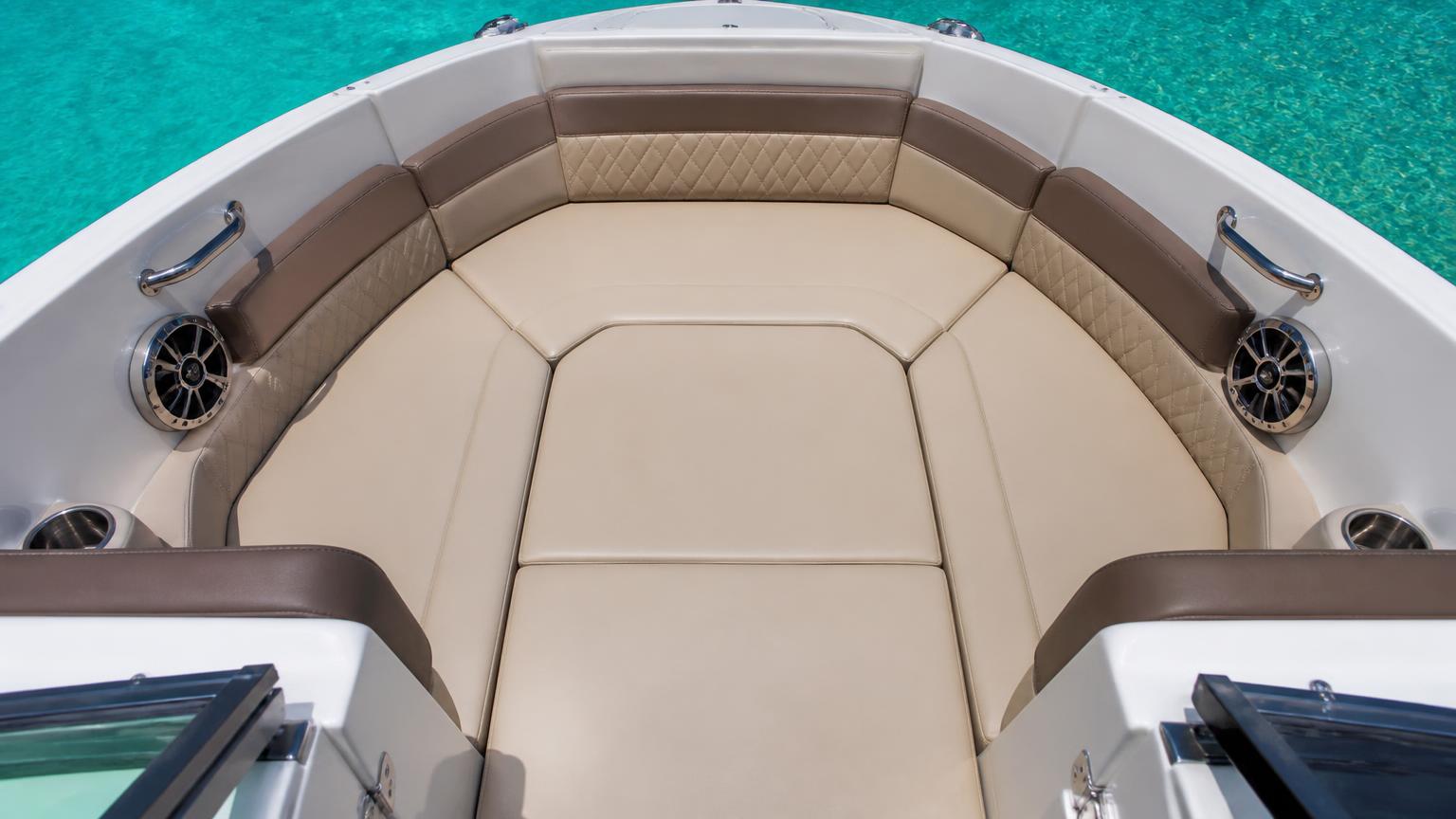
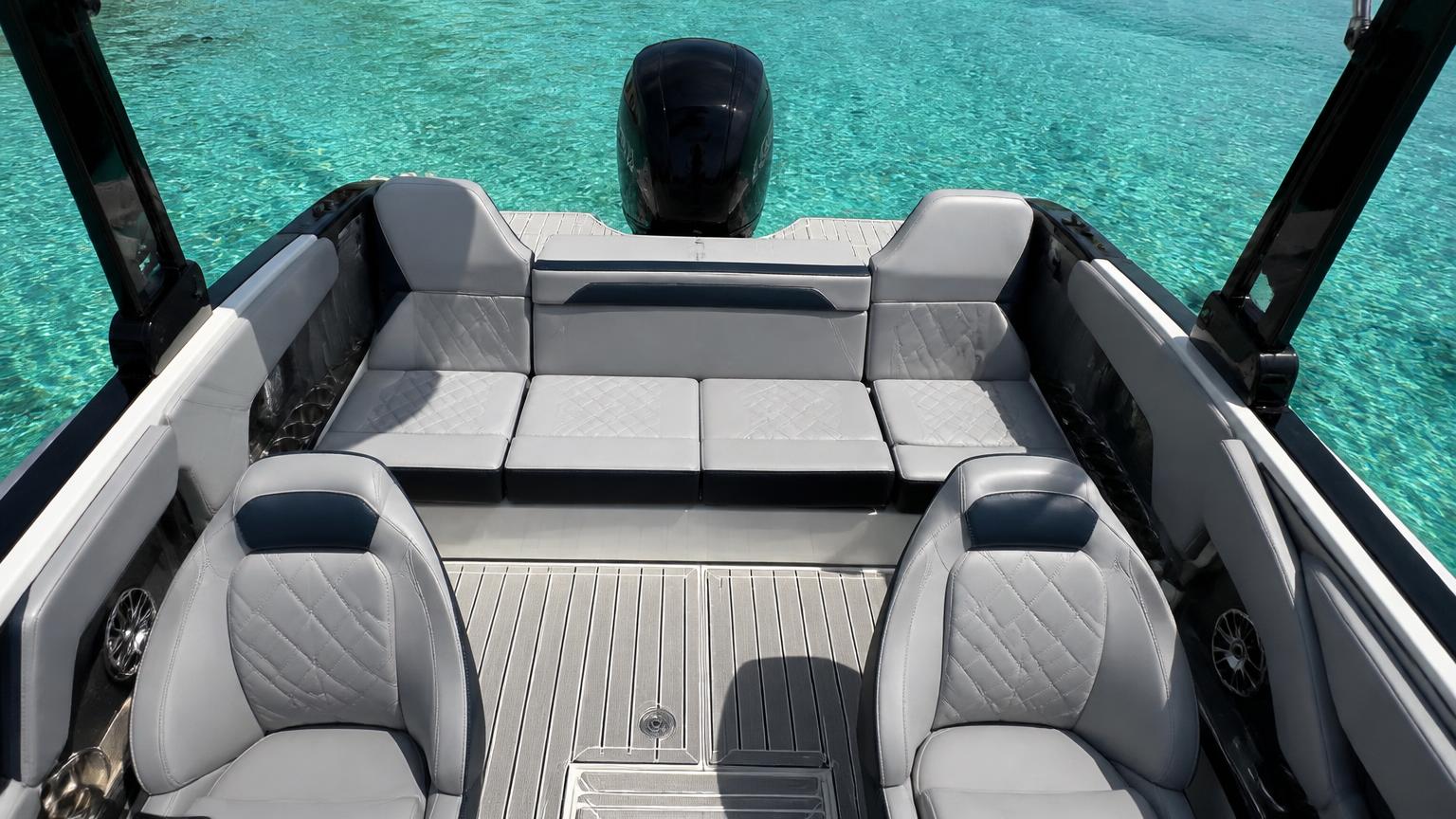
An internal engine occupies prime space at the stern, exactly where families want seating, storage and access to the water. Even when it doubles as a sun pad, the box interrupts movement and limits what designers can do below the aft lounge. An outboard moves the engine outside the hull and allows builders to use that internal volume for a full-width bench, deep lockers, coolers, batteries or a walk-through to the swim platform.
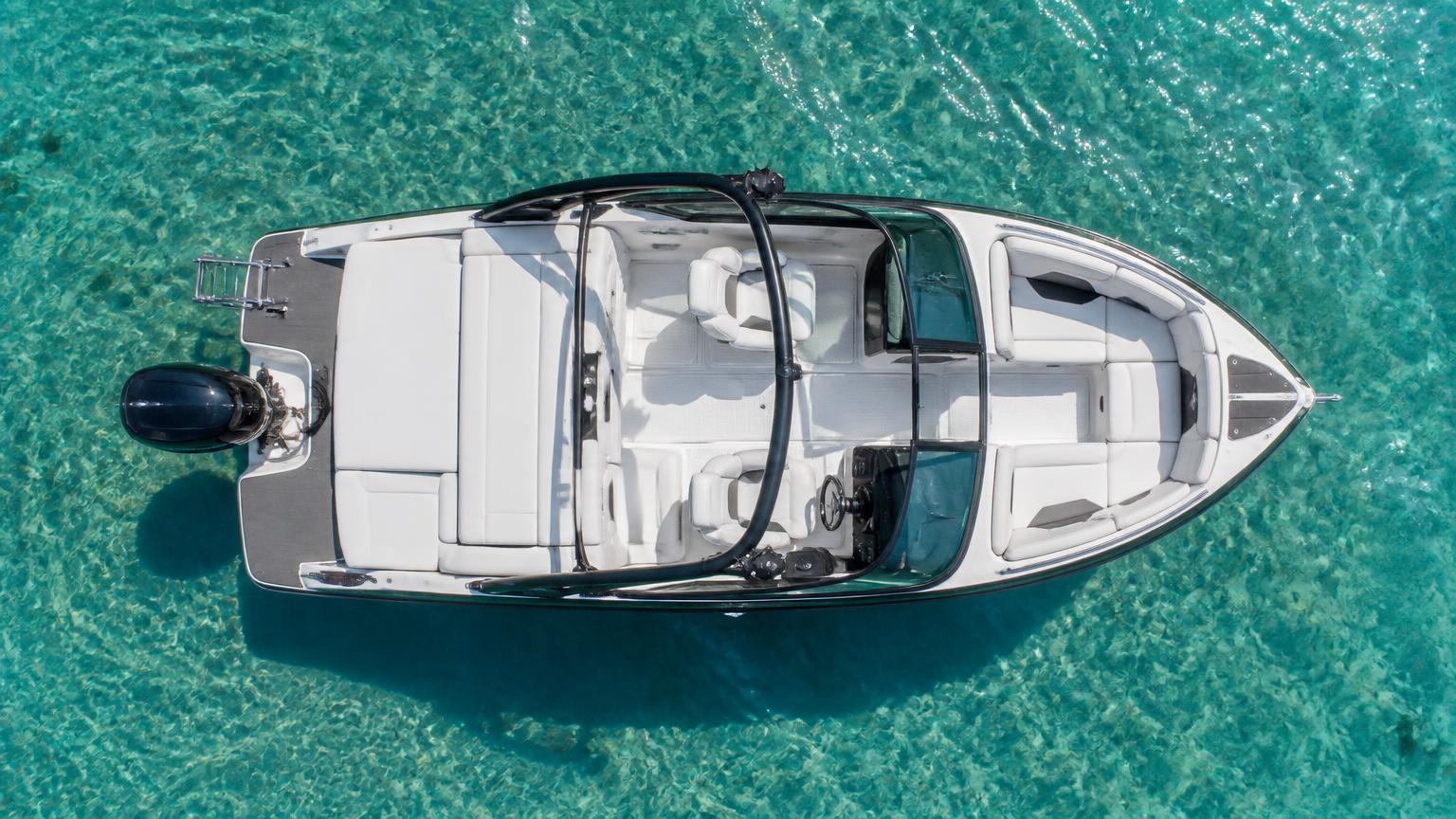
The outboard itself occupies part of the transom and can interrupt the centre of a swim platform, so the packaging win is not absolute. Designers answer with setback brackets, engine wells, side passages or asymmetric platforms. Many buyers prefer that trade: they gain an open cockpit and accept a visible motor at the rear. The strongest modern layouts treat the outboard as part of the design from the first sketch rather than attaching it to a former sterndrive hull.
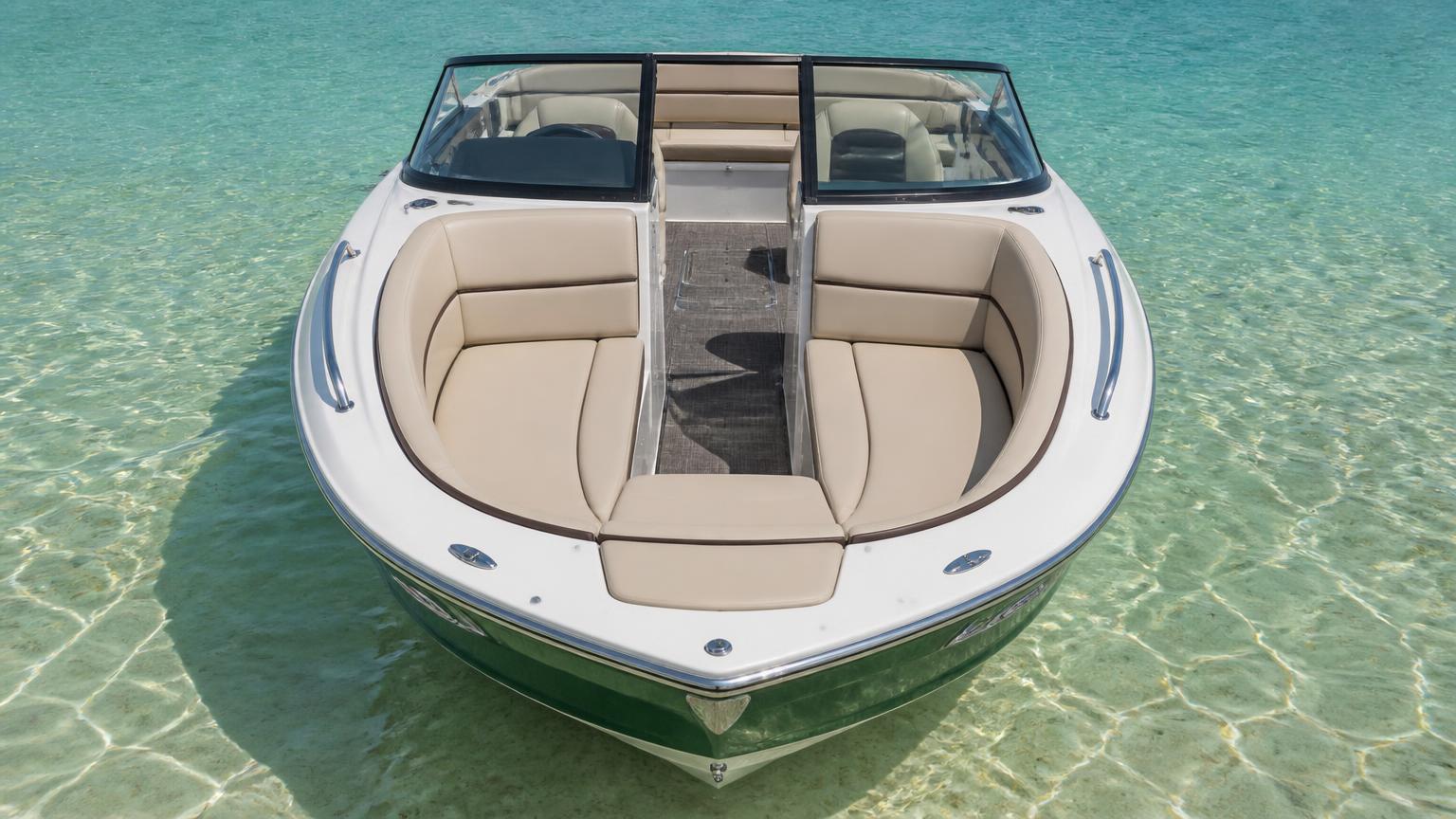
Handling, trim and ride have improved with better integration
A sterndrive places substantial mass low and somewhat forward, which can help a bowrider feel settled and maintain a clean swim platform. It also transmits thrust through a steerable leg positioned beneath the hull, giving strong low-speed response when power is applied. These are real advantages, and a well-designed sterndrive boat can deliver an excellent ride and balanced towing behaviour.
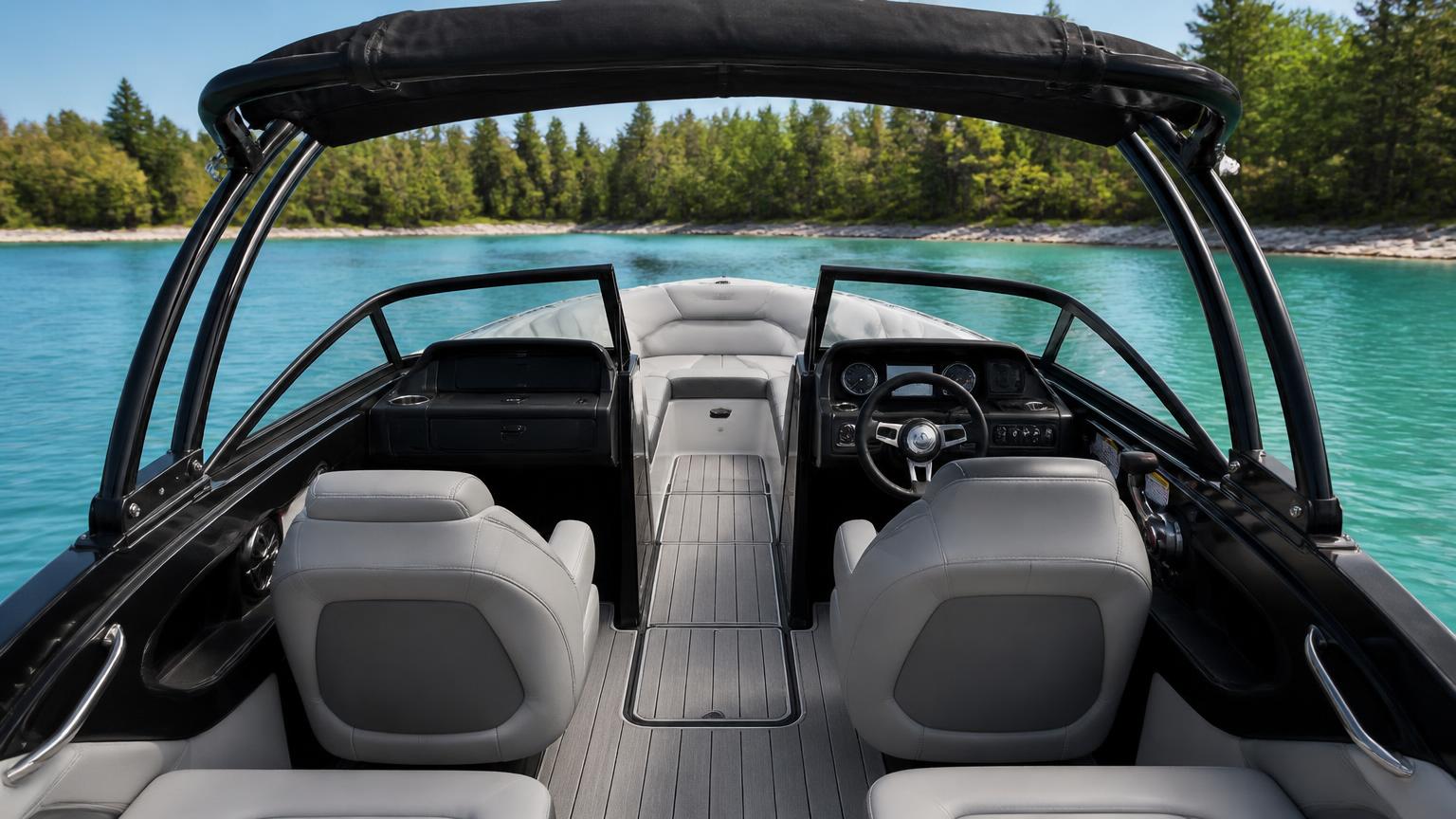
Outboard boats were once criticised for carrying too much weight on the transom, but modern hulls are designed around that load. Fuel tanks, batteries and seating can be positioned to establish the intended centre of gravity, while setback and mounting height place the propeller in cleaner water. Power steering, digital trim systems, propeller development and active trim controls help drivers reach the correct attitude. The result is fast planing, precise trim response and a ride that no longer feels like a compromise.
Reliability is partly engineering and partly visibility
It is too broad to claim that every outboard suffers fewer breakdowns than every sterndrive. Reliability depends on design, installation, maintenance, fuel quality and use. The outboard advantage is that the complete package is engineered and supported by one engine manufacturer, with integrated diagnostics and fewer hidden interfaces crossing the transom. Problems can be easier to identify before they become severe.
Visibility encourages care. Owners can raise the motor, inspect the propeller and gearcase, check for fishing line, flush the engine and notice fluid or corrosion around the cowling. With a sterndrive, the engine bay and bellows can remain out of sight between annual services. Modern outboards contain sophisticated electronics and are not cheap to repair, but strong dealer diagnostic systems and modular replacement have made ownership more predictable for many families.
Repowering is simpler and extends the useful life of the hull
When an outboard reaches the end of its economical life, a qualified installer can remove it and fit a compatible replacement after checking transom condition, controls, steering, weight and rated power. The owner may gain cleaner operation, better economy and a fresh warranty without replacing the boat. That possibility gives a sound hull a clear second life and makes the power unit easier to value separately.
Repowering a sterndrive can be more restrictive. Engine dimensions, exhaust, mounts, transom assembly, drive ratio and electronics must work together, and adapting an old hull to a different family may be uneconomic. Converting a sterndrive boat to an outboard is a major structural project, not a bolt-on shortcut. Buyers therefore place a premium on boats whose original design supports straightforward outboard replacement.
Outboard demand strengthens second-hand resale
Used-boat shoppers increasingly filter listings by outboard power, particularly in coastal regions. They recognise familiar engine brands, can ask a local dealer to read diagnostic history and can estimate replacement cost without opening the hull. A recent four-stroke with documented servicing often makes the whole package easier to finance and sell. Dealers respond by stocking what turns quickly, reinforcing manufacturer demand for new outboard models.
A maintained sterndrive bowrider can be excellent value, and its lower used price may be an opportunity for a mechanically informed freshwater buyer. The resale difference reflects perceived risk and buyer pool rather than proof that every outboard boat is superior. Owners planning a short ownership cycle, however, usually value the broader audience and simpler condition story attached to a recognised modern four-stroke.
Why manufacturers prefer outboards too
Builders benefit from simpler production. They can complete the hull and deck, then install an engine package late in the process without lowering a heavy block into a confined compartment. One platform can support several power ratings and, where engineering agreements allow, more than one brand. Inventory becomes more flexible and dealers can configure boats around local preferences.
Warranty responsibility is clearer as well. The engine manufacturer supports its integrated powertrain while the boat builder supports the hull, wiring and installation. Service centres already trained on that outboard family can diagnose it with factory tools. Lower production complexity does not automatically mean a cheaper retail boat — premium outboards are expensive — but it lets builders direct space and development effort toward features customers can see and use.
Where a stern drive still makes sense
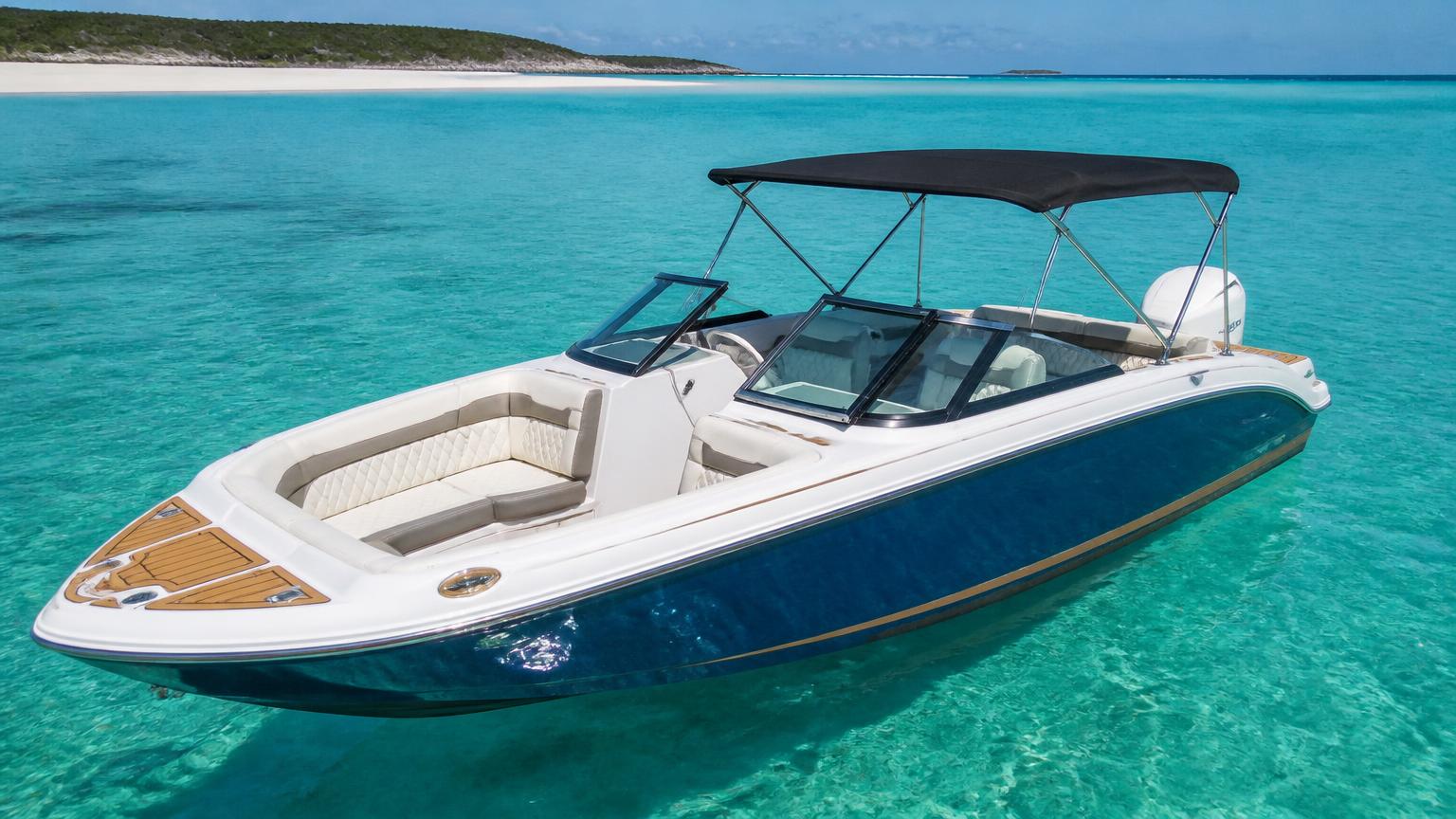
The industry trend does not make the I/O obsolete. A sterndrive can provide a beautifully open swim platform, keep the engine visually hidden and place its weight low in the hull. It can deliver strong mid-range torque and a settled feel for cruising or conventional water skiing. In freshwater, where corrosion pressure is lower and a skilled local mechanic is available, the maintenance equation can remain entirely acceptable.
Buyers who love the shape of a classic runabout, want a broad uncluttered stern or find a carefully maintained used package at the right price should not reject it on fashion alone. The decision must account for storage, water type, service history and intended ownership period. What has changed is that sterndrives are no longer the default answer simply because a bowrider needs serious power.
The four-stroke outboard is now the mainstream answer
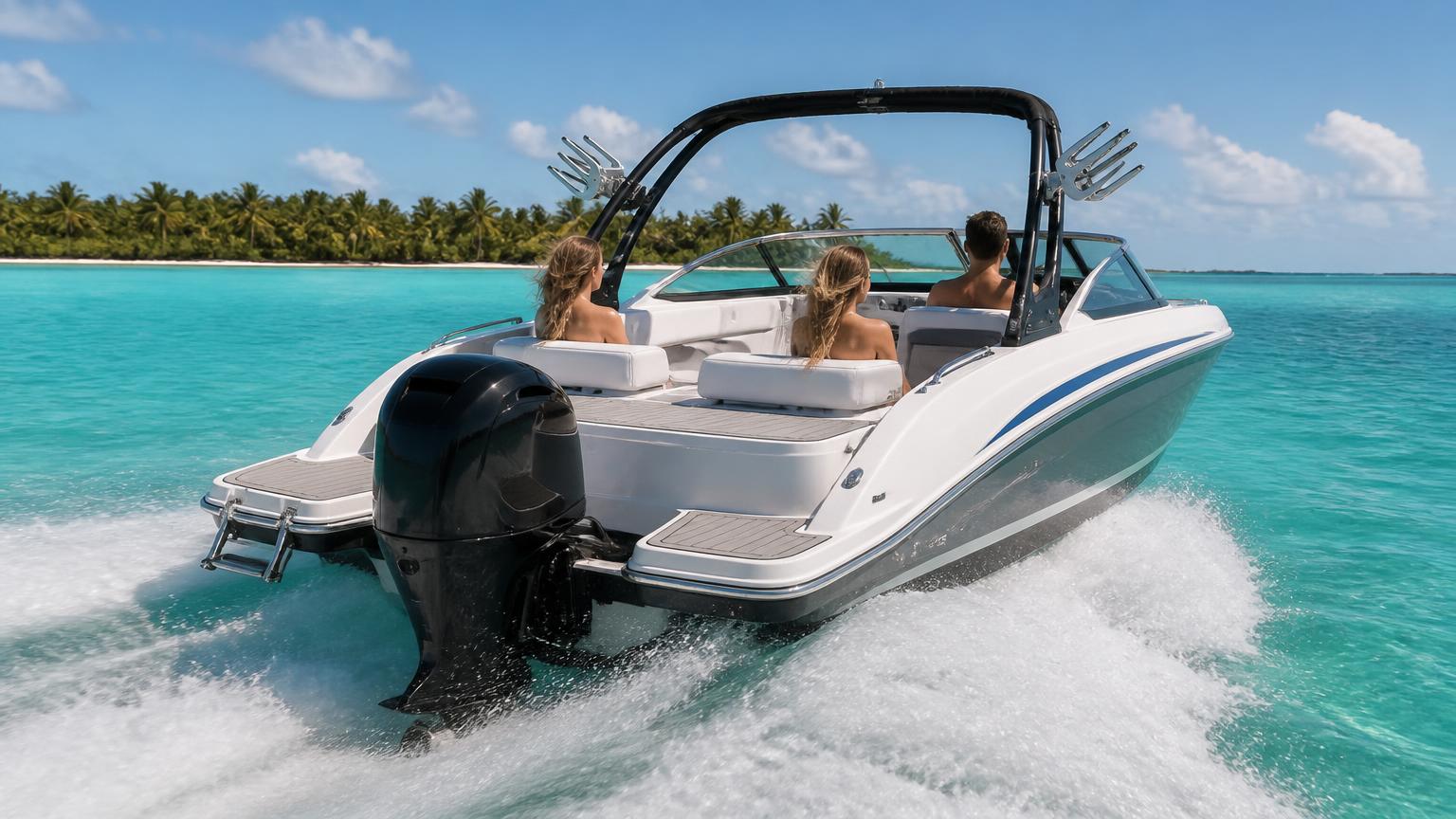
The movement from stern drives to outboards is the cumulative result of better four-strokes, broad power choice, accessible servicing, saltwater practicality, flexible boat layouts, simpler repowering and stronger buyer demand. No single breakthrough ended the I/O era. Instead, each generation of quieter and more powerful outboards removed another reason to keep the engine inside the boat.
For most modern family bowriders, the outboard now offers the easiest ownership story: service it from outside, tilt it clear, choose among multiple respected brands, and replace it without rebuilding the boat. MerCruiser and Volvo Penta stern drives still serve owners who value their particular strengths, but the centre of the market has moved. Four-stroke outboards did not merely catch up with the old standard — they changed what buyers expect a practical bowrider power system to be.
Sources and further reading
Featured Boat of the Week
Bayliner Bayliner DX2000 — Our Featured Bowrider This Week

This week we are putting the Bayliner Bayliner DX2000 in the spotlight, and it earns the spot. At 20 ft 2 in (6.16 m) long on a 8 ft (2.44 m) beam, this is a bowrider that reads the water well and still feels roomy enough for a full day out. A 20-foot deck-boat-width bowrider with outboard power and a huge social cockpit. Power comes from 115-150 hp mercury fourstroke outboard through a outboard package, and the fibreglass hull keeps the ride settled when the afternoon breeze puts a chop on the surface.
Seating is rated for 8 people, so there is space for family, friends, towels, eskies and the tow rope without anyone climbing over gear. Owners tend to buy it for family, water ski, leisure — which is exactly where it shines. Fuel is 30 us gal (114 l), and on the second-hand and new market you should expect to land somewhere around US$42,000 - US$58,000 new depending on hours, trailer and options.
Our full deep dive covers the layout in detail: bow lounge comfort, helm ergonomics, the rear entertaining area, storage that actually swallows a weekend, plus standard features, popular options and honest notes on where the boat compromises. If the Bayliner DX2000 is on your shortlist, start there — and check back next week, because the featured boat changes every week as we complete more full model reviews.
Featured Bowrider Article
Outboard vs Stern Drive Resale Value
Comparisons
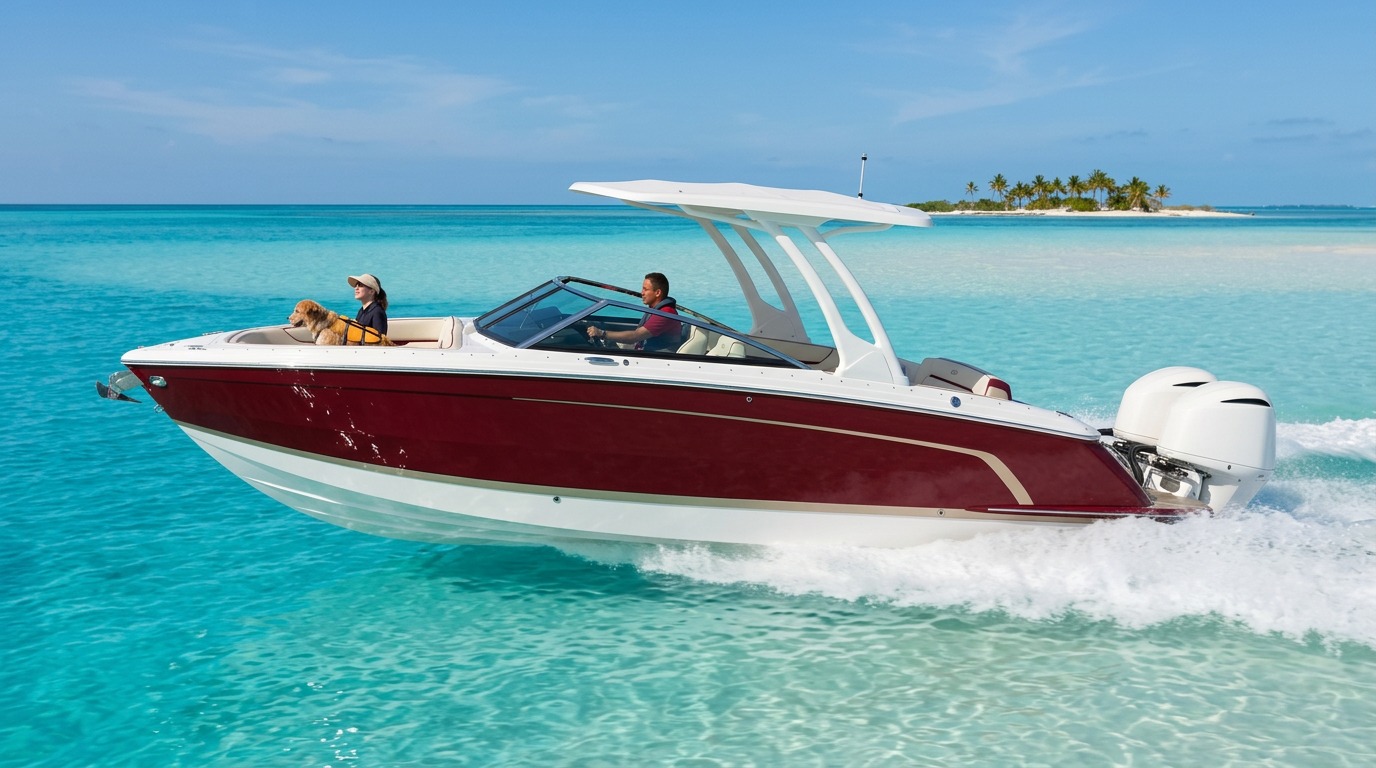
Resale is rarely the reason people buy a boat, and it is often the reason they regret one. Over the last decade the market has shifted decisively toward outboards, and that shift now shows up clearly in what used bowriders sell for and how quickly. Buyer demand for outboard-powered bowriders has grown steadily, driven by simpler maintenance, easier repowering, more cockpit space and quieter, cleaner modern four-strokes. Dealers report faster sales and firmer prices for outboard boats in most markets. Sterndrive bowriders, once the default, now attract a smaller pool of buyers. They still sell well when priced correctly and presented with good service history, but they typically sit longer and negotiate harder, especially in saltwater regions. The concern is maintenance rather than performance. Bellows, gimbal bearings, u-joints, exhaust manifolds and risers all have finite lives, and a neglected sterndrive can present a large bill. Buyers price that risk in even when the specific boat has been maintained impeccably. Repowering compounds it. Replacing an outboard is essentially a bolt-on job with a known price; replacing a sterndrive engine and leg is more involved, more expensive and often uneconomic on an older hull. That perception caps what older sterndrive boats can fetch.
Read the full article