Menu
Site Menu — Find Your Page
Bowrider Boats Mega Website
Comparisons
Aluminium vs Fibreglass Bowriders
This is the oldest argument in boating, and both sides are right. Aluminium is lighter, tougher and cheaper to keep; fibreglass rides better and looks better. Modern hull design has narrowed the gap dramatically, so the decision now comes down to how you use the boat.
Ride quality
Fibreglass has traditionally owned this category. Extra weight pushes through waves rather than skipping over them, and thick laminates absorb noise and vibration, giving the settled, quiet ride that sells premium bowriders.
Aluminium has closed much of the gap. Roll-formed hulls with fine, curved bow entries — the Quintrex Blade and Millennium designs being the best-known examples — slice waves instead of slapping them, and reverse chines add lift and spray control. A modern aluminium bowrider rides vastly better than a pressed flat-bottom boat from the 1990s, though a heavy fibreglass hull still has the edge in a serious chop.
Toughness and repairs
Aluminium wins on abrasion and impact. Beach it on sand, brush a rock ramp or bump a pontoon and the result is usually cosmetic. Dents can often be worked out, and welding repairs are quick and cheap.
Fibreglass is stronger in stiffness terms but more brittle in practice. Gelcoat chips, scratches and cracks, and impact damage requires laminating, filling, fairing and colour-matching — skilled, slow, expensive work. On the other hand, fibreglass does not suffer galvanic corrosion, which aluminium boats must be protected against with anodes and careful bonding.
Weight, towing and running cost
An aluminium bowrider typically weighs 25-40 per cent less than a fibreglass boat of the same length. That means a smaller tow vehicle, a lighter trailer, easier launching and less fuel needed for the same performance — often a smaller engine too.
Maintenance favours aluminium as well: no gelcoat to polish, no osmosis, and simple hose-down care. Fibreglass rewards regular waxing and covered storage, which is time or money depending on how you value your weekends.
Cost, resale and how to choose
Aluminium generally costs less to buy at the same length and holds value strongly in markets where alloy boats are the norm, such as Australia, New Zealand and much of Scandinavia. Fibreglass commands higher prices and stronger resale in North America and Southern Europe, where premium finishes and styling dominate.
Choose aluminium if you tow often, launch on rough ramps, fish, use shallow water, want low upkeep or need a lighter package. Choose fibreglass if ride comfort, quietness, styling and interior finish matter most and the boat lives on a marina berth or in a garage. Both are excellent boats — they simply reward different owners.
Keep reading
Buying Advice
Which Is the Lightest Bowrider Boat ?
Ownership
Which Bowriders Need the Least Maintenance?
Ownership
How Long Do Bowrider Boats Last?
Comparisons
Bowrider vs Deck Boat
Comparisons
Bowrider vs Cuddy Cabin
Comparisons
Outboard vs Stern Drive Resale Value
Comparisons
Why Length Matters: How Size and Weight Affect Ride Quality
Featured Boat of the Week
Bayliner Bayliner DX2000 — Our Featured Bowrider This Week

This week we are putting the Bayliner Bayliner DX2000 in the spotlight, and it earns the spot. At 20 ft 2 in (6.16 m) long on a 8 ft (2.44 m) beam, this is a bowrider that reads the water well and still feels roomy enough for a full day out. A 20-foot deck-boat-width bowrider with outboard power and a huge social cockpit. Power comes from 115-150 hp mercury fourstroke outboard through a outboard package, and the fibreglass hull keeps the ride settled when the afternoon breeze puts a chop on the surface.
Seating is rated for 8 people, so there is space for family, friends, towels, eskies and the tow rope without anyone climbing over gear. Owners tend to buy it for family, water ski, leisure — which is exactly where it shines. Fuel is 30 us gal (114 l), and on the second-hand and new market you should expect to land somewhere around US$42,000 - US$58,000 new depending on hours, trailer and options.
Our full deep dive covers the layout in detail: bow lounge comfort, helm ergonomics, the rear entertaining area, storage that actually swallows a weekend, plus standard features, popular options and honest notes on where the boat compromises. If the Bayliner DX2000 is on your shortlist, start there — and check back next week, because the featured boat changes every week as we complete more full model reviews.
Featured Bowrider Article
Best Luxury Bowrider Boats
Buying Advice
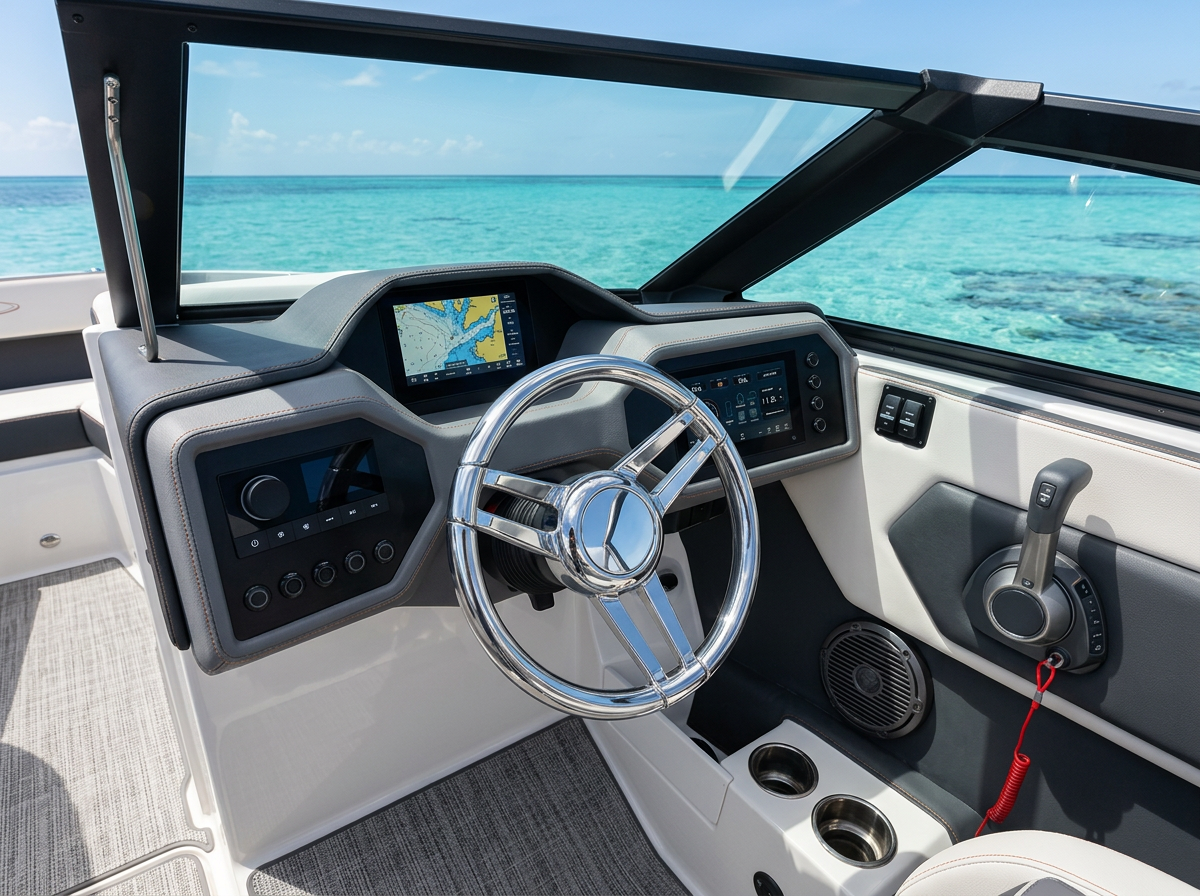
At the top of the bowrider market, boats stop competing on price and start competing on craftsmanship. The differences are real and immediately obvious the moment you step aboard, and they show up in ride quality, longevity and resale as much as in appearance. Build integrity comes first: closed-cell foam or composite coring rather than plywood, hand-laid or infused laminates, fully bonded stringer grids, and finished, gelcoated surfaces inside lockers and under hatches where cheaper boats leave rough glass. Then finish. Deep, flaw-free gelcoat, tight moulding tolerances, stainless rather than chromed plastic, hand-stitched upholstery with padded contours, soft-close hatches on gas struts and hidden wiring in labelled looms. These details cost money to build and are exactly what survives fifteen years of use. Premium bowriders usually carry more deadrise, more weight and more carefully developed hull shapes, which is why they feel planted in a chop where cheaper boats slam. Sound insulation and heavier laminates make them noticeably quieter as well. Equipment moves ahead too: joystick docking, digital throttles, dynamic positioning, touchscreen displays with integrated boat control, submersible swim platforms, powered biminis, underwater lighting, premium audio, refrigeration, hot showers and even air conditioning on larger models. In the North American premium bowrider and sport-boat segment…
Read the full article