Menu
Site Menu — Find Your Page
Bowrider Boats Mega Website
Buying Advice
The Best Bowrider Size for Families
Family boating rewards getting size right more than any other use. Too small and half the family sits uncomfortably; too big and the boat becomes a logistical project you use less often. Here is what each size band actually delivers.
16-18 ft (4.9-5.5 m): the easy starter
This size is the easiest boat to own. It tows behind a family SUV, fits in a garage, launches solo and costs the least to run. Four to six people fit, which suits a family of four with room for a friend.
The limits appear in rough water and on longer trips. Light hulls of this length get bounced by a chop, and a full load slows the boat noticeably. For lakes, rivers, calm bays and short outings it is often the most-used boat in a family's history.
19-21 ft (5.8-6.4 m): the sweet spot
This is where most families end up, and for good reason. Six to eight people fit comfortably, the hull has enough weight and deadrise to handle a seabreeze chop, and the boat still tows behind a mid-size SUV and fits on a single-axle or light tandem trailer.
It is also the deepest part of the used market, which means better choice when buying and easier selling later. Bow lounges are long enough for adults, rear seating usually converts, and there is real storage for boards, skis and eskies.
22-24 ft (6.7-7.3 m): the comfortable cruiser
Step up here and the boat becomes a genuine day cruiser: eight to ten people, wide beam, big sun pads, powered biminis, freshwater showers and enough range for a full day out. Ride quality in open water improves markedly.
The costs follow. You need a capable tow vehicle and a tandem trailer, storage becomes harder at home, and fuel and servicing rise with engine size. For families who boat most weekends on open water and often carry guests, it is worth every extra dollar.
Matching size to your real boating
Answer three questions honestly: how many people are aboard on a normal trip, how rough does your water usually get, and where will the boat live between trips? The answers point to a size band far more reliably than any brochure.
One further tip from experienced owners: buy the smallest boat that comfortably handles your normal crew and your typical conditions, not your rare best case. Boats that are easy to launch, tow and store get used, and a boat that gets used is always the right size.
Keep reading
Buying Advice
How Many People Fit in a Bowrider?
Ownership
Towing a Bowrider: What Vehicle Do You Need?
On the Water
Which Bowriders Make the Best Day Boats?
Buying Advice
Which Is the Lightest Bowrider Boat ?
Buying Advice
Old Bowriders vs New Bowrider Designs
Buying Advice
Choosing Your First Bowrider Boat
Buying Advice
Best Bowrider Boats Under $50,000
Buying Advice
What to Check When Buying a Used Bowrider
Featured Boat of the Week
Bayliner Bayliner DX2000 — Our Featured Bowrider This Week

This week we are putting the Bayliner Bayliner DX2000 in the spotlight, and it earns the spot. At 20 ft 2 in (6.16 m) long on a 8 ft (2.44 m) beam, this is a bowrider that reads the water well and still feels roomy enough for a full day out. A 20-foot deck-boat-width bowrider with outboard power and a huge social cockpit. Power comes from 115-150 hp mercury fourstroke outboard through a outboard package, and the fibreglass hull keeps the ride settled when the afternoon breeze puts a chop on the surface.
Seating is rated for 8 people, so there is space for family, friends, towels, eskies and the tow rope without anyone climbing over gear. Owners tend to buy it for family, water ski, leisure — which is exactly where it shines. Fuel is 30 us gal (114 l), and on the second-hand and new market you should expect to land somewhere around US$42,000 - US$58,000 new depending on hours, trailer and options.
Our full deep dive covers the layout in detail: bow lounge comfort, helm ergonomics, the rear entertaining area, storage that actually swallows a weekend, plus standard features, popular options and honest notes on where the boat compromises. If the Bayliner DX2000 is on your shortlist, start there — and check back next week, because the featured boat changes every week as we complete more full model reviews.
Featured Bowrider Article
Which Bowrider Is Best for Fishing?
On the Water
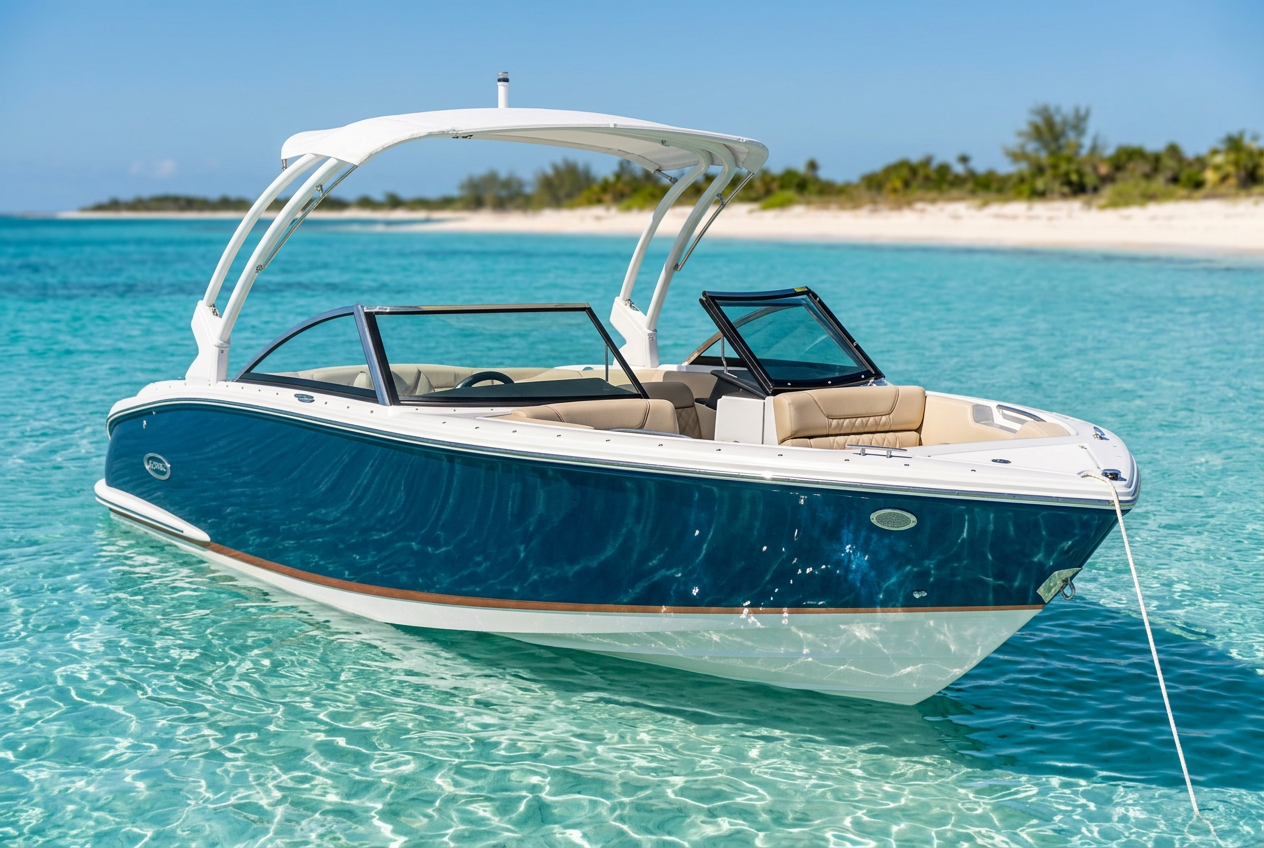
Bowriders are social boats first, which is why purists say they cannot fish. That is out of date. A well-specified bowrider fishes perfectly well for most people, provided you buy for the features that matter and accept the limits of an open-bow layout. Start with the deck. Removable bow cushions and a flat, unobstructed bow floor turn the front of the boat into a casting platform in under a minute. Boats with fixed, moulded-in bow furniture cannot do this, and no accessory will fix it. Next, look for a self-draining or easily washed floor, rod holders in the gunwales, a wet locker or fish box with a drain, and a transom you can land a fish over. A live well and a bait board are bonuses; a boat you can hose out is essential. Aluminium bowriders often out-fish fibreglass here simply because owners treat them more casually. A hull you do not mind dropping a lead sinker onto is a hull you will actually fish from. For estuary, bay and lake fishing, a moderate-deadrise hull in the 5.0-6.0 m range hits the balance between stability at rest and a comfortable run home. Deep-V hulls ride better offshore but roll more when you stop, which matters…
Read the full article