Menu
Site Menu — Find Your Page
Bowrider Boats Mega Website
Worlds Best Bowriders · Hull Technology
Quintrex Ride Quality: Millennium, Blade and APEX Hull
How Quintrex's Revolutionary Roll-formed Aluminium Hull Designs "Slice-through Water" like a knife, overcoming the notorious "Tinnie-Slap" and bringing Aluminium closer than ever to a Fibreglass ride.
The Technical illustrations in this feature Article are original Bowrider-Boats editorial visualizations.
They explain hull principles and are not factory engineering drawings or measurements for a particular model.
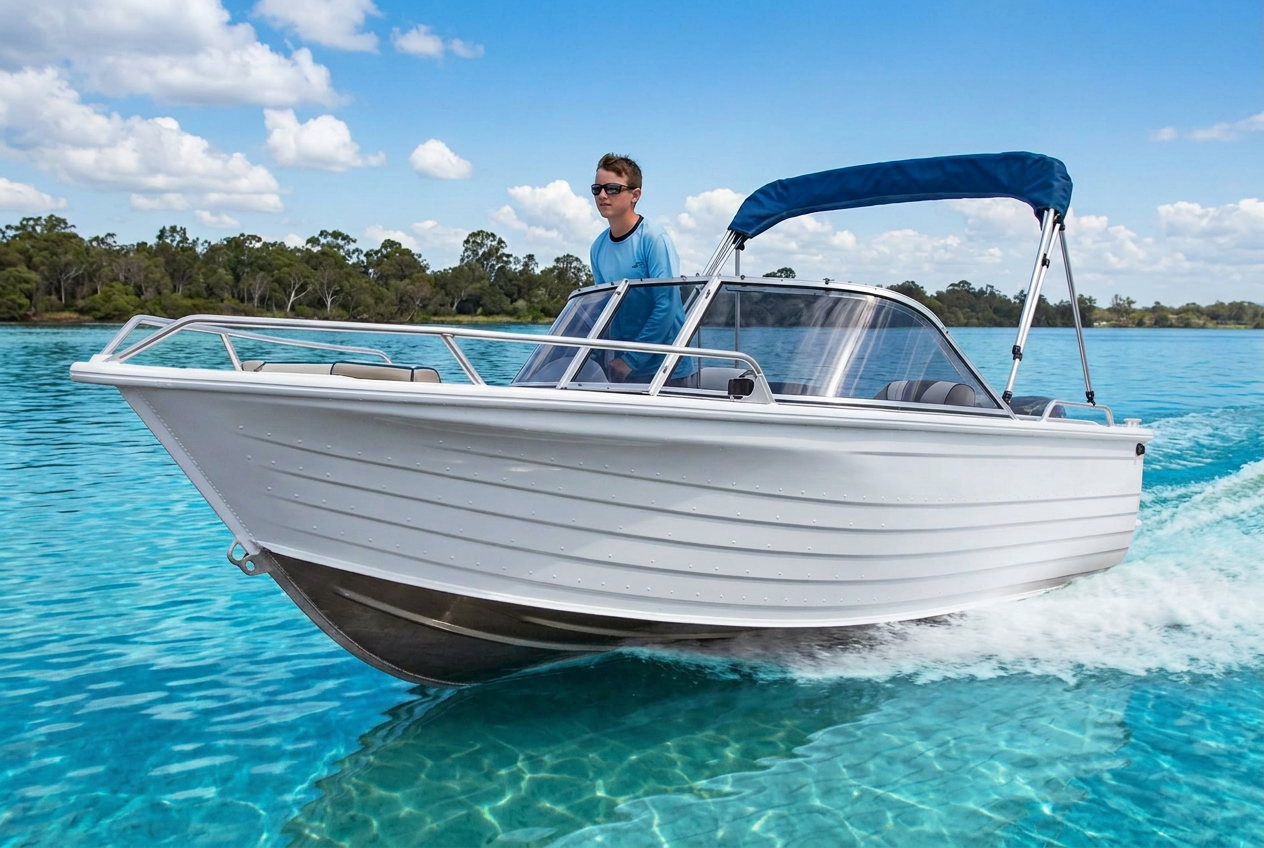
The Challenge: Aluminium vs Fibreglass Ride Quality
For Decades, Boaters faced a fundamental trade-off when choosing between Aluminium and Fibreglass Bowrider Boats. Aluminium is lighter and easier to tow and Maintain. It has a Tougher Structure and resists against abrasion, with Aluminium remarkably resistant to knock-impact damage. You can bounce an alloy hull off a rocky ramp and simply hammer out the dent. Fibreglass, by contrast, is heavier, and more "Fragile" in the sense it's more prone to gelcoat chipping, scratching or cracking, and far more expensive to repair after a serious impact. In Theory, Aluminium should be the obvious winner.
Yet Fibreglass has always held one Decisive Advantage: Ride Quality. The extra Weight of a fibreglass hull pushes through the water and spreads it apart smoothly. Delivering a settled, cushioned ride even in a late afternoon Seabreeze chop. Aluminium boats, being lighter, tend to bounce on top of the water rather than cutting through it. This produces the notorious 'Tinnie Slap' of as Americans call is "The Johnny Slap" — the harsh, repetitive slapping of the hull against the Aluminium on each wave — that puts off so many families from Aluminium boating altogether. It is the single biggest reason buyers pay more for fibreglass.
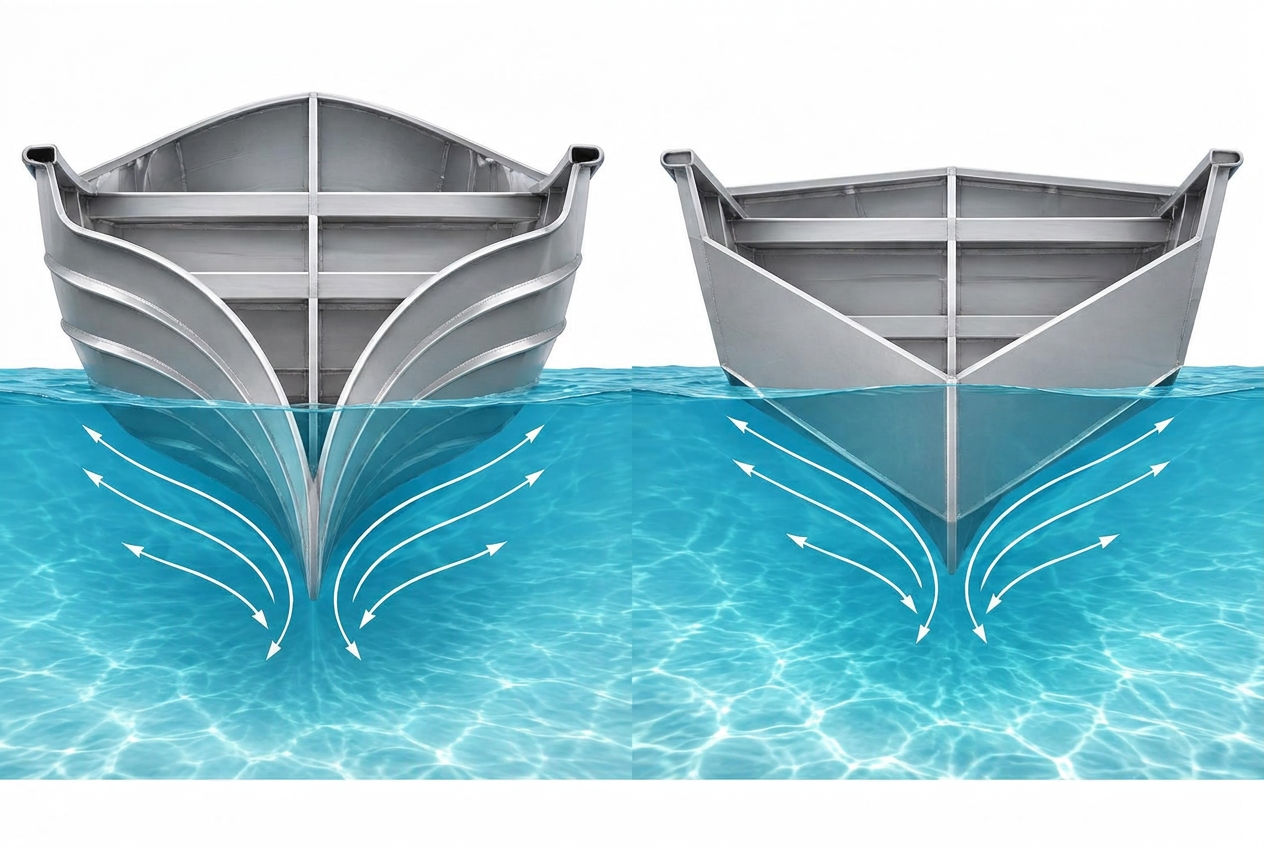
Quintrex, after Many Years of Evolution in Aluminium Boat Design appears to have Solved this Problem. The illustration above captures the heart of the problem. On the left, the CAD Design Engineered BLADE Like Formed Hull presents a Fine, Sharp and Curved Entry that can slice into an approaching wave; on the right, a conventional Bull-Nosed Pressed Aluminium Hull carries simpler, straighter panels that meet more of the water at once. This is what puts QUINTREX Boats Above the Rest in Ride Quality. This Article feature explains how that single difference in hull geometry changes everything about how it feels on the water.
The Solution: Quintrex's Revolutionary Hull Designs
Quintrex is the only boat builder in the entire world with the ability to "Roll-form Aluminium" in such a way that they can create a concave and convex hull shape all from the same Single Piece of Aluminium with no welds or joins. This Capability puts them Light-Years and Generations Ahead of almost every Aluminium Boat Fabricator in the Entire World. This Technology is what has Propelled them to become Australias Best and Leading Aluminium Boat Manufacturer and create 3 Distinct Hull Designs. The Millennium Hull from the Early 2000's Celebrating the Millennium. Then the Evolved Millennium has become the Blade Hull around 2014 and the APEX Hull for Wakeboarding. Each represents a leap forward in Aluminium hull engineering.
The key breakthrough is the roll-forming process itself. Traditional aluminium boats are pressed from flat sheet into a simple V or near-flat bottom — a shape that hits the water like a "Belly flop" - Quintrex's Roll-forming technique allows the Aluminium to be shaped into concave and convex curves that taper to a fine, knife-like entry at the bow. This shape allows the hull to slice through the water like a knife rather than slapping down onto it, fundamentally changing how an Aluminium boat behaves in a seaway.
The Millennium Hull was the first to introduce this technology to the market. The Blade Hull refined it further with a sharper entry and more aggressive concave shaping. The APEX Hull, the latest generation, combines everything Quintrex has learned into their most advanced hull form yet. Each iteration has narrowed the ride-quality gap with fibreglass, and the latest designs have all but closed it.
Blade Hull vs a Regular Pressed-Aluminium Hull
Viewed head-on, the difference is easy to see. A regular pressed-aluminium hull usually carries comparatively simple, straight panels from the keel towards the chines. That construction is strong and economical, but it limits how gradually the bow can introduce itself to an approaching wave. When explained Technically from an Engineering Perspective A wider section of metal can meet the water at once, producing a sudden rise in pressure and the familiar slap transmitted through the structure.
The Blade Hull Concept Separates those jobs across a more complex shape. Its narrow lower entry begins the cut, the changing concave and convex surfaces manage the flow as it rises, and the fuller flared shoulders recover buoyancy higher in the bow. Fine entry does not mean sacrificing usable bow volume: the hull can be narrow where it first meets the water and broad where passengers, seating and buoyancy need space. This not only Improves Ride Quality but keeps Spray Down and away from passengers .
This comparison also explains why deadrise alone never tells the complete ride-quality story. Two boats may quote a similar transom angle yet behave very differently because their forward sections, chines, flare, weight distribution and running trim manage impact and spray in different ways.
Why Concave and Convex Aluminium Surfaces Matter
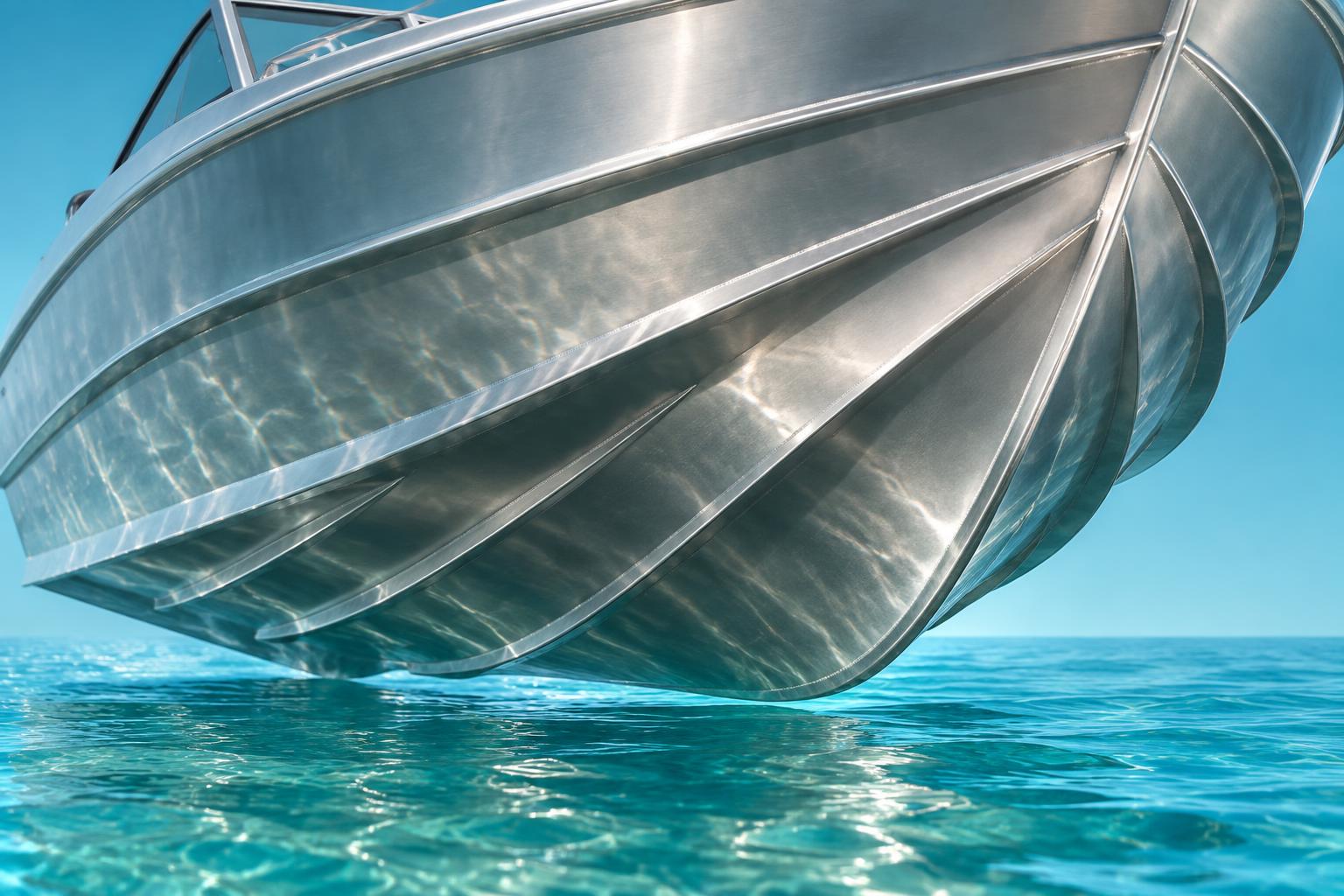
Flat aluminium sheet naturally prefers simple bends. Roll forming changes what the designer can ask that sheet to do, progressively working compound-looking concave and convex surfaces into the hull panel. The result is not merely cosmetic. Each curve can influence pressure, stiffness and the direction in which water moves beneath the boat. This is what separates Quintrex Boats from the rest of the pack
A concave section can gather and guide water along a deliberate path. A convex transition can release that flow progressively instead of allowing it to detach unpredictably. Longitudinal ribs and strakes add stiffness to a light aluminium skin while also creating controlled running surfaces. Together they help a hull preserve a finer forward shape without depending on the mass of thick fibreglass to settle the boat.
There is still no single shape that removes every impact. Speed, load, trim, wave period and driver input remain critical. The advantage is that the Aluminium Roll Formed Geometry gives the hull more tools for managing those forces before they reach the people sitting behind the windscreen.
From Millennium to Blade and APEX
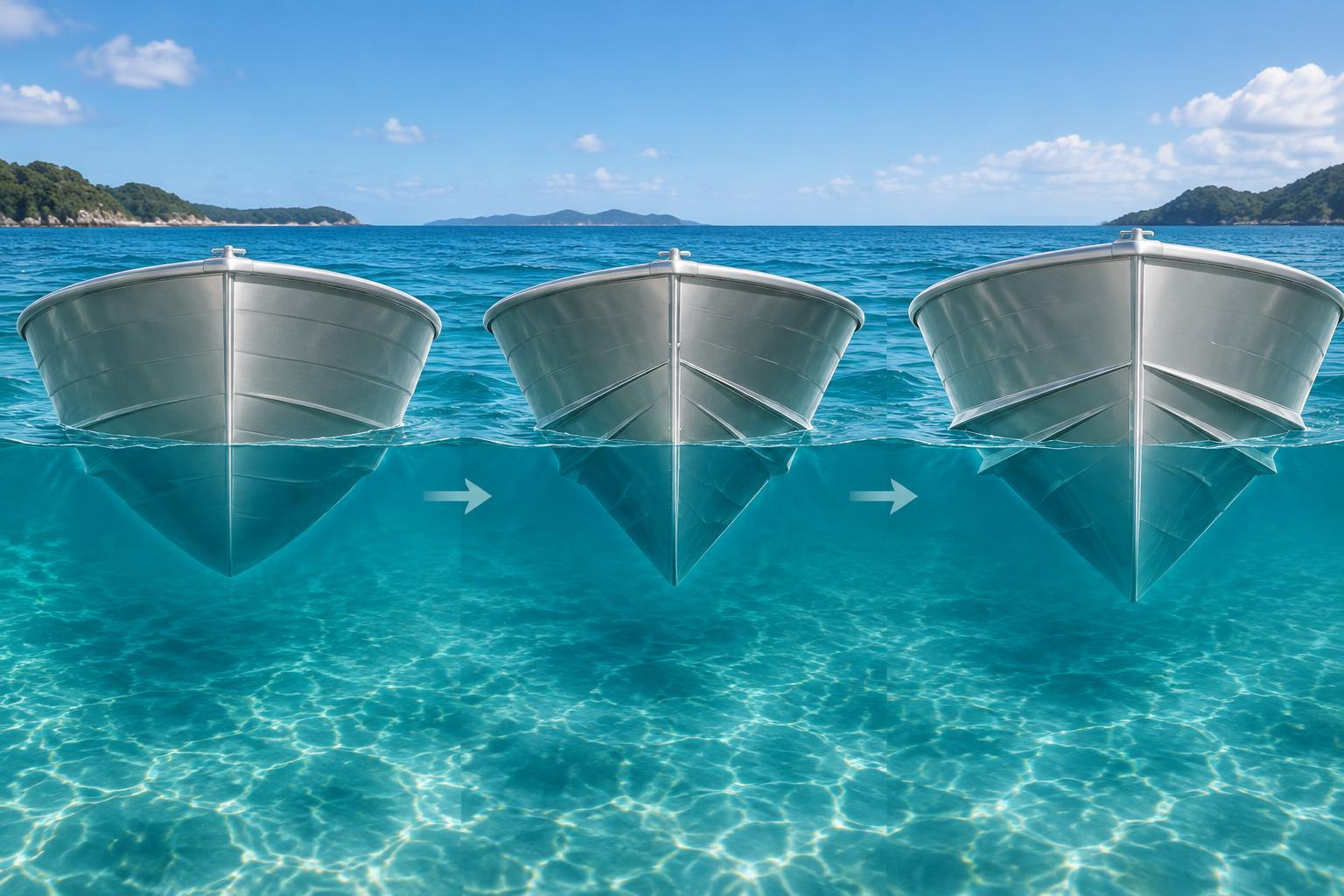
The Millennium, Blade and APEX names describe an evolving family of ideas rather than one identical shape applied to every boat. Millennium established the broader premise: use formed aluminium geometry to combine a soft forward entry with useful beam and stability. Blade pushed the visual and hydrodynamic emphasis towards a finer, sharper entry intended to cut cleanly into short Australian chop.
APEX develops the package again, balancing fine-entry ride comfort with stability, internal space, spray management and efficient planing. The exact proportions vary with boat size and purpose because a fishing platform, family bowrider and offshore-oriented model do not carry the same loads or operate at the same speeds. Whilst Ride-Quality underway is the Primary Objective, there still needs to be focus and presence on the "Stability at Rest" Component of Hull Design, and Quintrex again nails this.
What joins the Generations is the Design sequence visible in the illustration. Green Water first meets a narrow lower bow, then encounters progressively fuller sections that build lift and buoyancy. Instead of asking one blunt surface to provide entry, lift, volume and spray control simultaneously, the Revolutionary Hull Design assigns those functions to different parts of its form, hence the Complexity in Shape.
Slicing, Not Slapping: How the Blade Hull Works
To understand why the Blade Hull is so effective, compare it to a typical pressed aluminium hull. A standard alloy boat has a relatively blunt, rounded bow — often described as 'bull-nosed' — that presents a wide, flat surface to the oncoming water. Each wave is met with a slap, and the energy is transmitted straight up through the hull into the seats. The boat literally falls off the back of each wave and belly-flops into the trough. This is what makes Typical Aluminium Boat Hulls ride Notoriously Rough and Hard
The Blade Hull, by contrast, presents a fine, deep-V entry that parts the water cleanly. Concave sections channel water away from the hull in a controlled flow rather than deflecting it violently. The result is that the boat maintains forward momentum through the chop, cutting a path rather than bouncing off every wave. Passengers feel a smooth, progressive motion rather than a series of jarring impacts.
This is the difference between slicing a knife through water and dropping a plate onto it. The knife meets the water at almost no resistance; the plate meets it all at once. This is how Quintrex's Roll-Formed Blade Hull gives an Aluminium bowrider that knife-edge entry. The resultant effect on ride comfort is Dramatic and Immediately noticeable on the first trip out. Giving Quintrex's Legendary Ride Quality Name
Slicing Through Chop vs the Belly-Flop Effect
A blunt hull entering a wave presents a large area to the water over a very short time. Pressure rises quickly, the bow decelerates vertically, and the structure answers with a sharp report. That is the belly-flop effect: not that the entire bottom is flat, but too much running surface arrives at next wave together.
A finer entry spreads the event over distance and time. The keel begins the opening, the forward V continues it, and the formed shoulders progressively move the water aside. The total force does not disappear, but its delivery becomes less abrupt. That is why passengers often describe the better hull as quieter and softer even when both boats are travelling at the same speed.
Good driving remains part of the equation. Trimming the bow too high can expose flatter after-sections to the chop, while burying it unnecessarily can increase drag and spray. The best result comes when the driver uses trim and throttle to let the hull's designed entry do the work.
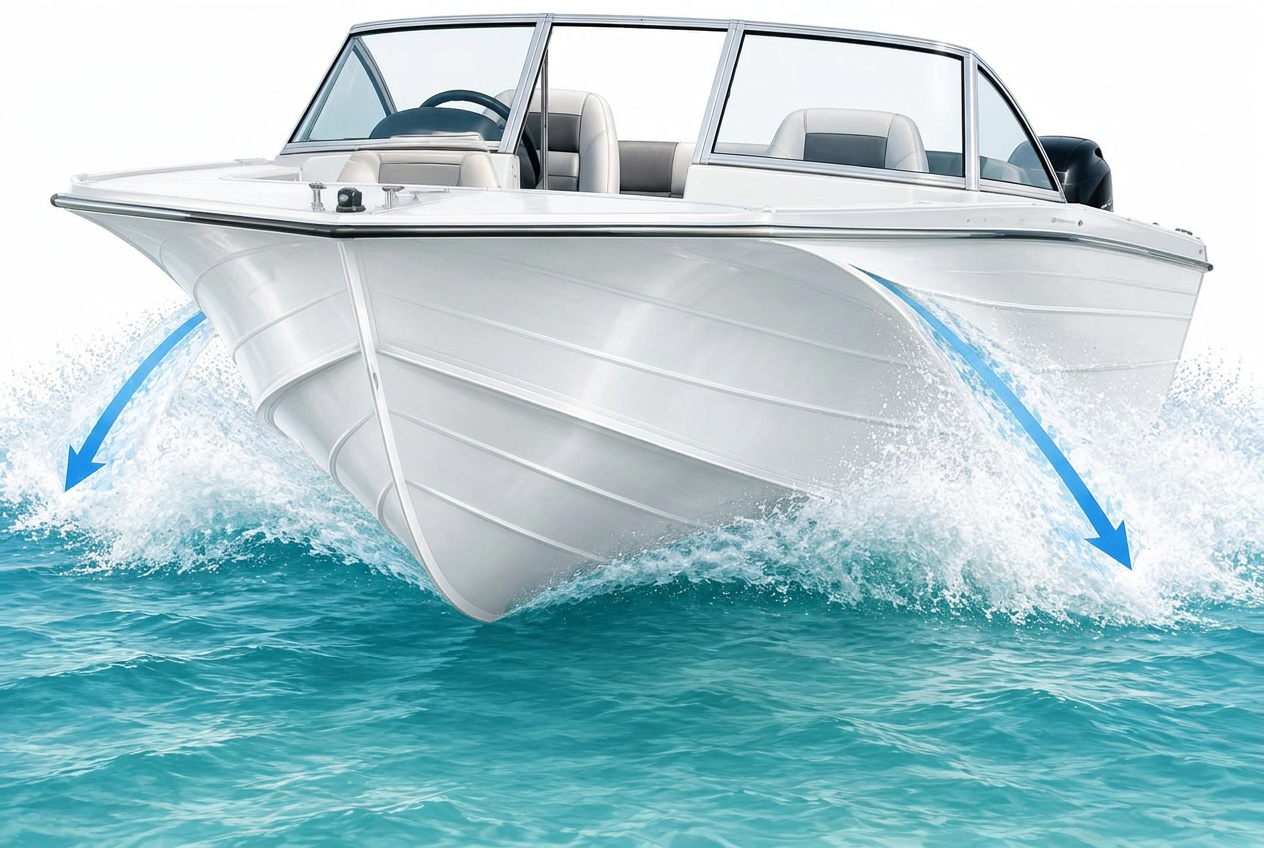
The Carolina Flare: Keeping the Boat Dry
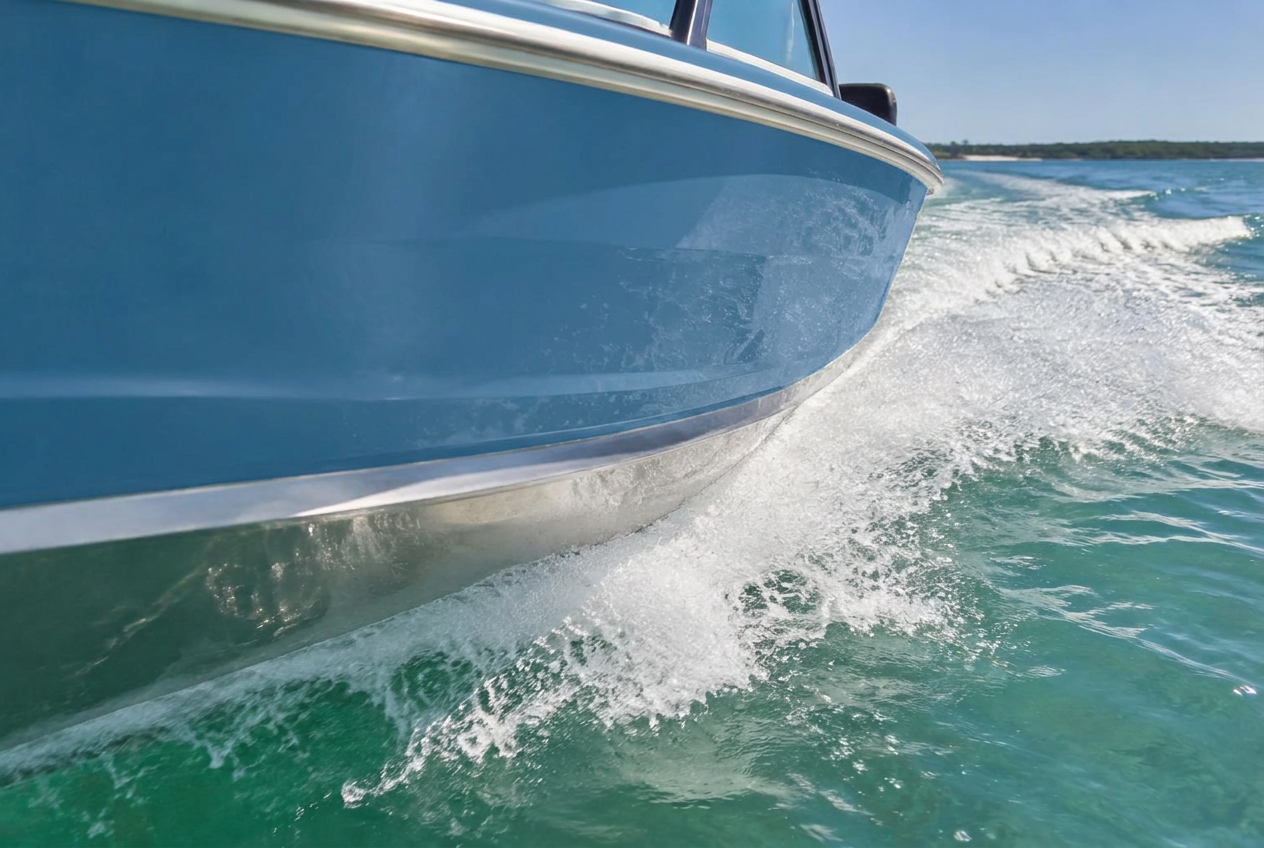
An additional benefit of Quintrex's Blade Hull is the curvature at the bow, which deflects water spray back down towards the water itself rather than blowing it back into the cockpit. This is combined with a 'Carolina flare' in the upper bow side sections — a hull-shaping technique borrowed from offshore sportfishing boats built in Carolina, USA, where keeping dry in big seas is a way of life.
The Carolina flare works by flaring the upper hull sides outward so that any spray thrown up by the bow is redirected outward and downward, back to the waterline. On a typical aluminium bowrider with flat or near-vertical topsides, spray blows straight back over the windscreen and soaks everyone on board. On a Quintrex with the Blade Hull and Carolina flare, the spray is trapped and redirected away from the cockpit.
The result is that Quintrex aluminium boats stay remarkably dry compared to mainstream aluminium bowriders. For families spending a day on the water, this matters enormously — no one wants to arrive at the sandbar soaked and cold. The dry ride is one of the most frequently praised features in Quintrex owner reviews, and it is a direct consequence of the roll-formed hull shape that no competitor can replicate.
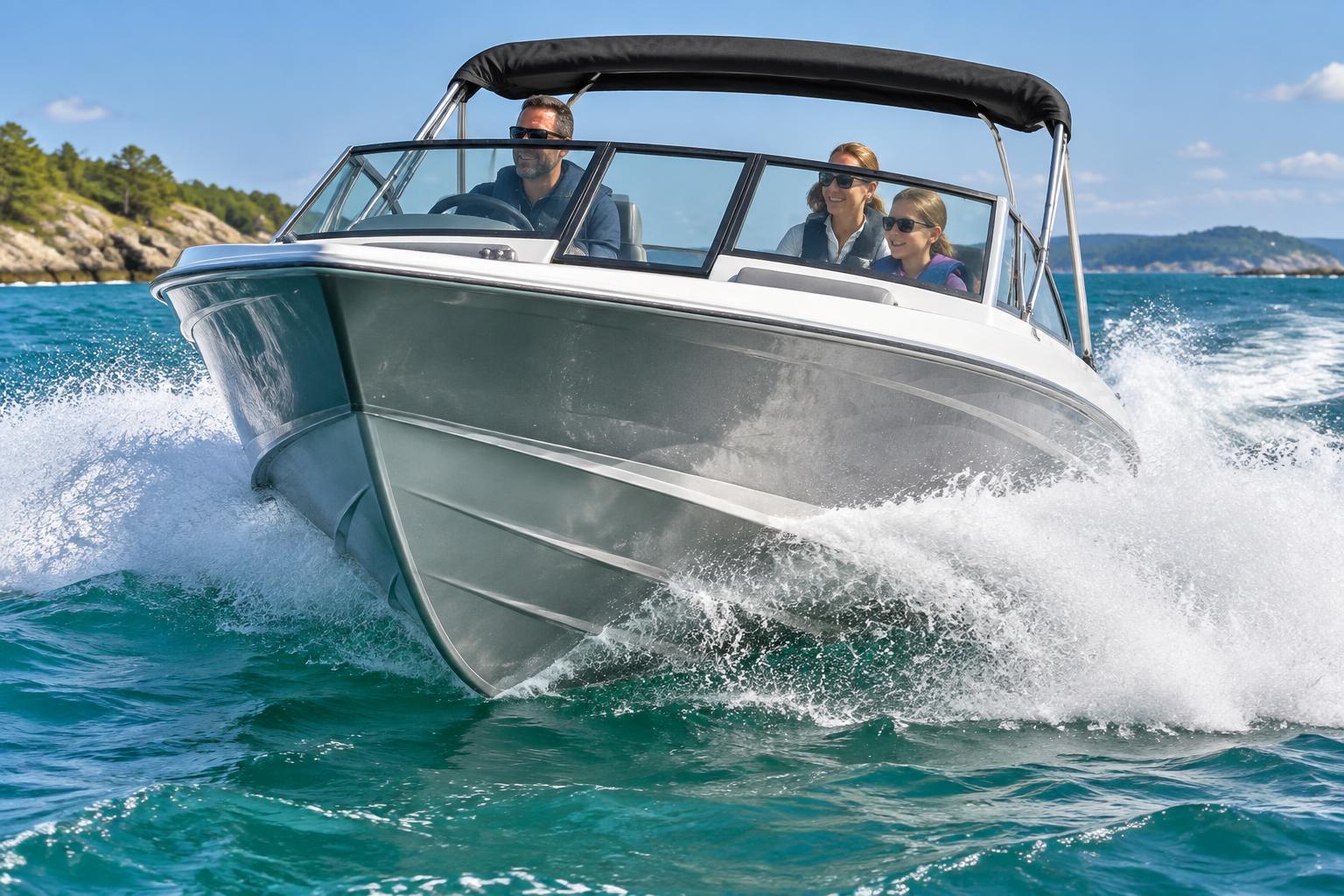
How Carolina Flare Deflects Spray Away from Passengers
A fine entry can cut beautifully yet still be wet if the upper bow does not manage the displaced water. Carolina flare answers that problem by widening the topsides more aggressively as they rise from the waterline. Spray travelling upward meets an outward-facing surface and is redirected away from the windscreen rather than curling over the gunwale.
The lower bow, chines and upper flare work as a sequence. The entry divides the wave, the formed surfaces guide its flow, and the flare gives the final outward-and-downward instruction. The faster the spray is moving, the more important a clean release becomes; uncontrolled water can be carried aft by a crosswind even when the bow initially pushes it aside.
For a family bowrider, dryness is part of ride quality rather than a separate luxury. Children in the bow, passengers behind the windscreen and gear stored on deck all benefit when spray is sent back towards the sea. A dry cockpit also feels warmer and calmer, makes the boat outing more enjoyable.
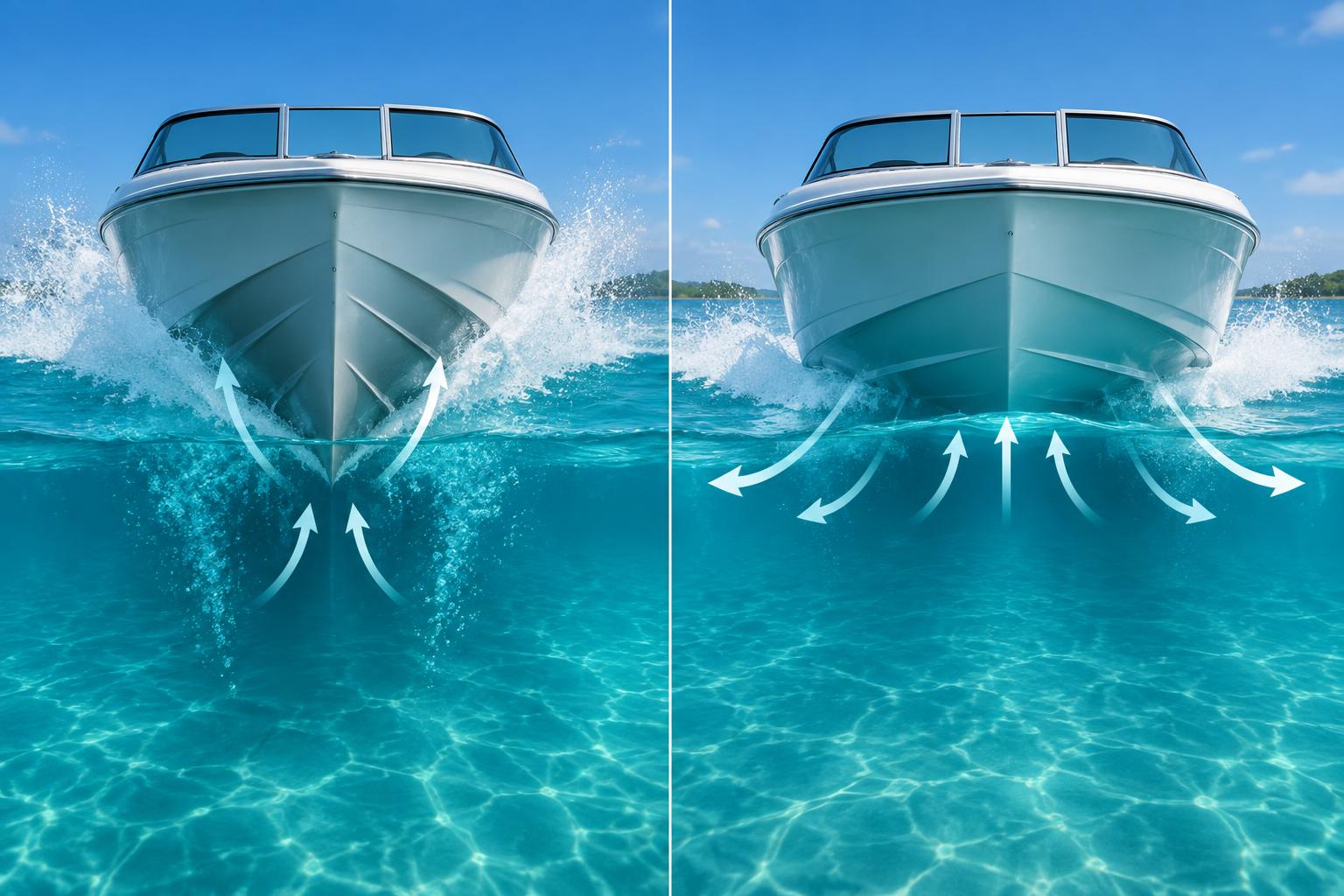
Reverse Chines: Lift, Stability and a Wider Effective Footprint
A conventional chine marks the junction between the bottom and the hull side. A reverse chine turns part of that edge down or outward, giving moving water a surface that can generate lift and redirect spray. At planing speed, the chine can make the hull behave as though it has a broader effective footprint without requiring the deepest central V to become flat.
That additional lift can help the boat rise onto the plane, resist excessive lean and feel more planted during turns. At rest, beam and immersed volume remain the dominant influences, but the outer hull geometry still affects how quickly the boat rolls and how confidently passengers can move around.
The comparison is not a promise that every reverse-chine boat outperforms every mono-V. Chine width, angle and position must be matched to the complete hull. Used as part of the Blade or related roll-formed design, however, it complements the fine entry: sharp down the centre for comfort, broader at the edges for lift, stability and spray control and Stability at Rest is also very important.
Reverse Chines and the Aerated Water Cushion
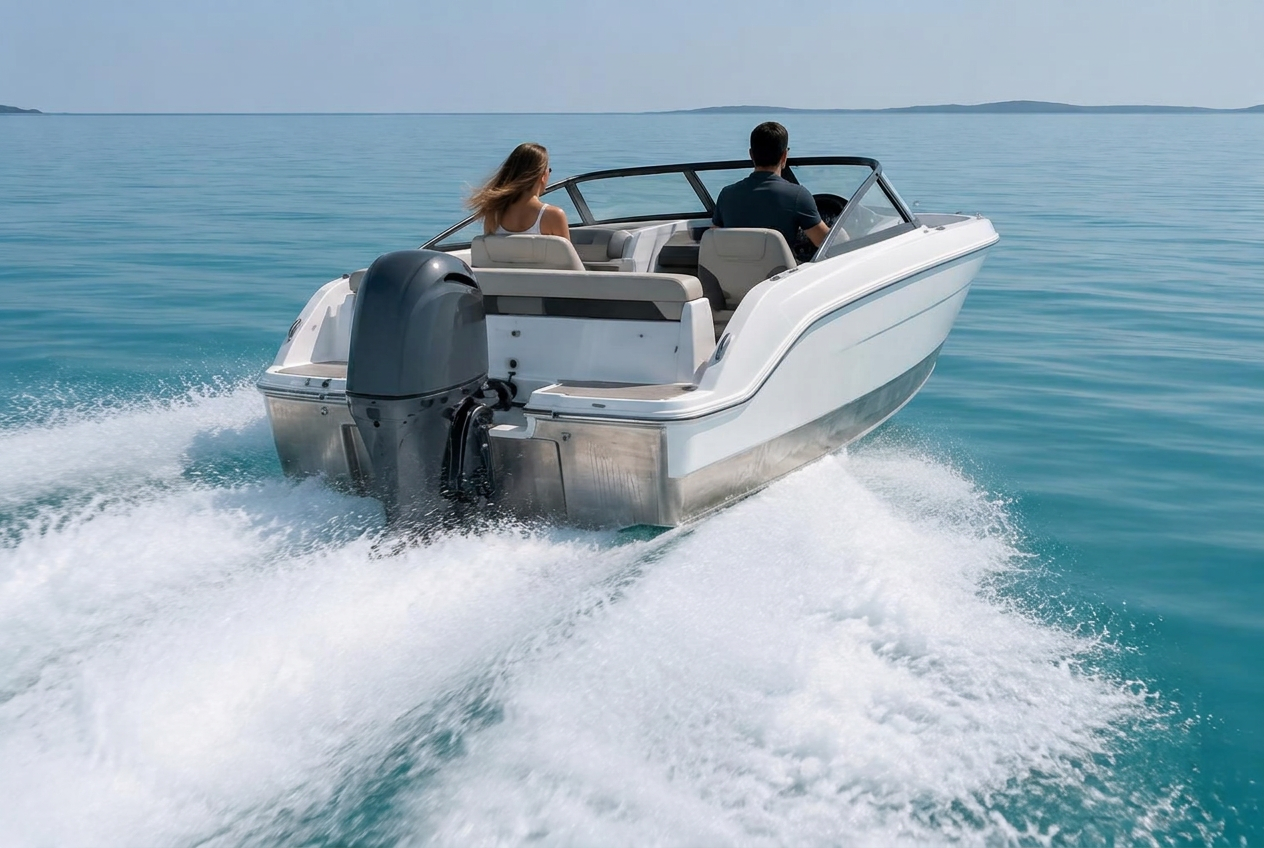
The re-direction of water back down to the waterline has another advantage that is less obvious but equally important to ride quality. When combined with the midship and rear reverse chines built into the Blade Hull, the redirected water creates a foamy, frothy, aerated turbulence layer along the hull's running surface. This aerated water behaves very differently from flat, laminar water.
Think of it as a foam-like air cushion — similar in principle to a hovercraft riding on a cushion of air. When you watch a Quintrex Blade Hull in action, you can see the white foamy water trailing behind the boat. That foam is full of air bubbles, and it is far more compressible than solid water. Instead of the hull meeting a rigid, concrete-like water surface with one hundred per cent surface tension, it meets a soft, aerated layer that absorbs and cushions each impact. Almost like riding on a Hover-Craft
Being able to turbulate the water and break the surface tension is the key to overcoming the harsh ride typically associated with aluminium boats. Unbroken surface tension is what makes water feel 'concrete-hard' when a light hull hits it at speed. By aerating the water flow along the hull, Quintrex effectively turns that concrete layer into a foam mattress — and the ride quality improvement is immediately obvious to anyone who has spent time in both a Quintrex and a conventional pressed-alloy boat.
The Telwater Advantage: Stacer's Revolution Hull
Quintrex is now owned by Telwater, the Australian marine giant that also produces Stacer, Savage, and several other well-known aluminium brands. When Telwater acquired the roll-forming technology through Quintrex, it was only a matter of time before it appeared across the group's other brands. Stacer now features its own version, called the Revolution Hull — a similar concept built on the same roll-forming principles with some slight variations to make it a different product to the Quintrex Brand.
The Stacer Revolution Hull shares the same fundamental advantage: it slices through the water with a fine, curved entry rather than belly-flopping onto each wave. In Stacer's Wildrider and Cortron models, the Revolution Hull delivers a noticeably smoother ride than the typical bull-nosed, rounder-hull aluminium bowriders from competitors who still rely on traditional pressed-alloy construction. The improvement is most apparent in a cross-chop, where a conventional alloy boat is at its worst.
This is why the Millennium, Blade, APEX, and Revolution hull designs bring Telwater's Quintrex and Stacer branded aluminium boats one step closer to the Holy Grail of Australian boating: an 'Aluminium Boat that rides like a Fibreglass Boat.' That has always been the challenge and trade-off between the two materials. Aluminium is lighter to tow, harder in abrasion resistance, and superior in knock-impact toughness versus equivalent fibreglass boats. Fibreglass has always held the advantage in ride quality. Quintrex's roll-formed hull designs have narrowed that gap to the point where, for many buyers, the Aluminium Advantages — Lighter towing, tougher hull, lower cost — no longer come with the ride-quality penalty they once did.
This is why Quintrex is the clear market leader in Aluminium Hull Design and "Ride Quality, a position that almost all other Aluminium Bowrider Manufacturers" find hard to match. No competitor has yet replicated the Roll-Forming process that makes the Blade Hull possible. This plus many Years of Evolution and CAD Designed Technology is why Quintrex and Stacer remain the Aluminium brands that ride like fibreglass.
Ride Quality In Action: The Foam Cushion & The Dry Bow
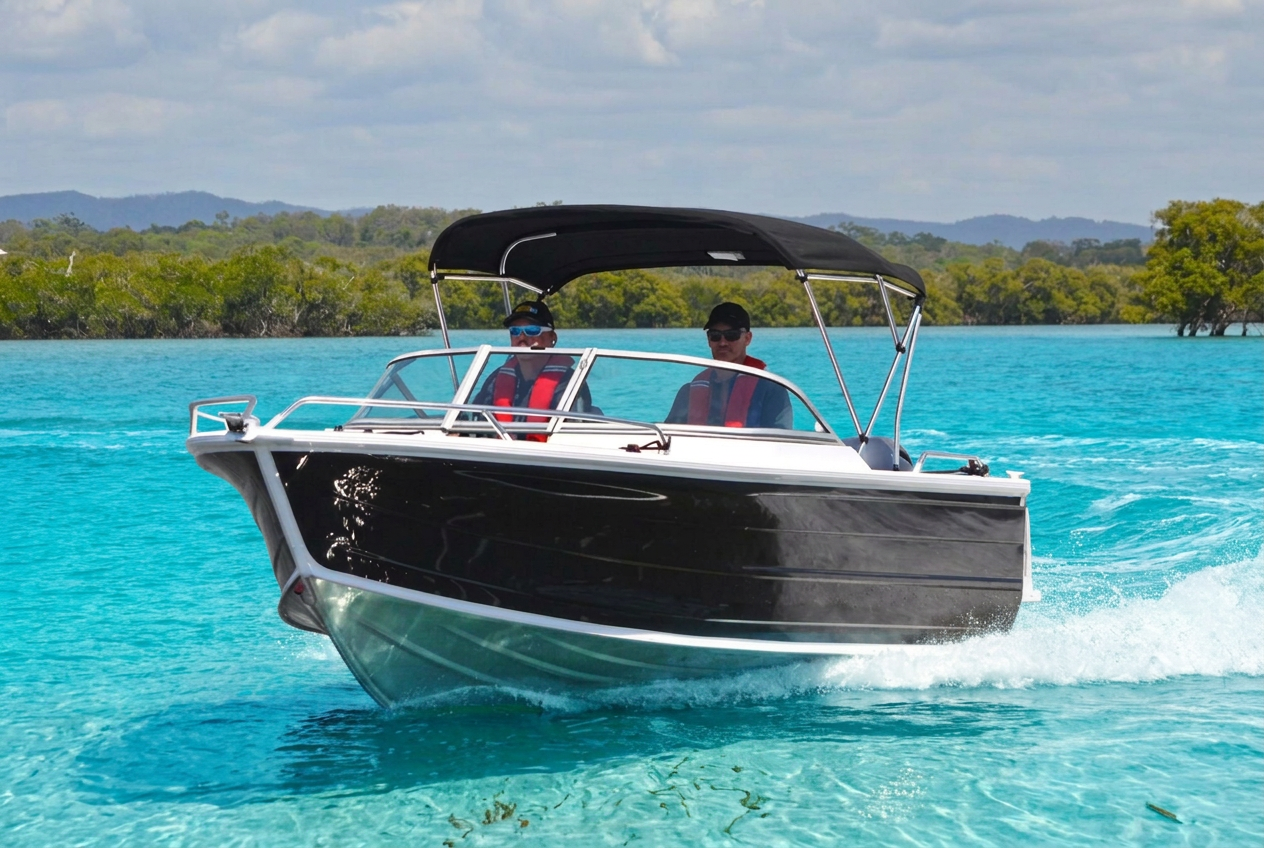
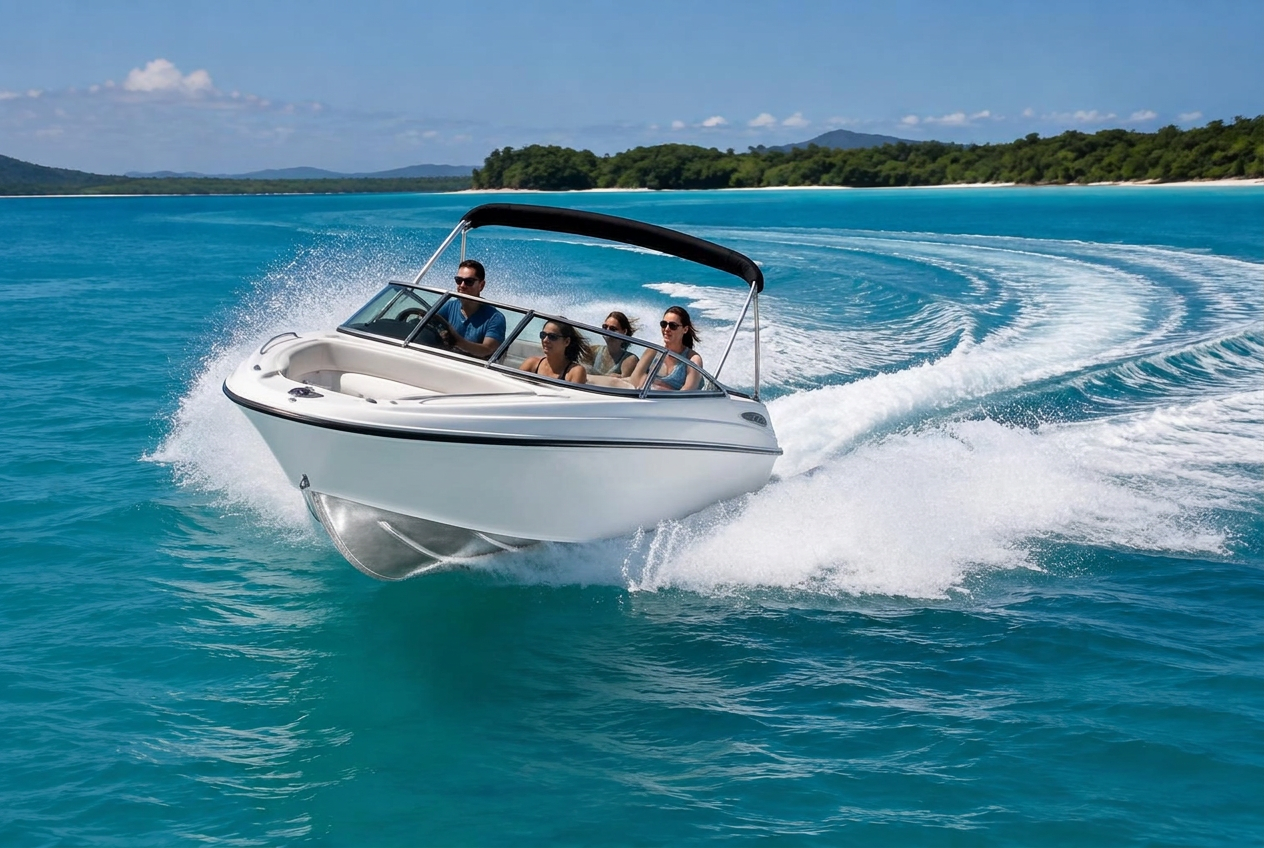
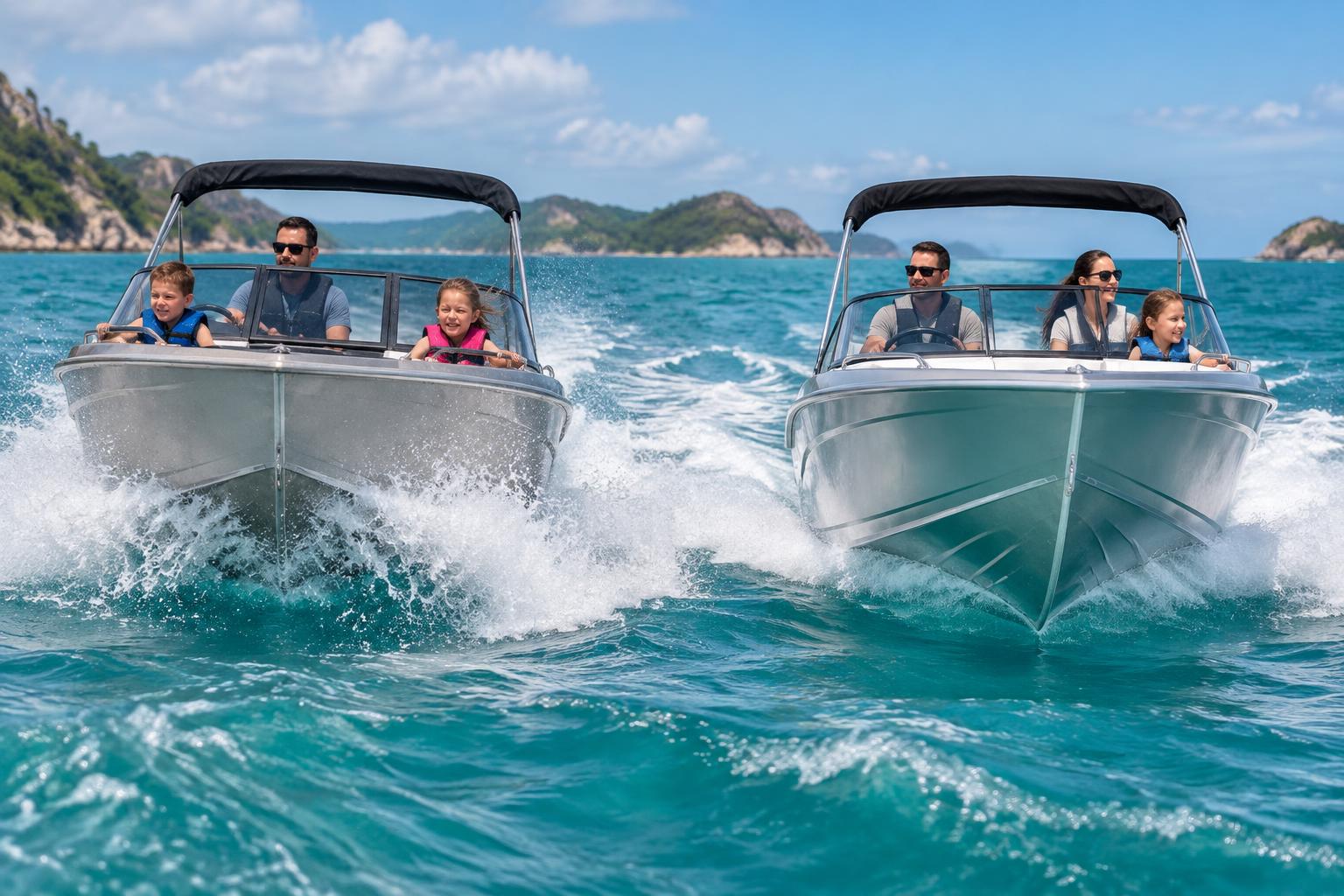
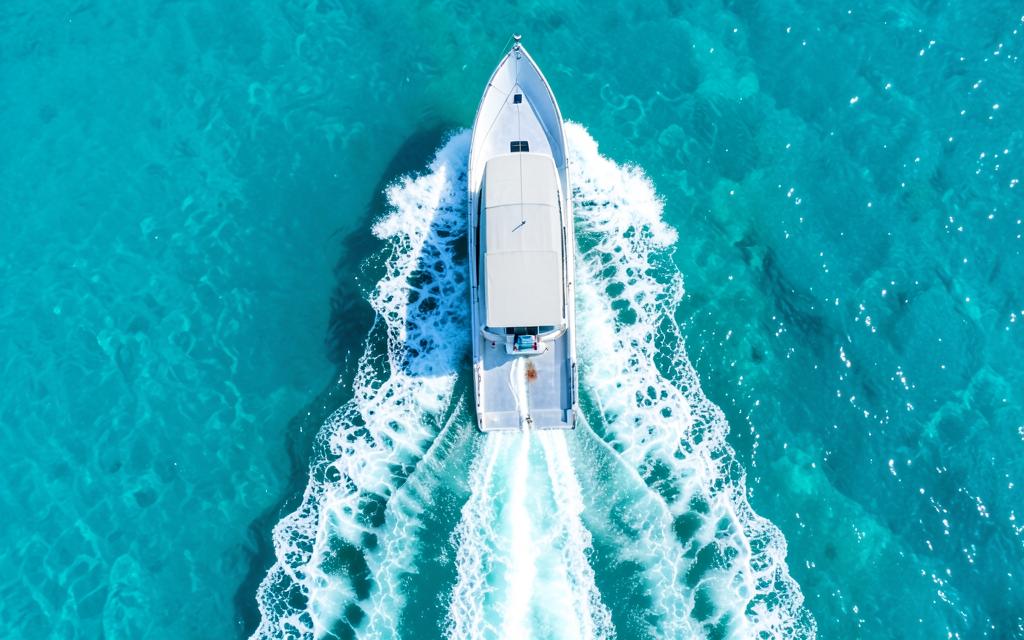
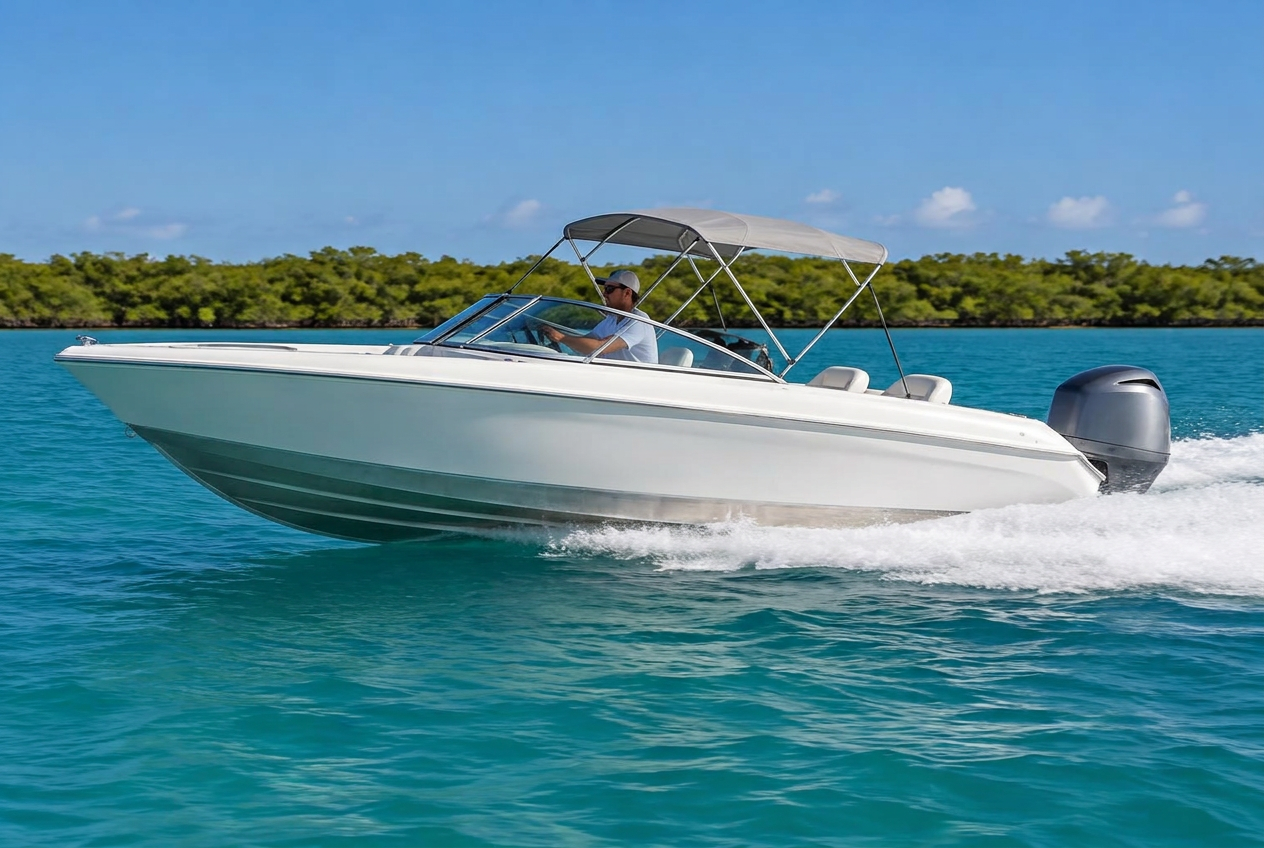
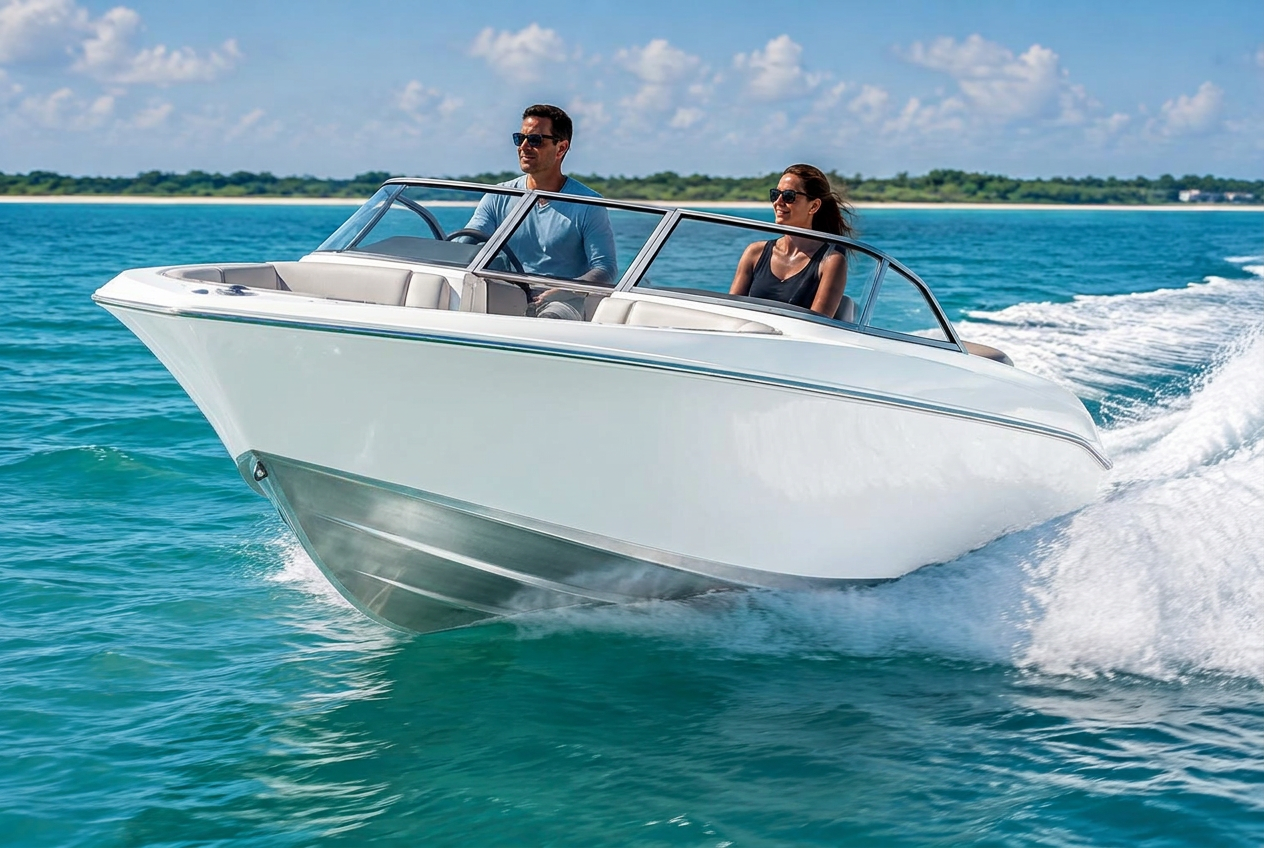
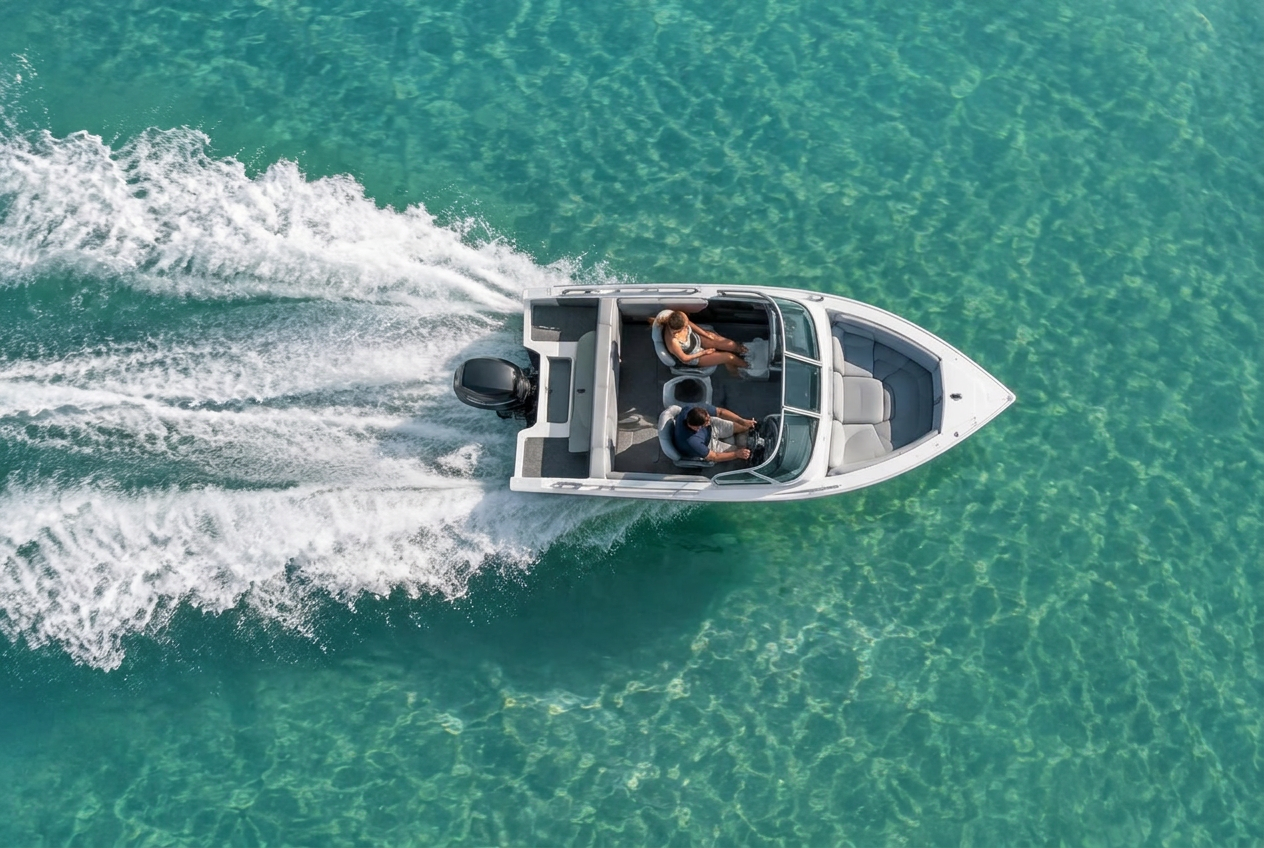
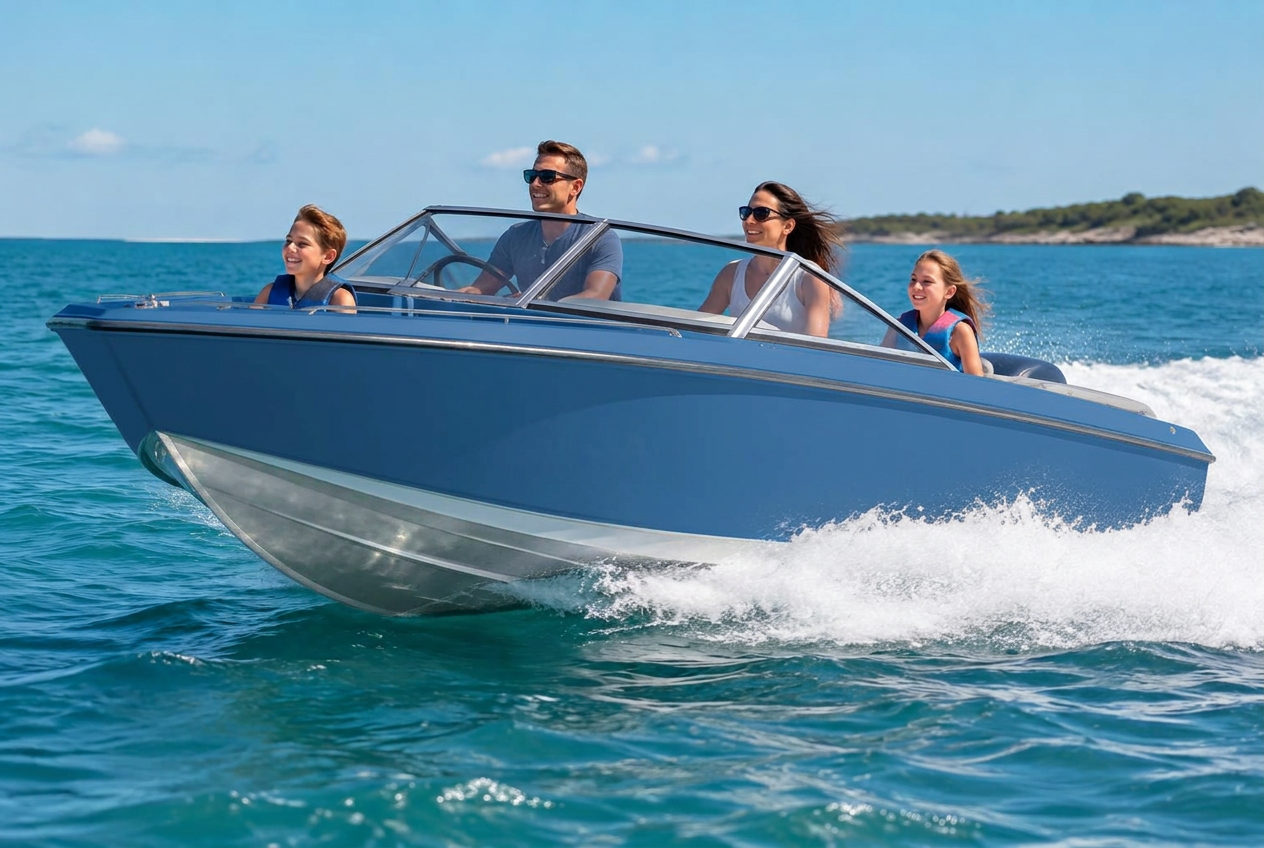
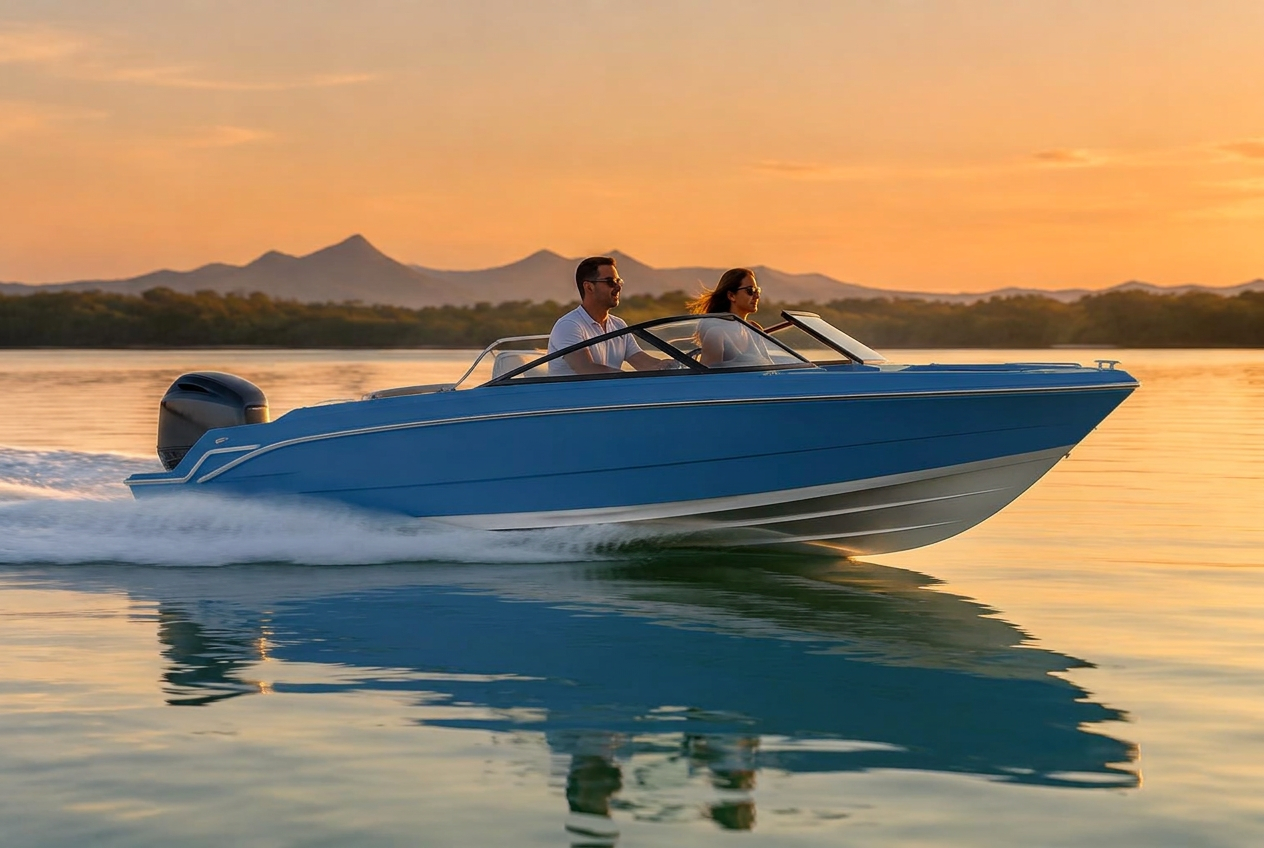
These Images show the outcome of well-designed roll-formed aluminium hull on the water. First, the white foamy aerated cushion that forms along and behind the running surface, softening every impact the way a foam mattress softens a fall. Secondly the fact that the foam and spray are only visible from midship rearward. Forward of the helm the hull is dry, because the fine entry and the Carolina-style flare push water outward and downward before it can ever climb the hull sides and reach the passengers.
See The Quintrex Ride Quality For Yourself
This short video shows a Quintrex roll-formed hull in action on the water. Watch the fine bow entry slice through the surface almost without spray, while the aerated white foam cushion only forms from midship rearward — keeping the cockpit and passengers dry. The combination of the Blade-style entry, Carolina flare and reverse chines is exactly what closes the ride-quality gap between aluminium and fibreglass.
Video: Quintrex roll-formed hull ride quality on the water. Embedded for editorial context via YouTube.
The Quintrex Bowrider: On The Water & Up Close
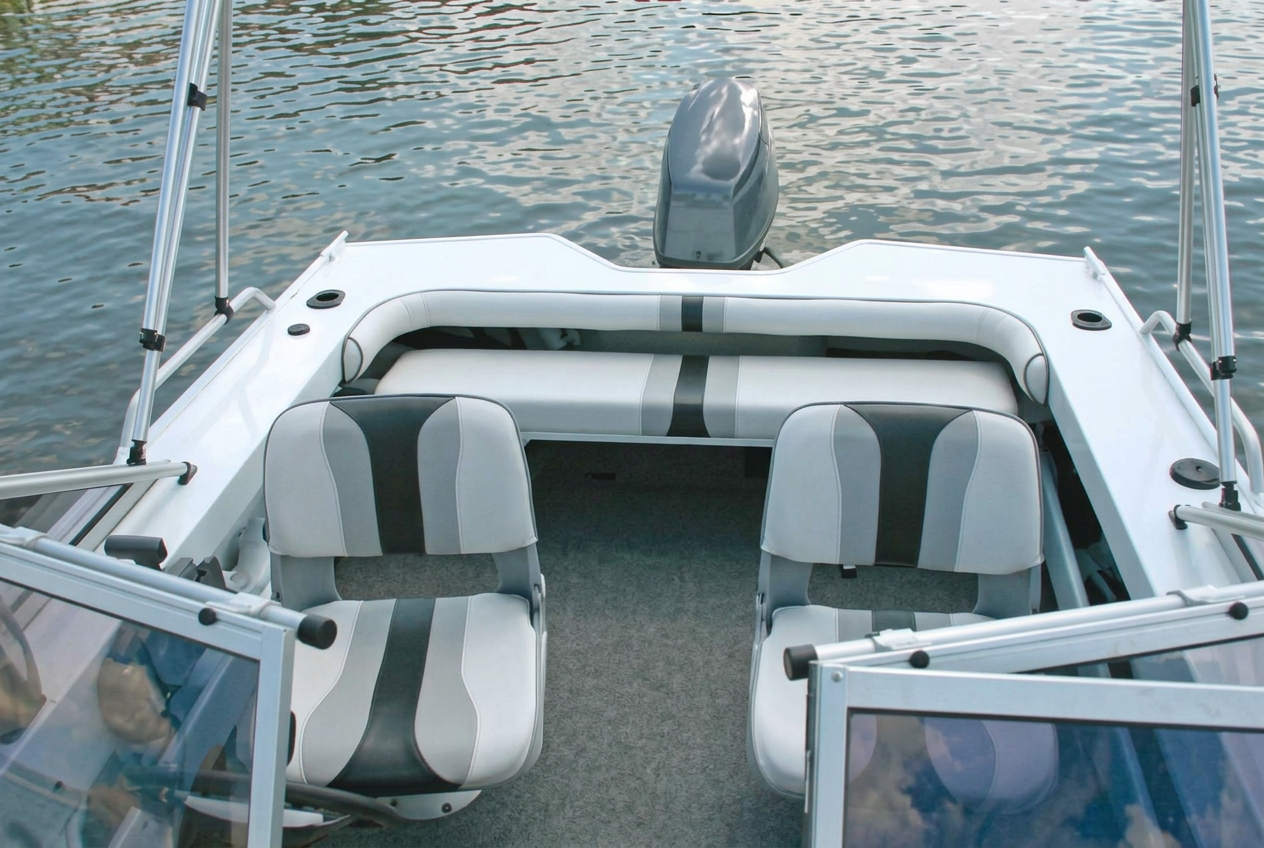
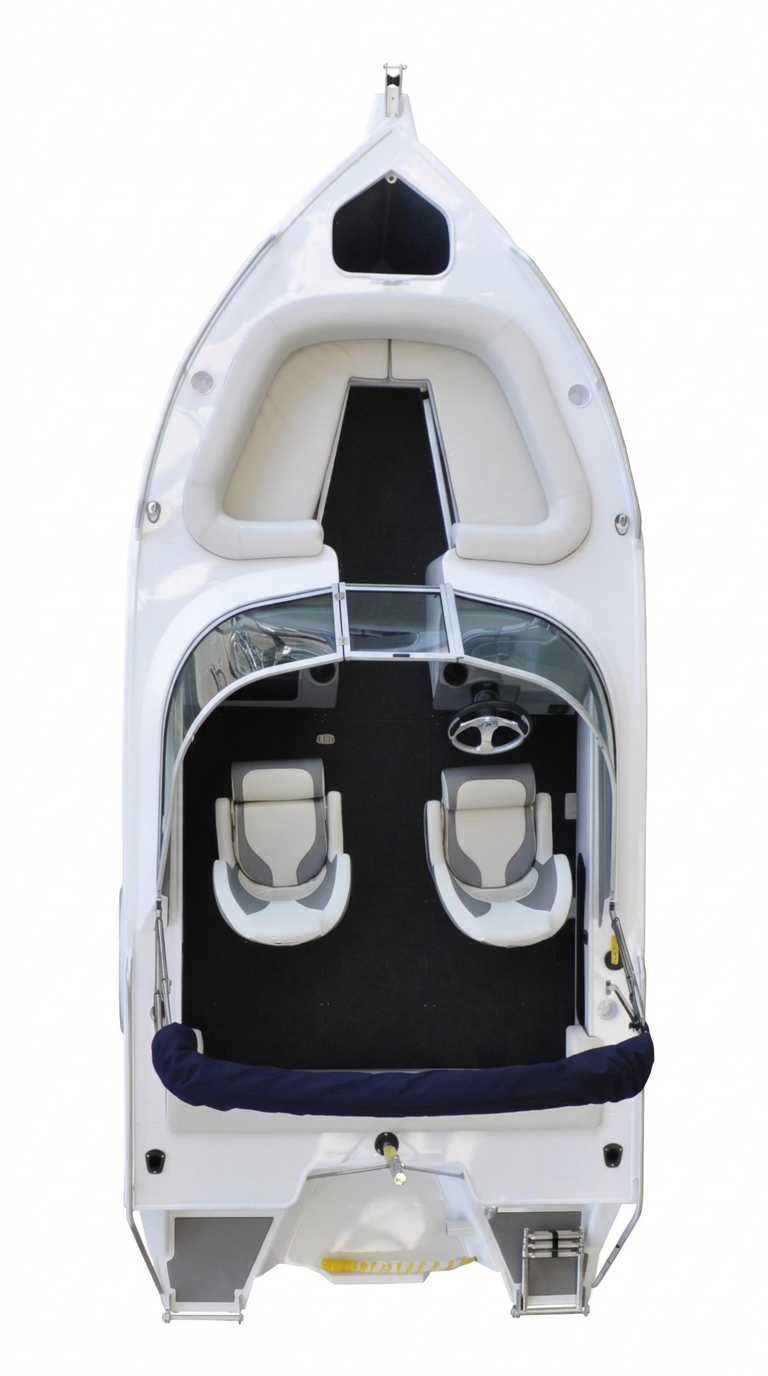
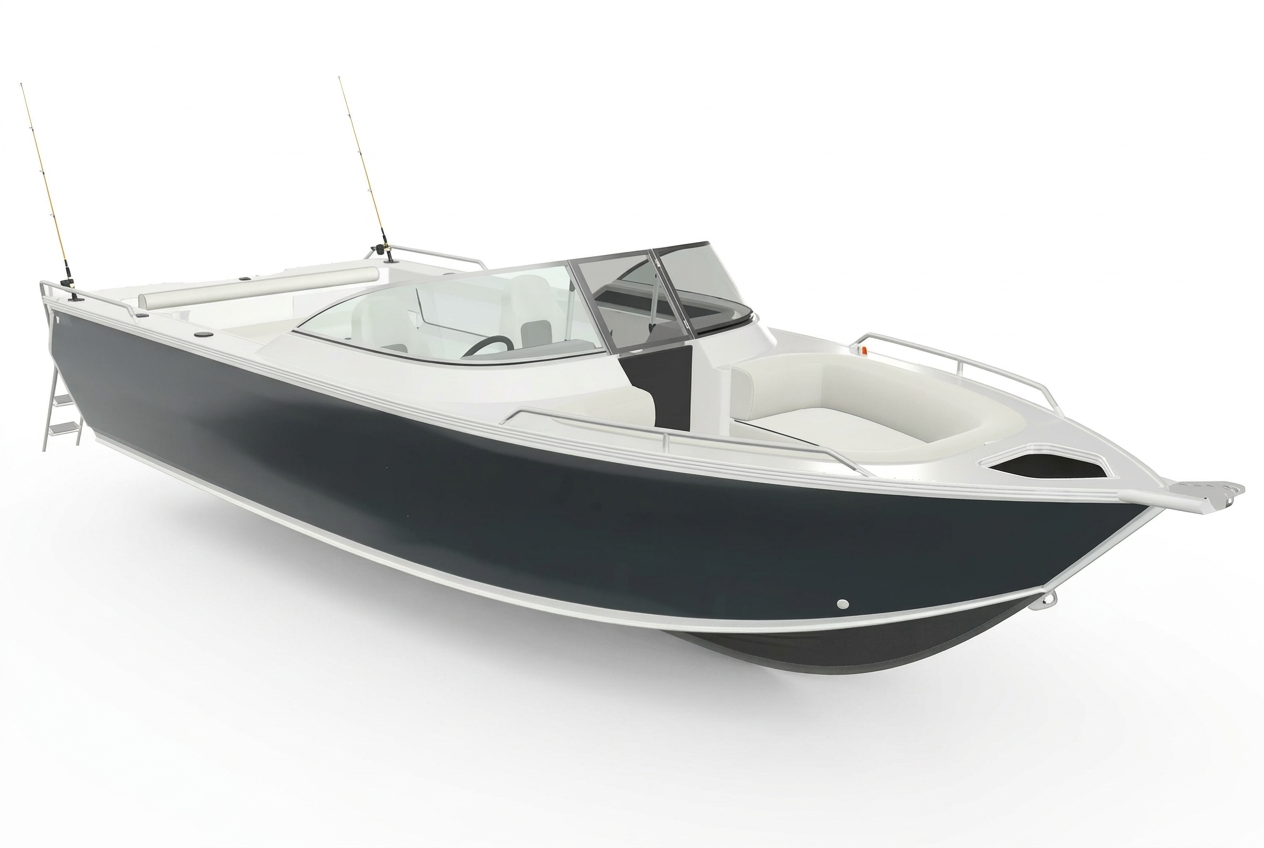
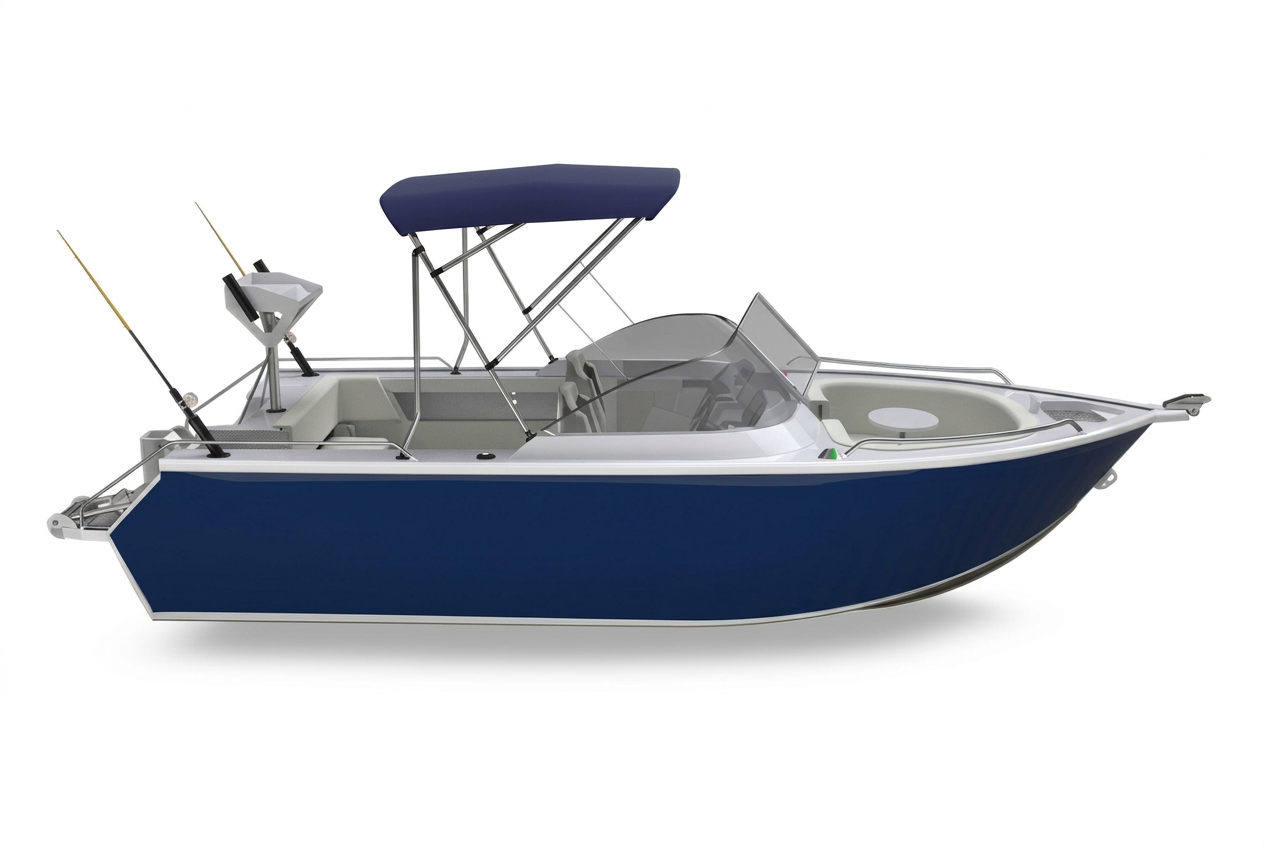
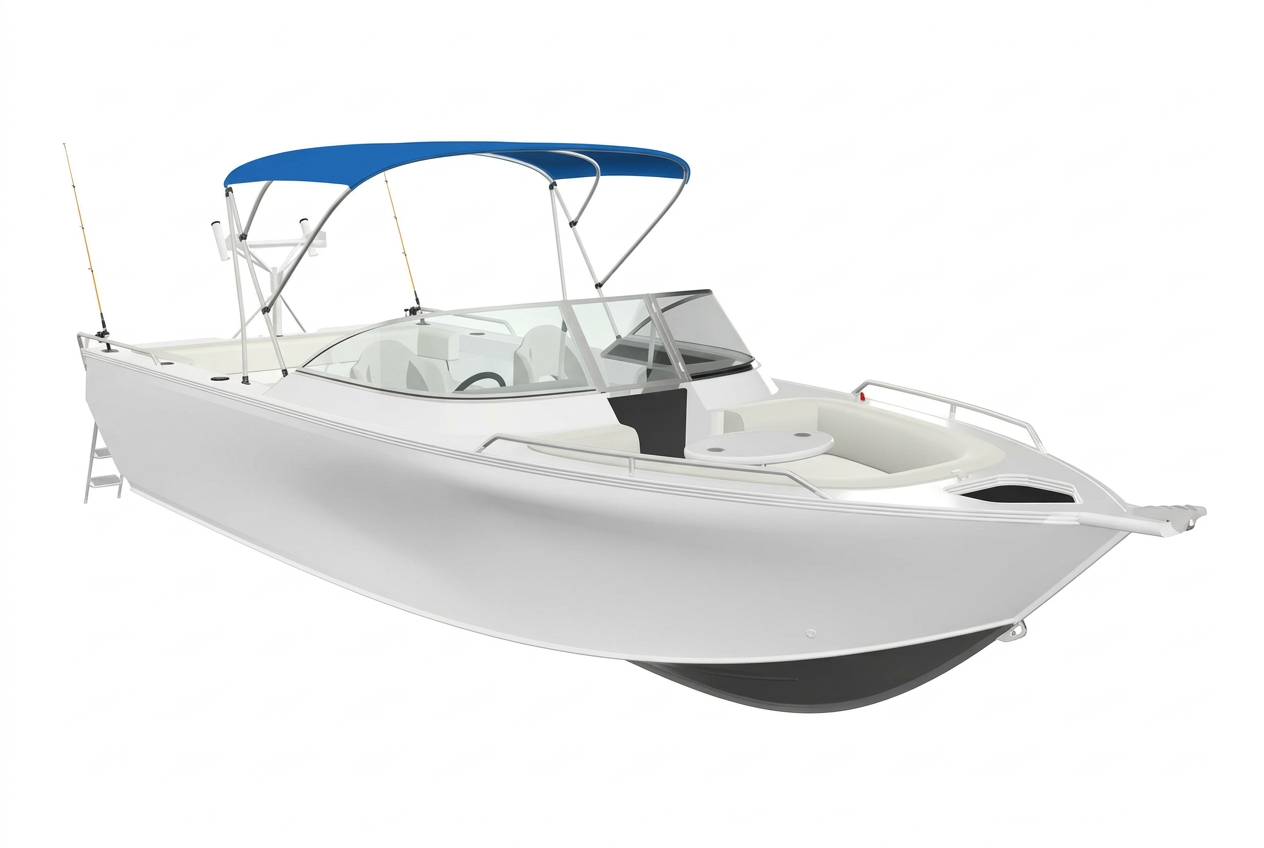
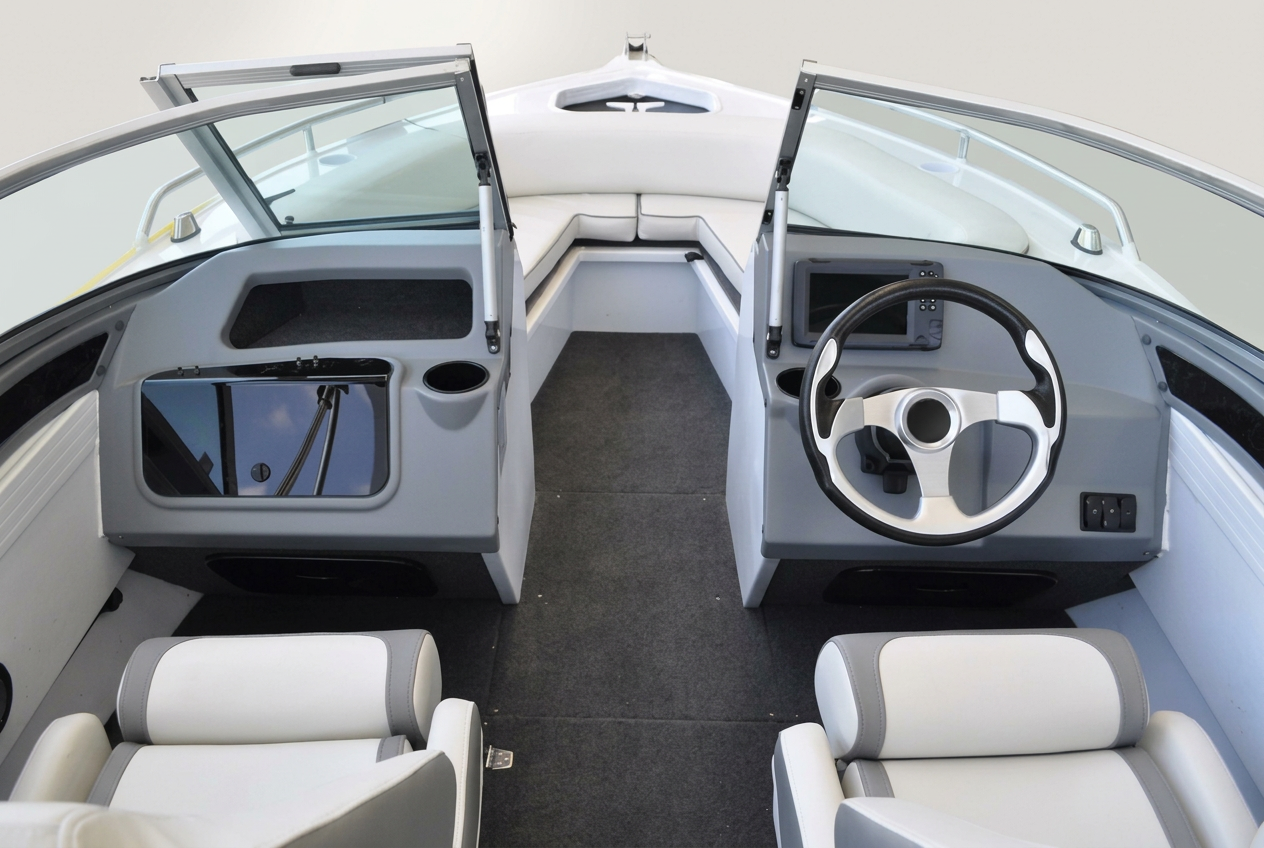
To finish this feature, here are eight original Bowrider-Boats images celebrating the Quintrex Aluminium Bowrider itself. The family-friendly cockpit layouts, the fishing-ready variants and the modern helm consoles. Together they show why these boats have become the benchmark for Aluminium bowriders worldwide: tough, dry-riding, soft-landing hulls wrapped around genuinely versatile family layouts.
Explore More Bowrider Brands & Models
Quintrex and Stacer are part of the Telwater family of aluminium boat brands. Dive into our full directory of bowrider manufacturers and individual model reviews.
Featured Boat of the Week
Bayliner Bayliner DX2000 — Our Featured Bowrider This Week

This week we are putting the Bayliner Bayliner DX2000 in the spotlight, and it earns the spot. At 20 ft 2 in (6.16 m) long on a 8 ft (2.44 m) beam, this is a bowrider that reads the water well and still feels roomy enough for a full day out. A 20-foot deck-boat-width bowrider with outboard power and a huge social cockpit. Power comes from 115-150 hp mercury fourstroke outboard through a outboard package, and the fibreglass hull keeps the ride settled when the afternoon breeze puts a chop on the surface.
Seating is rated for 8 people, so there is space for family, friends, towels, eskies and the tow rope without anyone climbing over gear. Owners tend to buy it for family, water ski, leisure — which is exactly where it shines. Fuel is 30 us gal (114 l), and on the second-hand and new market you should expect to land somewhere around US$42,000 - US$58,000 new depending on hours, trailer and options.
Our full deep dive covers the layout in detail: bow lounge comfort, helm ergonomics, the rear entertaining area, storage that actually swallows a weekend, plus standard features, popular options and honest notes on where the boat compromises. If the Bayliner DX2000 is on your shortlist, start there — and check back next week, because the featured boat changes every week as we complete more full model reviews.
Featured Bowrider Article
Which Is the Lightest Bowrider Boat ?
Buying Advice
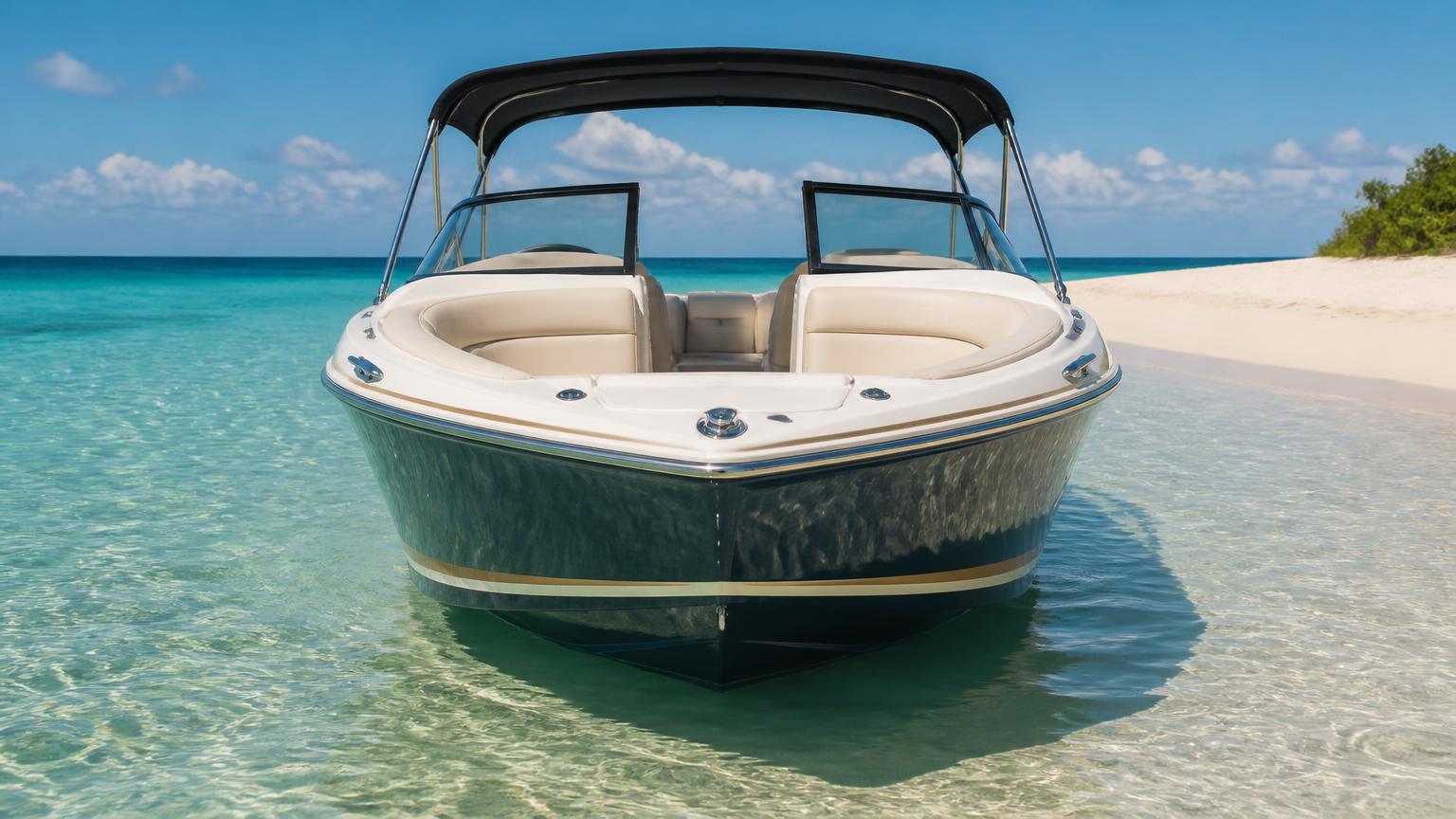
Weight is an Important Factor when choosing a Boat. It determines How Easy it is to Tow, Launch and Retrieve. Hull Mass is also a Primary Indicator of how well the Boat will Ride in Choppy Water and Heavy Seas. Light Hulls like Aluminium Launch easily, Tow behind Regular Vehicles, and cost less to run and maintain. This Article Explores how the lightest Bowriders on the market stack up, and where the Weight actually comes from. It should come as no Surprise the Lightest Bowriders happen to also be the Smallest in Length. Starting in the 16 ft (4.88 m) Class, Pressed and Roll-formed Aluminium Bowriders like the Quintrex 481 are the outright lightweights. A 4.5-4.9 m Aluminium Bowrider with a small outboard typically weighs 350-550 kg (770-1,210 lb) as a bare hull, and 700-900 kg (1,540-1,985 lb) on the trailer with Engine, Fuel, Battery and Gear aboard. Brands built around Aluminium construction include Quintrex, Stacer, Stessco, BlueFin, Razorline, Barcrusher and similar builders in Australia Dominate this band. Lighter does not mean flimsy, and Aluminium construction is not all the same. A compact pressed-Alloy family boat can be remarkably light, while a larger Plate-Aluminium boat with thicker bottom sheets, welded frames, a hard top and…
Read the full article