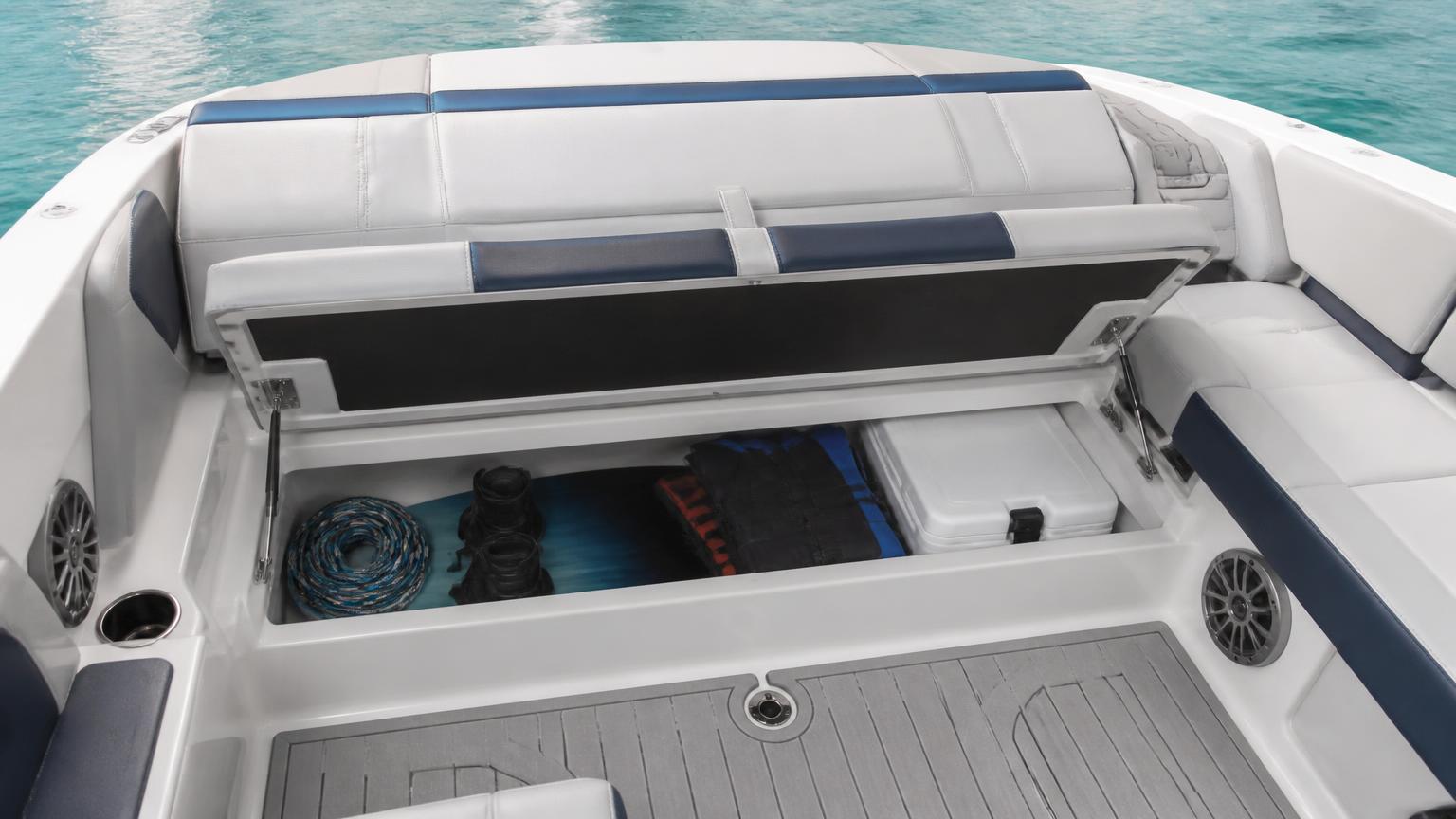
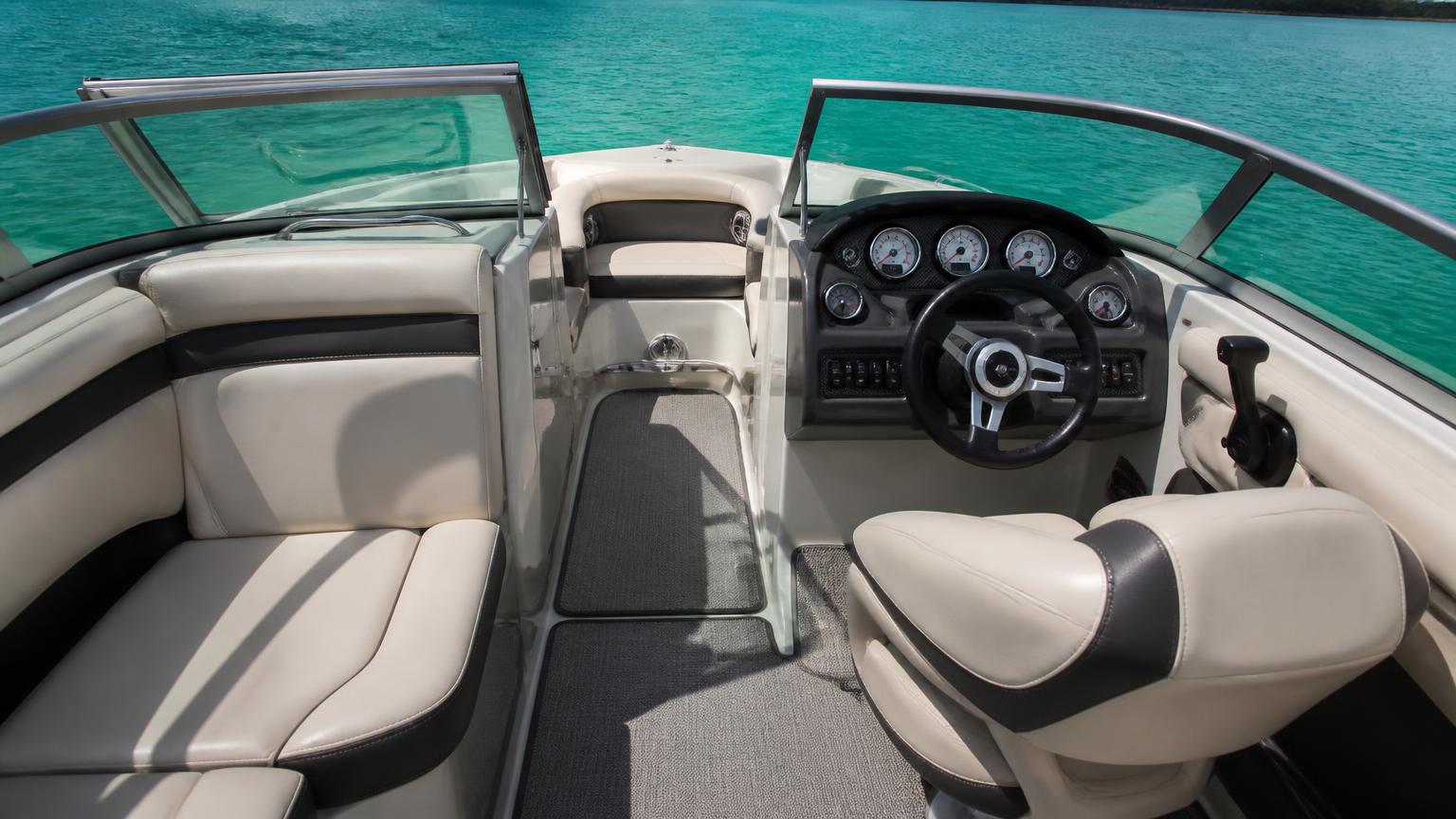
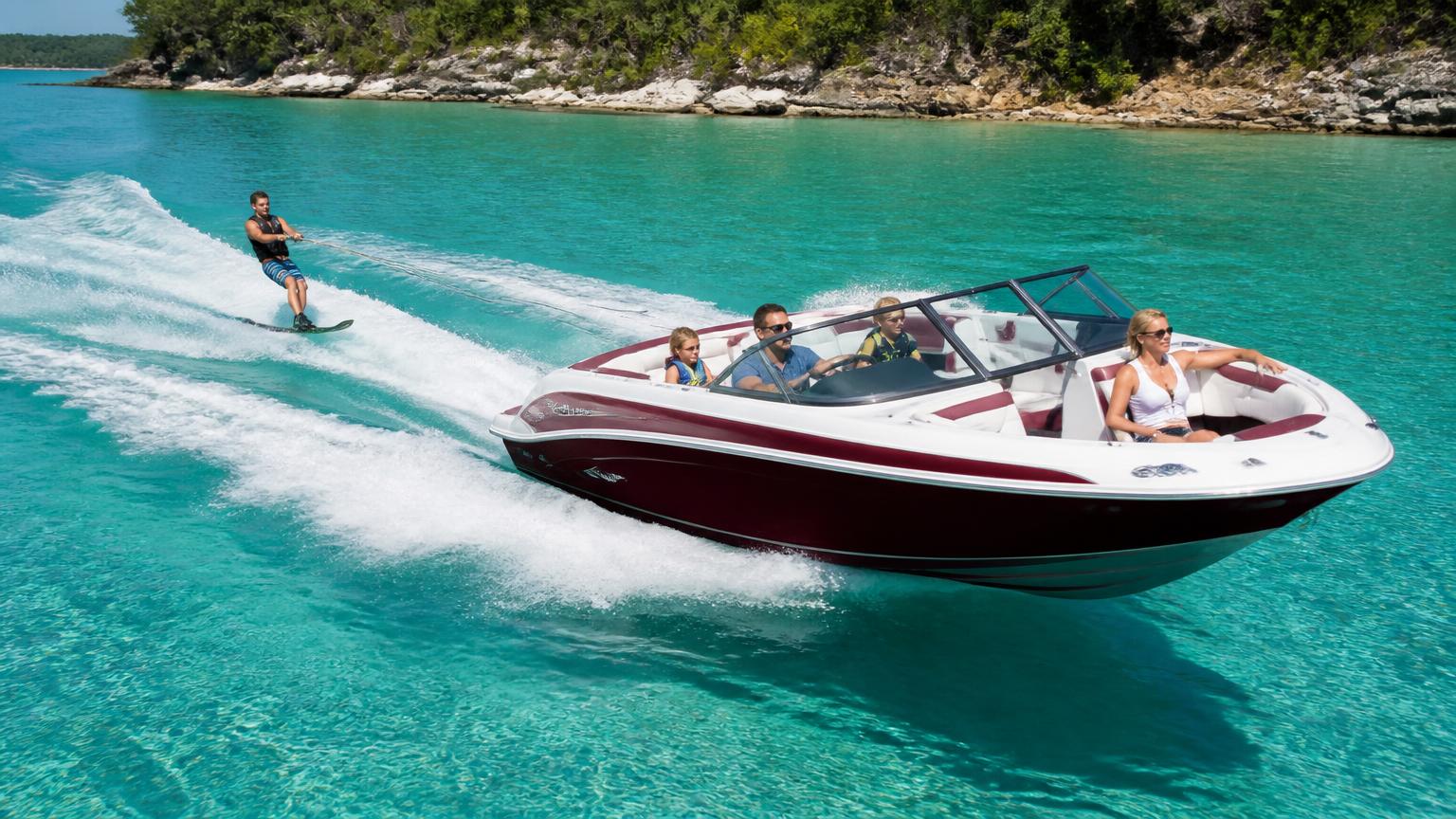
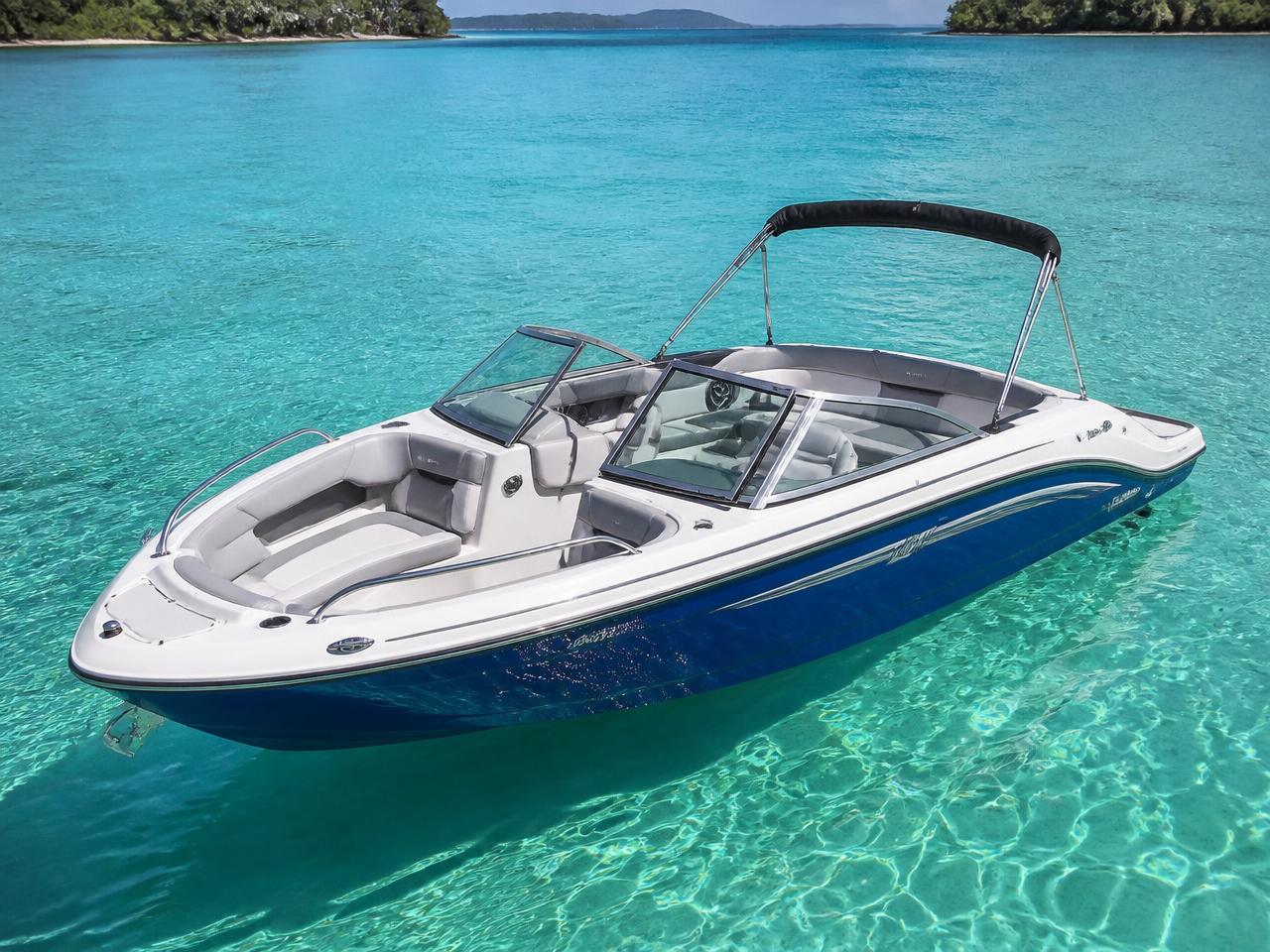
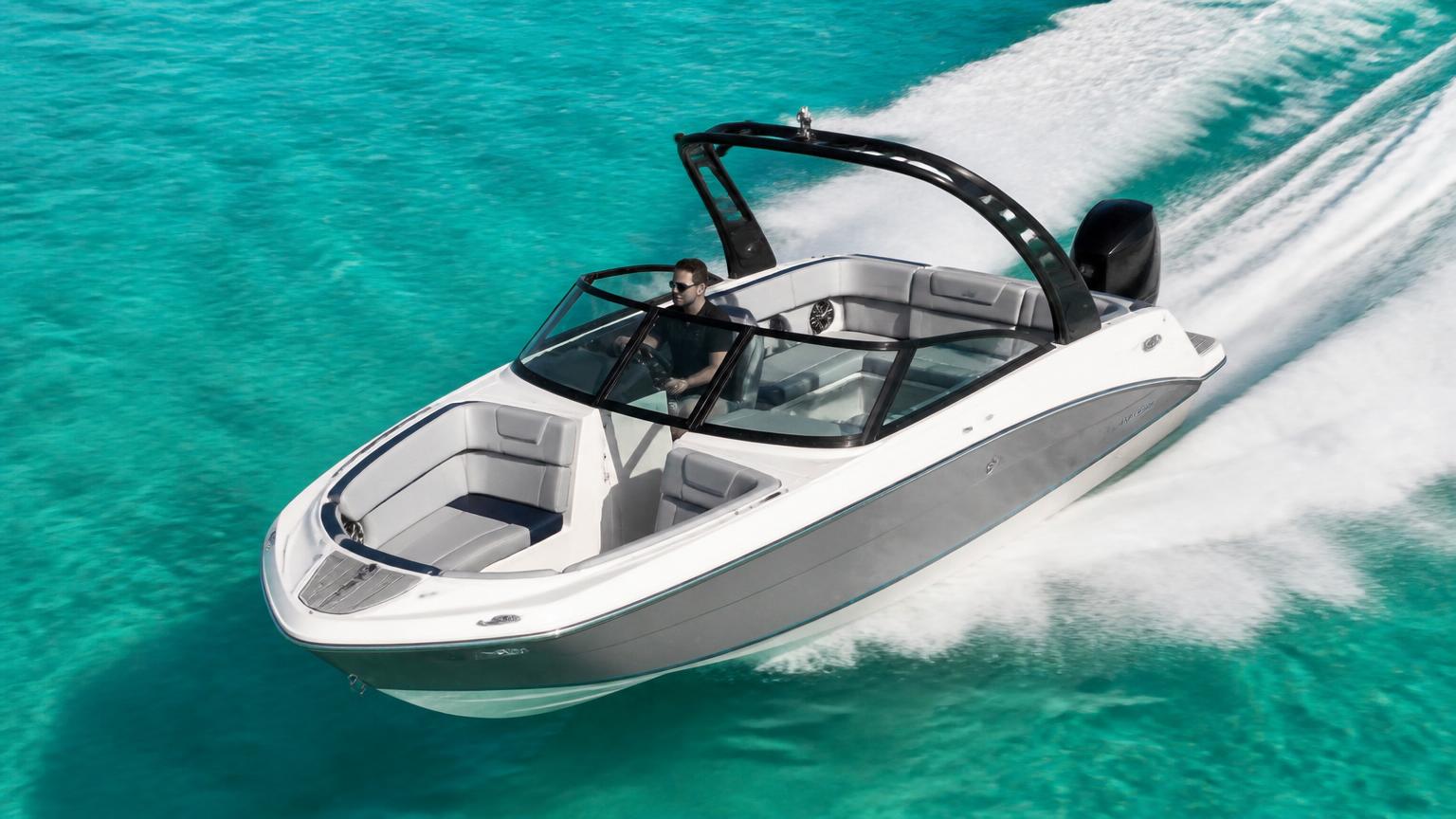
Bayliner VR5
The world's best selling bowrider size, Light, simple and easy to tow.
- Length
- 19 ft 9 in (6.02 m)
- Drive
- Outboard
- Seats
- 8 people / 1,150 lb
US$38,000 - US$52,000 new
Site Menu — Find Your Page
Bowrider Boats Mega Website

How You'll Use It
Deadrise is the V-angle of the hull at the transom. Under 17 degrees is a flat, stable, early-planing hull that suits calm water and towing. Twenty to 24 degrees is a deep-V that cuts chop but rolls more at rest.
Family bowriders typically sit at 18-21 degrees, which is a deliberate compromise between stability at anchor and comfort at speed.

Heavier hulls ride better, full stop. A fibreglass boat will out-ride an aluminium boat of the same length in a chop. Wider beam adds stability at rest and interior room but increases drag and can make the ride harsher in a short sea.

Bowriders are not good boats for heavy seas. The open bow means green water coming over the front lands on your passengers, and there is no cabin to retreat into. In genuinely rough conditions a cuddy, a centre console with a T-top or a hardtop is the correct boat.
Within their intended envelope, sheltered bays, lakes, rivers and coastal water in reasonable conditions, they are comfortable, dry and predictable.

The bowriders that come up most often when readers ask us where to start.

The world's best selling bowrider size, Light, simple and easy to tow.
US$38,000 - US$52,000 new

The refined mainstream benchmark: quiet, dry, and beautifully finished for the money.
US$72,000 - US$95,000 new

15.5 ft fibreglass Bayliner bowrider with stern drive power — entry level pricing and a classic convertible bowrider layout.
US$26,000 - US$34,000 new
Materials & Sizes
Bowrider Boat Build Materials
Materials & Sizes
Bowrider Boat Sizes
Start Here
The Benefits of Bowrider Boats
Materials & Sizes
Fibreglass Bowrider Boats
How You'll Use It
Bowrider Boats for Families
How You'll Use It
Bowrider Boats for Fishing
How You'll Use It
Bowrider Boats for Water Ski
How You'll Use It
Bowrider Boats for Leisure
Featured Boat of the Week

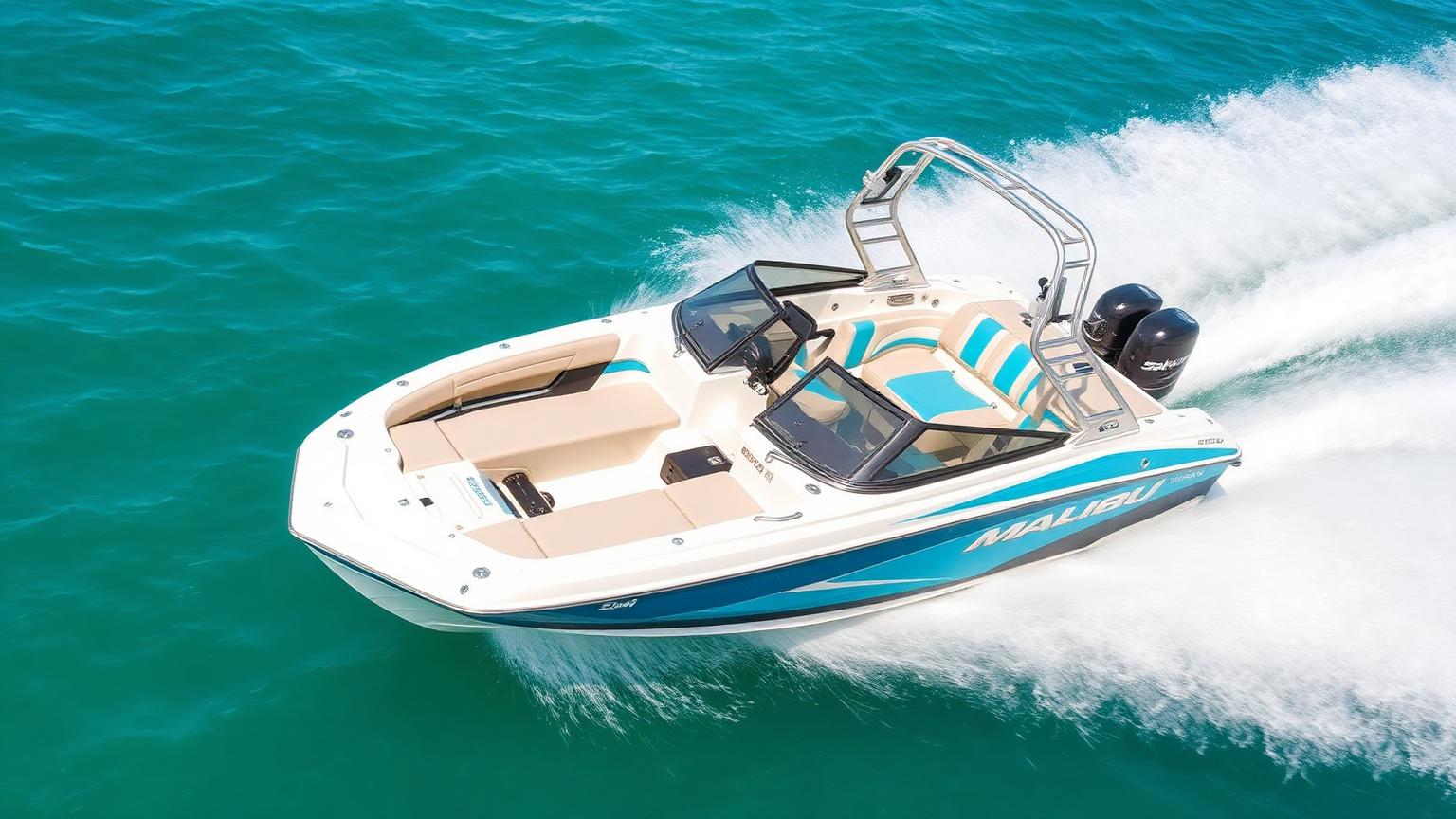
This week we are putting the Bayliner Bayliner DX2000 in the spotlight, and it earns the spot. At 20 ft 2 in (6.16 m) long on a 8 ft (2.44 m) beam, this is a bowrider that reads the water well and still feels roomy enough for a full day out. A 20-foot deck-boat-width bowrider with outboard power and a huge social cockpit. Power comes from 115-150 hp mercury fourstroke outboard through a outboard package, and the fibreglass hull keeps the ride settled when the afternoon breeze puts a chop on the surface.
Seating is rated for 8 people, so there is space for family, friends, towels, eskies and the tow rope without anyone climbing over gear. Owners tend to buy it for family, water ski, leisure — which is exactly where it shines. Fuel is 30 us gal (114 l), and on the second-hand and new market you should expect to land somewhere around US$42,000 - US$58,000 new depending on hours, trailer and options.
Our full deep dive covers the layout in detail: bow lounge comfort, helm ergonomics, the rear entertaining area, storage that actually swallows a weekend, plus standard features, popular options and honest notes on where the boat compromises. If the Bayliner DX2000 is on your shortlist, start there — and check back next week, because the featured boat changes every week as we complete more full model reviews.
Featured Bowrider Article
On the Water

Bowriders are designed for protected water, but plenty of owners run them along the coast, out to islands and offshore to fish. It can be done safely with the right boat, the right conditions and the right discipline — and it goes badly wrong when any one of those is missing. Size and deadrise come first. A 6.5-8.0 m hull with 19-22 degrees of transom deadrise handles offshore swell far better than a 5 m lake boat with a shallow V. Higher freeboard, a deep cockpit and self-draining decks matter just as much as length. The open bow is the weak point. Boats designed for coastal use offer a full bow cover or tonneau that closes the forward seating, preventing green water entering the boat. A bowrider without one should never be driven into head seas offshore, because a wave over the bow puts water straight into the hull. Twin outboards, a reliable bilge pump, a battery isolator and a proper anchoring setup all add real margin when you are hours from a ramp. Weather discipline is what keeps bowrider owners safe. A benign morning with under ten knots of wind and a low, long-period swell is very different from a fifteen-to-twenty-knot afternoon seabreeze with…
Read the full article