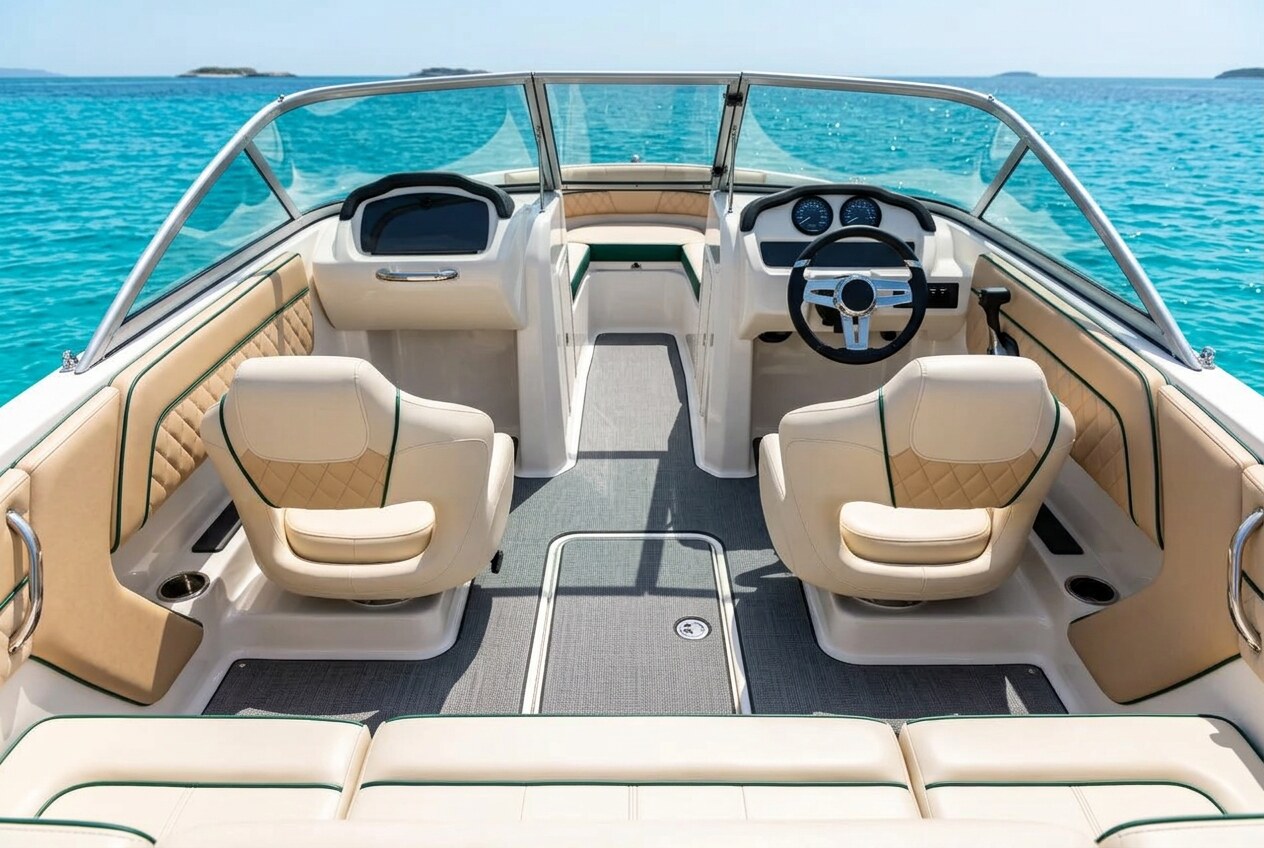
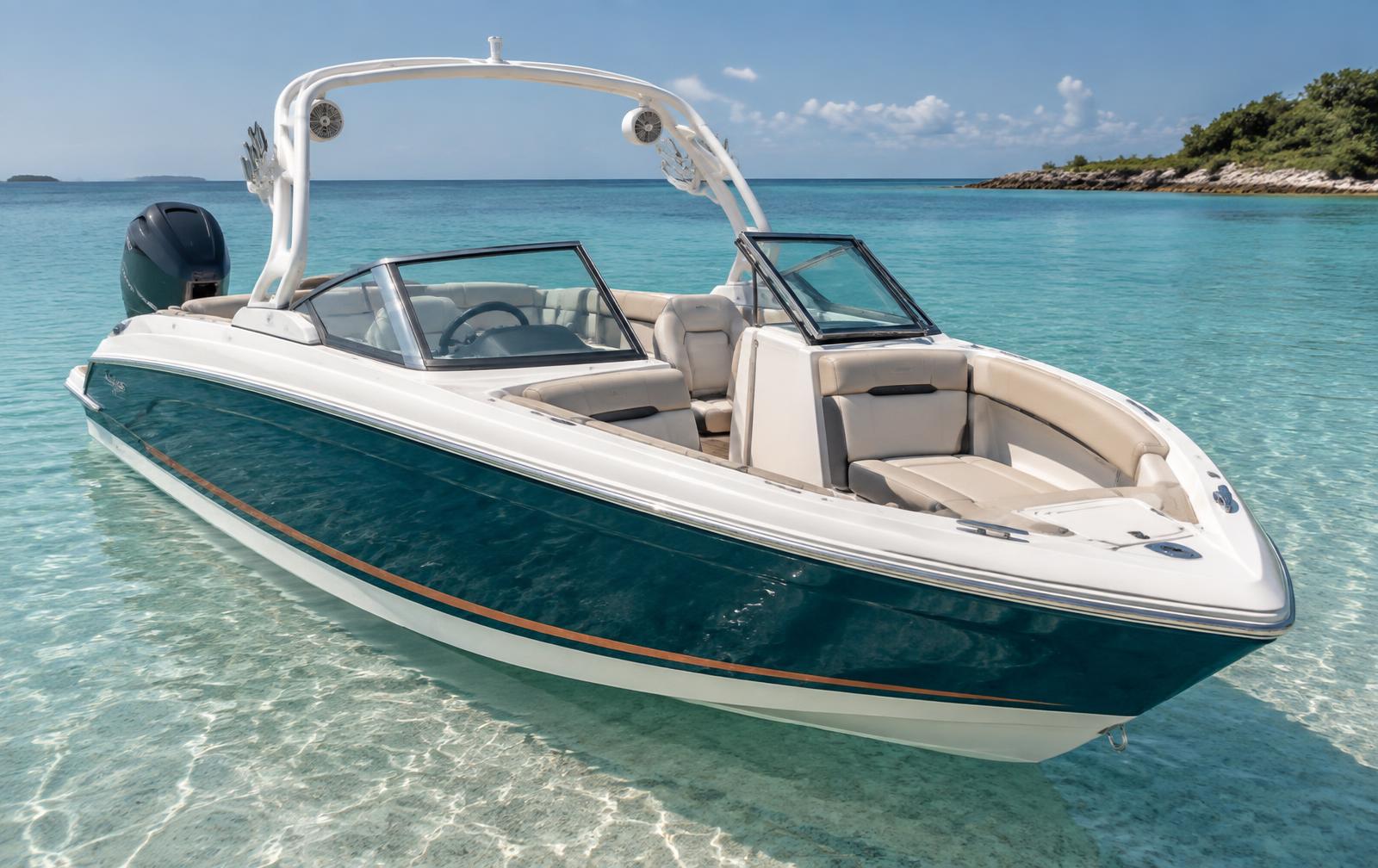
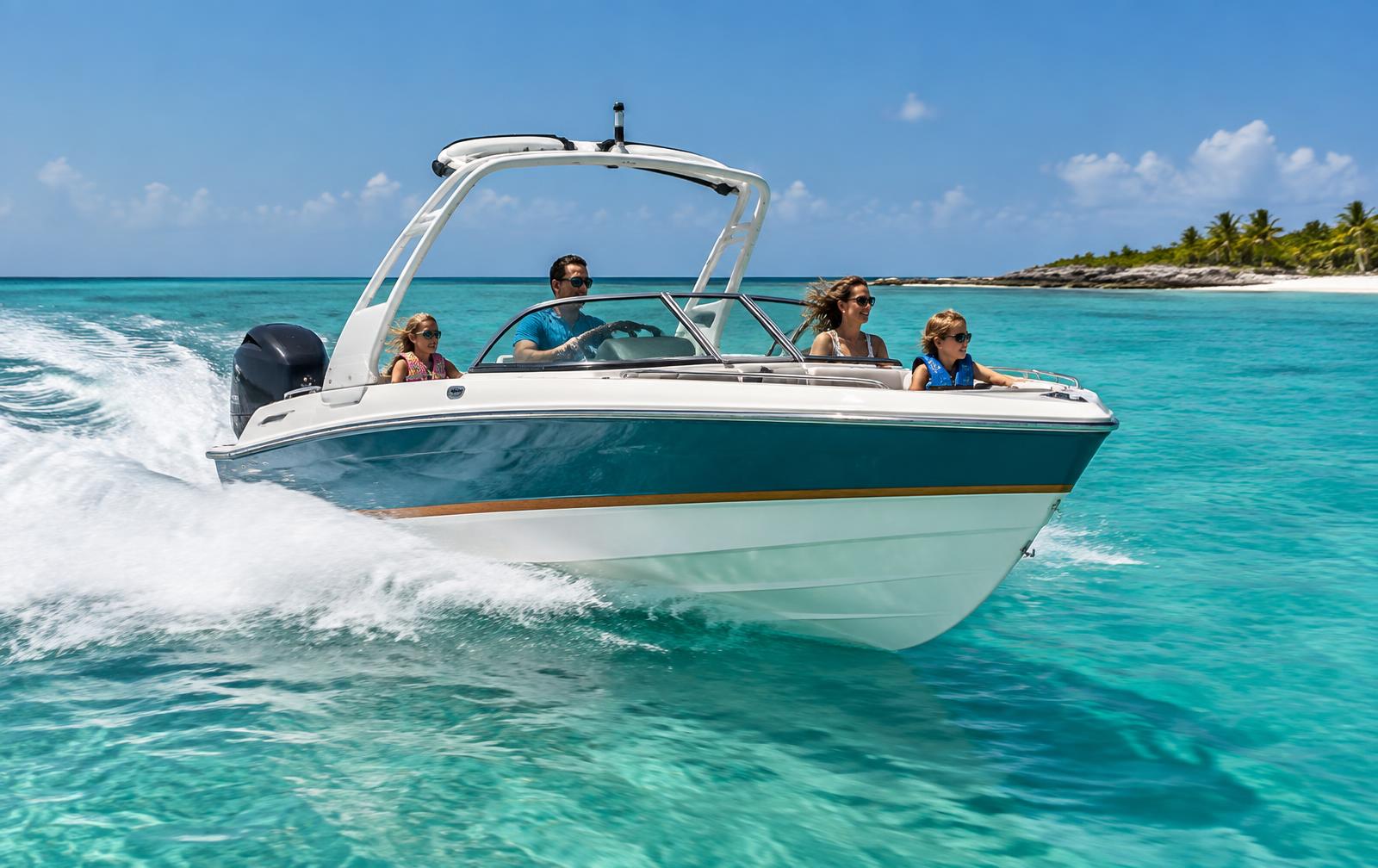
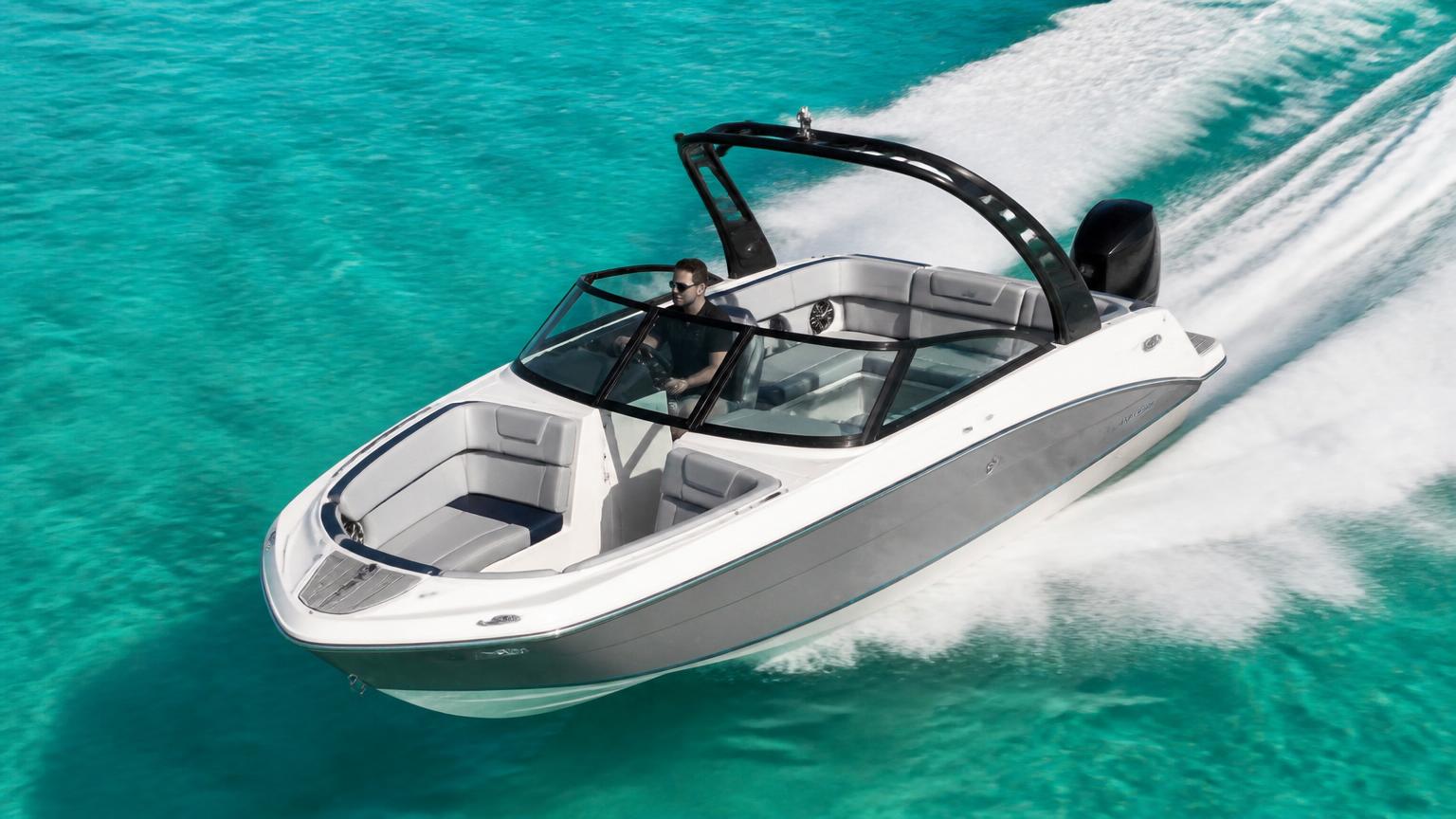
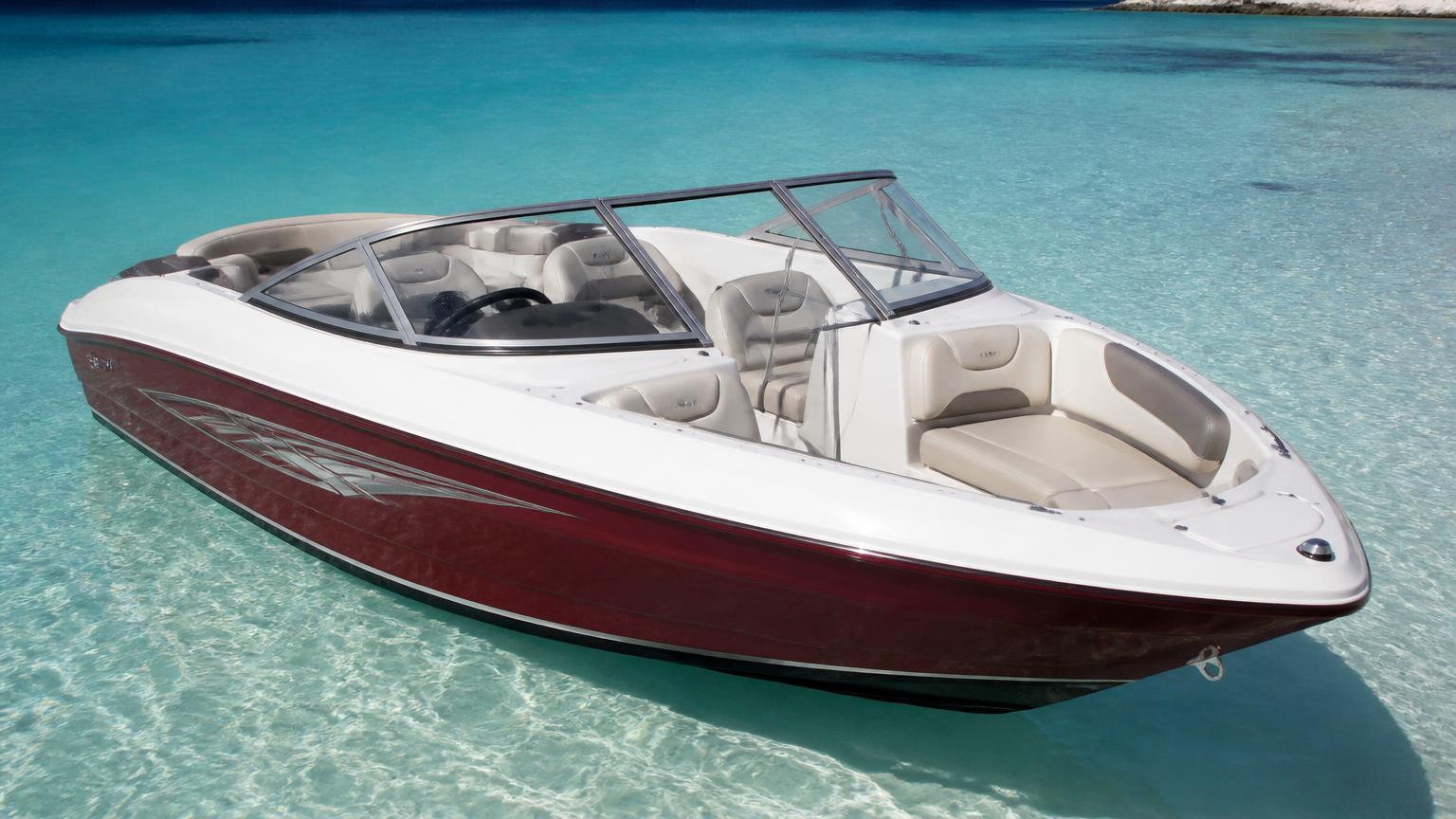
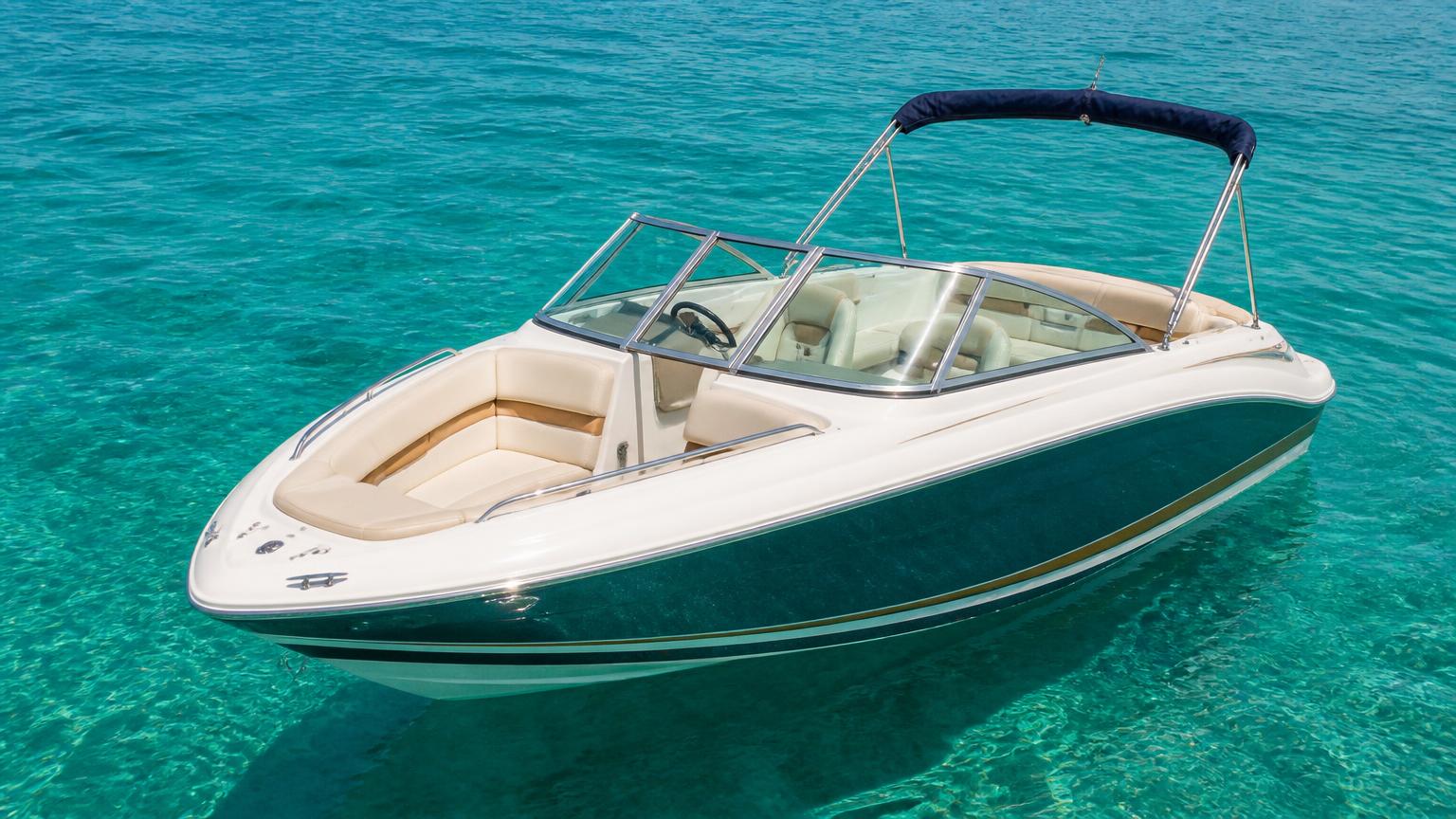
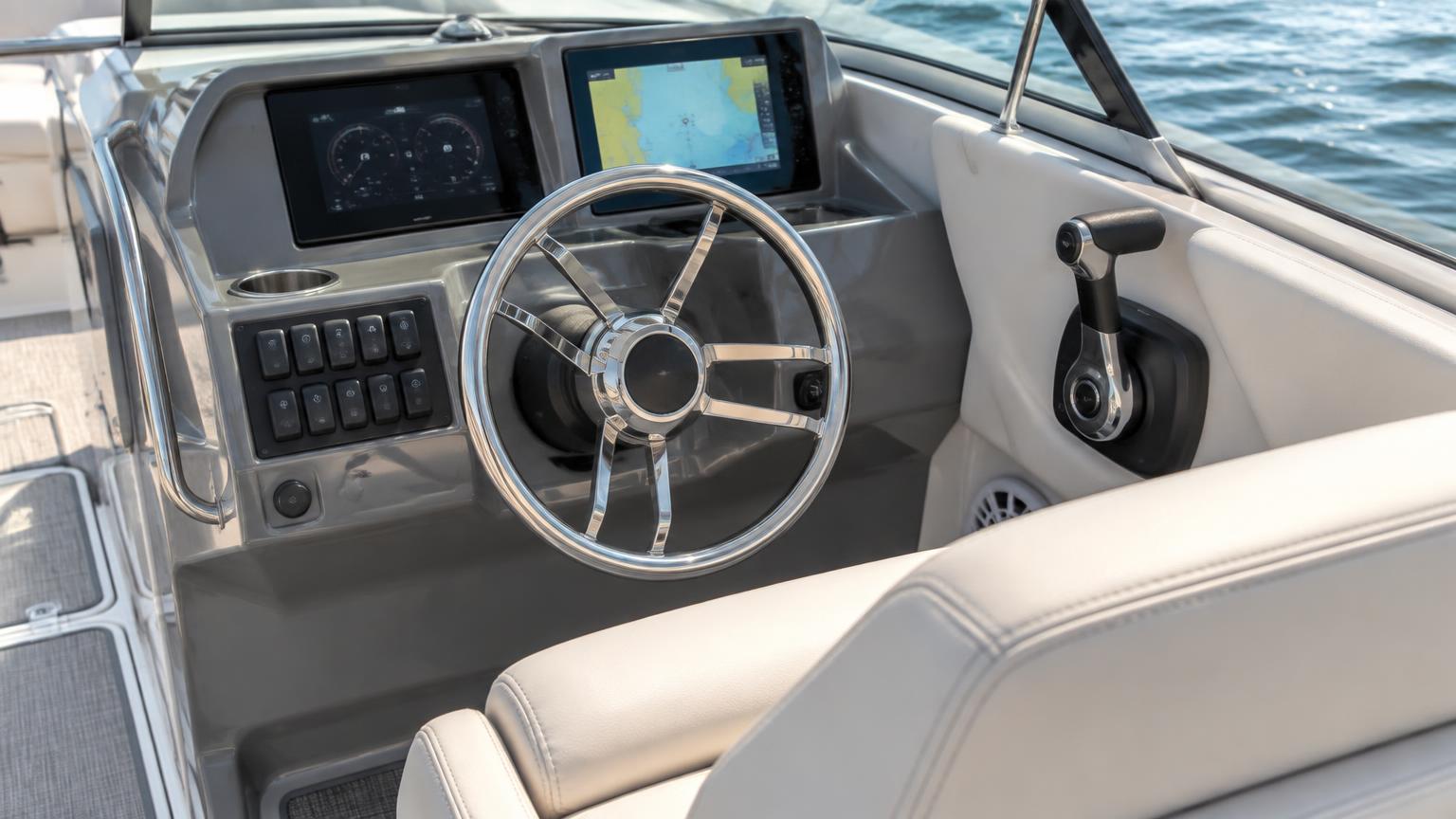
Bayliner VR5
The world's best selling bowrider size, Light, simple and easy to tow.
- Length
- 19 ft 9 in (6.02 m)
- Drive
- Outboard
- Seats
- 8 people / 1,150 lb
US$38,000 - US$52,000 new
Site Menu — Find Your Page
Bowrider Boats Mega Website

How You'll Use It
Towing is where a bowrider earns its keep with teenagers. The open bow gives the observer a clear view, the cockpit has room for wet gear, and the right hull will pull a skier out of the water cleanly.
How bowriders perform for water skiing, wakeboarding and towing biscuits, what power you need, and when a dedicated towboat is the better answer.
For towing children on a biscuit, 90-115 hp on a light hull is enough. For a single adult slalom skier, plan on 150 hp minimum. For two adults, wakeboarding with ballast, or a heavy 22 ft (6.71 m) boat, 200-300 hp is the realistic band.
Hole-shot matters more than top speed. A boat that lifts a skier smoothly at part throttle is far more pleasant than one that needs full throttle and a huge bow rise.

A transom tow eye is standard, a removable ski pylon is better because it raises the rope, and a tower is best for wakeboarding because the higher pull creates more air. Add board racks, a mirror and a proper rope locker.
Speed control, either factory or aftermarket, transforms skiing consistency and is well worth the money if anyone in the family is serious.

A direct-drive inboard like the Malibu Response TXi produces a smaller, harder wake than any stern drive or outboard bowrider ever will. If competition skiing is the goal, buy the towboat.
If skiing is one of several activities, a stern drive bowrider with a pylon gives 85 percent of the experience and keeps every other use case intact.

These are the bowriders our reviewers reach for when water ski is the priority. Every one keeps the three-zone lounge layout intact.

The world's best selling bowrider size, Light, simple and easy to tow.
US$38,000 - US$52,000 new

The refined mainstream benchmark: quiet, dry, and beautifully finished for the money.
US$72,000 - US$95,000 new

Sea Ray's entry point, and the most refined 19-footer in the class. Premium finish in a size anything can tow.
US$45,000 - US$62,000 new

A 20-foot deck-boat-width bowrider with outboard power and a huge social cockpit.
US$42,000 - US$58,000 new

The previous-generation classic. Millions of families learned to boat in one of these.
US$8,000 - US$22,000 used

The bigger brother to the 185. More beam, more seats and a proper convertible aft lounge.
US$12,000 - US$32,000 used
Engines & Drives
Bowrider Boat Engine Options
Engines & Drives
Inboard IO Bowrider Boats
How You'll Use It
Bowrider Boats for Families
Start Here
The Best Bowrider Boats
How You'll Use It
Bowrider Boats for Fishing
How You'll Use It
Bowrider Boats for Leisure
How You'll Use It
How Do Bowrider Boats Ride?
How You'll Use It
Bowrider Boat Maintenance
Featured Boat of the Week

This week we are putting the Bayliner Bayliner DX2000 in the spotlight, and it earns the spot. At 20 ft 2 in (6.16 m) long on a 8 ft (2.44 m) beam, this is a bowrider that reads the water well and still feels roomy enough for a full day out. A 20-foot deck-boat-width bowrider with outboard power and a huge social cockpit. Power comes from 115-150 hp mercury fourstroke outboard through a outboard package, and the fibreglass hull keeps the ride settled when the afternoon breeze puts a chop on the surface.
Seating is rated for 8 people, so there is space for family, friends, towels, eskies and the tow rope without anyone climbing over gear. Owners tend to buy it for family, water ski, leisure — which is exactly where it shines. Fuel is 30 us gal (114 l), and on the second-hand and new market you should expect to land somewhere around US$42,000 - US$58,000 new depending on hours, trailer and options.
Our full deep dive covers the layout in detail: bow lounge comfort, helm ergonomics, the rear entertaining area, storage that actually swallows a weekend, plus standard features, popular options and honest notes on where the boat compromises. If the Bayliner DX2000 is on your shortlist, start there — and check back next week, because the featured boat changes every week as we complete more full model reviews.
Featured Bowrider Article
On the Water

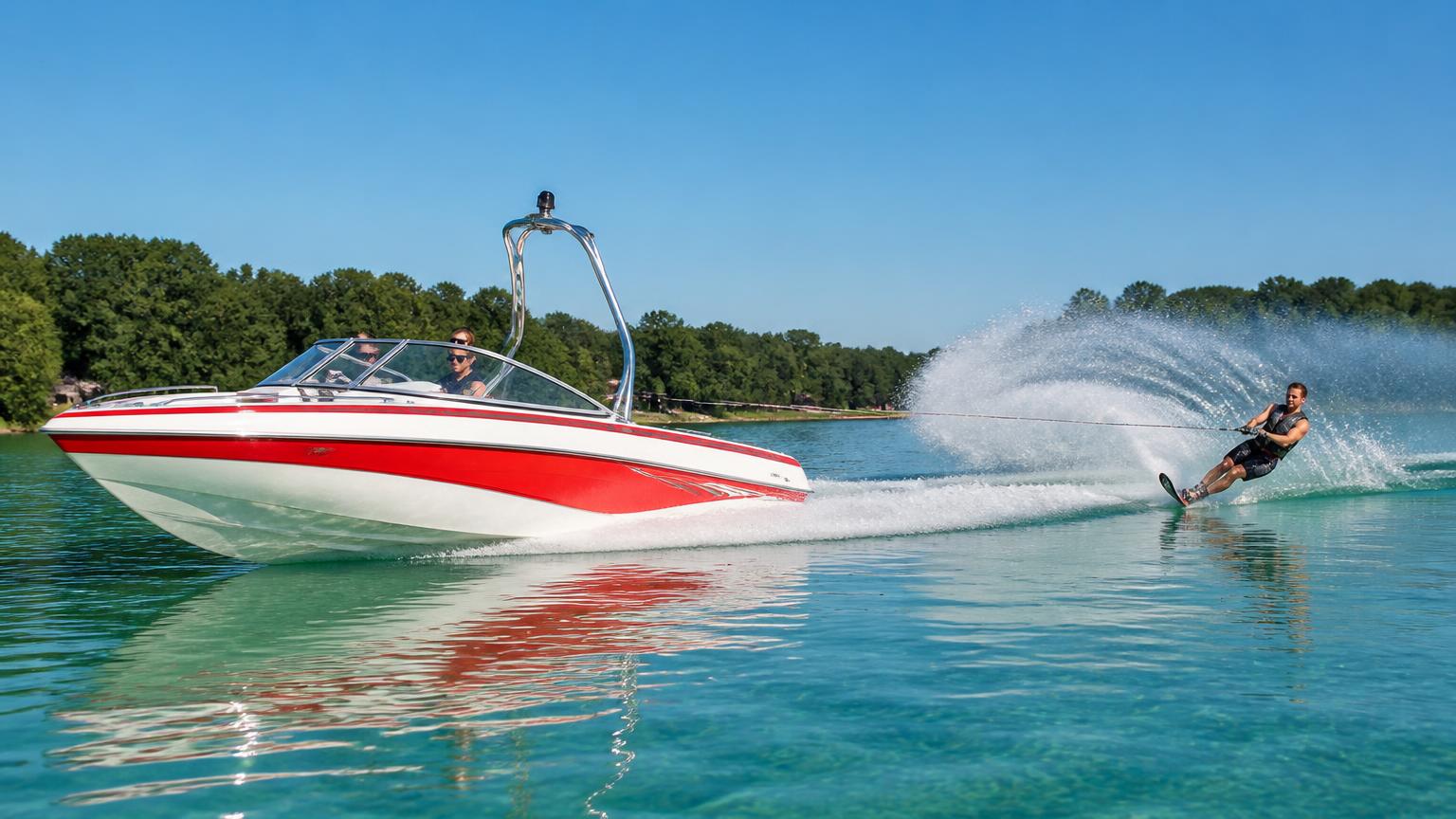
Towsports ask more of a hull than any other use. A boat that is perfect for slalom skiing is wrong for wakeboarding, and a wake-surf boat is useless for a beginner skier. Understanding what you tow, and at what speed, tells you exactly which bowrider to buy. Slalom water skiing wants a small, hard, flat wake at 48-58 km/h (30-36 mph). That comes from a lighter boat, a direct-drive or sterndrive layout with the engine positioned to keep the stern from squatting, and a hull that runs level. Wakeboarding wants the opposite: a bigger, cleaner, ramp-shaped wake at 30-38 km/h (19-24 mph), which means weight in the stern, ballast and a tower to lift the rope. Wake surfing goes further still, demanding an inboard V-drive, heavy asymmetric ballast and surf-gate technology to shape a rideable wave — something almost no conventional bowrider can produce safely with an outboard or sterndrive leg. For an all-round family towsports bowrider, a moderate-deadrise fibreglass hull of 5.5-6.7 m with a sterndrive is hard to beat. The inboard engine mass keeps the boat planted, the drive leg is protected, and the hull holds a plane cleanly at ski speeds. Outboard bowriders tow perfectly well and are simpler to own, but…
Read the full article