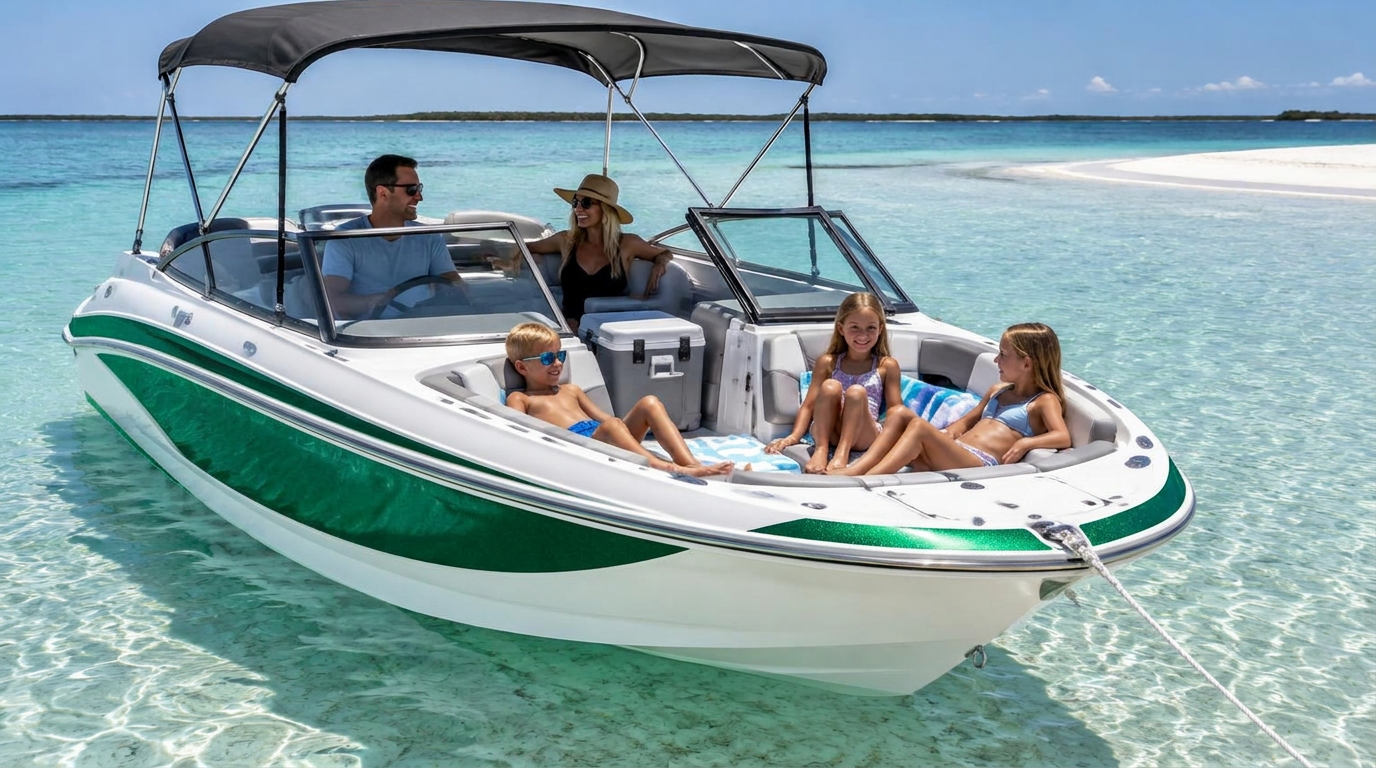
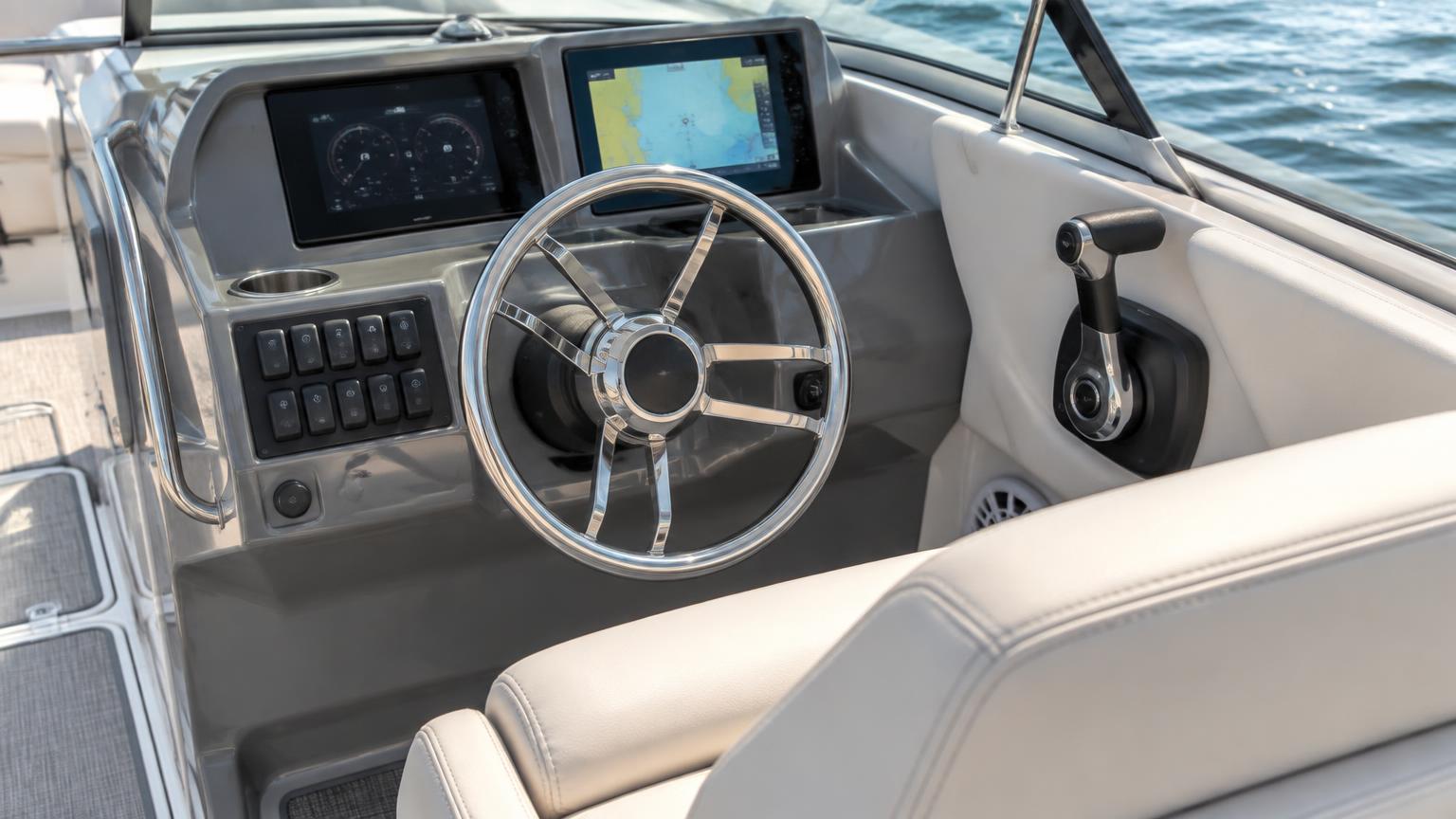
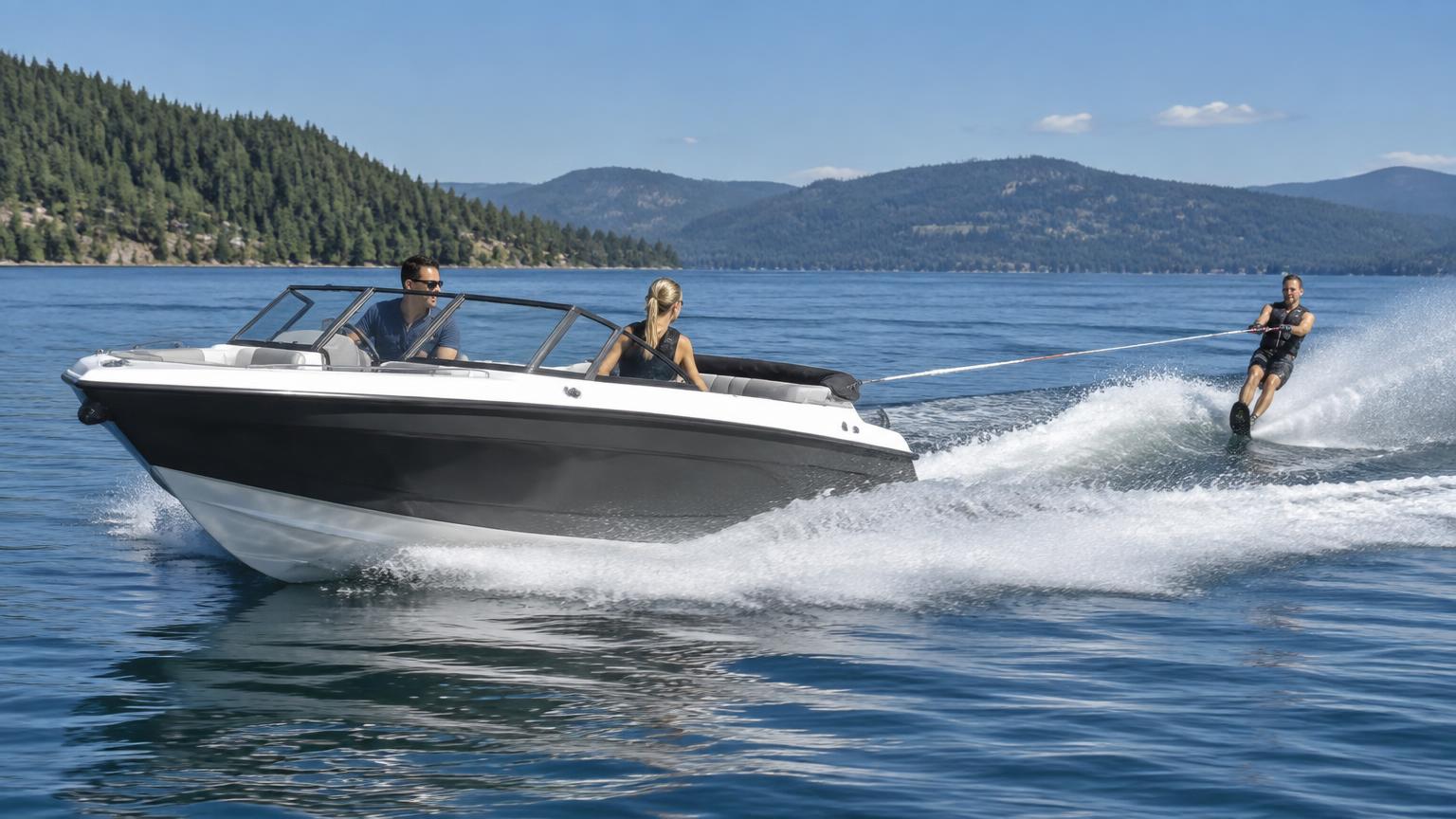
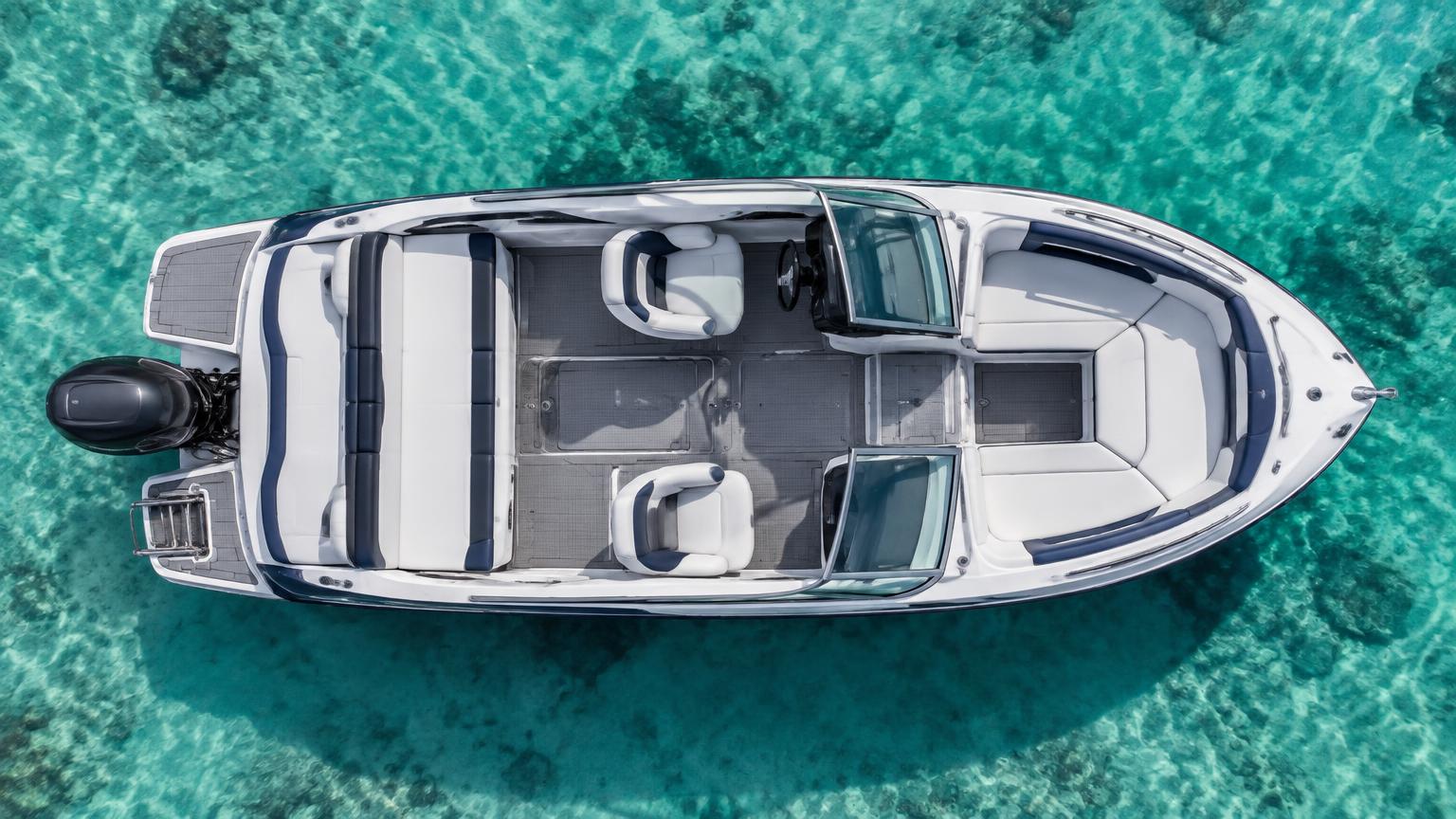
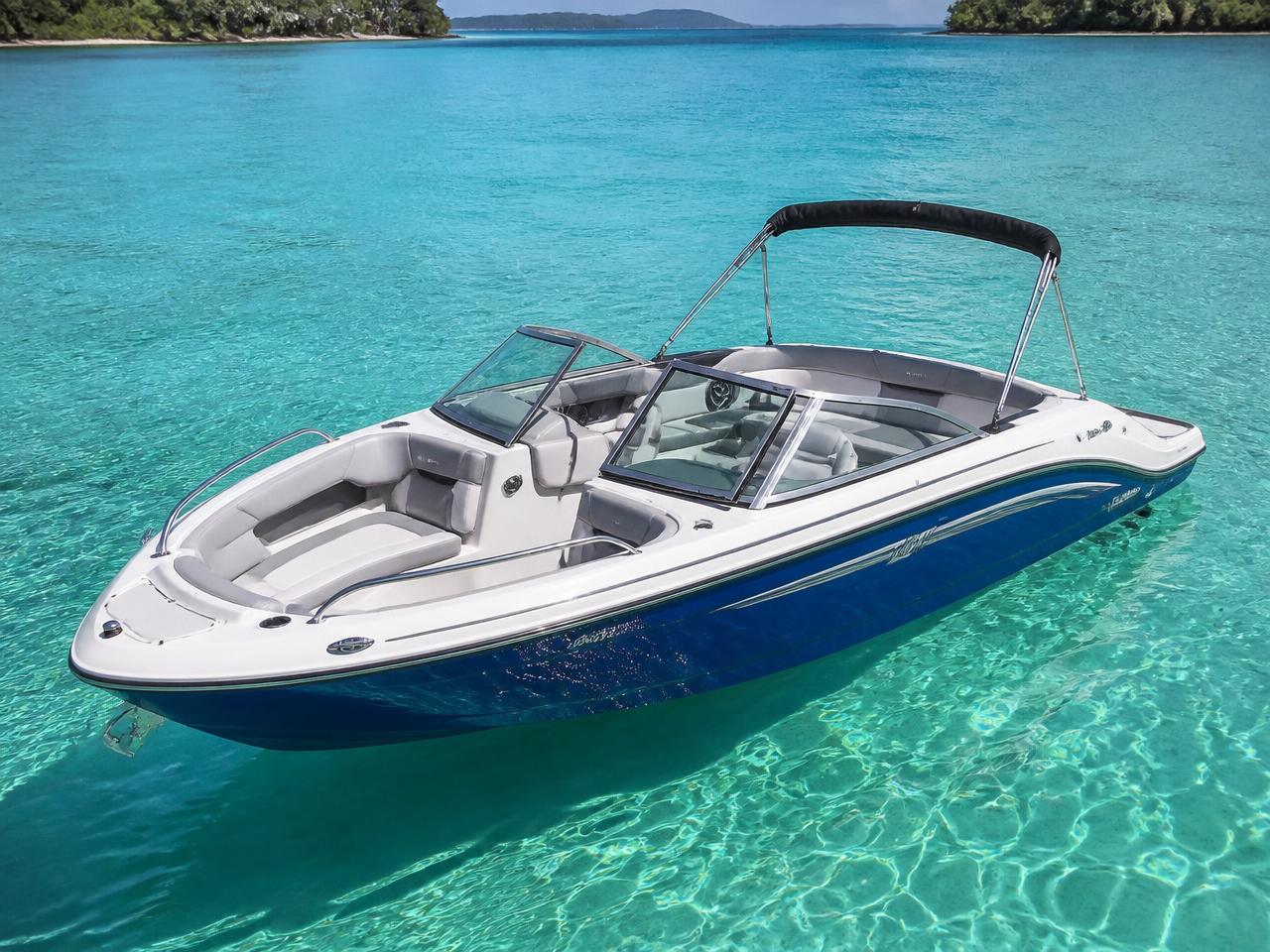
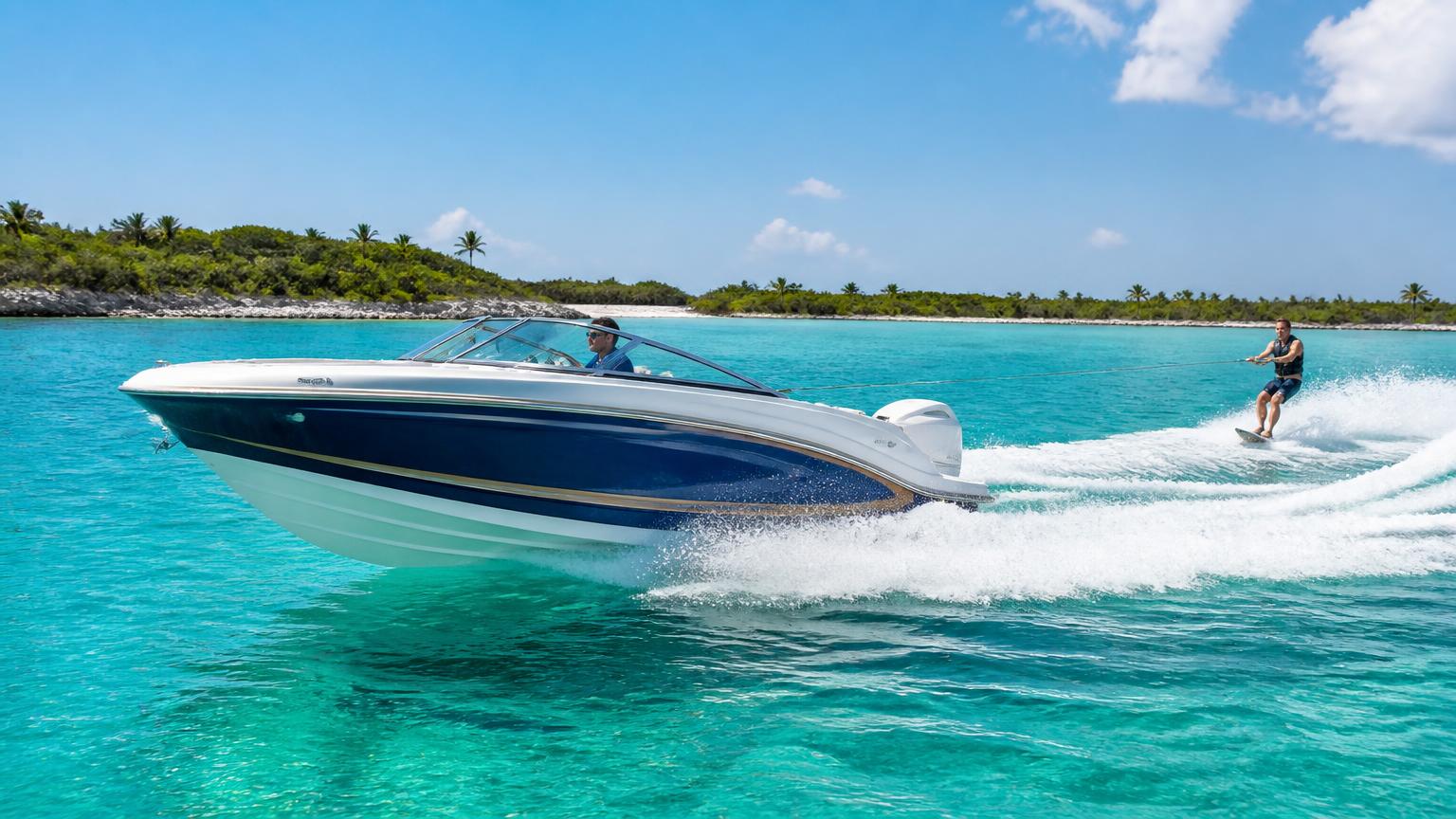
Bayliner VR5
The world's best selling bowrider size, Light, simple and easy to tow.
- Length
- 19 ft 9 in (6.02 m)
- Drive
- Outboard
- Seats
- 8 people / 1,150 lb
US$38,000 - US$52,000 new
Site Menu — Find Your Page
Bowrider Boats Mega Website

Materials & Sizes
Every length on this site is given in both feet and metres, because boat sizing is one of the few areas where the whole world genuinely uses both. Here is what each size band actually gives you.
Bowrider lengths from 16 ft to 28 ft in feet and metres, with capacity, towing weight and the right use case for each size band.
Four to six people, 90-115 hp, and a trailer weight most family cars can tow. Perfect for lakes, rivers and sheltered estuaries. Cheap to buy, cheap to run, easy to store, and the boat most first-time owners should consider.

The heart of the market. Seven to ten people, 115-250 hp, and enough hull to handle a moderate chop. Tows behind a mid-size SUV. This size band accounts for the majority of bowriders sold worldwide.

Ten to twelve people, 250-350 hp, and a genuinely capable open-water hull. You will want a full-size tow vehicle and a tandem trailer. This is where wide-beam social layouts and refreshment centres appear.

Twelve to fifteen people, often twin outboards, and marina berthing rather than trailering for most owners. These are day boats rather than runabouts, with galley modules, heads and serious range.

The bowriders that come up most often when readers ask us where to start.

The world's best selling bowrider size, Light, simple and easy to tow.
US$38,000 - US$52,000 new

The refined mainstream benchmark: quiet, dry, and beautifully finished for the money.
US$72,000 - US$95,000 new

15.5 ft fibreglass Bayliner bowrider with stern drive power — entry level pricing and a classic convertible bowrider layout.
US$26,000 - US$34,000 new
Featured Boat of the Week

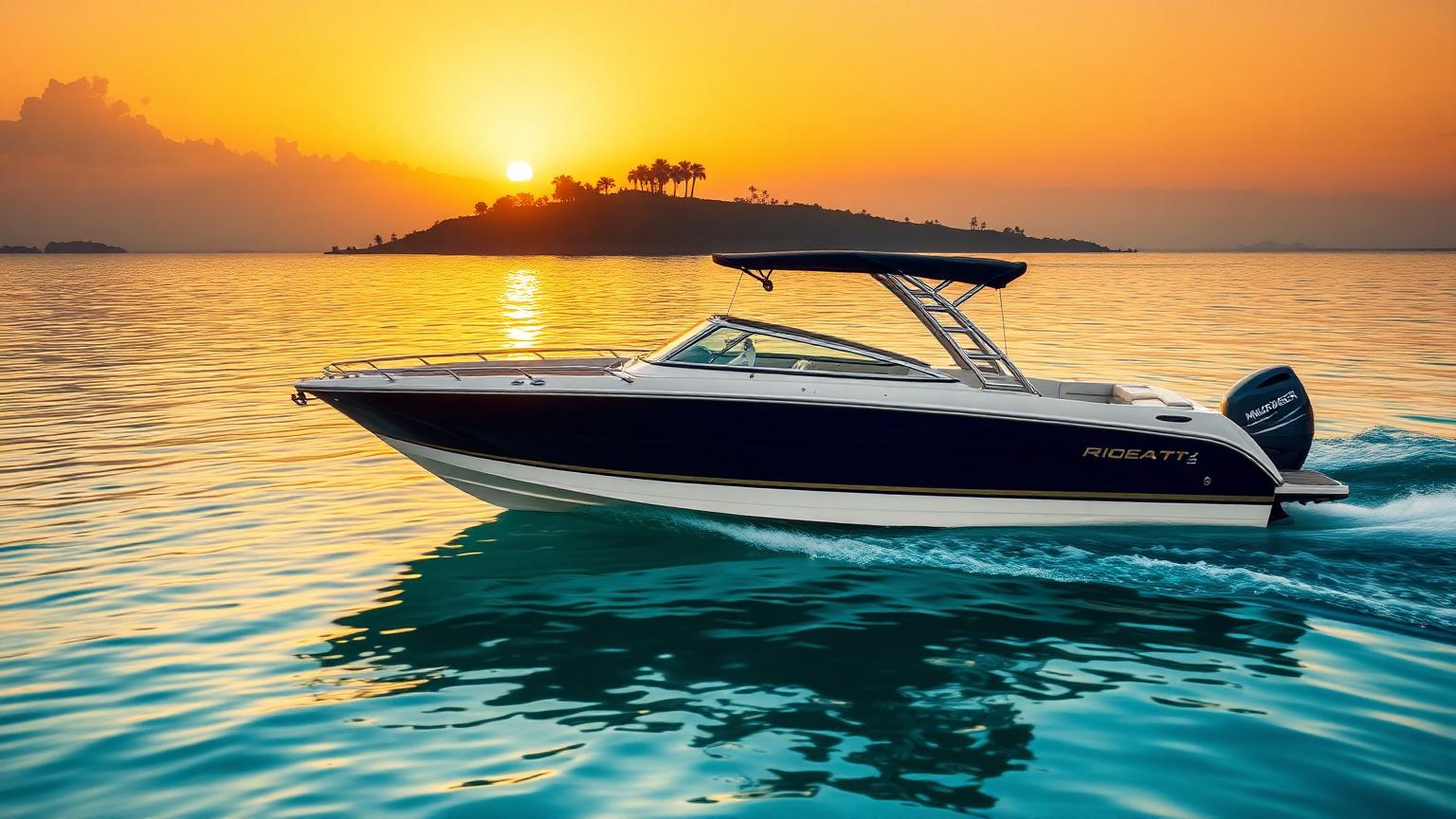
This week we are putting the Bayliner Bayliner DX2000 in the spotlight, and it earns the spot. At 20 ft 2 in (6.16 m) long on a 8 ft (2.44 m) beam, this is a bowrider that reads the water well and still feels roomy enough for a full day out. A 20-foot deck-boat-width bowrider with outboard power and a huge social cockpit. Power comes from 115-150 hp mercury fourstroke outboard through a outboard package, and the fibreglass hull keeps the ride settled when the afternoon breeze puts a chop on the surface.
Seating is rated for 8 people, so there is space for family, friends, towels, eskies and the tow rope without anyone climbing over gear. Owners tend to buy it for family, water ski, leisure — which is exactly where it shines. Fuel is 30 us gal (114 l), and on the second-hand and new market you should expect to land somewhere around US$42,000 - US$58,000 new depending on hours, trailer and options.
Our full deep dive covers the layout in detail: bow lounge comfort, helm ergonomics, the rear entertaining area, storage that actually swallows a weekend, plus standard features, popular options and honest notes on where the boat compromises. If the Bayliner DX2000 is on your shortlist, start there — and check back next week, because the featured boat changes every week as we complete more full model reviews.
Featured Bowrider Article
Comparisons

Bowriders and deck boats look related, and many buyers cross-shop them. The difference sits entirely in the bow: a bowrider tapers to a pointed entry, while a deck boat carries its beam right forward to a broad, blunt bow. That one change alters space, ride and personality completely. The deck boat wins on volume. Carrying full beam to the bow creates a large forward lounge area, often with a walk-through gate and space for four or five people up front. Total capacity on a deck boat is typically two to four higher than a bowrider of the same length. The bowrider trades that volume for a narrower, more sheltered bow. Its forward lounges are more intimate, better protected from spray, and more comfortable at speed because they sit further inboard. A pointed bow parts waves. That is why bowriders ride more comfortably in a chop, stay drier at speed and handle open water better. Deck boats with blunt bows can pound and throw spray when conditions get lumpy, though modern deck boat hulls are far better than early designs. Deck boats are more stable at rest, thanks to that carried-forward beam, and they plane easily. For calm lakes and rivers they are excellent. For coastal…
Read the full article