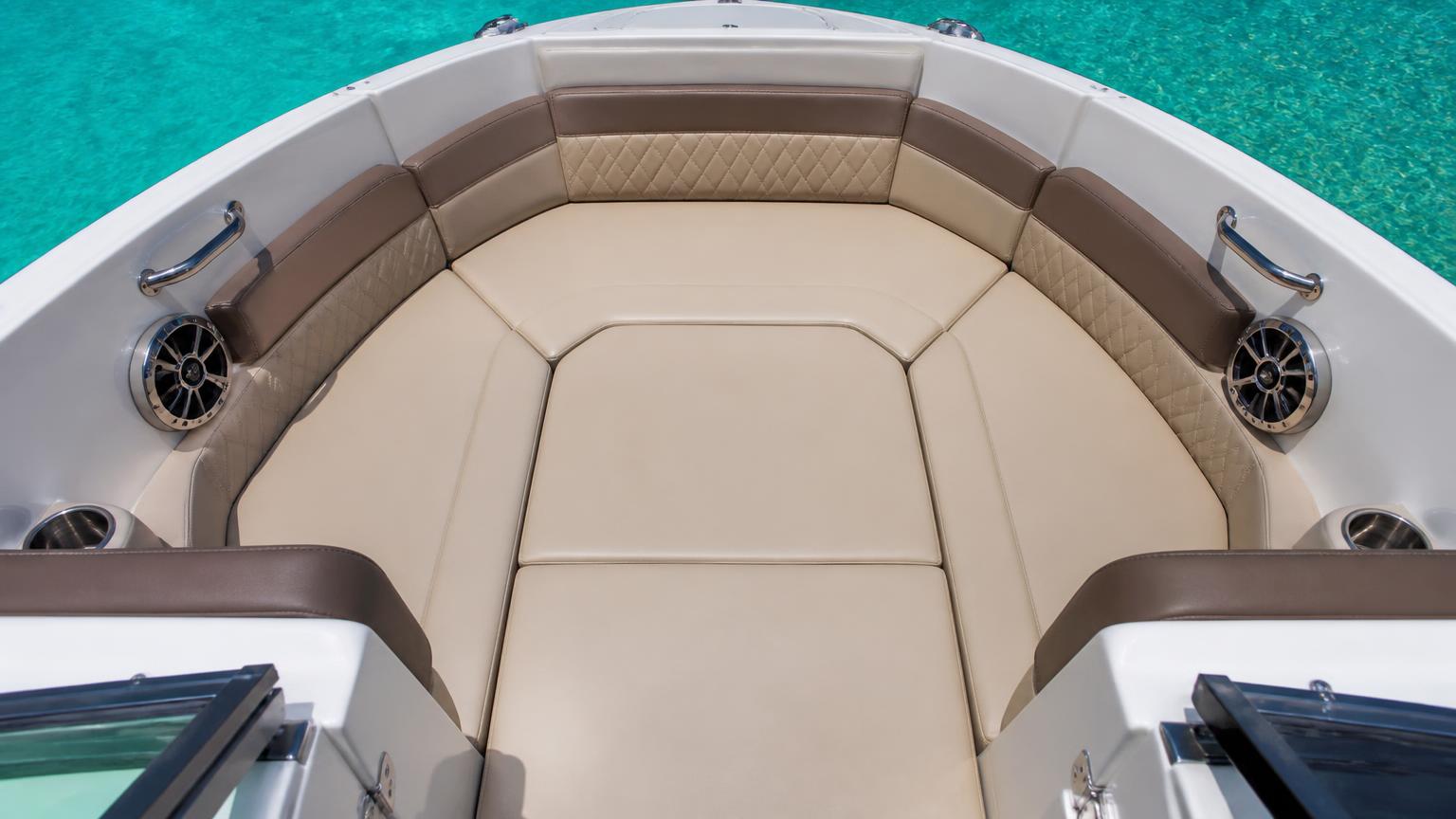
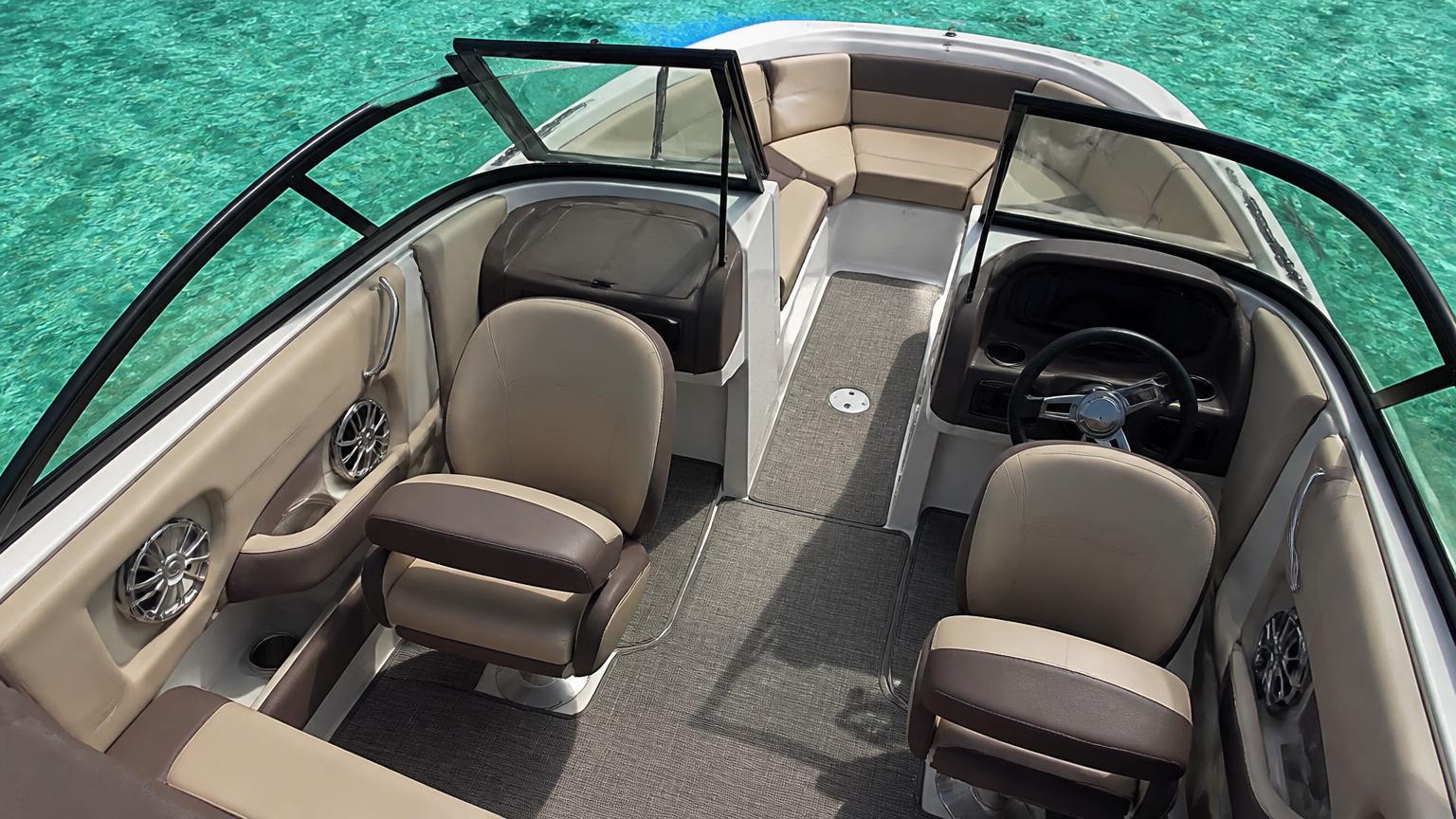
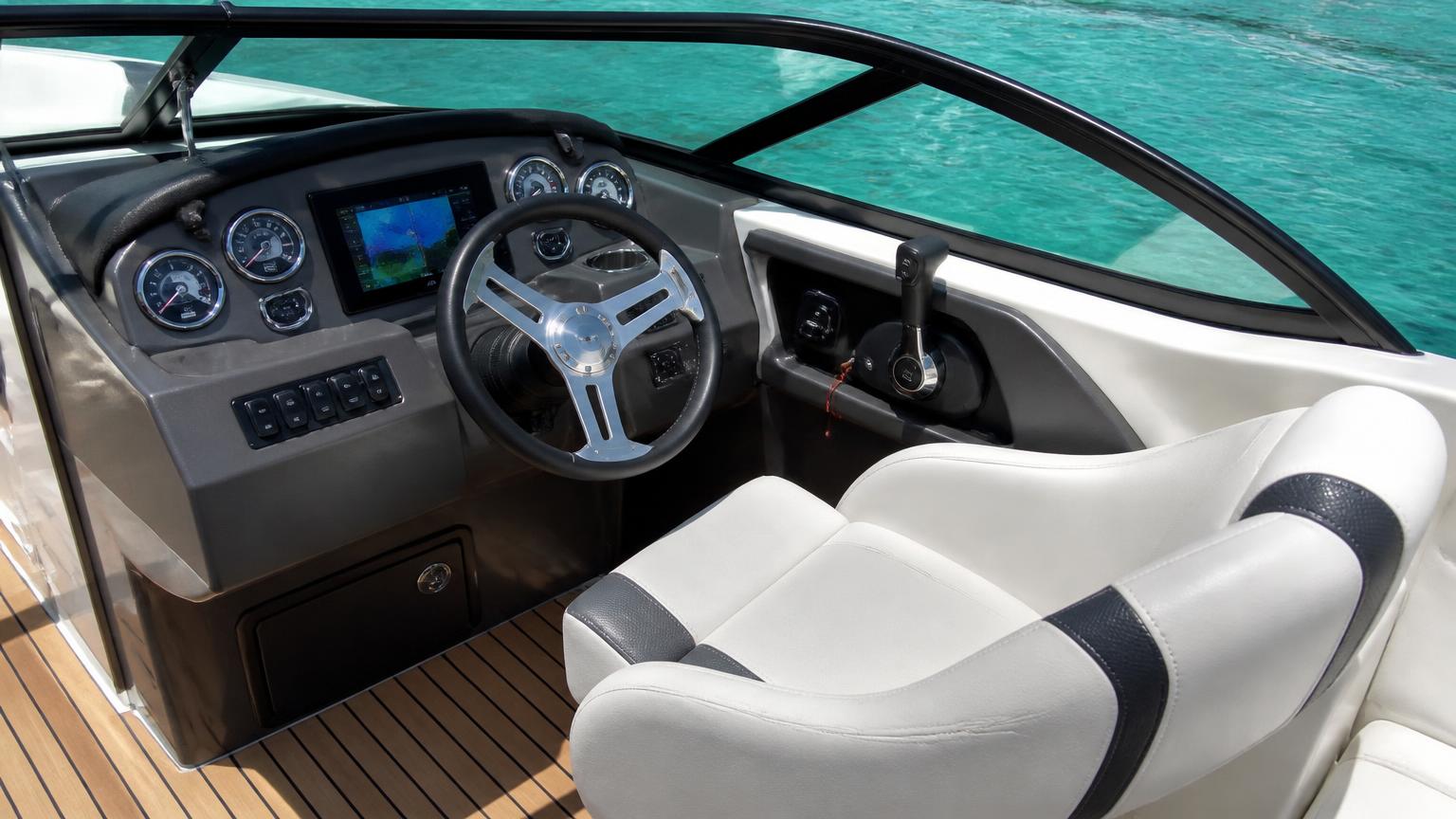
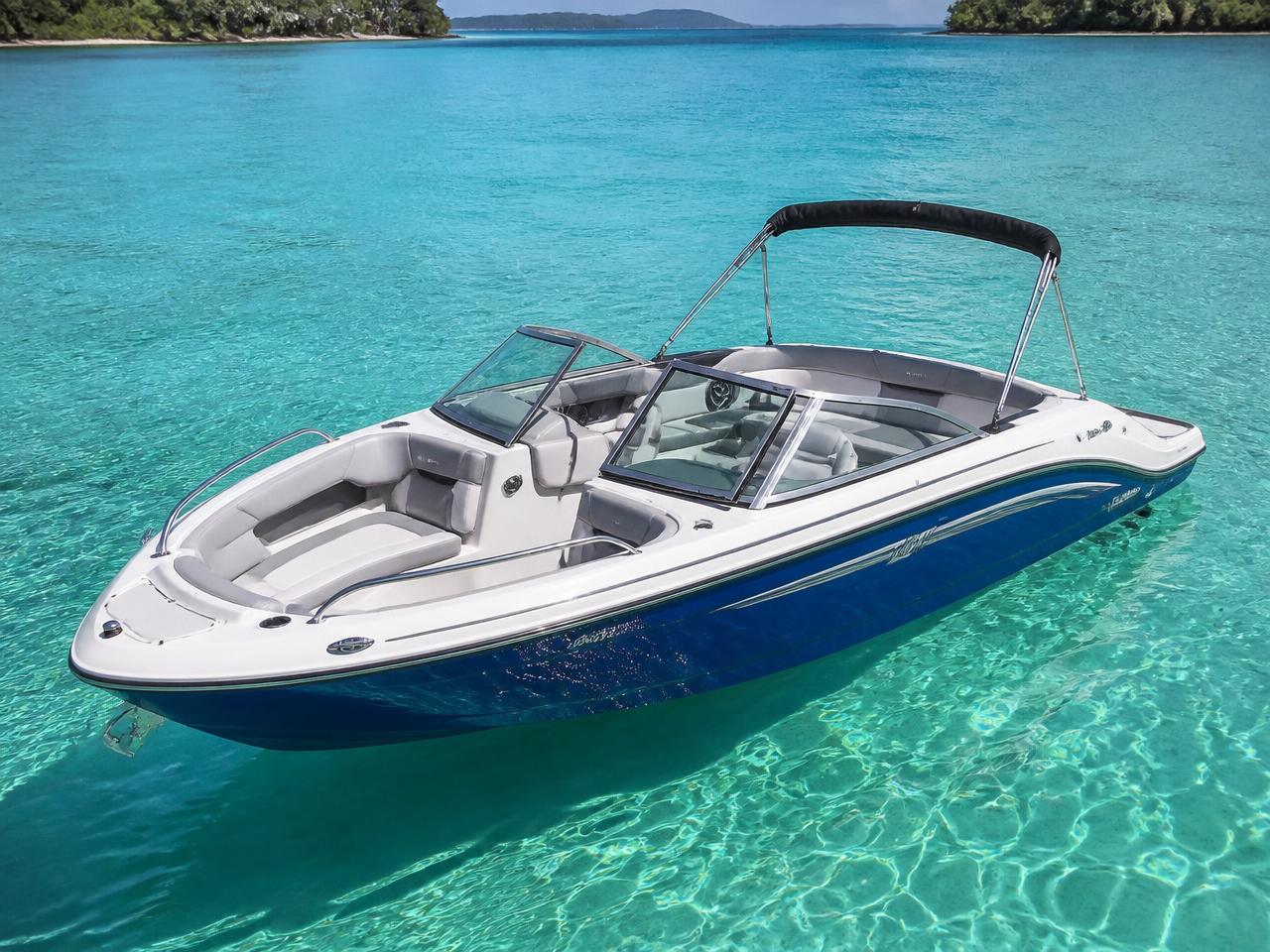
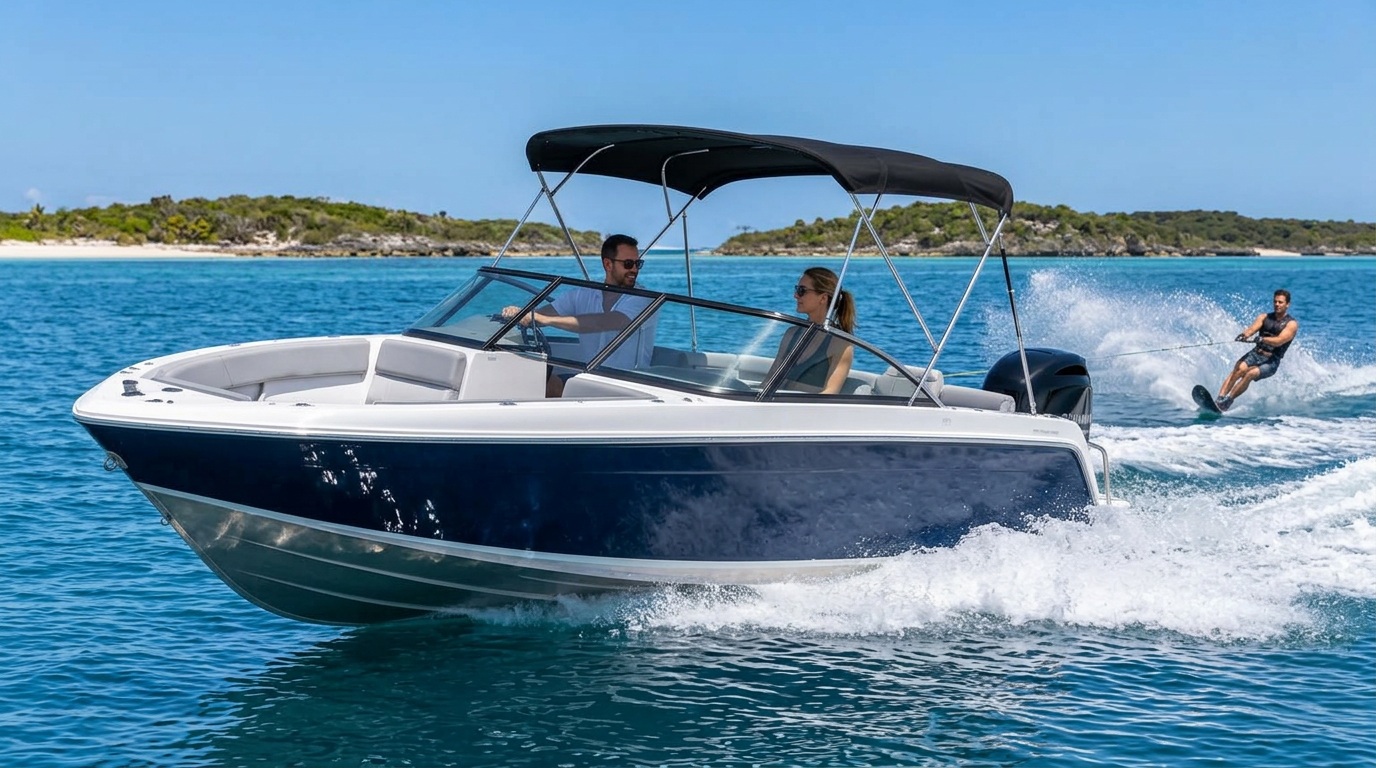
Bayliner VR5
The world's best selling bowrider size, Light, simple and easy to tow.
- Length
- 19 ft 9 in (6.02 m)
- Drive
- Outboard
- Seats
- 8 people / 1,150 lb
US$38,000 - US$52,000 new
Site Menu — Find Your Page
Bowrider Boats Mega Website

Buying & Owning
The used bowrider market is enormous, which is good news: there is always another boat. Never fall in love with the first one you inspect.
A complete used bowrider buying guide: what to inspect, what to walk away from, and where to find boats for sale worldwide.
Hull: tap the transom and stringers for dull spots, check the bilge for standing water and staining, inspect the hull-deck joint. Engine: cold start it, check the oil, look for corrosion and ask for service records. Drive: bellows condition, anodes, drive oil clarity, play in the leg.
Then the boring things that cost real money: upholstery condition, cover and bimini, trailer bearings, brakes and tyres, and whether every switch, light and pump actually works.

Soft transom or stringers, milky engine oil, a seller who will not allow a sea trial, missing registration or title, and evidence of a submerged or repaired collision hull. Walk away from all of them regardless of price.

Boatsales, Boats Online, YachtWorld, Boat Trader, Gumtree, eBay Motors and Facebook Marketplace all carry heavy bowrider inventory. Dealer used stock costs more but comes with recourse.

The bowriders that come up most often when readers ask us where to start.

The world's best selling bowrider size, Light, simple and easy to tow.
US$38,000 - US$52,000 new

The refined mainstream benchmark: quiet, dry, and beautifully finished for the money.
US$72,000 - US$95,000 new

15.5 ft fibreglass Bayliner bowrider with stern drive power — entry level pricing and a classic convertible bowrider layout.
US$26,000 - US$34,000 new
Featured Boat of the Week

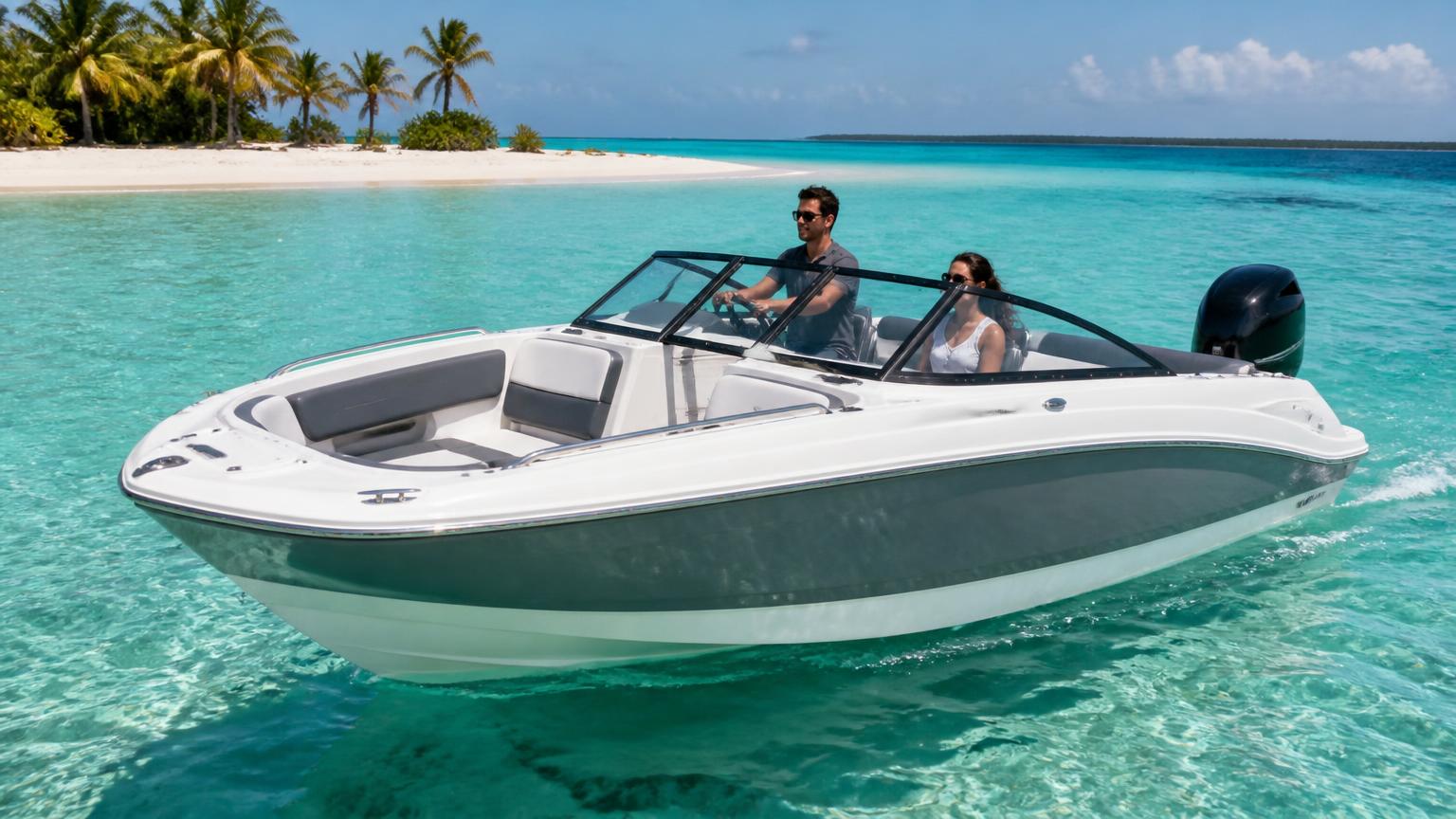
This week we are putting the Bayliner Bayliner DX2000 in the spotlight, and it earns the spot. At 20 ft 2 in (6.16 m) long on a 8 ft (2.44 m) beam, this is a bowrider that reads the water well and still feels roomy enough for a full day out. A 20-foot deck-boat-width bowrider with outboard power and a huge social cockpit. Power comes from 115-150 hp mercury fourstroke outboard through a outboard package, and the fibreglass hull keeps the ride settled when the afternoon breeze puts a chop on the surface.
Seating is rated for 8 people, so there is space for family, friends, towels, eskies and the tow rope without anyone climbing over gear. Owners tend to buy it for family, water ski, leisure — which is exactly where it shines. Fuel is 30 us gal (114 l), and on the second-hand and new market you should expect to land somewhere around US$42,000 - US$58,000 new depending on hours, trailer and options.
Our full deep dive covers the layout in detail: bow lounge comfort, helm ergonomics, the rear entertaining area, storage that actually swallows a weekend, plus standard features, popular options and honest notes on where the boat compromises. If the Bayliner DX2000 is on your shortlist, start there — and check back next week, because the featured boat changes every week as we complete more full model reviews.
Featured Bowrider Article
Ownership

The purchase price is the headline; the running cost is what decides whether you keep the boat. Fortunately bowriders are among the cheapest powerboats to own, and the numbers are predictable enough to budget properly before you buy. A 5.5-6.0 m bowrider with a 115-150 hp four-stroke uses roughly 15-25 litres per hour at cruise. At fifty hours a year — a typical family season — that is 750-1,250 litres. A 7 m boat with 250-300 hp can double it. Cruise speed matters more than engine size. Running at an efficient 3,500-4,000 rpm instead of wide-open throttle routinely halves consumption, and a correctly pitched propeller can improve economy by ten per cent on its own. Budget an annual service of roughly 400-900 in local currency for a single modern outboard, more if the engine is large or the labour rate is high. Sterndrives typically run higher because the drive leg needs its own attention, and bellows replacement every few years is a scheduled cost rather than a surprise. Add anodes, filters, gear oil, propeller repairs, batteries every three to five years, trailer bearings and tyres, plus antifoul if the boat lives in the water. Boats kept on a trailer and flushed after use avoid most…
Read the full article