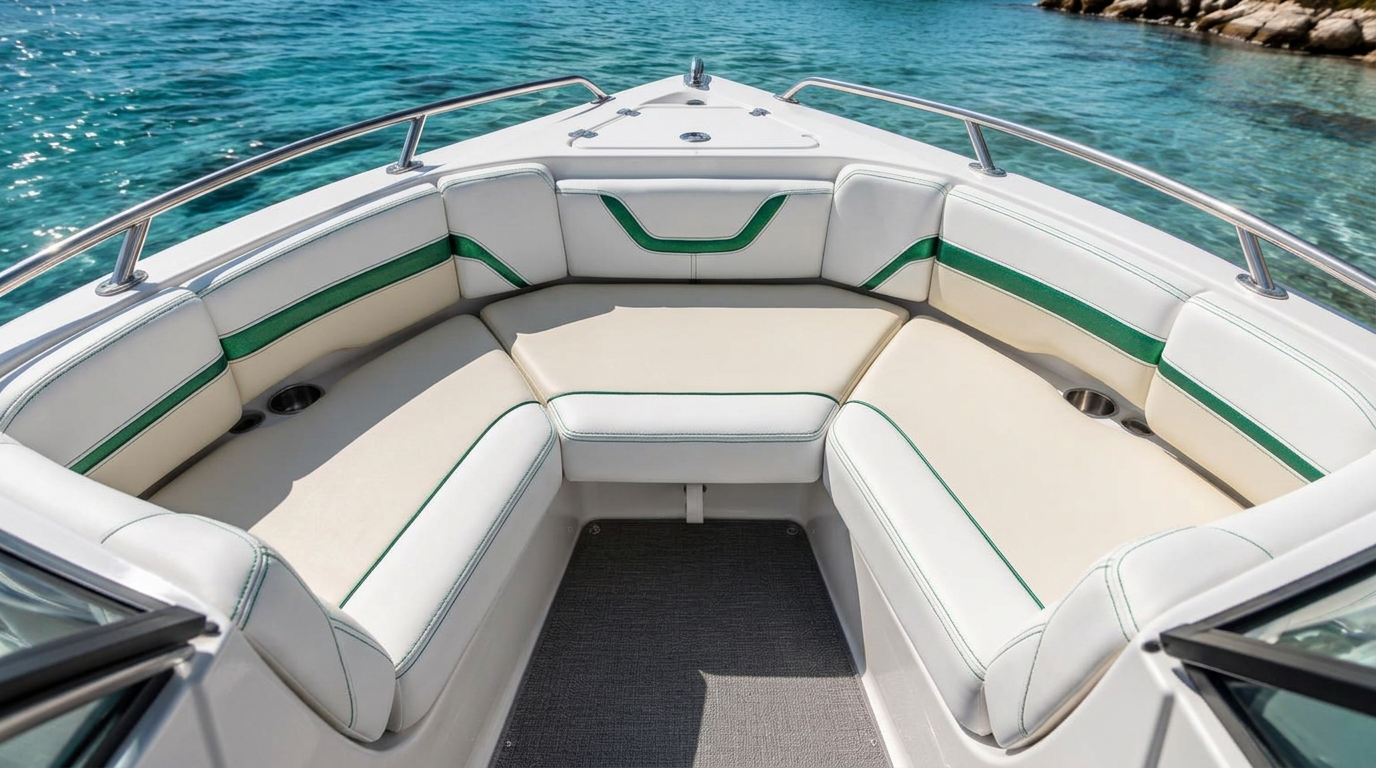
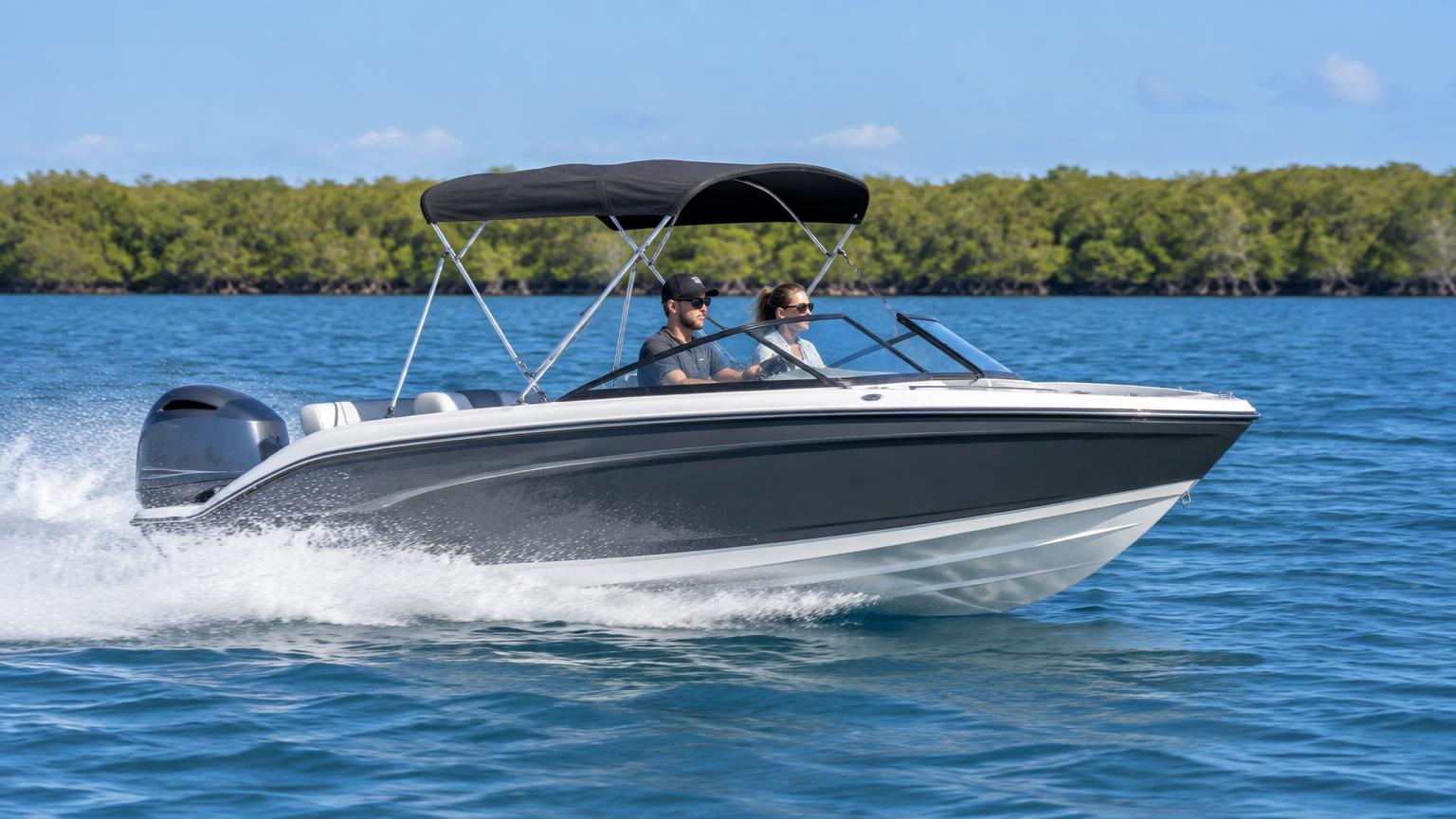
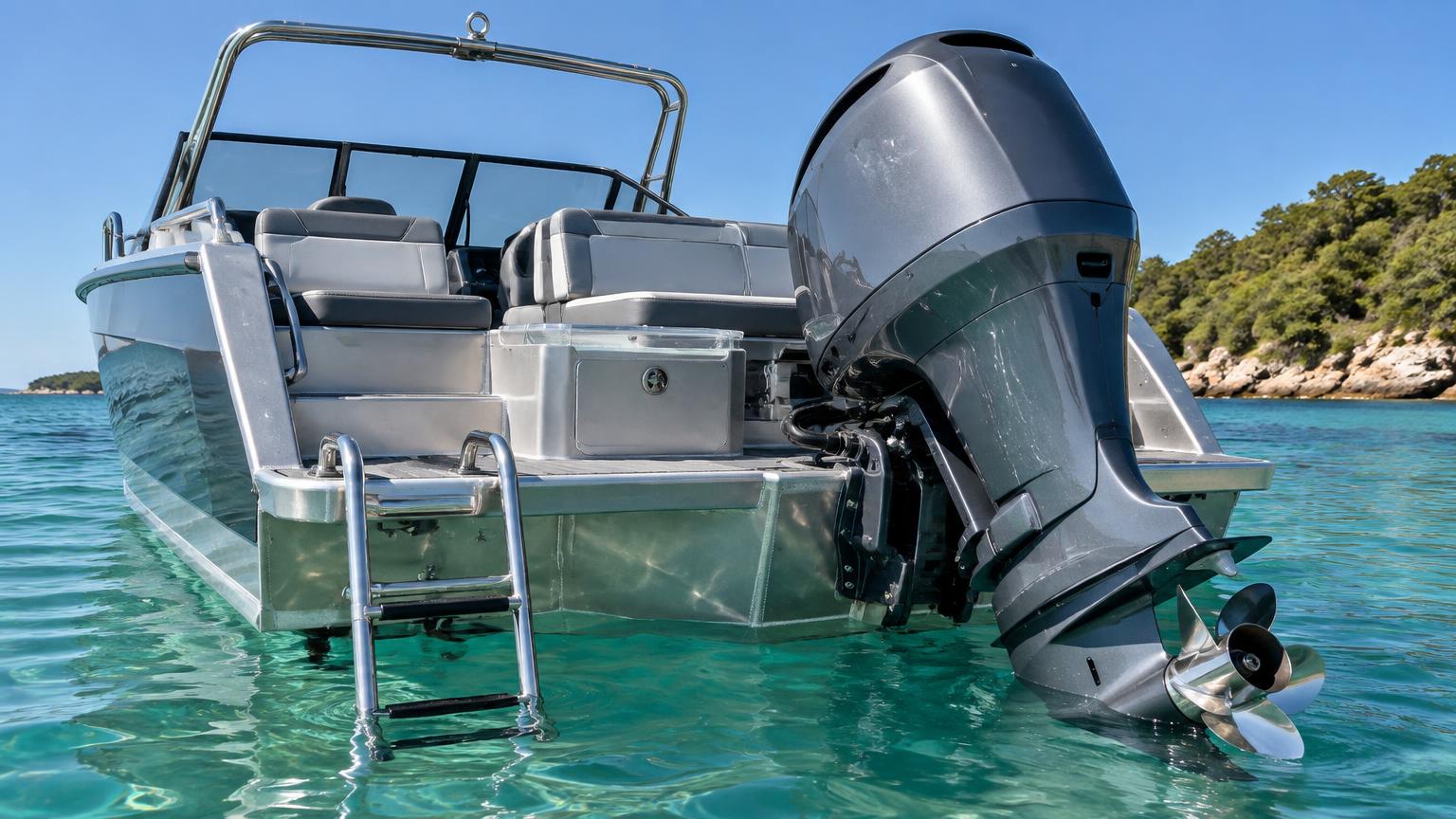
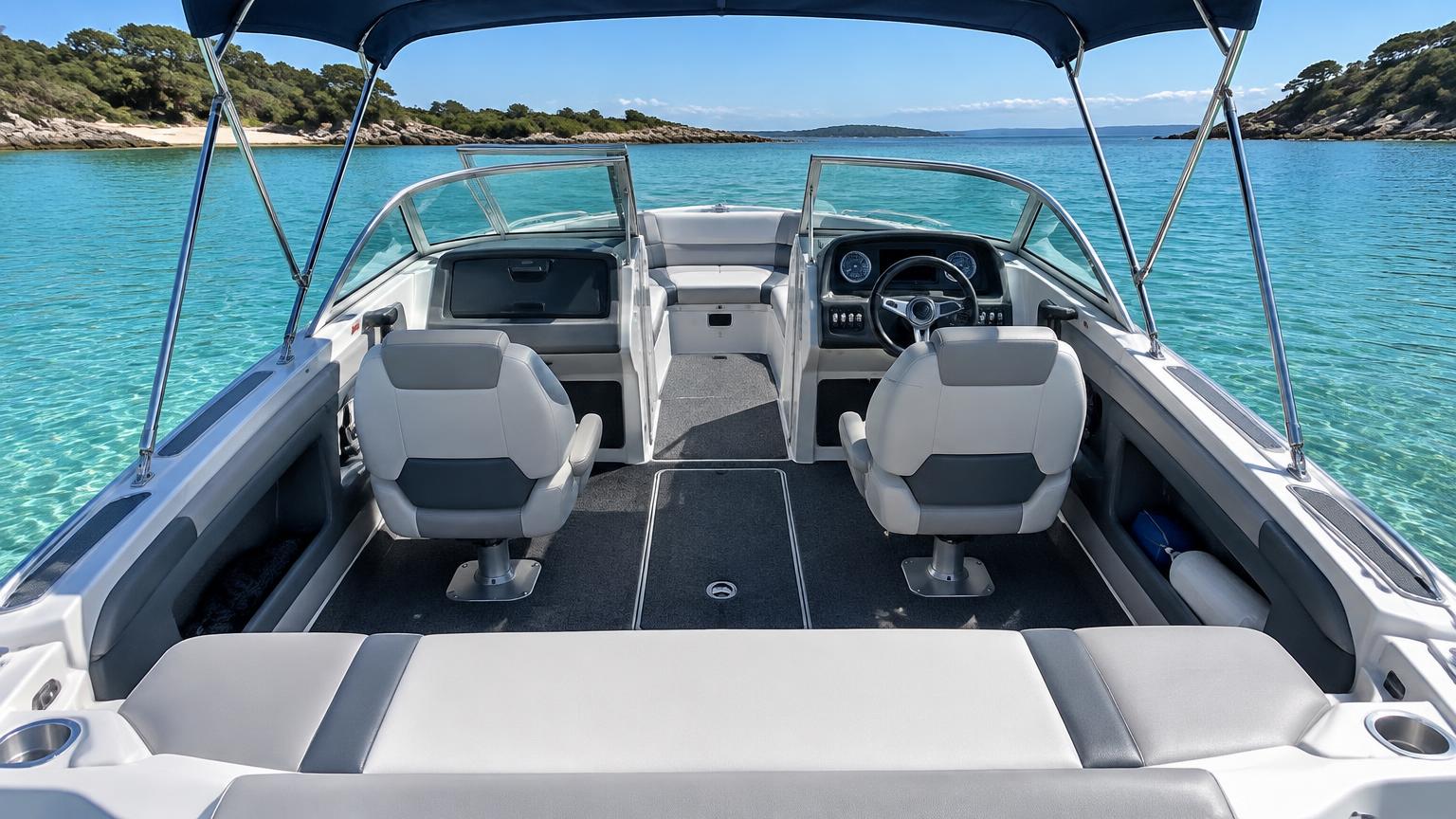
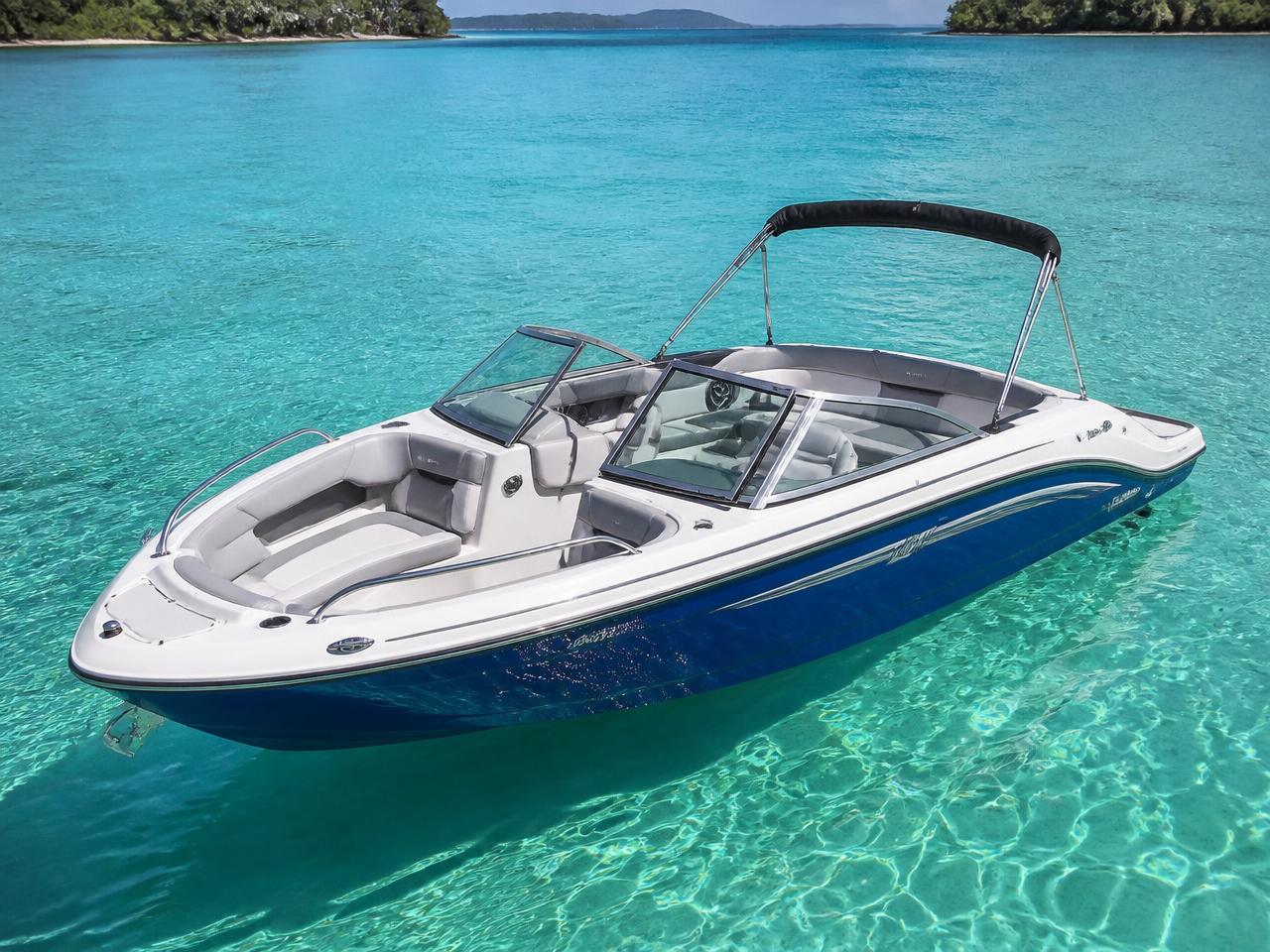
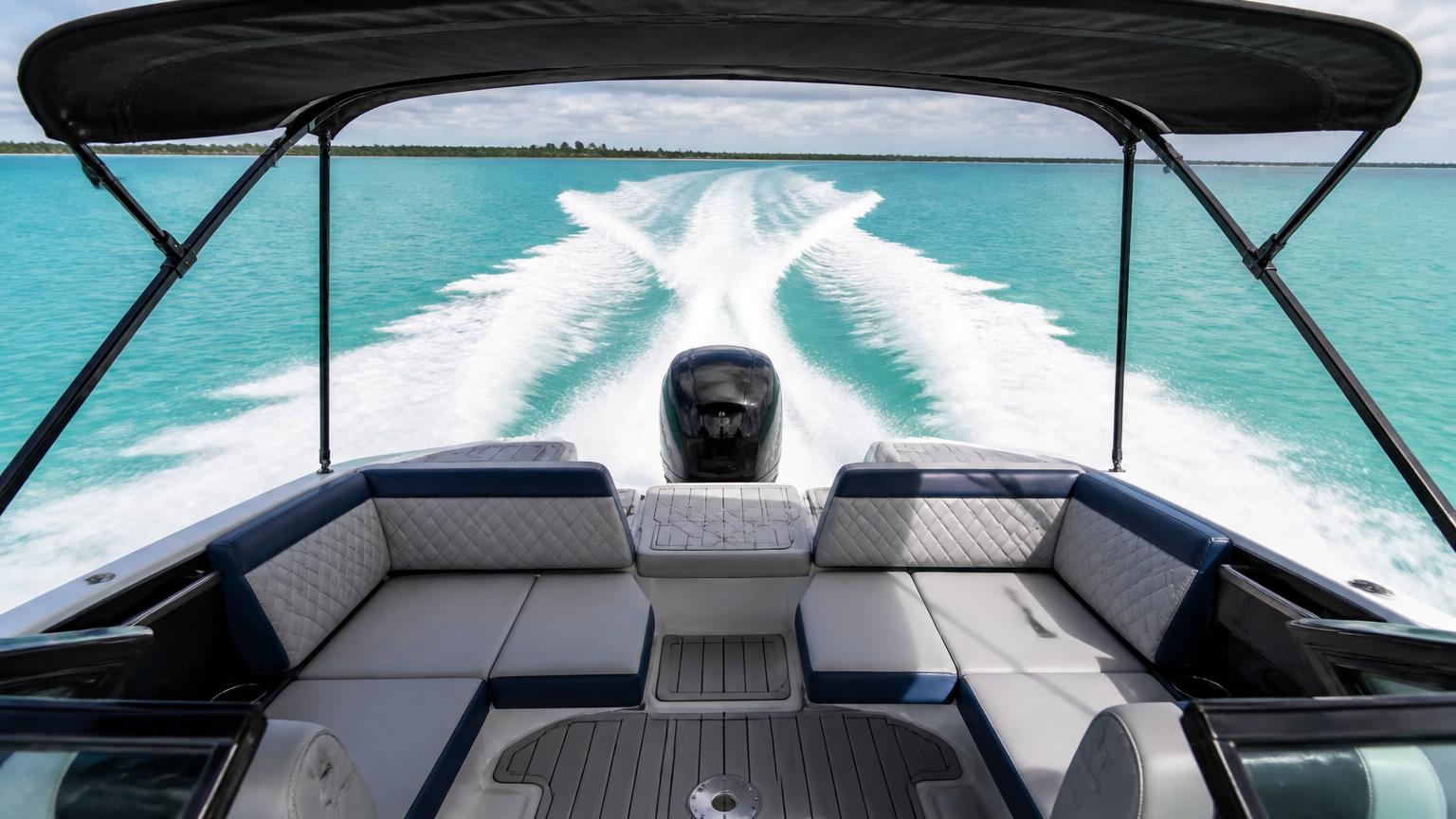
Bayliner VR5
The world's best selling bowrider size, Light, simple and easy to tow.
- Length
- 19 ft 9 in (6.02 m)
- Drive
- Outboard
- Seats
- 8 people / 1,150 lb
US$38,000 - US$52,000 new
Site Menu — Find Your Page
Bowrider Boats Mega Website

Materials & Sizes
Aluminium bowriders are the practical choice. They are lighter to tow, they survive ramp knocks and oyster racks, and when something does go wrong a welder can fix it in an afternoon.
Everything about aluminium bowriders: pressed vs plate construction, ride quality, corrosion care, leading brands and who they suit.
Pressed alloy boats, such as most Quintrex and Stacer models, use thinner sheet formed into shape. They are light, affordable and easy to tow. Plate alloy boats use thicker sheet welded into a heavier, stiffer hull that rides better and costs more.
If you boat in open water regularly, the extra weight of plate is worth paying for. On lakes and estuaries, pressed alloy is entirely adequate.

Aluminium is lighter, so it moves more in a chop and transmits more noise. Modern hull designs like the Quintrex Blade and Stacer EVO Advance have narrowed the gap dramatically, but a fibreglass hull of the same length will still be quieter and softer.
What you gain is a boat that does not care about a rocky ramp, a sandy beach landing or a hard day of fishing.

Rinse with fresh water after every saltwater trip, especially the trailer. Check anodes annually, avoid mixing dissimilar metals at fittings, and inspect welds around the transom and chines for hairline cracking on older boats.
Painted hulls need touching up where they chip; bare alloy simply oxidises to a dull grey and keeps going.

Quintrex and Stacer dominate Australia and New Zealand, with Stessco and Sirocco covering the value and plate ends respectively. In North America, Lund, Crestliner and Smoker Craft build alloy open-bow runabouts on the same principle.

The bowriders that come up most often when readers ask us where to start.

The world's best selling bowrider size, Light, simple and easy to tow.
US$38,000 - US$52,000 new

The refined mainstream benchmark: quiet, dry, and beautifully finished for the money.
US$72,000 - US$95,000 new

15.5 ft fibreglass Bayliner bowrider with stern drive power — entry level pricing and a classic convertible bowrider layout.
US$26,000 - US$34,000 new
Featured Boat of the Week

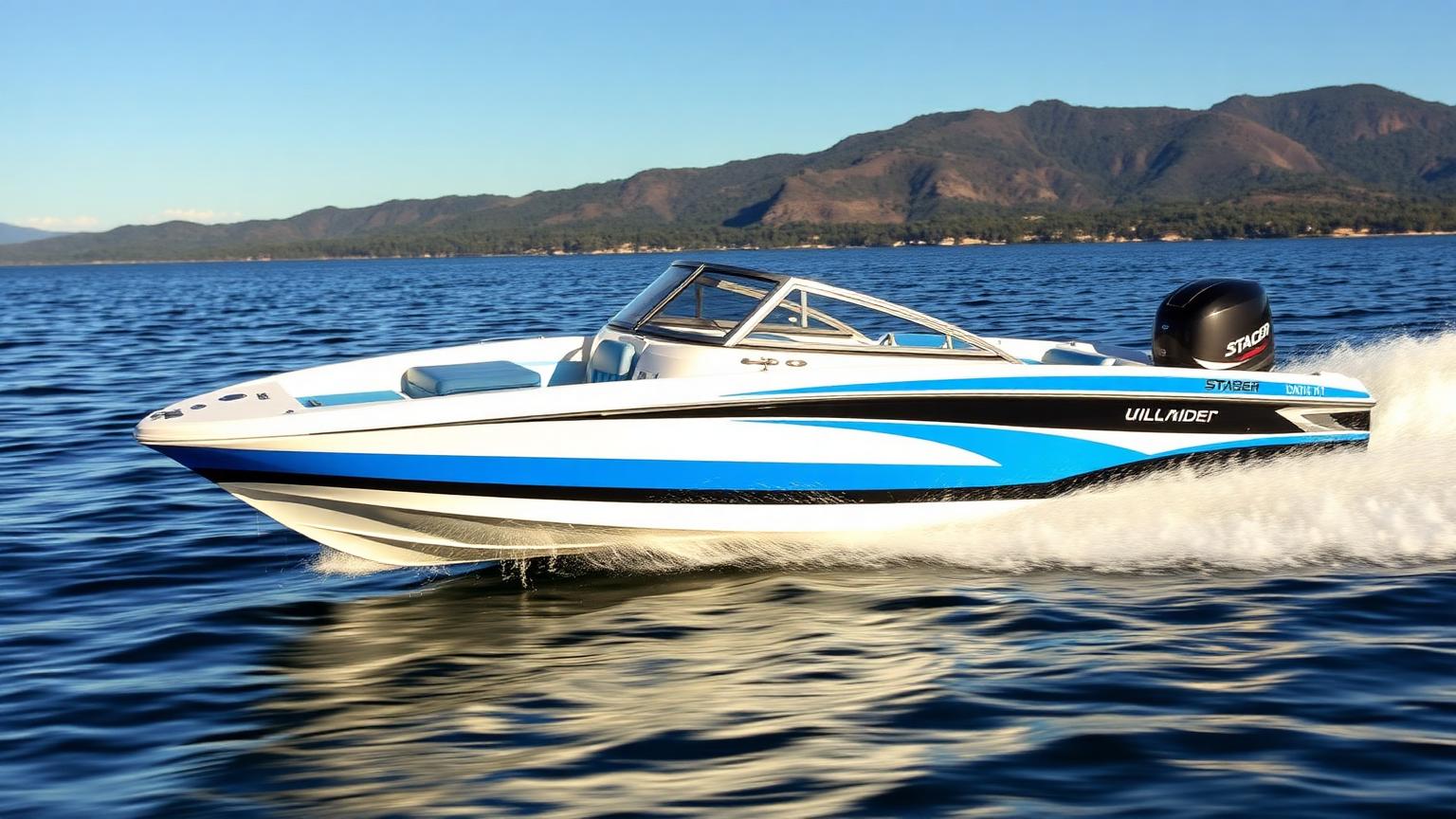
This week we are putting the Bayliner Bayliner DX2000 in the spotlight, and it earns the spot. At 20 ft 2 in (6.16 m) long on a 8 ft (2.44 m) beam, this is a bowrider that reads the water well and still feels roomy enough for a full day out. A 20-foot deck-boat-width bowrider with outboard power and a huge social cockpit. Power comes from 115-150 hp mercury fourstroke outboard through a outboard package, and the fibreglass hull keeps the ride settled when the afternoon breeze puts a chop on the surface.
Seating is rated for 8 people, so there is space for family, friends, towels, eskies and the tow rope without anyone climbing over gear. Owners tend to buy it for family, water ski, leisure — which is exactly where it shines. Fuel is 30 us gal (114 l), and on the second-hand and new market you should expect to land somewhere around US$42,000 - US$58,000 new depending on hours, trailer and options.
Our full deep dive covers the layout in detail: bow lounge comfort, helm ergonomics, the rear entertaining area, storage that actually swallows a weekend, plus standard features, popular options and honest notes on where the boat compromises. If the Bayliner DX2000 is on your shortlist, start there — and check back next week, because the featured boat changes every week as we complete more full model reviews.
Featured Bowrider Article
Ownership

More boats are damaged sitting still than being used. A weekend spent laying up a bowrider properly prevents frost damage, fuel problems, flat batteries, mildew and cracked vinyl — and makes the first trip of the next season a pleasure rather than a repair bill. Flush thoroughly with fresh water, then change engine oil and filters while the oil is warm so contaminants leave with it. Change the gearcase or lower unit oil too, and inspect what comes out for water or metal. In freezing climates, drain all raw water from sterndrive blocks, manifolds and hoses, or fill the system with the correct concentration of non-toxic antifreeze. Fog the cylinders if the manufacturer recommends it, grease all fittings, and store outboards in the fully down position so water drains out of the leg. Fill the fuel tank to around ninety per cent and add a quality fuel stabiliser, then run the engine long enough to draw treated fuel through the whole system. A nearly full tank limits condensation, and stabiliser prevents the gum and phase separation that ruin injectors and carburettors. Drain freshwater tanks, showers, ballast systems and toilets completely, and pump antifreeze through where freezing is possible. Remove drain plugs, clear scuppers and leave…
Read the full article