Menu
Site Menu — Find Your Page
Bowrider Boats Mega Website
Buying Advice
What to Check When Buying a Used Bowrider
Used bowriders are the best value in boating, and the worst, depending entirely on the twenty minutes you spend inspecting one. Most expensive faults are visible to a careful buyer who knows where to look — you do not need to be a marine technician, just methodical.
Structure first: floor, transom and stringers
Walk the whole floor in bare feet or soft shoes, pressing hard, especially either side of the helm and along the walkway to the bow. Any sponginess, flexing or creaking suggests water in the floor core, which is the single most expensive fault on a small boat.
Then grip the outboard or drive leg and push up and down firmly while watching the transom from inside. Movement, flexing, cracks radiating from the drive cutout or rusty screw heads all point to a wet transom. Lift every hatch and look for staining, standing water and rust streaks in the bilge — a dry bilge after rain is a very good sign.
Engine and drive
Ask for service records and hours. Cold-start the engine yourself: it should fire within a few seconds, settle to a steady idle and pump a strong stream of cooling water. Grey or milky oil, a sweet coolant smell or heavy smoke are reasons to walk away.
On sterndrives, inspect the bellows for cracks, the leg for corrosion and impact damage, and the anodes for wear. Check gear oil colour if the seller will drain a little — milky oil means water intrusion. On outboards, tilt the leg and look at the lower unit, prop shaft seals and the condition of the prop itself.
Electrics, upholstery and fittings
Test every switch, light, pump, horn, gauge and stereo. Marine electrics fail through corrosion, so open the switch panel back if you can and look for green connectors or crumbling terminals. Confirm the bilge pump and blower actually run.
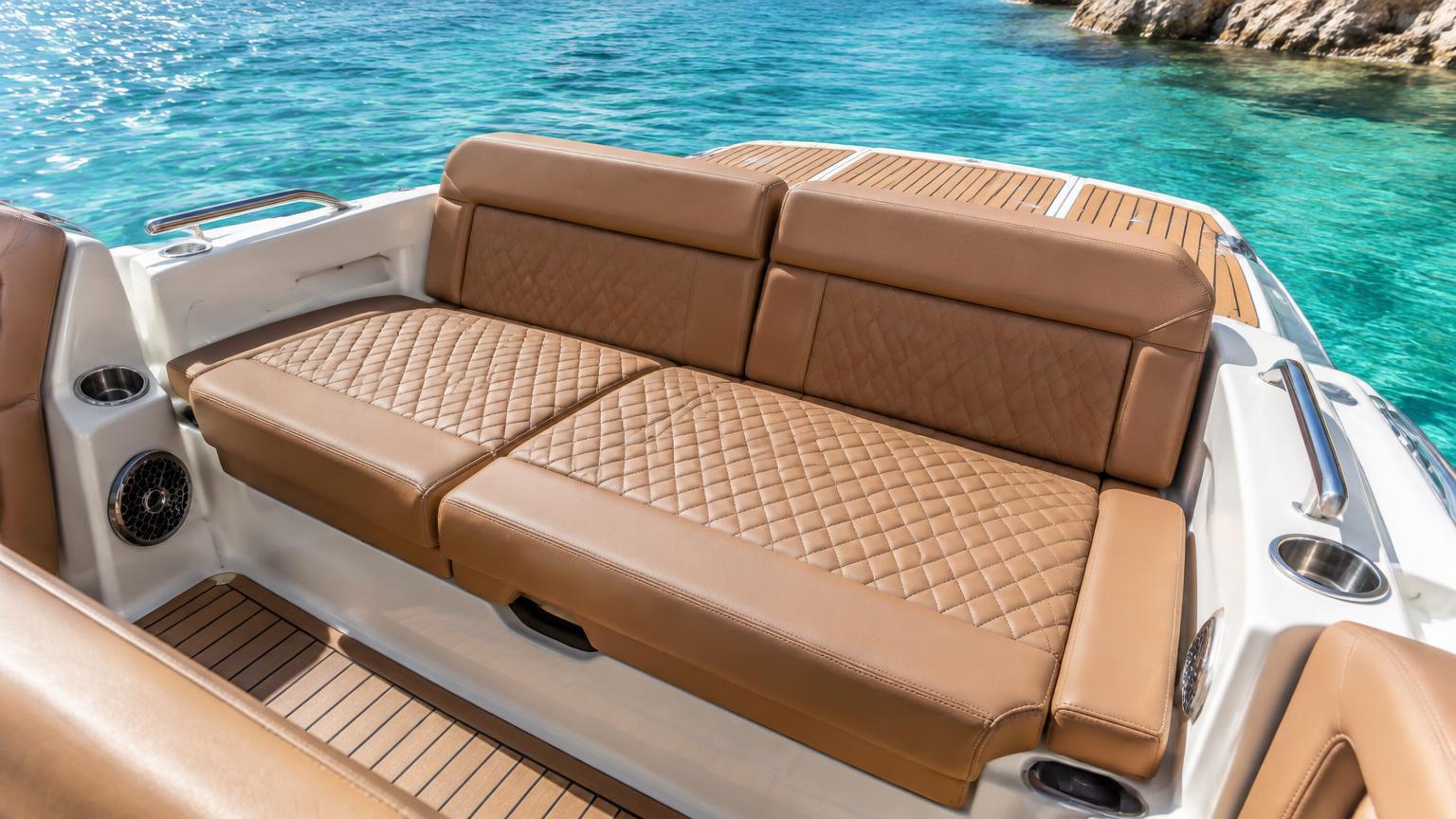
Upholstery, canvas and covers are the biggest cosmetic costs. Cracked seams, hard brittle vinyl and mouldy stitching mean a re-trim bill that can run into thousands. Check hatch hinges, cleats, rails and the windscreen for stress cracks, and confirm the bow gate and ladder work properly.
Trailer and sea trial
A good trailer is worth thousands and a bad one is a project. Check frame rust, spring condition, bearing play, brake function, tyre age and light operation, and confirm the winch and rollers or bunks support the hull correctly.
Never buy without a water test. Look for smooth planing, a solid feel at cruise, no vibration, correct rpm at wide-open throttle, straight tracking with hands off briefly, and a hull that stays dry inside. Then check the bilge again after the run. If the seller refuses a sea trial, walk away — there is always another boat.
Keep reading
Ownership
How Long Do Bowrider Boats Last?
Buying Advice
Best Bowrider Boats Under $50,000
Buying Advice
Old Bowriders vs New Bowrider Designs
Buying Advice
Which Is the Lightest Bowrider Boat ?
Buying Advice
Choosing Your First Bowrider Boat
Buying Advice
How Many People Fit in a Bowrider?
Buying Advice
The Best Bowrider Size for Families
Featured Boat of the Week
Bayliner Bayliner DX2000 — Our Featured Bowrider This Week

This week we are putting the Bayliner Bayliner DX2000 in the spotlight, and it earns the spot. At 20 ft 2 in (6.16 m) long on a 8 ft (2.44 m) beam, this is a bowrider that reads the water well and still feels roomy enough for a full day out. A 20-foot deck-boat-width bowrider with outboard power and a huge social cockpit. Power comes from 115-150 hp mercury fourstroke outboard through a outboard package, and the fibreglass hull keeps the ride settled when the afternoon breeze puts a chop on the surface.
Seating is rated for 8 people, so there is space for family, friends, towels, eskies and the tow rope without anyone climbing over gear. Owners tend to buy it for family, water ski, leisure — which is exactly where it shines. Fuel is 30 us gal (114 l), and on the second-hand and new market you should expect to land somewhere around US$42,000 - US$58,000 new depending on hours, trailer and options.
Our full deep dive covers the layout in detail: bow lounge comfort, helm ergonomics, the rear entertaining area, storage that actually swallows a weekend, plus standard features, popular options and honest notes on where the boat compromises. If the Bayliner DX2000 is on your shortlist, start there — and check back next week, because the featured boat changes every week as we complete more full model reviews.
Featured Bowrider Article
Winterising and Storing a Bowrider
Ownership
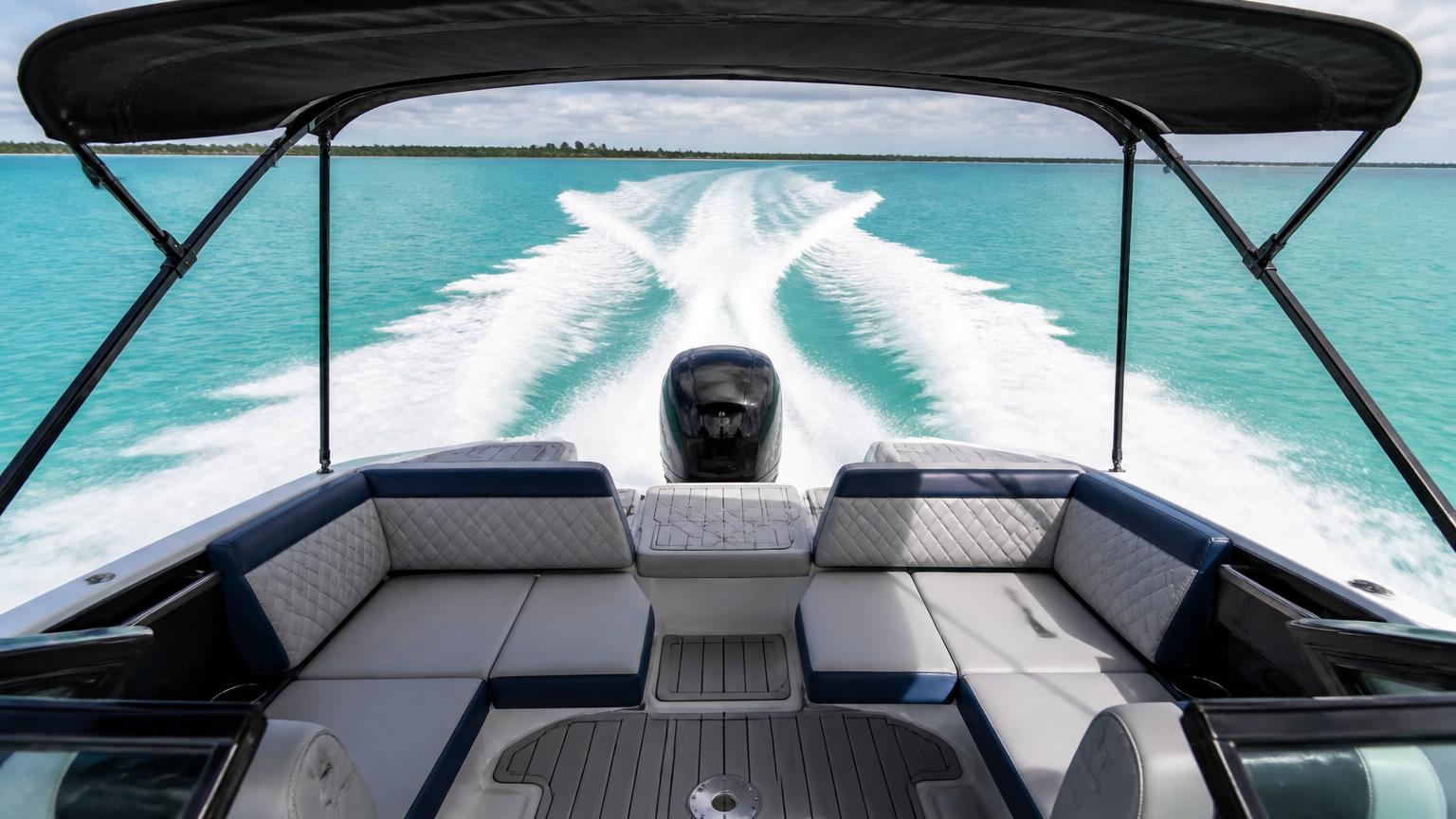
More boats are damaged sitting still than being used. A weekend spent laying up a bowrider properly prevents frost damage, fuel problems, flat batteries, mildew and cracked vinyl — and makes the first trip of the next season a pleasure rather than a repair bill. Flush thoroughly with fresh water, then change engine oil and filters while the oil is warm so contaminants leave with it. Change the gearcase or lower unit oil too, and inspect what comes out for water or metal. In freezing climates, drain all raw water from sterndrive blocks, manifolds and hoses, or fill the system with the correct concentration of non-toxic antifreeze. Fog the cylinders if the manufacturer recommends it, grease all fittings, and store outboards in the fully down position so water drains out of the leg. Fill the fuel tank to around ninety per cent and add a quality fuel stabiliser, then run the engine long enough to draw treated fuel through the whole system. A nearly full tank limits condensation, and stabiliser prevents the gum and phase separation that ruin injectors and carburettors. Drain freshwater tanks, showers, ballast systems and toilets completely, and pump antifreeze through where freezing is possible. Remove drain plugs, clear scuppers and leave…
Read the full article