Menu
Site Menu — Find Your Page
Bowrider Boats Mega Website
Comparisons
Bowrider vs Deck Boat
Bowriders and deck boats look related, and many buyers cross-shop them. The difference sits entirely in the bow: a bowrider tapers to a pointed entry, while a deck boat carries its beam right forward to a broad, blunt bow. That one change alters space, ride and personality completely.
Space and seating
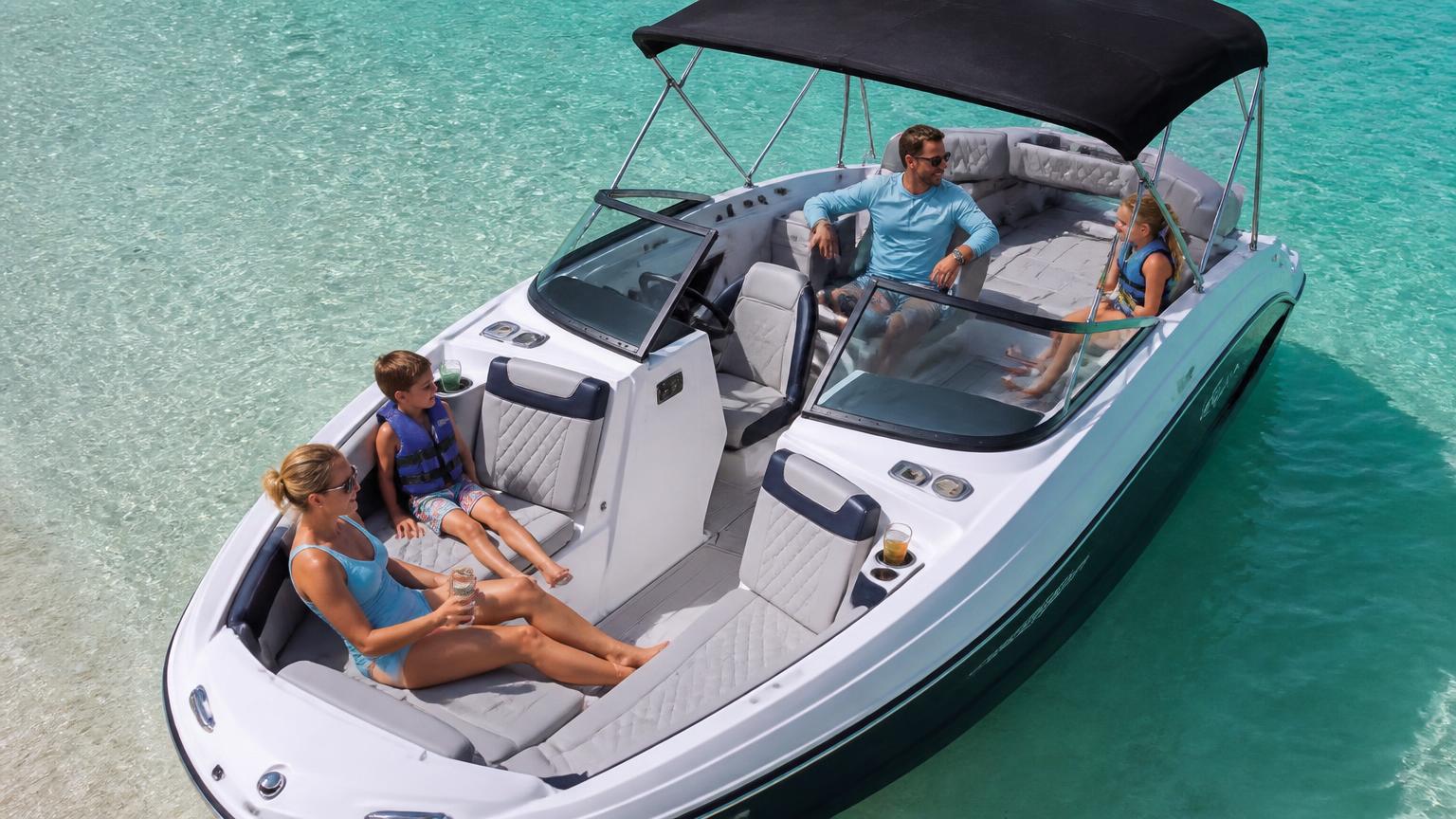
The deck boat wins on volume. Carrying full beam to the bow creates a large forward lounge area, often with a walk-through gate and space for four or five people up front. Total capacity on a deck boat is typically two to four higher than a bowrider of the same length.
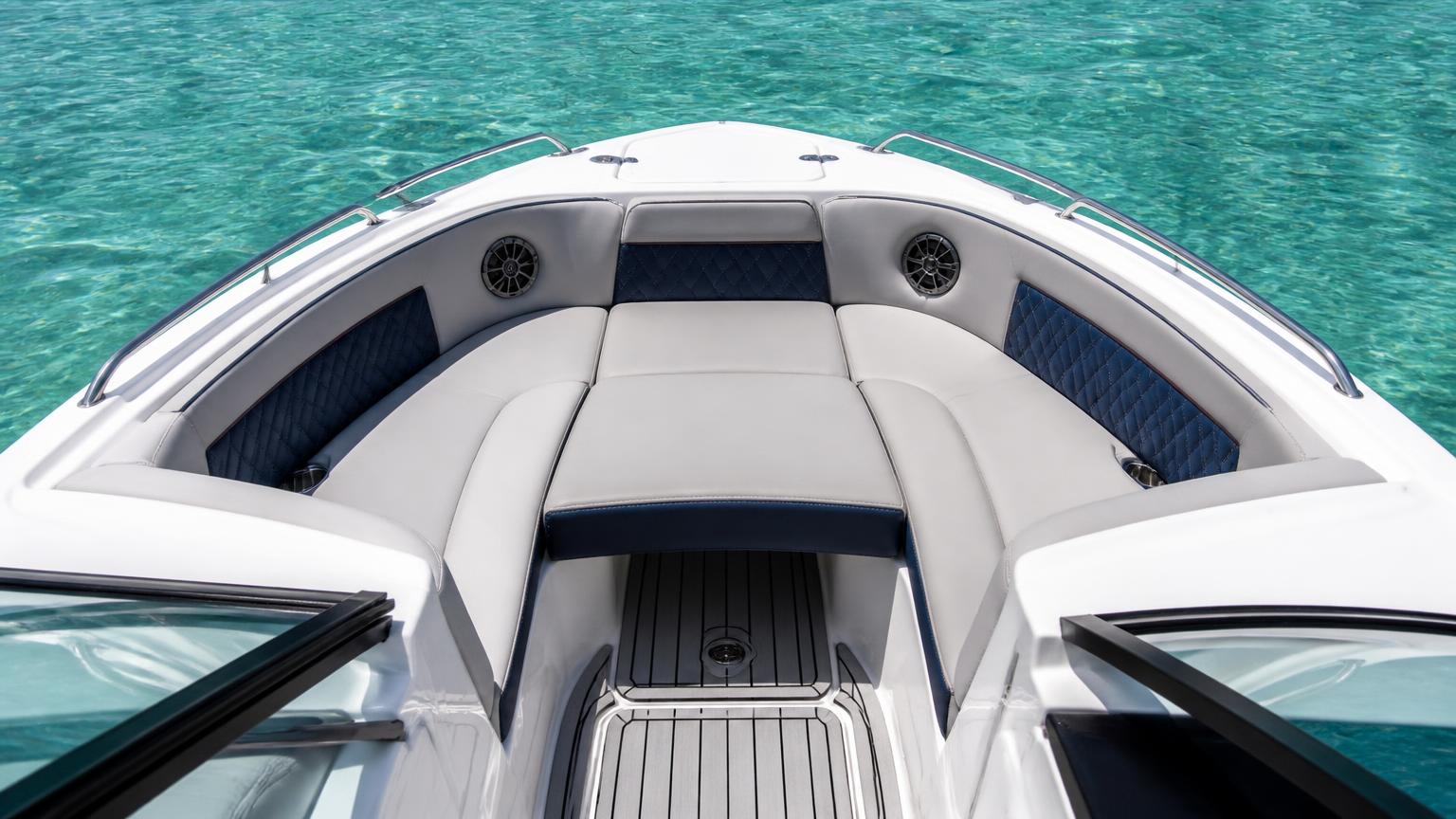
The bowrider trades that volume for a narrower, more sheltered bow. Its forward lounges are more intimate, better protected from spray, and more comfortable at speed because they sit further inboard.
Ride and handling
A pointed bow parts waves. That is why bowriders ride more comfortably in a chop, stay drier at speed and handle open water better. Deck boats with blunt bows can pound and throw spray when conditions get lumpy, though modern deck boat hulls are far better than early designs.
Deck boats are more stable at rest, thanks to that carried-forward beam, and they plane easily. For calm lakes and rivers they are excellent. For coastal bays, estuaries and anything with a seabreeze chop, the bowrider is the more pleasant hull.
Performance and towing
For a given engine, bowriders are usually a little quicker and more efficient because they have less wetted surface forward and less aerodynamic bluntness. Deck boats need more power to achieve the same speeds and burn slightly more fuel.
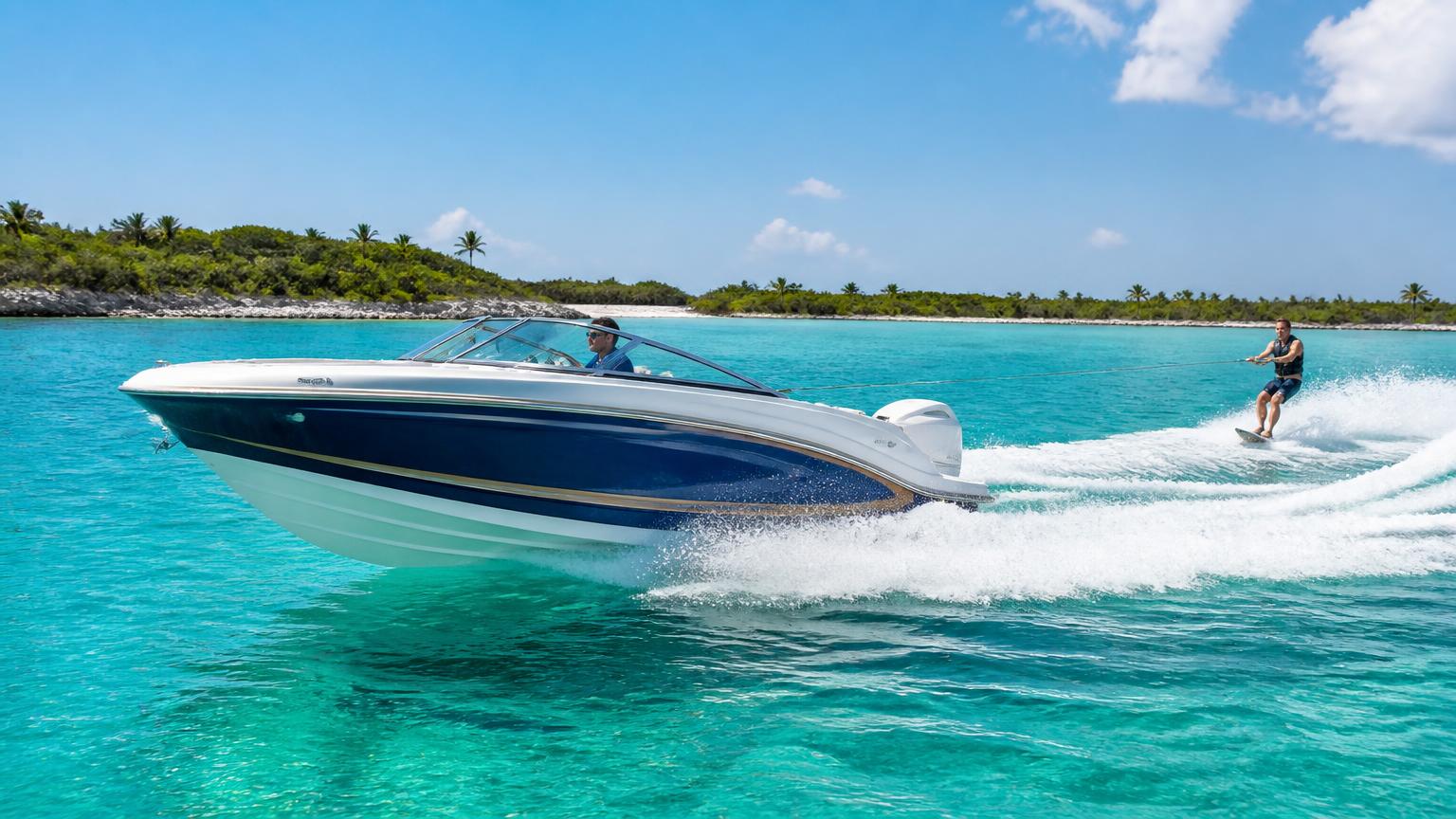
Both tow skiers and boards happily. Deck boats have the advantage of extra passenger space for spotters and gear; bowriders have the advantage of a cleaner wake in most designs and a hull that copes better with rough water on the run home.
Which one to choose
Buy a deck boat if you regularly carry large groups on protected water, want maximum lounging space per metre of length, and value stability at rest above ride comfort under way.
Buy a bowrider if you boat on open or exposed water, prioritise a dry, comfortable ride, want stronger resale in most markets, or want a boat that handles a broader range of conditions. For the majority of owners who mix cruising, swimming, fishing and towsports on varied water, the bowrider remains the more versatile choice.
Keep reading
Featured Boat of the Week
Bayliner Bayliner DX2000 — Our Featured Bowrider This Week

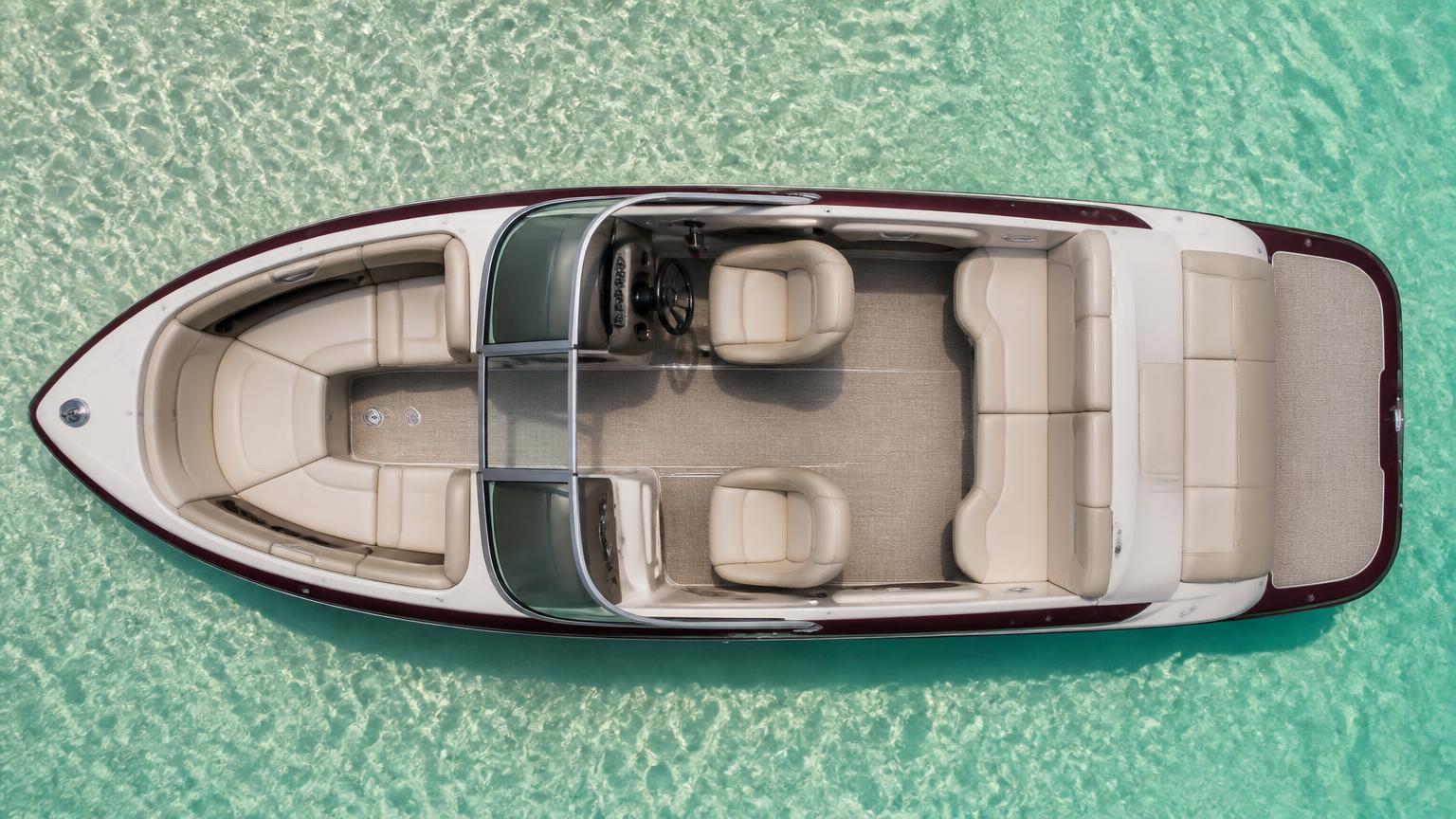
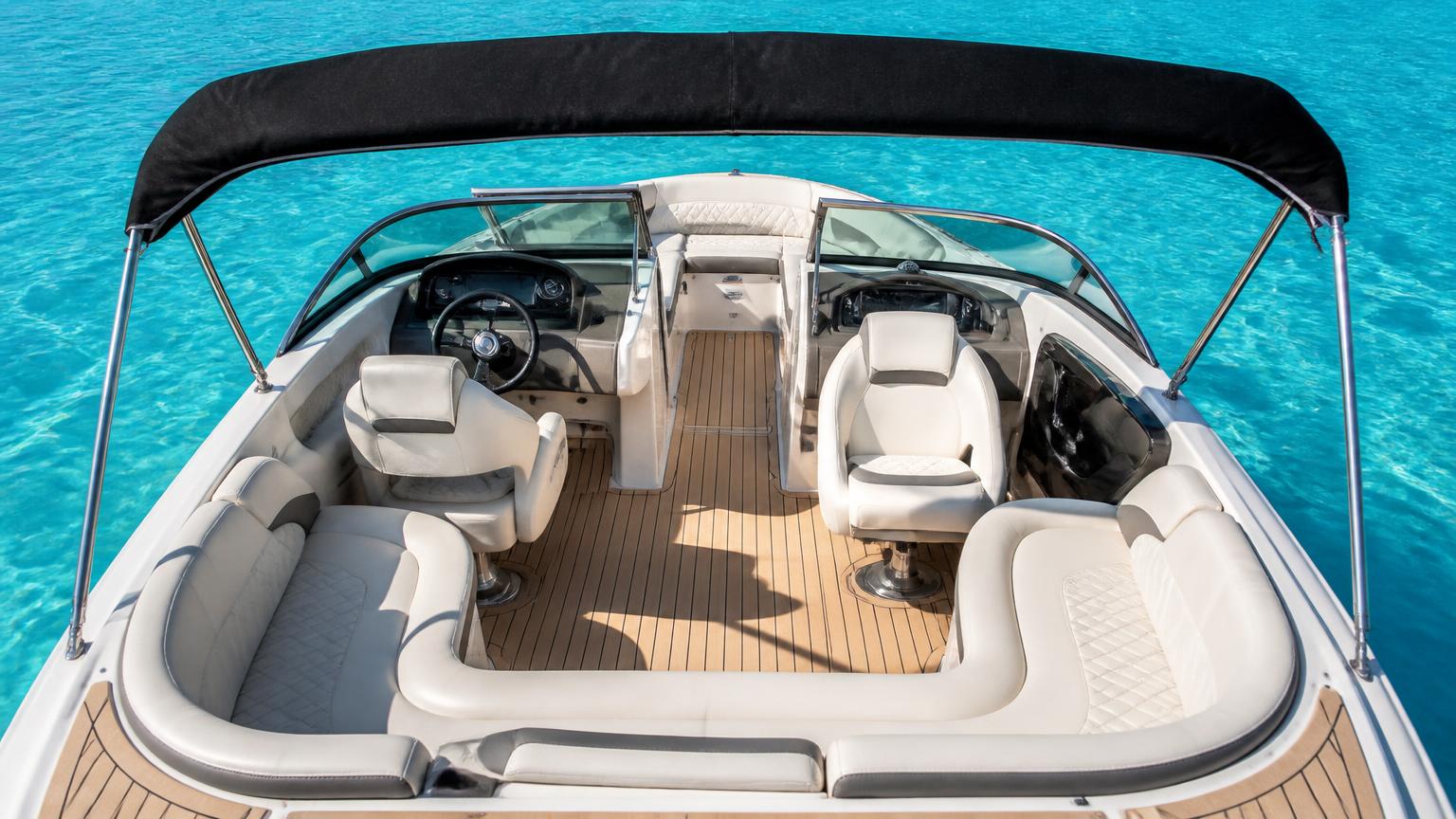
This week we are putting the Bayliner Bayliner DX2000 in the spotlight, and it earns the spot. At 20 ft 2 in (6.16 m) long on a 8 ft (2.44 m) beam, this is a bowrider that reads the water well and still feels roomy enough for a full day out. A 20-foot deck-boat-width bowrider with outboard power and a huge social cockpit. Power comes from 115-150 hp mercury fourstroke outboard through a outboard package, and the fibreglass hull keeps the ride settled when the afternoon breeze puts a chop on the surface.
Seating is rated for 8 people, so there is space for family, friends, towels, eskies and the tow rope without anyone climbing over gear. Owners tend to buy it for family, water ski, leisure — which is exactly where it shines. Fuel is 30 us gal (114 l), and on the second-hand and new market you should expect to land somewhere around US$42,000 - US$58,000 new depending on hours, trailer and options.
Our full deep dive covers the layout in detail: bow lounge comfort, helm ergonomics, the rear entertaining area, storage that actually swallows a weekend, plus standard features, popular options and honest notes on where the boat compromises. If the Bayliner DX2000 is on your shortlist, start there — and check back next week, because the featured boat changes every week as we complete more full model reviews.
Featured Bowrider Article
Towing a Bowrider: What Vehicle Do You Need?
Ownership
Getting towing right is the difference between spontaneous weekends and a boat that stays home. The mistake almost everyone makes is comparing the brochure hull weight to their vehicle's tow rating — two numbers that have almost nothing to do with real towing. Start with the dry hull weight, then add the engine if it is quoted separately, then fuel at roughly 0.75 kg per litre, plus batteries, safety gear, water sports equipment, an esky and the trailer itself. Trailers add 250-450 kg for single-axle and 400-700 kg for tandem. A 5.5 m aluminium bowrider quoted at 600 kg dry usually tows at 1,200-1,400 kg. A 6.5 m fibreglass boat quoted at 1,600 kg often tows at 2,400-2,700 kg. Always use the loaded figure and aim to stay well under your vehicle's rating rather than at it. Up to about 1,200 kg loaded — small aluminium bowriders to 5 m — a mid-size sedan, wagon or compact SUV with a proper tow package is usually sufficient. Between 1,200 and 2,000 kg, mid-size SUVs and utes handle the job comfortably. Above 2,000 kg, which covers most fibreglass bowriders over 6 m, you want a full-size SUV, ute or truck rated for 2,500-3,500 kg. Beyond 2,500 kg…
Read the full article