Menu
Site Menu — Find Your Page
Bowrider Boats Mega Website
Comparisons
Why Length Matters: How Size and Weight Affect Ride Quality
Ask any experienced boat owner what they would change about their first boat and most say the same thing: they would buy a bigger one. Length is the single strongest predictor of how a bowrider rides in real conditions. Hull design, deadrise and build quality all matter, but they work within the limits set by how long and how heavy the boat is.
Length changes the ride more than anything else
A longer hull spans more of the wave. Where a 4.5 m bowrider drops into every trough and climbs every face, a 6.5 m hull bridges the gap between crests, so the bow rises and falls less and the boat tracks through chop rather than over it. That is why the same 30 cm wind chop feels like hard work in a small boat and like nothing at all in a larger one.
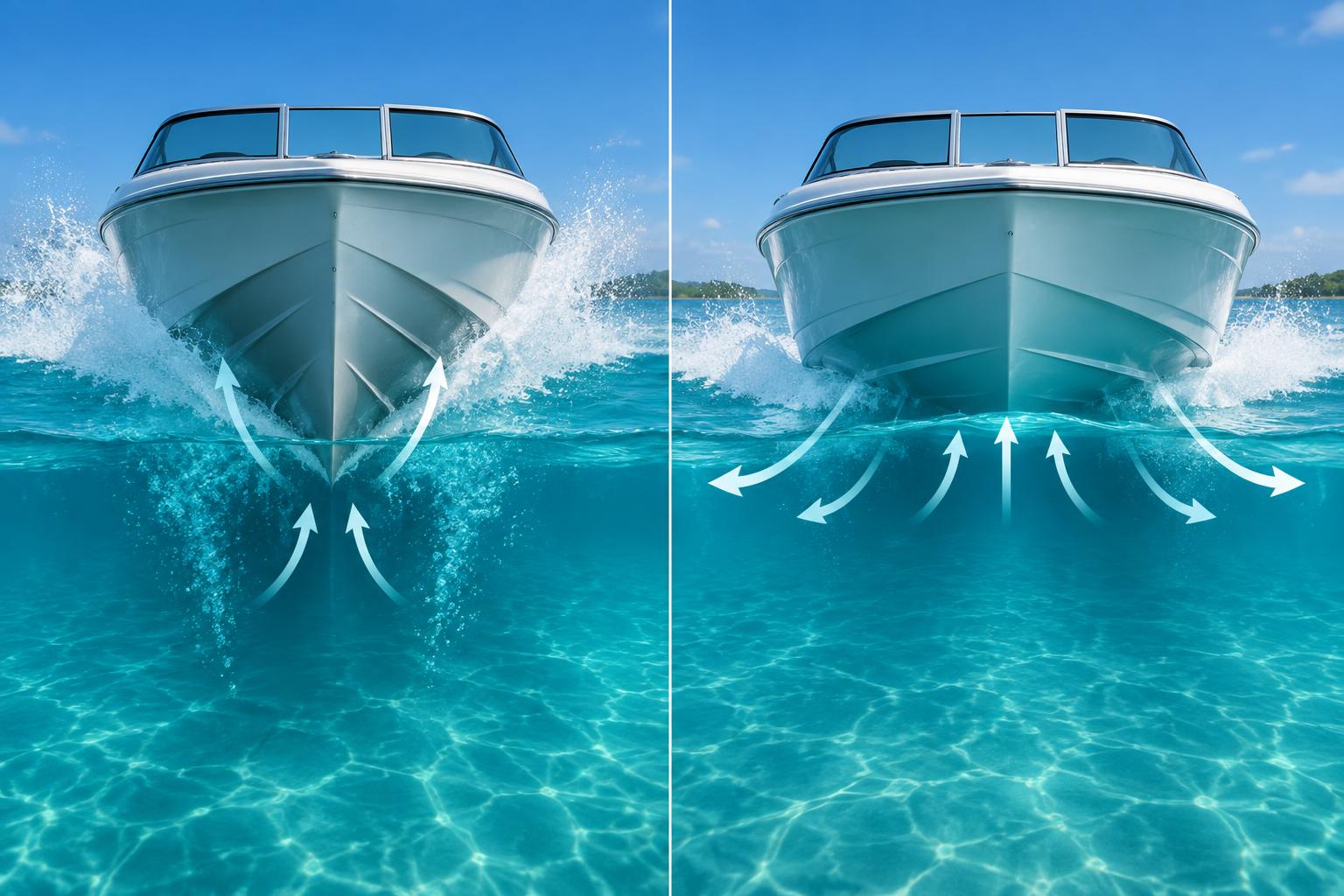
Waterline length also sets a longer, flatter running attitude and a bigger entry area, so the hull slices water progressively instead of arriving flat. And a longer boat carries a longer, finer forefoot: the sharp part of the bow does the work of splitting the wave before the wider mid-sections reach it, which is exactly what makes a ride feel soft rather than jarring.
Weight is the quiet partner of length
Momentum smooths water. A heavier hull has more inertia, so a given wave impact changes its motion less — it pushes through instead of being deflected. This is why two boats of identical length can ride completely differently, and why a well-loaded boat with fuel, gear and people aboard often rides better than the same boat empty.
Weight distribution matters as much as total mass. Weight low and slightly aft of centre gives the best combination of soft entry and stability; too much weight forward makes the boat wet and prone to bow steer, and too much aft lifts the fine entry clear of the water so the flat mid-sections slam. Trim tabs, engine trim and simply moving passengers around are the cheapest ride-quality controls on any bowrider.
Beam and deadrise complete the picture. Extra beam adds stability at rest and interior space but a wide, flat hull pounds; a deeper V of 20 degrees or more cuts cleanly but rolls more at anchor and needs more power. Every bowrider is a negotiation between those two ends, and longer boats simply have more room to negotiate well.
Aluminium versus fibreglass
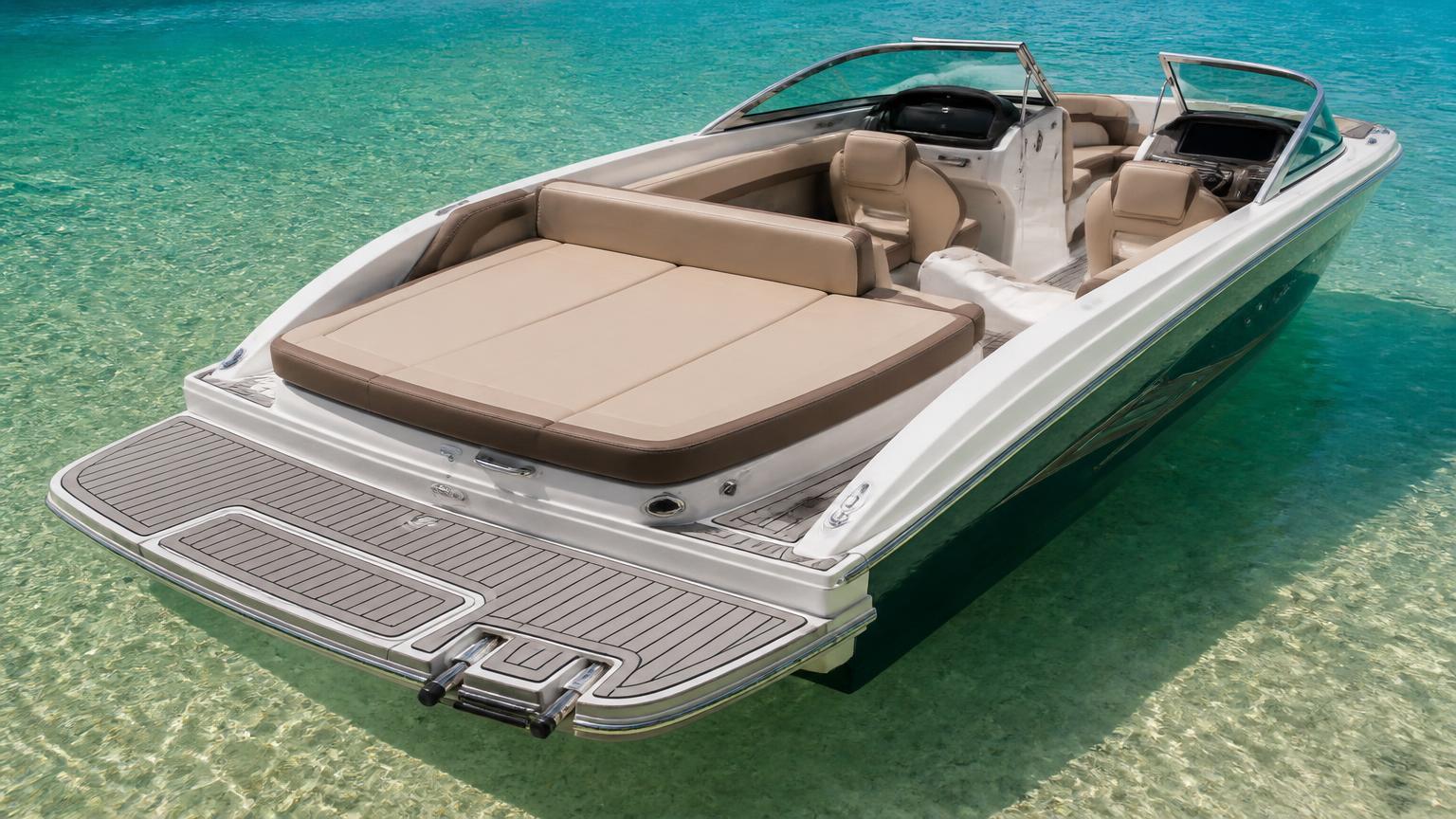
Fibreglass is heavier for the same size and can be moulded into any shape a designer draws, including fine entries, complex variable deadrise, spray rails and hollow sections. That combination of mass plus shape freedom is why fibreglass bowriders have traditionally set the standard for a soft, quiet ride, and why the difference is so obvious in open water.
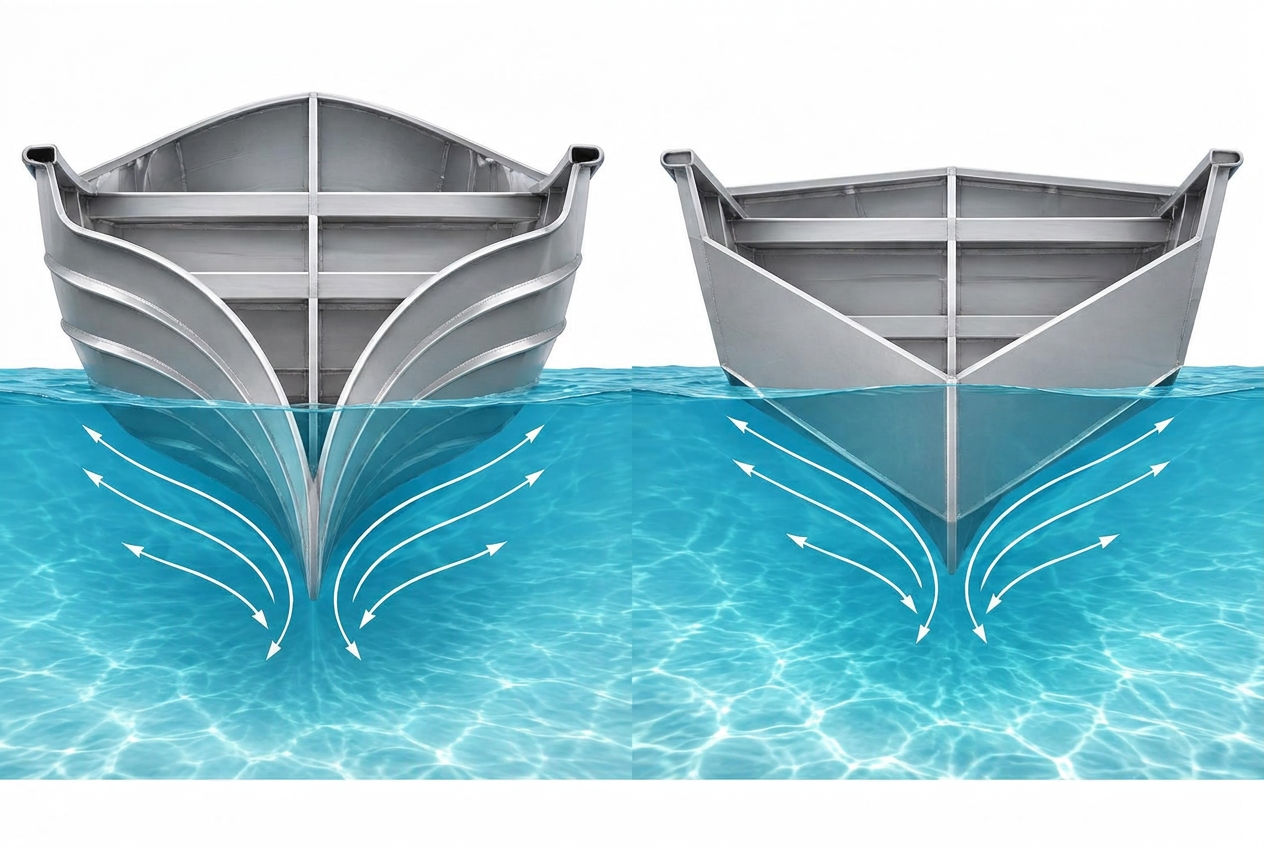
Aluminium is lighter, tougher against rocks, ramps and oyster leases, cheaper to build and easier to repair, all of which is why it dominates in Australia, New Zealand, Scandinavia and North American lake country. The historic penalty was ride: a light hull built from flat, folded sheet has less mass to absorb impact and flatter panels that drum and slap — the noise owners call tinnie slap.
There is no universally better material. A fibreglass hull usually wins on ride comfort and quietness at the same length; an aluminium hull wins on towing weight, durability, shallow-water confidence and price. Choose by how and where you boat, then buy the longest hull of that type your budget, tow vehicle and storage will take.
How fibreglass hull design got softer
Modern fibreglass bowriders ride far better than boats of the same size from thirty years ago. Designers now use variable deadrise — very sharp at the stem, easing progressively aft — so the hull slices first and supports later. Stepped hulls, wider chine flats, lifting strakes and carefully placed spray rails control how water leaves the hull, which reduces both wetted area and impact.
Construction has changed just as much. Resin infusion, closed-cell foam cores, fully bonded stringer grids and thicker laminates in the forward sections produce hulls that are stiffer and quieter, so less impact energy reaches the crew as noise and vibration. Add trim tabs and modern digitally trimmed engines and the same designer's hull can be tuned for a soft head sea or a level, efficient cruise.
How aluminium closed the gap: Millennium, Blade and APEX
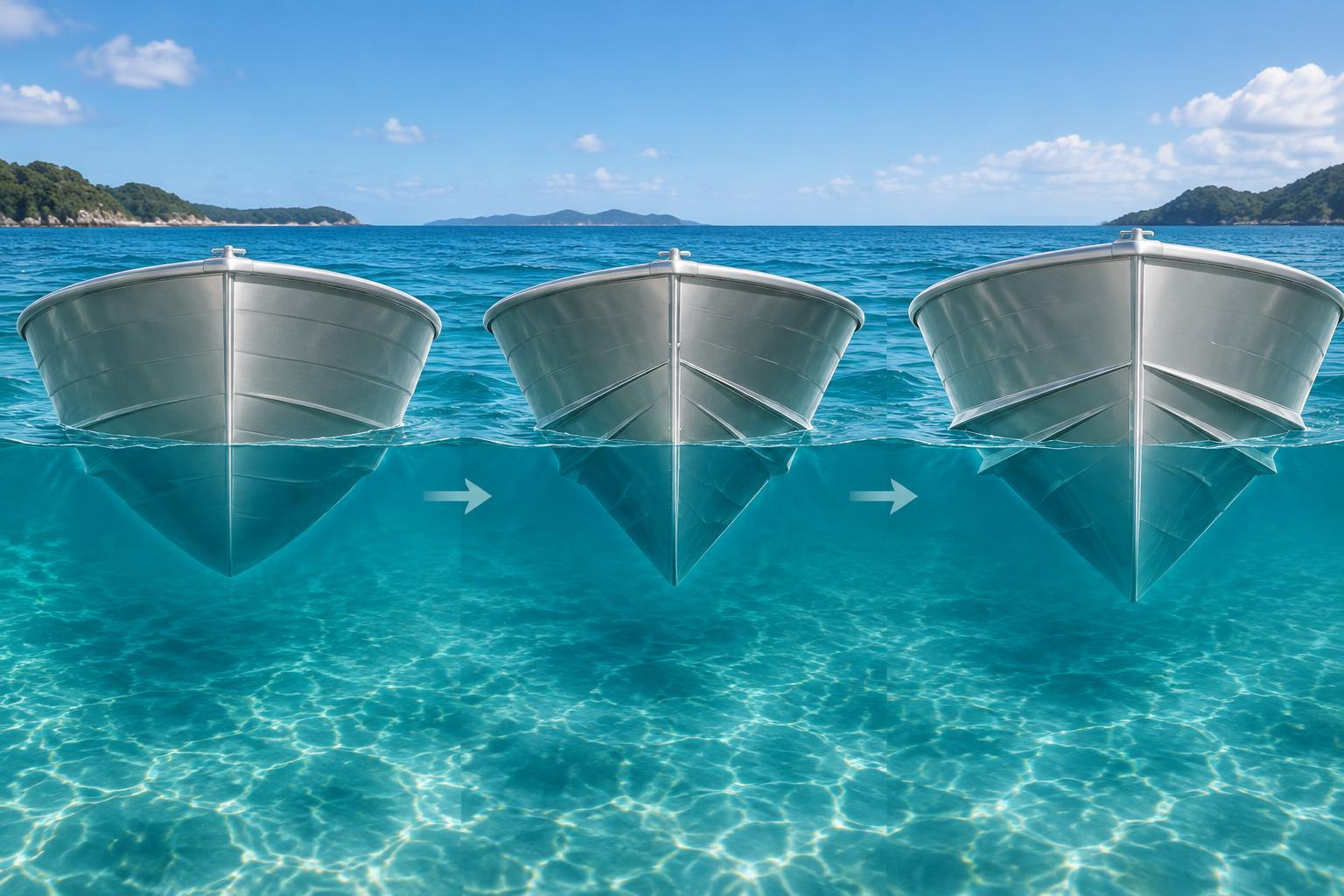
The biggest change in aluminium boat building was pressing curves into the plate instead of folding flat panels. Quintrex's Millennium hull introduced roll-formed compound curvature that removed the flat drumming surfaces and gave a genuinely shaped, softer-riding aluminium hull.
The Blade hull took that further with a much sharper, deeper forefoot that slices into a wave rather than belly-flopping onto it, along with reverse chines that push spray down and outward and add stability at rest. The result was an aluminium hull that could carry proper deadrise up front while remaining lighter than an equivalent fibreglass boat.
APEX continues the evolution with a deeper, finer entry, longer running surfaces and more refined chine geometry, aimed squarely at the sharpness and quietness that fibreglass owners take for granted. Combined with heavier plate, stiffer internal framing, better sound deadening and pressed rather than folded sections, the modern aluminium bowrider rides much closer to fibreglass than it did a generation ago — while keeping its weight, durability and price advantages.
What this means when you are choosing
Be honest about your water. If you boat on protected rivers, lakes and calm bays, 4.5 m to 5.5 m is plenty and the extra length is money spent on capability you rarely use. If you cross open bays, run coastal water or expect wind chop on a big lake, every additional half-metre buys real comfort, and 6 m to 7 m is the sweet spot for a family bowrider.
Then check the practical limits before you fall in love with a hull: tow vehicle capacity, licence and braking requirements, ramp and storage constraints, and the fuel bill that comes with a heavier boat. Test the shortlist on a choppy day rather than a glassy one, sit in the bow while somebody else drives, and pay attention to noise as well as impact. Between two boats you like, the longer, better-shaped hull almost always makes the better long-term buy.
Featured Boat of the Week
Bayliner Bayliner DX2000 — Our Featured Bowrider This Week

This week we are putting the Bayliner Bayliner DX2000 in the spotlight, and it earns the spot. At 20 ft 2 in (6.16 m) long on a 8 ft (2.44 m) beam, this is a bowrider that reads the water well and still feels roomy enough for a full day out. A 20-foot deck-boat-width bowrider with outboard power and a huge social cockpit. Power comes from 115-150 hp mercury fourstroke outboard through a outboard package, and the fibreglass hull keeps the ride settled when the afternoon breeze puts a chop on the surface.
Seating is rated for 8 people, so there is space for family, friends, towels, eskies and the tow rope without anyone climbing over gear. Owners tend to buy it for family, water ski, leisure — which is exactly where it shines. Fuel is 30 us gal (114 l), and on the second-hand and new market you should expect to land somewhere around US$42,000 - US$58,000 new depending on hours, trailer and options.
Our full deep dive covers the layout in detail: bow lounge comfort, helm ergonomics, the rear entertaining area, storage that actually swallows a weekend, plus standard features, popular options and honest notes on where the boat compromises. If the Bayliner DX2000 is on your shortlist, start there — and check back next week, because the featured boat changes every week as we complete more full model reviews.
Featured Bowrider Article
Which Bowriders Make the Best Day Boats?
On the Water
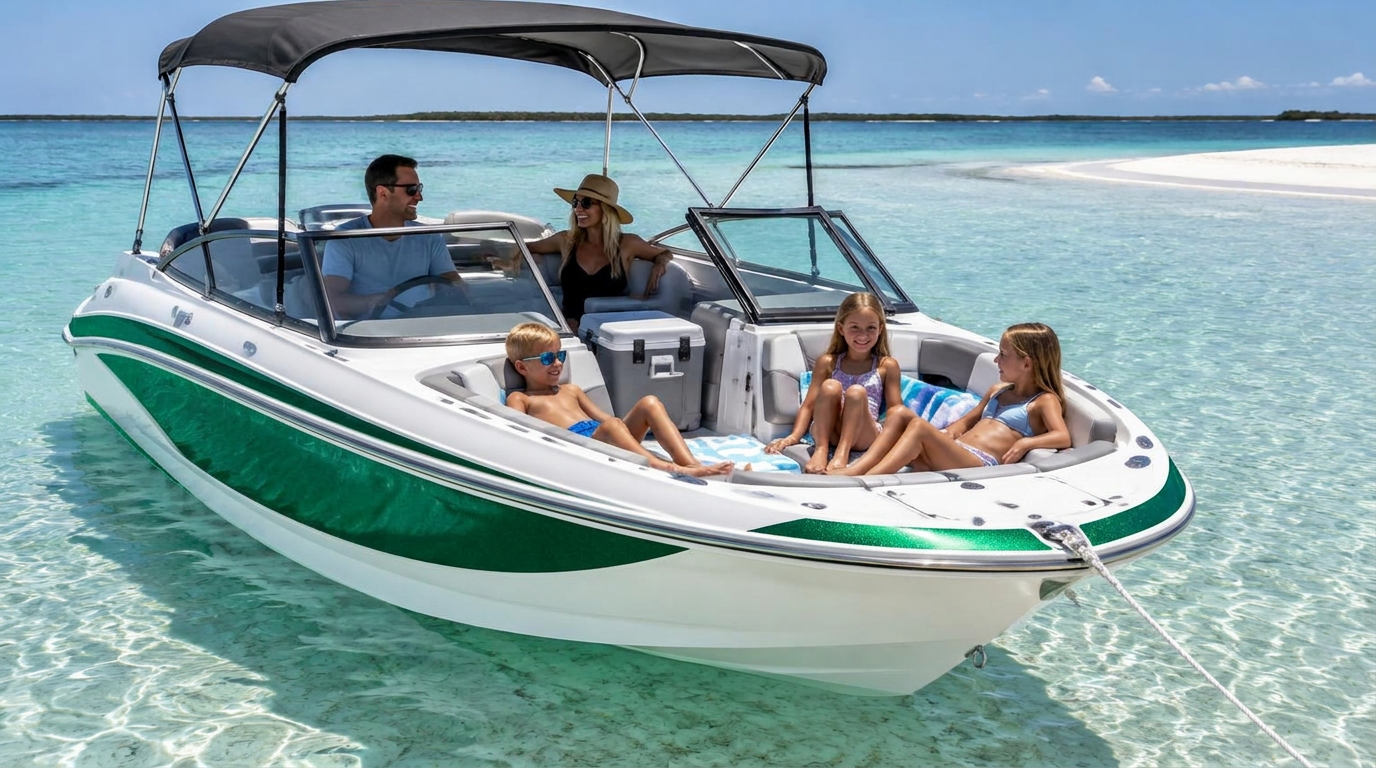
A day boat has one job: carry people comfortably from breakfast until sunset. No sleeping, no towing tournaments, no offshore ambitions — just shade, seating, swimming and a cooler that stays cold. Bowriders are arguably the best day boats ever built, and a handful of features separate the great ones from the merely adequate. The best day-boat bowriders are wide for their length. Extra beam turns the bow into a genuine lounge instead of two narrow benches, and lets the cockpit carry facing seats rather than a single rear bench. Look for continuous, well-padded cushions, high backrests and armrests you can actually lean on for hours. Convertible seating multiplies the boat's usefulness. Rear benches that flip into aft-facing lounges, filler cushions that turn the cockpit into a sun pad, and reversible helm seats let one boat suit sunbathing, conversation, dining and watching a skier. Shade is the most under-rated day-boat feature. A large, quickly deployed bimini — ideally powered, ideally covering both the helm and part of the cockpit — decides whether you stay out until five o'clock or head home at one. Bow shades and cockpit awnings extend that further. Swim access matters just as much. A wide platform, a sturdy telescopic ladder and…
Read the full article