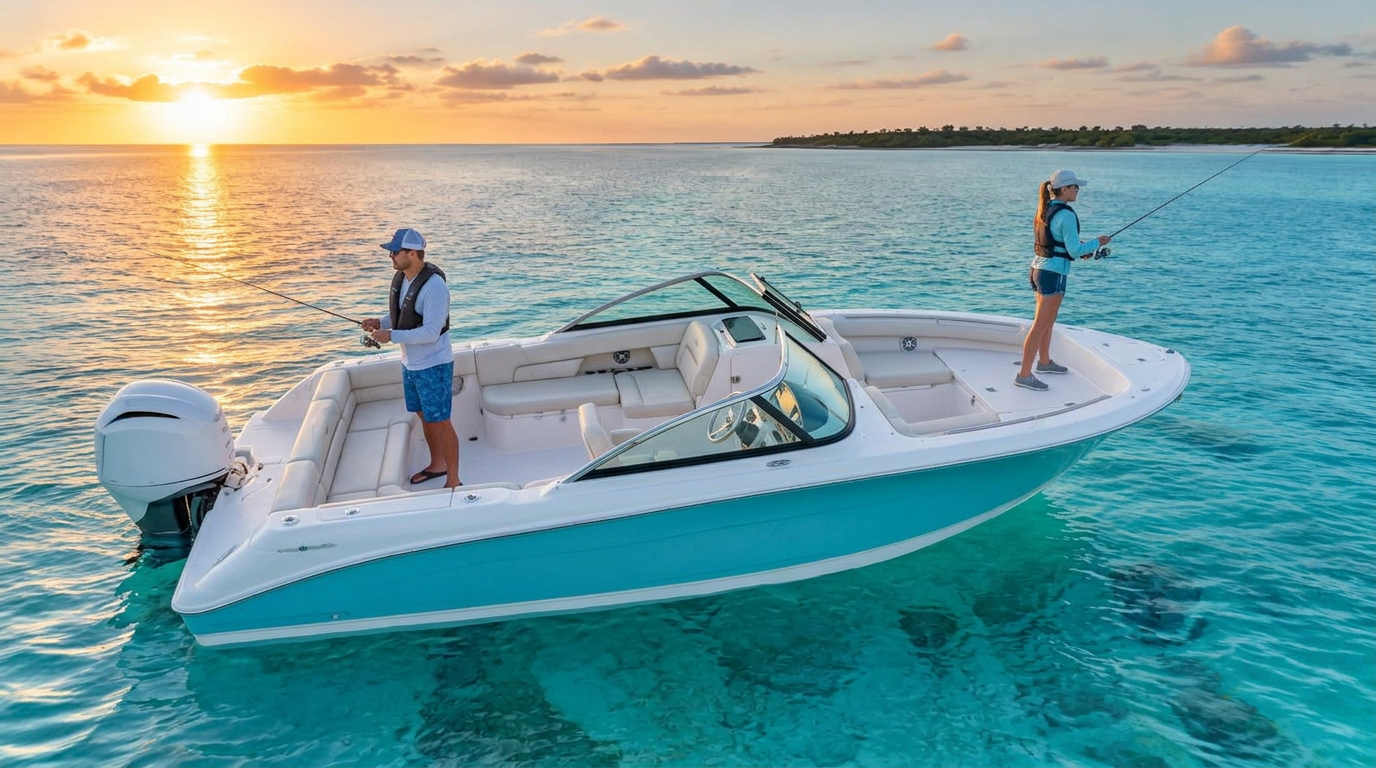
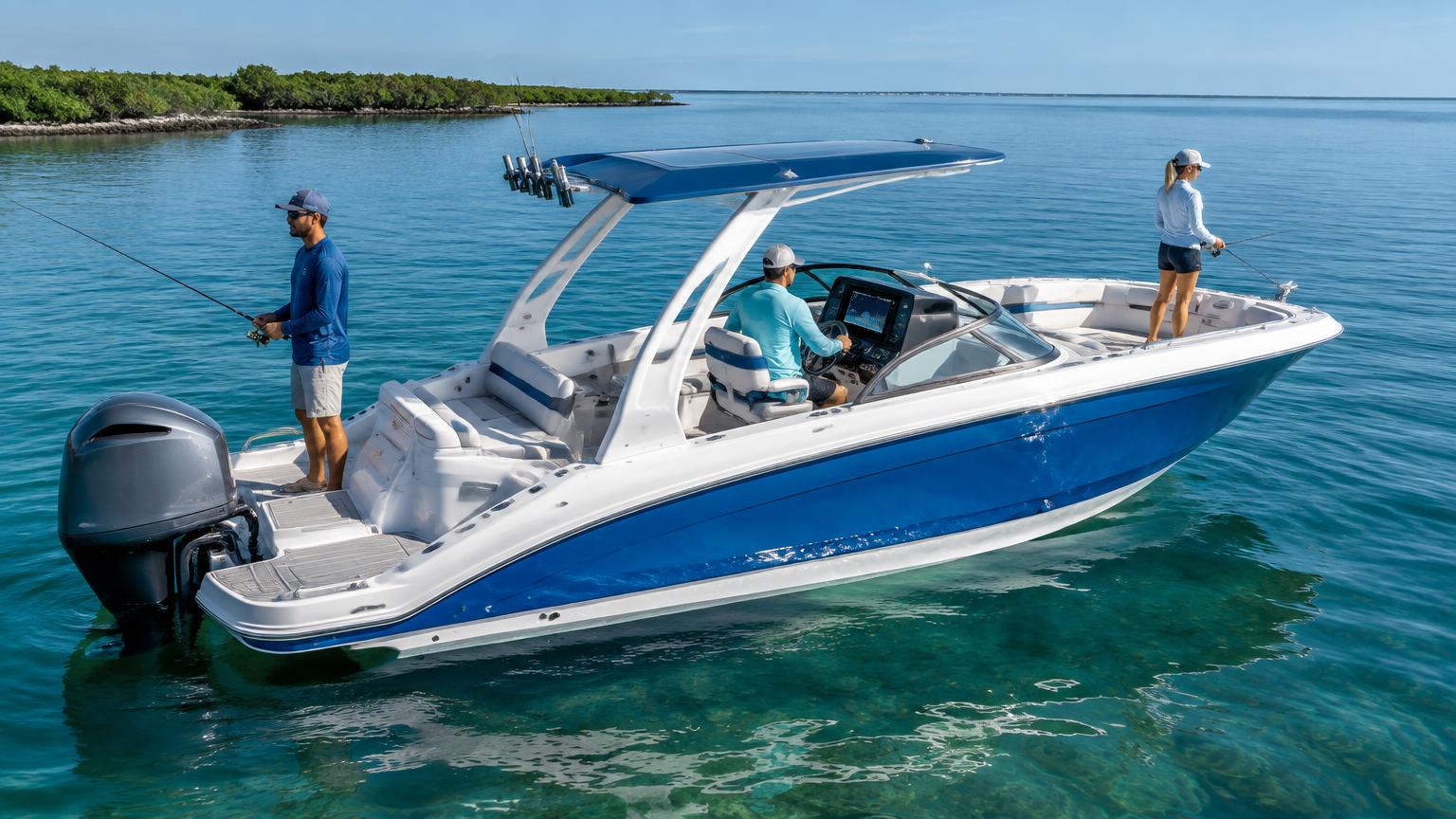
A bowrider can become a practical inshore or freshwater fishing platform without surrendering the comfort that makes it a family favourite. The successful setups protect the upholstery, keep hooks and tackle controlled, and use removable equipment so the boat can return to cruising mode after the session.
Bowrider Boats for Fishing: practical setups, suitable models, live bait wells, bait boards, rod holders, electronics and honest crossover advice.
Start with a reversible fishing conversion
The most useful fishing bowrider is not permanently rebuilt. Begin by removing loose rear cushions, bow infills and any cockpit table, then store them dry rather than stacking them where a hook can find the vinyl. Fit a washable nonslip mat over vulnerable flooring, secure tackle boxes below seat height and preserve a clear route between the bow, helm and stern. Before drilling anything, check what lies beneath the deck and whether the change affects hull warranties or flotation spaces.
Plan around two working zones rather than trying to turn every seat into a casting deck. One angler can work forward while another uses the stern, leaving the windscreen passage and helm clear. That simple discipline makes an ordinary family layout safer and more productive than a cockpit crowded with coolers, loose rods and permanent accessories.
Start with a reversible fishing conversion · Bowrider Boats for Fishing
Fishing safely from the open bow
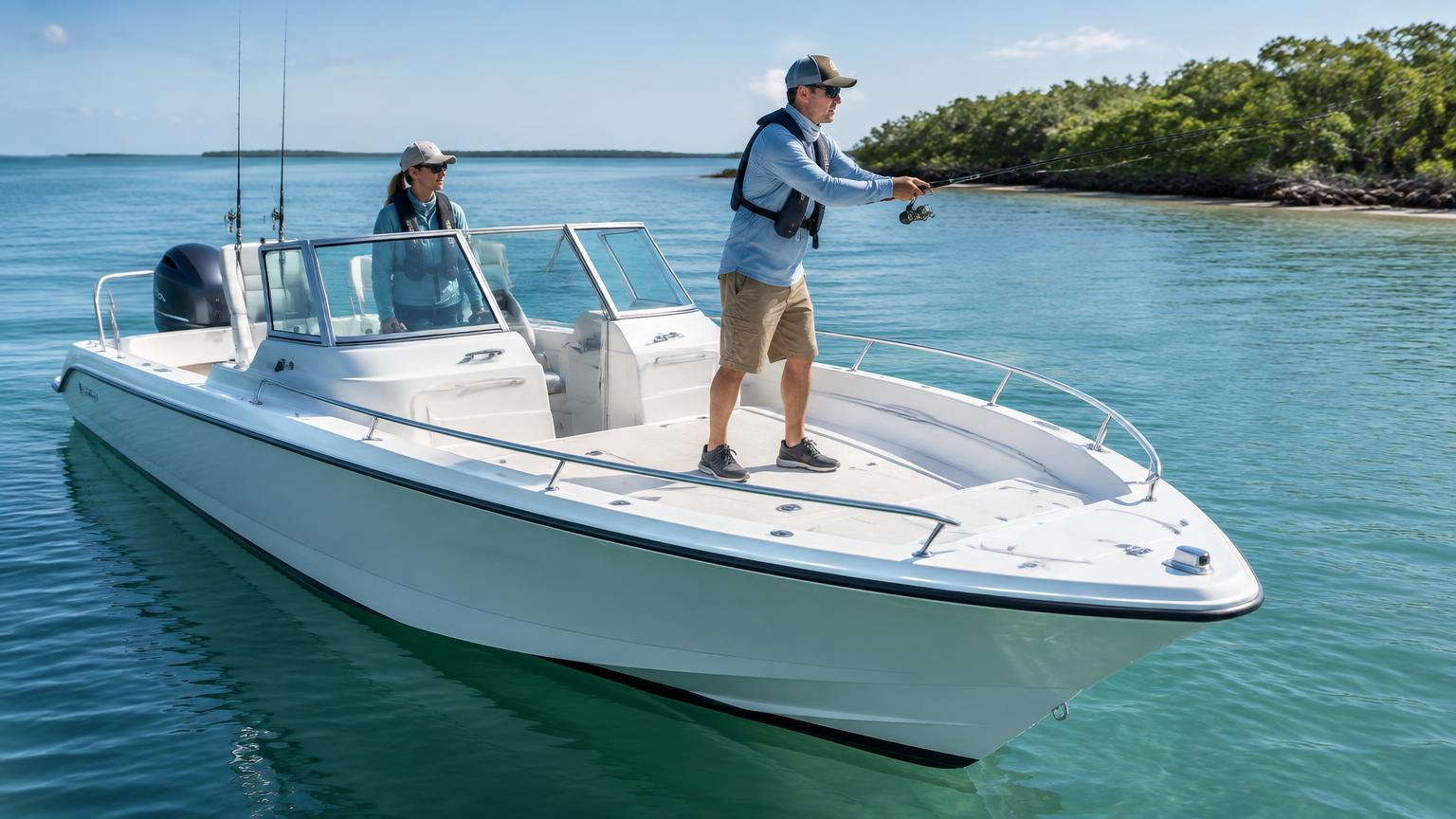
The open bow gives a good sightline for casting at structure, but it is still a lounge footwell rather than a purpose-built walk-around deck. Remove only cushions intended to be removable, use the lowest stable floor area, and keep feet inside the rails. A pedestal seat or raised insert should be used only when it is properly supported and approved for that hull; never balance a home-made board across upholstery.
Keep spare hooks covered and rods pointed away from passengers passing through the windscreen. The skipper should reduce wake and announce every movement before repositioning. In chop, the bow rises and falls more sharply than the cockpit, so anglers should move aft, sit down or stop fishing until conditions settle.
Fishing safely from the open bow · Bowrider Boats for Fishing
Make the stern the main working zone
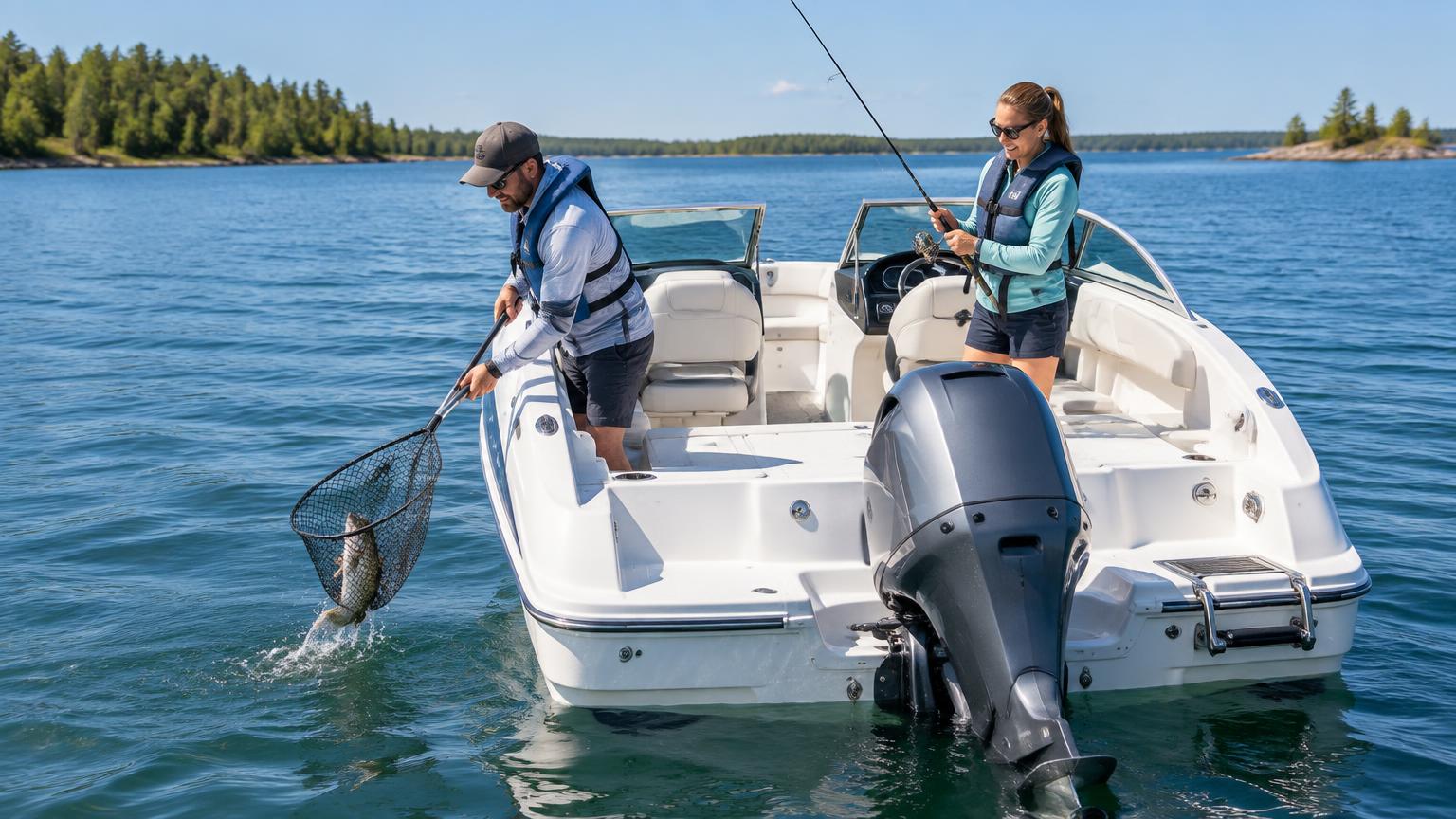
Most conversions work best at the stern. Outboard bowriders often provide platforms beside the engine and remove the interior engine box, while removable rear lounges can reveal useful floor area. Assign one side for landing fish and keep the other clear for boarding. A short-handled rubber landing net, reachable pliers and a measured release mat reduce the time a fish spends beside delicate upholstery.
Sterndrive boats provide a broad swim platform but put machinery beneath the sun pad, so access hatches and ventilation must remain unobstructed. Never fish with anyone standing on a wet platform underway, and keep lines clear of the propeller and drive. Switch the engine off before a fish, leader or net is handled close to the transom.
Make the stern the main working zone · Bowrider Boats for Fishing
Use removable rod holders and protected storage
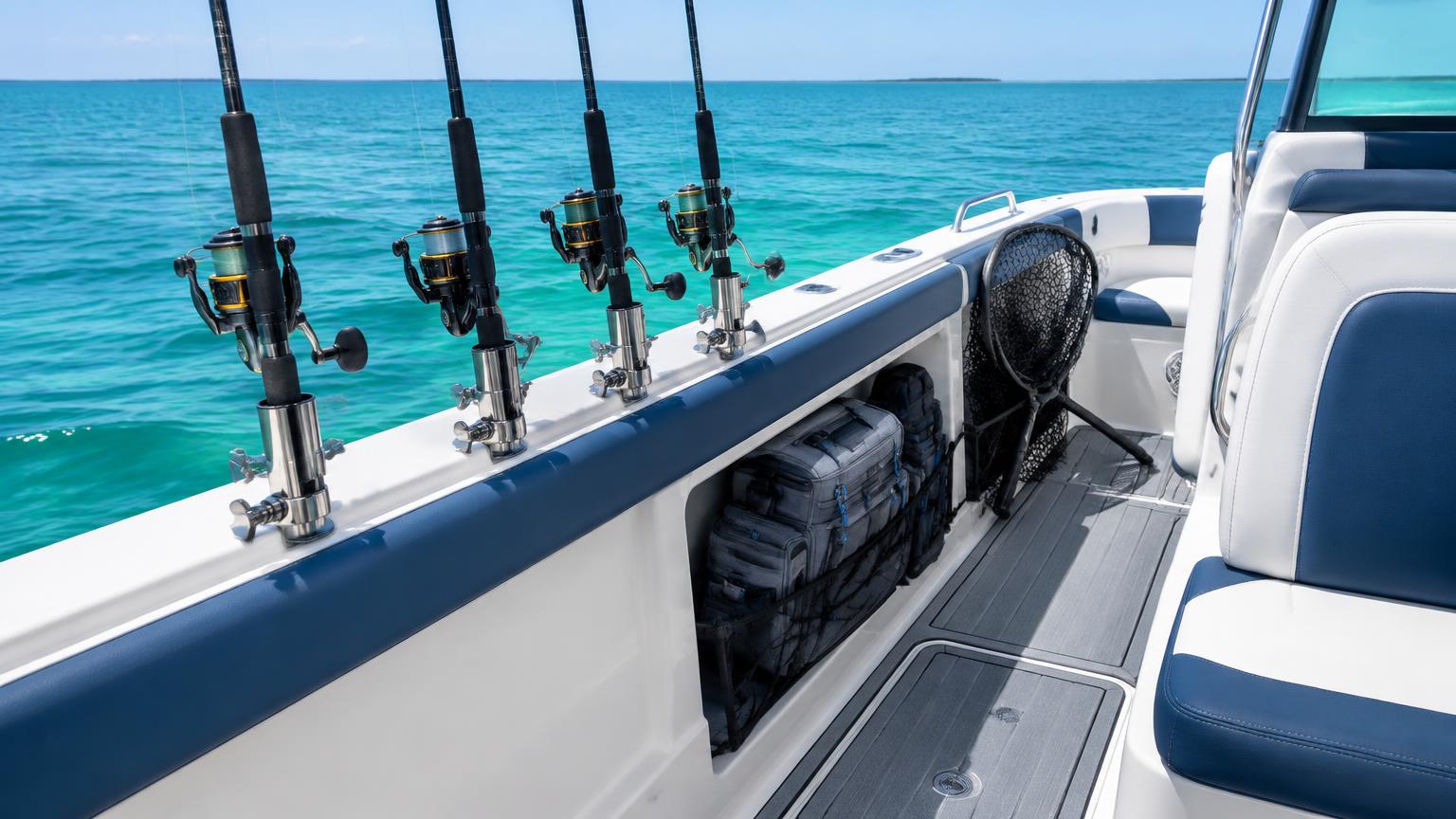
Clamp-on or track-mounted rod holders make sense when their bases fit a structural rail or manufacturer-approved mounting point. Angle rods so tips remain inside the boat at the ramp and cannot meet a passenger's face. During travel, horizontal sleeves or padded straps are safer than leaving long rods upright beneath bridges, trees or a low bimini.
Give every item a home before departure. Terminal tackle belongs in latched trays, knives in sheaths, sinkers in closed boxes and the landing net against a side panel. Soft tackle bags suit irregular lockers and can be removed for family days. Avoid blocking bilge access, fire equipment, batteries, fuel shut-offs or the route to the boarding ladder.
Use removable rod holders and protected storage · Bowrider Boats for Fishing
Add a stable bait board without damaging the boat
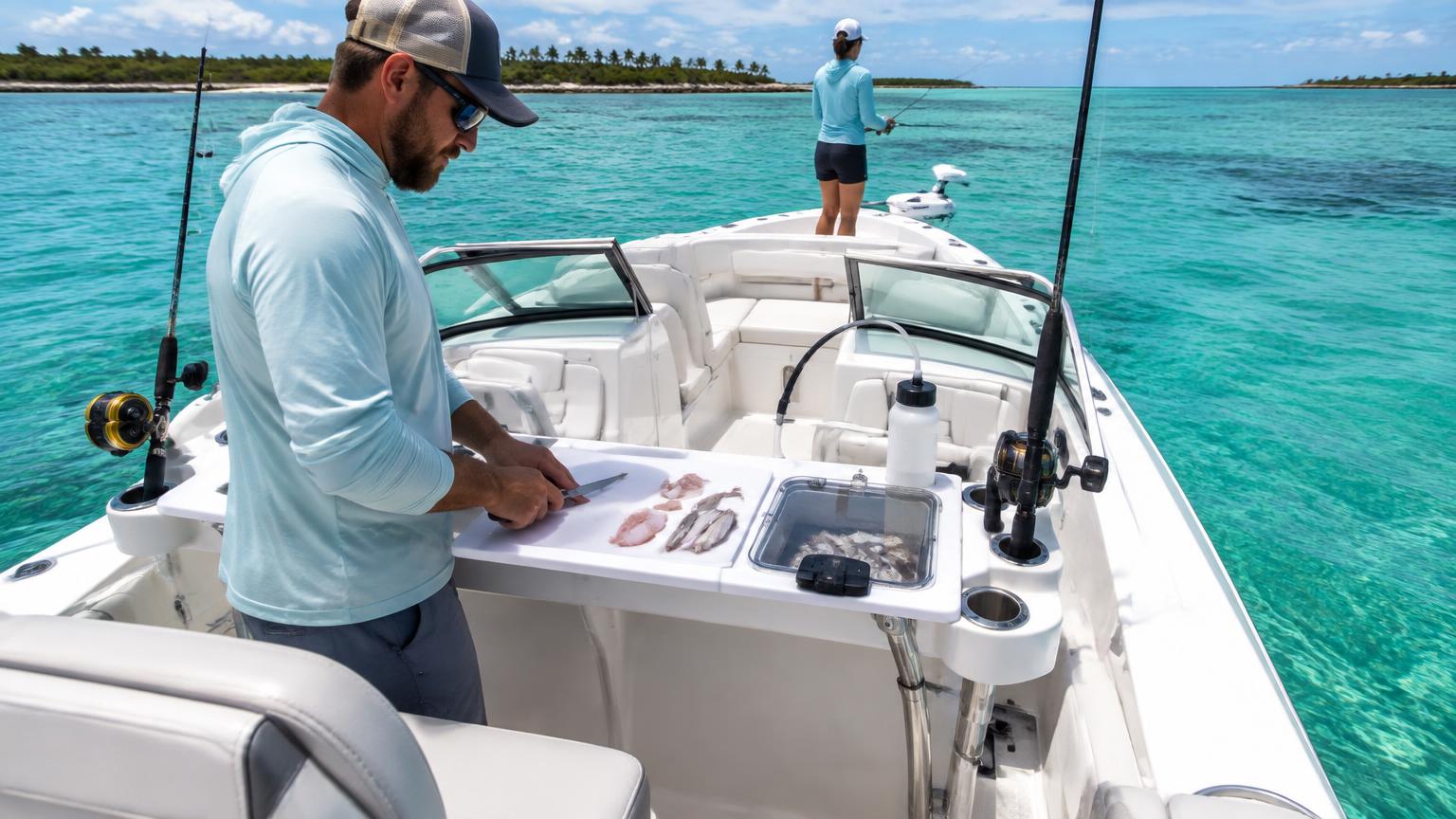
A removable bait board keeps cutting, rigging and fish handling away from seats. Transom-mounted boards are convenient, but the support must tolerate leverage without cracking fibreglass or distorting thin aluminium. Rail clamps, a properly engineered socket or an existing table pedestal are preferable to improvised screws. Rounded corners, a retaining lip and dedicated tool slots help contain the work.
Choose a board that lifts off for washing and does not obstruct the engine, ladder or tow point. Keep bait in a sealed container below until needed and collect every offcut rather than washing it into a marina. On a family boat, a clean board can double as a serving surface only after complete disinfection and with separate food utensils.
Add a stable bait board without damaging the boat · Bowrider Boats for Fishing
Portable live bait wells and catch storage
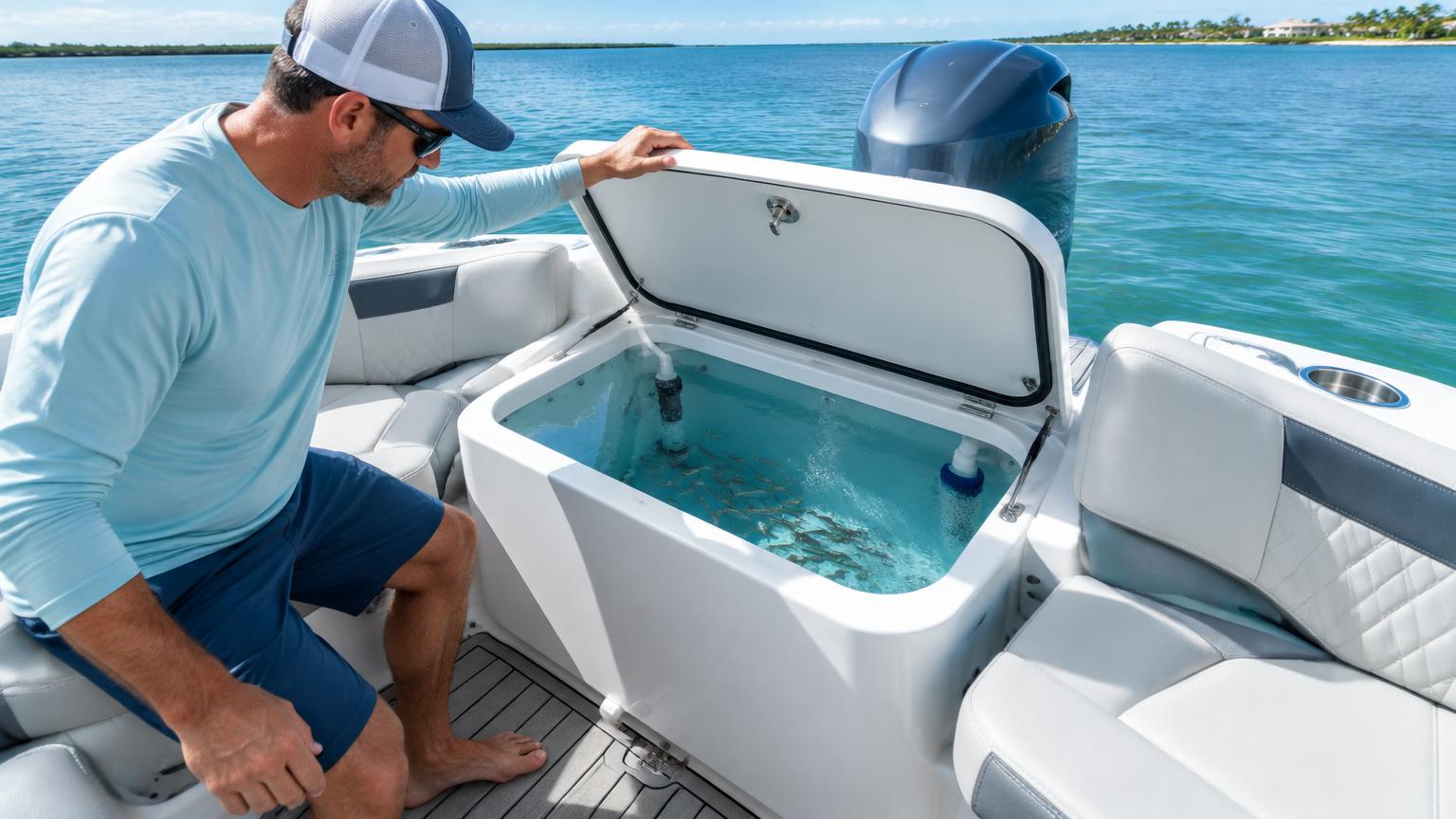
Some aluminium Cruiseabouts include a stern live-bait tank, while most fibreglass bowriders need a portable aerated tank or insulated cooler. A portable well must be secured low, supplied by protected wiring and sized for the bait species. Water is heavy—about one kilogram per litre—so a full 60-litre tank adds roughly 60 kilograms before pumps and equipment and must count toward capacity and trim.
Use a separate ice slurry or compliant catch bag for harvested fish; a live-bait well is not automatically a safe food-storage box. Drain water only where regulations allow, clean pumps and hoses after salt use, and never let a portable tank slide across the cockpit during acceleration or a sharp turn.
Portable live bait wells and catch storage · Bowrider Boats for Fishing
Bowrider models that adapt well to fishing
The Bayliner VR5 offers a wide 20-foot-class family layout, integrated cooler and outboard access, but it does not arrive as a dedicated fishing boat; removable holders, deck protection and portable bait storage do the conversion. The larger Cobalt R6 provides more separation between anglers and premium Coastal Edition hardware on relevant configurations, although its upholstery and price make careful protection essential. Exact dimensions, engines and equipment vary by model year and market.
The previous-generation Bayliner 185 deserves special mention because selected model years offered a documented factory Fishing option: an aerated livewell, bow casting platform and seat, bow-mounted MotorGuide electric motor, Lowrance fishfinder, rod storage and tackle bag. Availability differs by year and used boats may retain only part of the package, so verify the original build sheet rather than assuming every 185 has it.
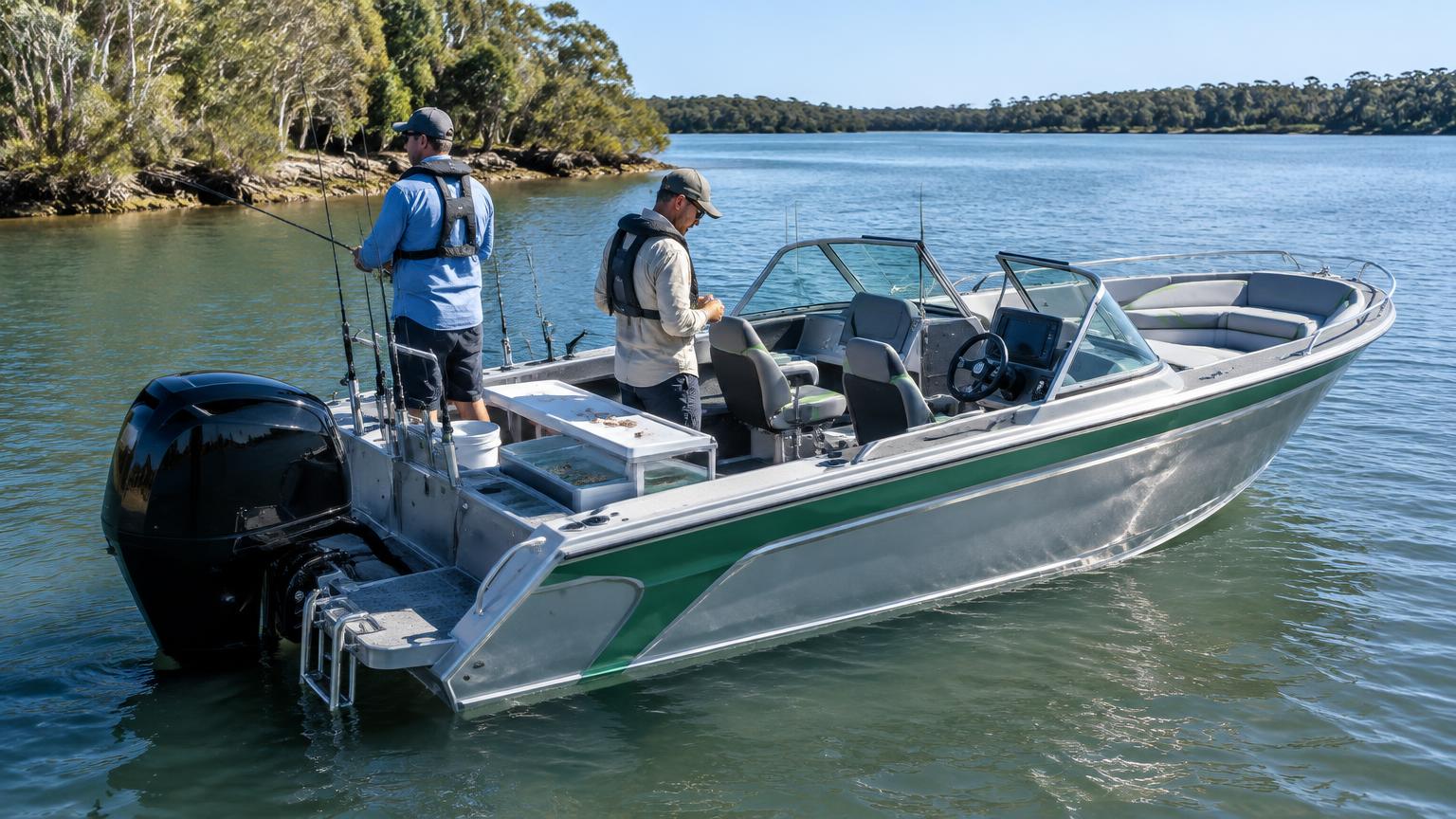
Quintrex 481, 510, 520, 540, 590 and 610 Cruiseabout models are family bowriders rather than dedicated fishing lines, yet their aluminium construction, outboard power and convertible rear areas suit mixed use. Depending on year and trim, buyers can find live-bait tanks, cutting boards, rod storage, sounders and bow-mount provisions; Cruiseabout Pro packages may bundle popular equipment. Also consider the Quicksilver Activ 605 Bowrider, Stacer 539 Outlaw Bowrider and Karnic SL 602 where locally available. Compare actual fitted hardware, not just brochure photography.
Bowrider models that adapt well to fishing · Bowrider Boats for Fishing
Electronics for finding fish and navigating home
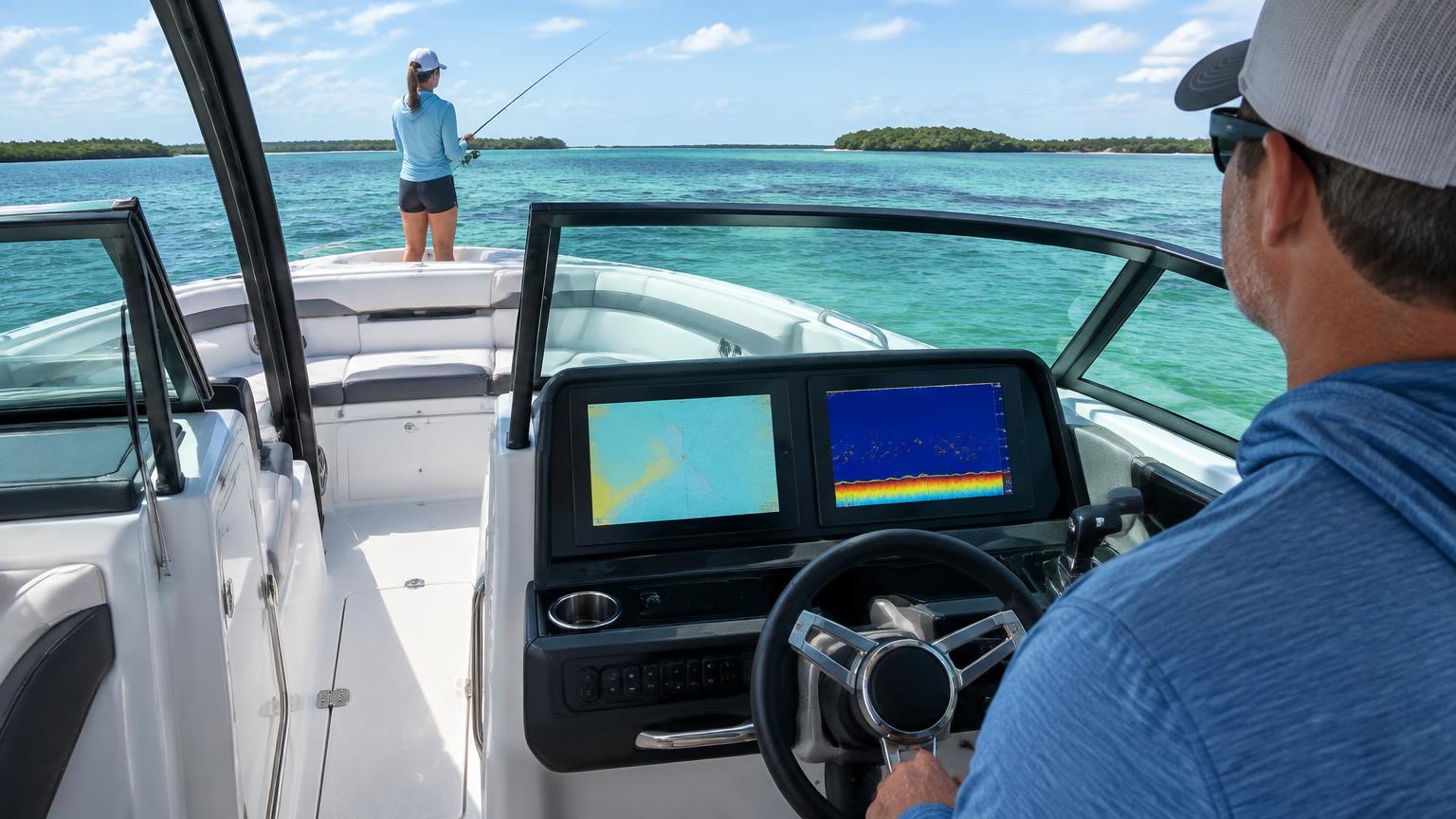
A compact chartplotter and sounder adds more value than decorative fishing accessories. Fit the display where the skipper can read depth, bottom contour and chart information without losing forward visibility. The transducer needs clean water flow and a location that will not be struck by the trailer, ladder or sterndrive. Professional installation avoids electrical noise and poorly sealed holes.
Create waypoints for ramps, channels and productive structure, but treat electronic charts as aids rather than guarantees. Carry the required navigation equipment, watch actual depth and keep software current. A handheld VHF or fixed radio appropriate to the operating area is a better safety investment than a larger sonar screen when trips extend beyond sheltered water.
Electronics for finding fish and navigating home · Bowrider Boats for Fishing
Bow-mounted electric motors and battery planning
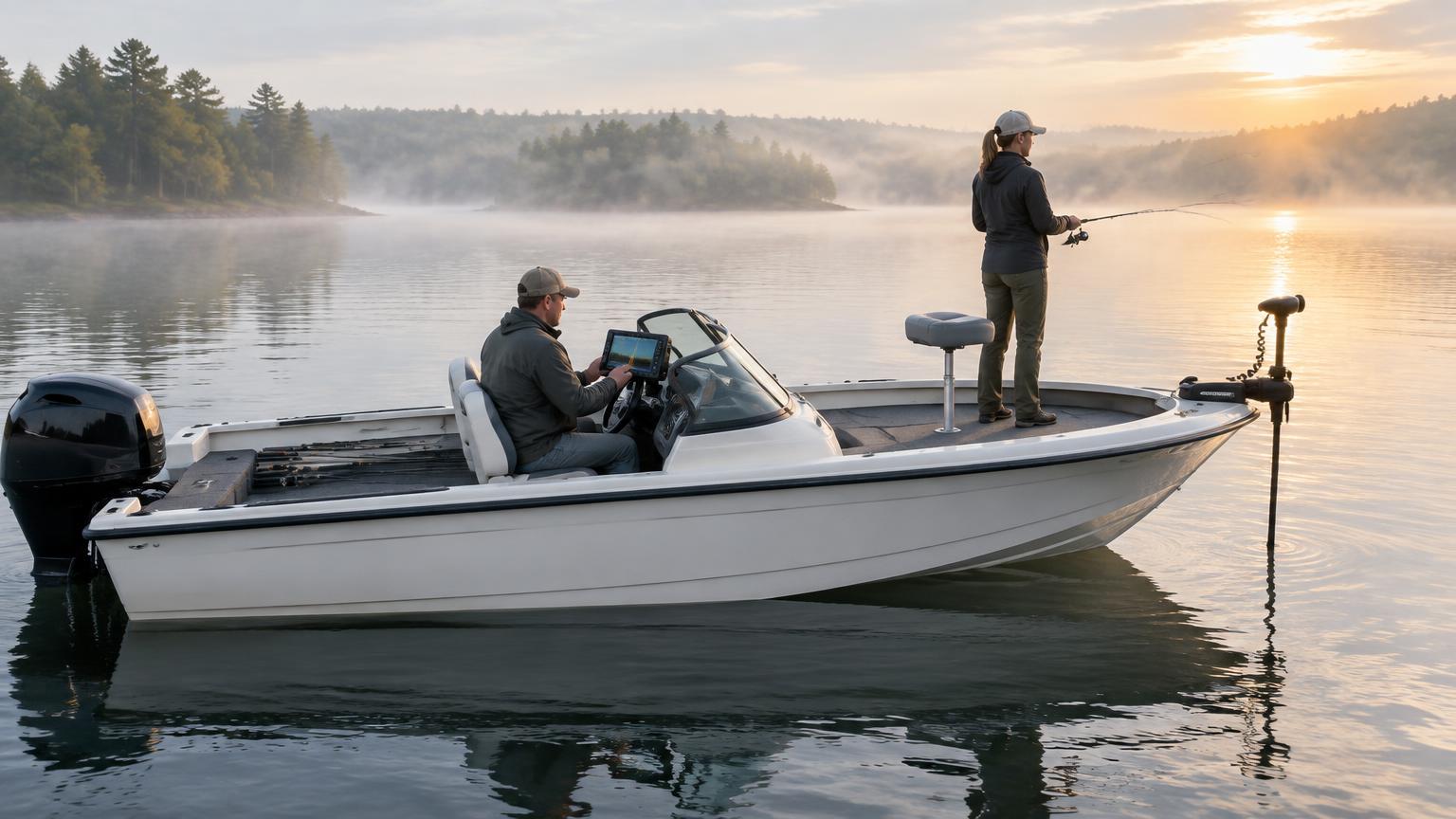
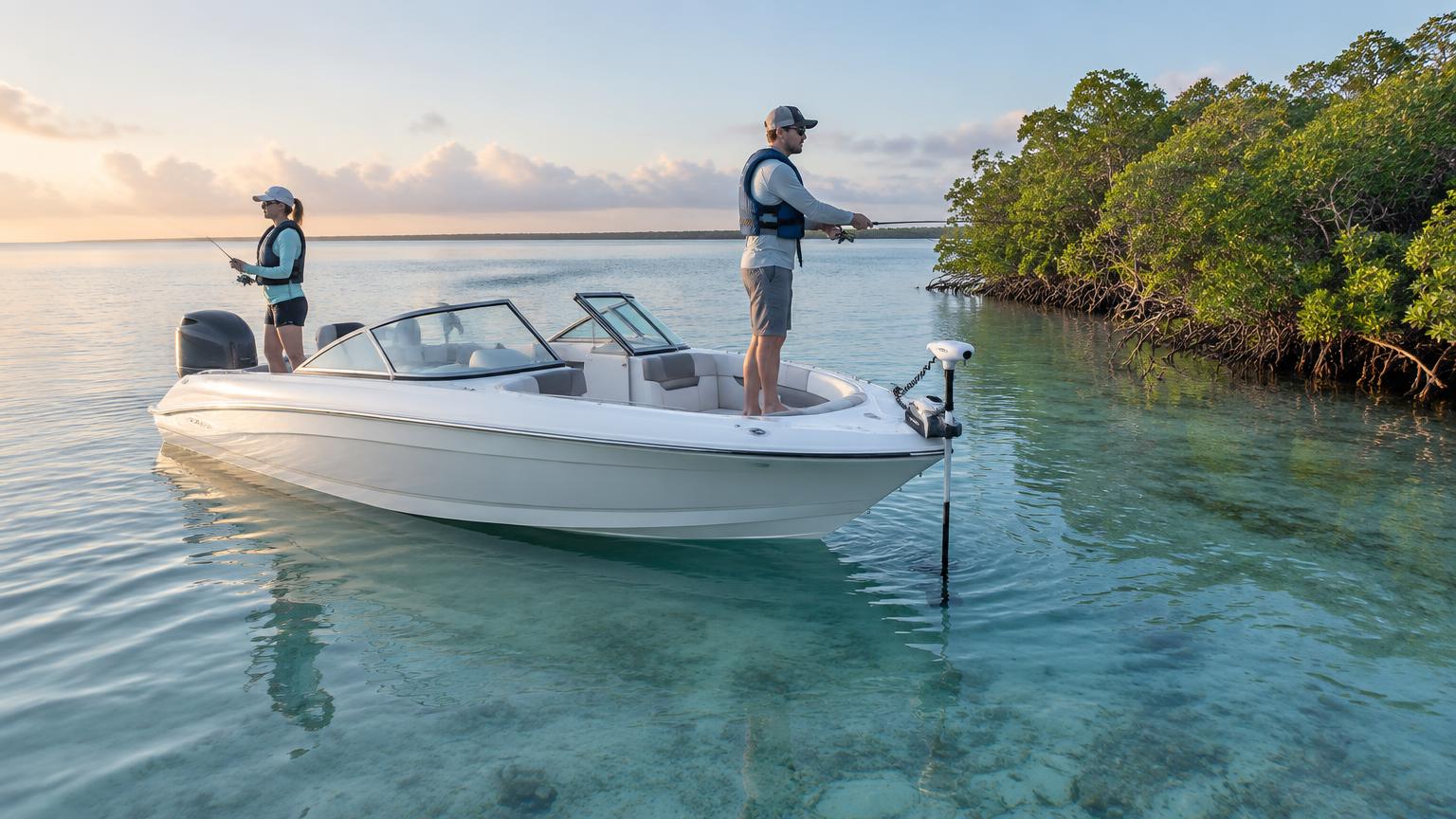
An electric motor can quietly hold the bow into wind or current and make repeated casts along a bank far easier. The challenge is structure: a bowrider's anchor locker, rails and curved deck may leave no strong, level mounting surface. Use a removable quick-release bracket designed by a marine fabricator or supported by the boat builder, and retain access to the anchor.
Battery weight and charging matter as much as thrust. Secure batteries in ventilated, protected boxes, fit correctly sized circuit protection and cabling, and place weight so the boat still trims correctly. Confirm shaft length for the bow's freeboard and expected chop. A wireless remote is useful, but the skipper must still maintain a lookout while controlling the boat.
Bow-mounted electric motors and battery planning · Bowrider Boats for Fishing
Safety, loading and passenger discipline
Fishing introduces sharp hooks, loose line and people standing where they normally sit. Everyone should wear an appropriate life jacket, footwear should grip wet decks, and children need a hook-free seating zone. Agree on casting directions, use hook covers during travel and carry a first-aid kit capable of handling punctures. Observe capacity plates and local rules after adding water tanks, batteries and tackle.
Weather limits matter. A bowrider can be excellent on lakes, rivers, estuaries and protected coastal water, but open bows can take water when driven poorly into steep following or head seas. Match the trip to the hull, experience and forecast; carry communications and reserve fuel; and return early when wind, visibility or bar conditions deteriorate.
Safety, loading and passenger discipline · Bowrider Boats for Fishing
Clean down and know the crossover limits
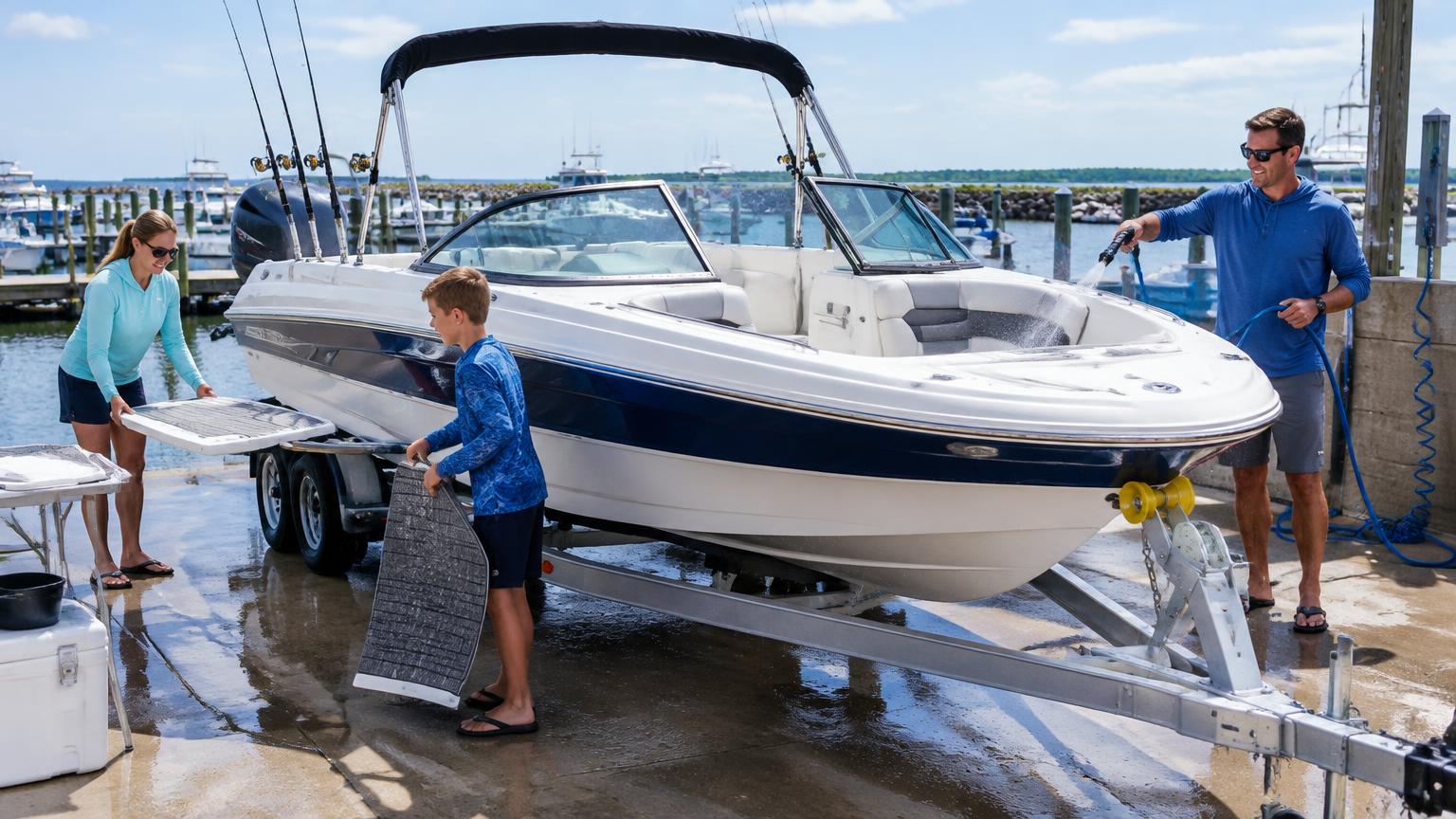
At the ramp, remove hooks and rubbish before folding seats back into place. Rinse salt, scales and bait residue with fresh water, wash deck mats separately, flush livewell plumbing and dry lockers with hatches open. Use cleaners approved for marine vinyl and aluminium or gelcoat, and avoid harsh solvents. Inspect upholstery seams immediately because a tiny hook puncture is easier to repair before water reaches the foam.
A converted bowrider will not provide the walk-around access, high gunwales, plumbed systems or uncluttered wash-down deck of a centre console, bass boat or dedicated plate-alloy fishing boat. It is the right answer when fishing shares the calendar with cruising, swimming and watersports. If nearly every outing is offshore fishing, buy the purpose-built tool; if the family wants one boat for many activities, a carefully arranged bowrider can handle a serious session and still be comfortable on Sunday afternoon.
Clean down and know the crossover limits · Bowrider Boats for Fishing
Bowrider models that suit fishing
These crossover bowriders offer useful space or proven equipment for inshore and freshwater fishing while retaining family seating. Check the exact year, trim and fitted options before buying.
Bayliner Bayliner DX2000 — Our Featured Bowrider This Week
Bayliner Bayliner DX2000 — three-quarter bow view on crystal clear water. Images Created by www.Bowrider-Boats.com
This week we are putting the Bayliner Bayliner DX2000 in the spotlight, and it earns the spot. At 20 ft 2 in (6.16 m) long on a 8 ft (2.44 m) beam, this is a bowrider that reads the water well and still feels roomy enough for a full day out. A 20-foot deck-boat-width bowrider with outboard power and a huge social cockpit. Power comes from 115-150 hp mercury fourstroke outboard through a outboard package, and the fibreglass hull keeps the ride settled when the afternoon breeze puts a chop on the surface.
Seating is rated for 8 people, so there is space for family, friends, towels, eskies and the tow rope without anyone climbing over gear. Owners tend to buy it for family, water ski, leisure — which is exactly where it shines. Fuel is 30 us gal (114 l), and on the second-hand and new market you should expect to land somewhere around US$42,000 - US$58,000 new depending on hours, trailer and options.
Our full deep dive covers the layout in detail: bow lounge comfort, helm ergonomics, the rear entertaining area, storage that actually swallows a weekend, plus standard features, popular options and honest notes on where the boat compromises. If the Bayliner DX2000 is on your shortlist, start there — and check back next week, because the featured boat changes every week as we complete more full model reviews.
Bowrider vs Cuddy Cabin: Open Bow or Enclosed? — Images Created by www.Bowrider-Boats.com
A cuddy cabin takes the same hull as a bowrider and decks over the bow to create a small enclosed space. Whether that is an upgrade or a downgrade depends entirely on whether you would rather sit in the sun or shelter from it. Shelter is the headline benefit. A cuddy provides a place to change, keep gear dry, escape rain or sun, and install a portable toilet — which is a genuine game-changer for families with young children or for anyone boating in unpredictable weather. It also offers lockable storage. Cameras, phones, wallets and fishing tackle can live behind a cabin door rather than in an open locker, and many cuddies include a V-berth cushion set for occasional overnight stays at anchor. Seating and sociability. A bowrider's forward lounges add four seats and turn the front of the boat into the best place to sit at anchor. Decking that area over removes it, and the cabin space you gain is small, dark and awkward compared with a proper cabin boat. Most cuddy cabins in the 5.5-7.0 m range are too cramped to sleep in comfortably for more than a night. Many owners end up using the space purely as a wet locker, which is…