Menu
Site Menu — Find Your Page
Bowrider Boats Mega Website
On the Water
Bowrider Seating and Layout Explained
The bow lounges
Two facing lounges run forward from the windscreen, usually seating two to four people, with backrests moulded into the hull sides and cushions over deep storage lockers. Longer lounges are worth seeking out because they allow adults to stretch out and double as sun beds at anchor.
Good bow areas include filler cushions that turn the whole space into a single sun pad, an insert table for picnics, drink holders, speakers, a bow ladder or step-through gate, and a cover or tonneau for towing and rougher water. Check the depth of the bow sides too — shallow sides feel exposed at speed.
Helm and companion seating
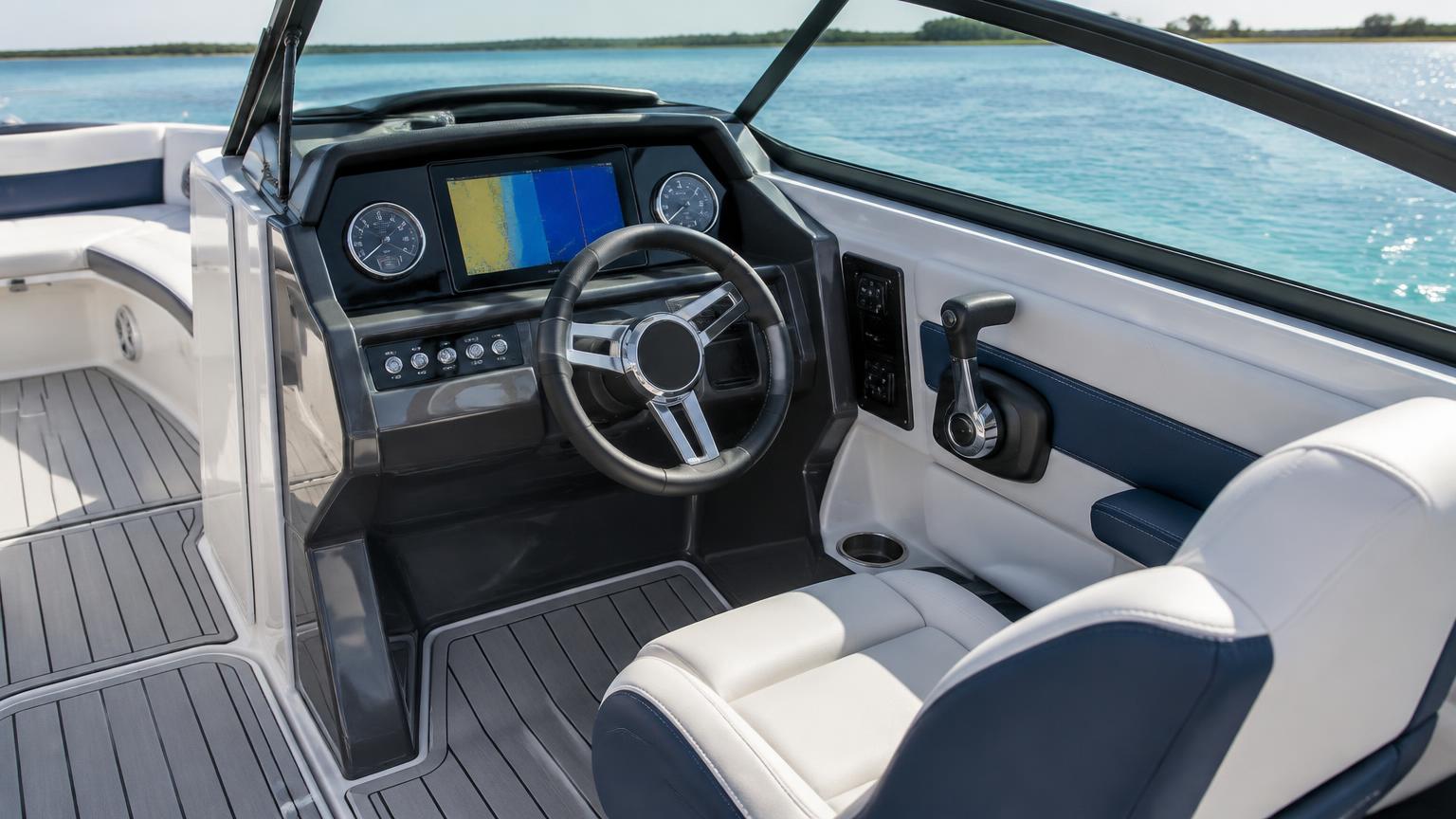
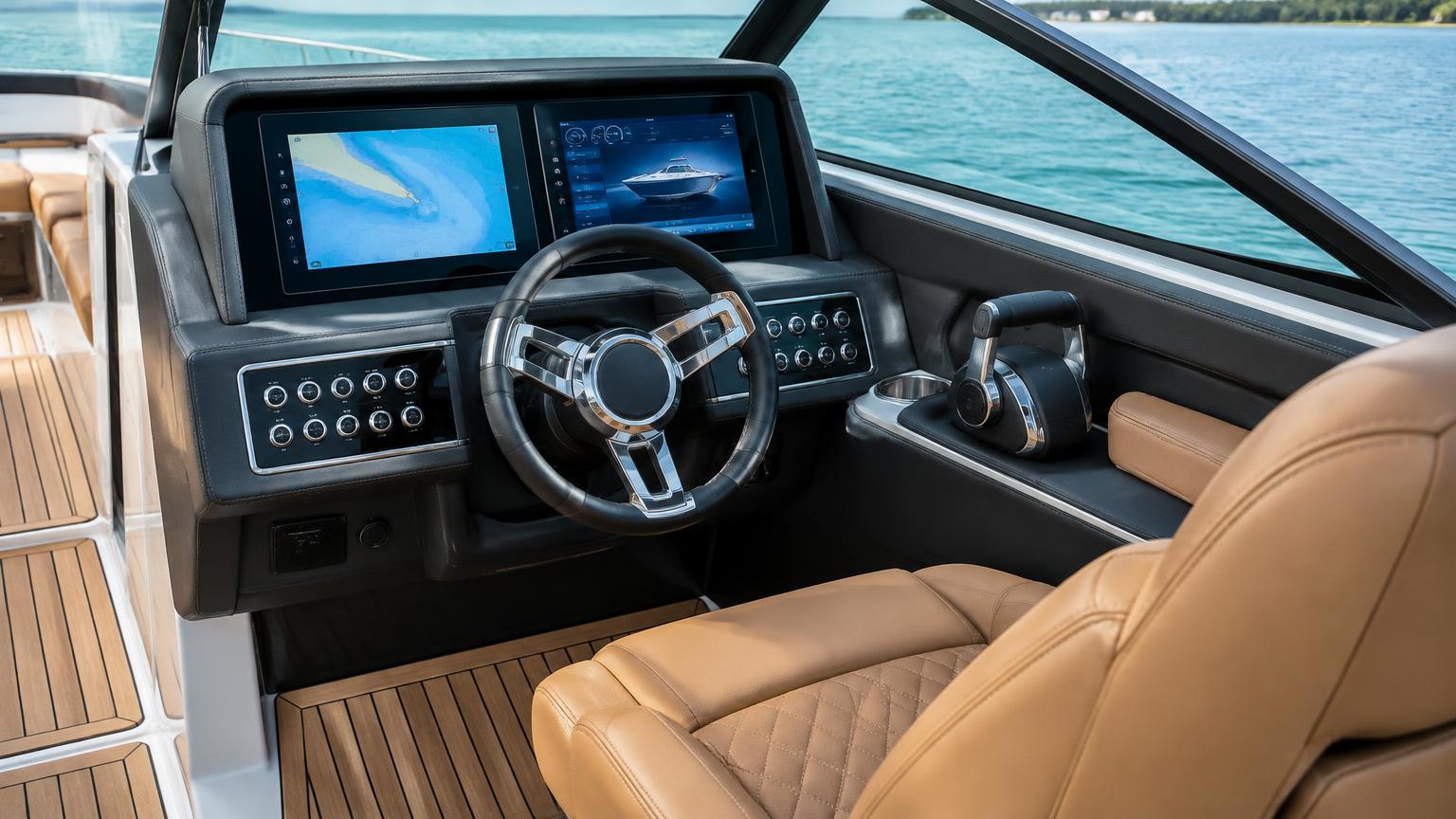
The helm seat should adjust fore and aft, offer a flip-up bolster for standing, and give a clear sightline over the bow when the boat is planing. A dash with room for a chartplotter, clean switch layout and readable gauges makes every trip easier.
Opposite it, the companion seat may be a simple bucket, a double lounge or a reversible seat that faces aft for watching skiers. Reversible and swivel companion seats add enormous flexibility, especially on tow-sport boats where a spotter needs to face backwards.
Rear lounge, sun pad and platform
The rear bench is where a bowrider becomes a social boat. Full-width benches seat three or four, and the best designs convert: backrests that fold flat into a sun pad, seat bases that flip to face the swim platform, or a rear-facing lounge for watching the wake.
Beyond it sits the swim platform and boarding ladder, wider on sterndrive boats and split around the leg on outboard boats. Look for a telescopic ladder deep enough to use comfortably, a freshwater shower, a ski locker in the floor and a transom walk-through.
Storage, fishing and choosing a layout
Storage decides how relaxed a boat feels. Look for a full-length in-floor ski locker, deep bow lockers, a dedicated anchor well, under-seat compartments that drain, an insulated esky or livewell, and somewhere dry and lockable for phones and keys.
Then match the layout to your use. Families want long bow lounges, a convertible rear seat and lots of storage. Fishing owners want removable cushions, casting space, a livewell and rod holders. Tow-sport owners want a reversible seat, a tower or ski pole and a big ski locker. The hull matters, but the layout is what you live with every trip.
Keep reading
Buying Advice
How Many People Fit in a Bowrider?
On the Water
Which Bowrider Is Best for Fishing?
Ownership
Bowrider Accessories Worth Buying
On the Water
Which Bowriders Make the Best Day Boats?
On the Water
The Best Bowriders for Wake and Water Ski
On the Water
Can You Take a Bowrider Offshore?
On the Water
How to Drive a Bowrider
On the Water
Best Bowrider Boats for Overnight Camping
Featured Boat of the Week
Bayliner Bayliner DX2000 — Our Featured Bowrider This Week

This week we are putting the Bayliner Bayliner DX2000 in the spotlight, and it earns the spot. At 20 ft 2 in (6.16 m) long on a 8 ft (2.44 m) beam, this is a bowrider that reads the water well and still feels roomy enough for a full day out. A 20-foot deck-boat-width bowrider with outboard power and a huge social cockpit. Power comes from 115-150 hp mercury fourstroke outboard through a outboard package, and the fibreglass hull keeps the ride settled when the afternoon breeze puts a chop on the surface.
Seating is rated for 8 people, so there is space for family, friends, towels, eskies and the tow rope without anyone climbing over gear. Owners tend to buy it for family, water ski, leisure — which is exactly where it shines. Fuel is 30 us gal (114 l), and on the second-hand and new market you should expect to land somewhere around US$42,000 - US$58,000 new depending on hours, trailer and options.
Our full deep dive covers the layout in detail: bow lounge comfort, helm ergonomics, the rear entertaining area, storage that actually swallows a weekend, plus standard features, popular options and honest notes on where the boat compromises. If the Bayliner DX2000 is on your shortlist, start there — and check back next week, because the featured boat changes every week as we complete more full model reviews.
Featured Bowrider Article
Bowrider vs Deck Boat
Comparisons
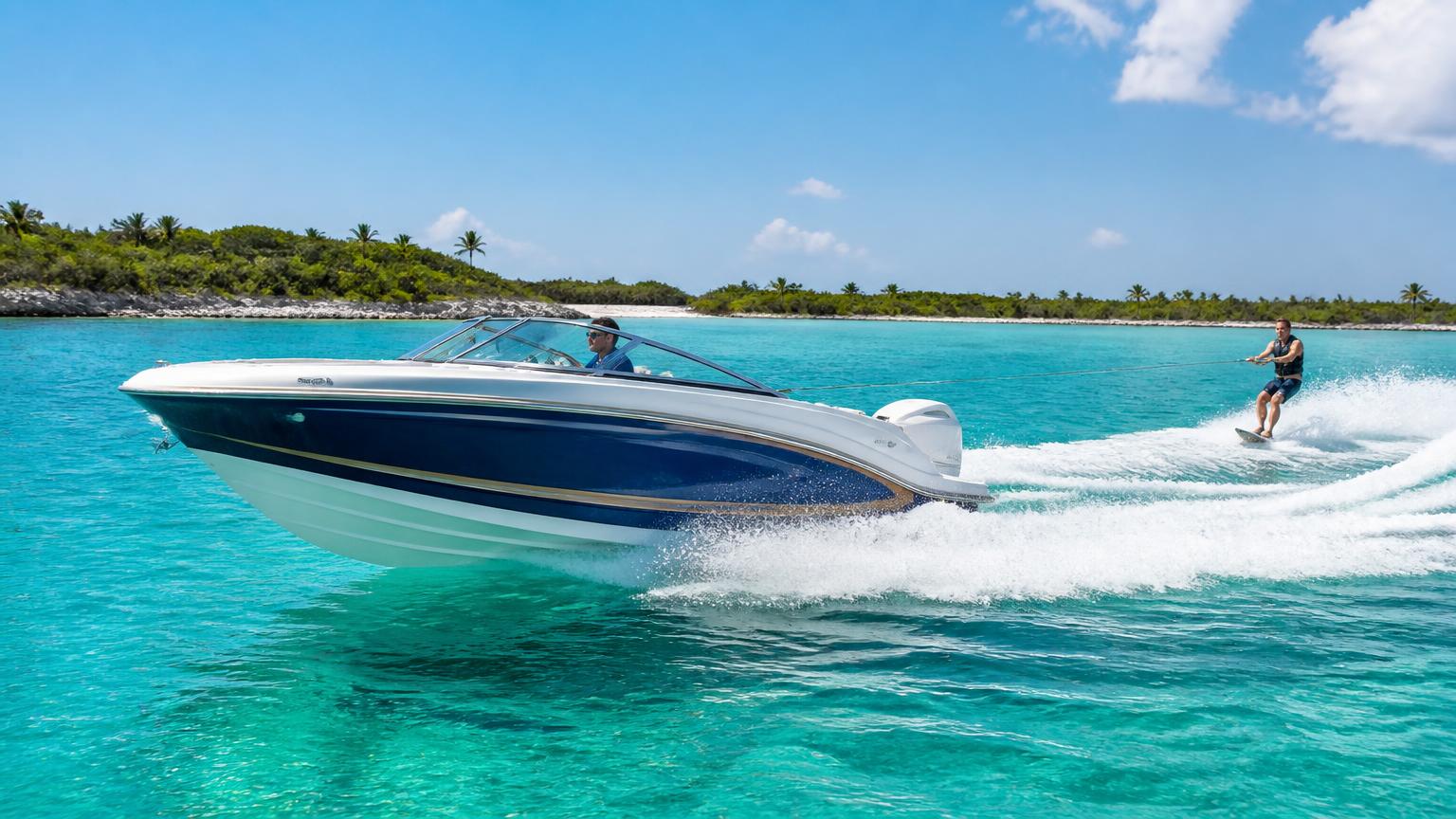
Bowriders and deck boats look related, and many buyers cross-shop them. The difference sits entirely in the bow: a bowrider tapers to a pointed entry, while a deck boat carries its beam right forward to a broad, blunt bow. That one change alters space, ride and personality completely. The deck boat wins on volume. Carrying full beam to the bow creates a large forward lounge area, often with a walk-through gate and space for four or five people up front. Total capacity on a deck boat is typically two to four higher than a bowrider of the same length. The bowrider trades that volume for a narrower, more sheltered bow. Its forward lounges are more intimate, better protected from spray, and more comfortable at speed because they sit further inboard. A pointed bow parts waves. That is why bowriders ride more comfortably in a chop, stay drier at speed and handle open water better. Deck boats with blunt bows can pound and throw spray when conditions get lumpy, though modern deck boat hulls are far better than early designs. Deck boats are more stable at rest, thanks to that carried-forward beam, and they plane easily. For calm lakes and rivers they are excellent. For coastal…
Read the full article