Menu
Site Menu — Find Your Page
Bowrider Boats Mega Website
On the Water
The Best Bowriders for Wake and Water Ski
Ski, wake and surf are different jobs
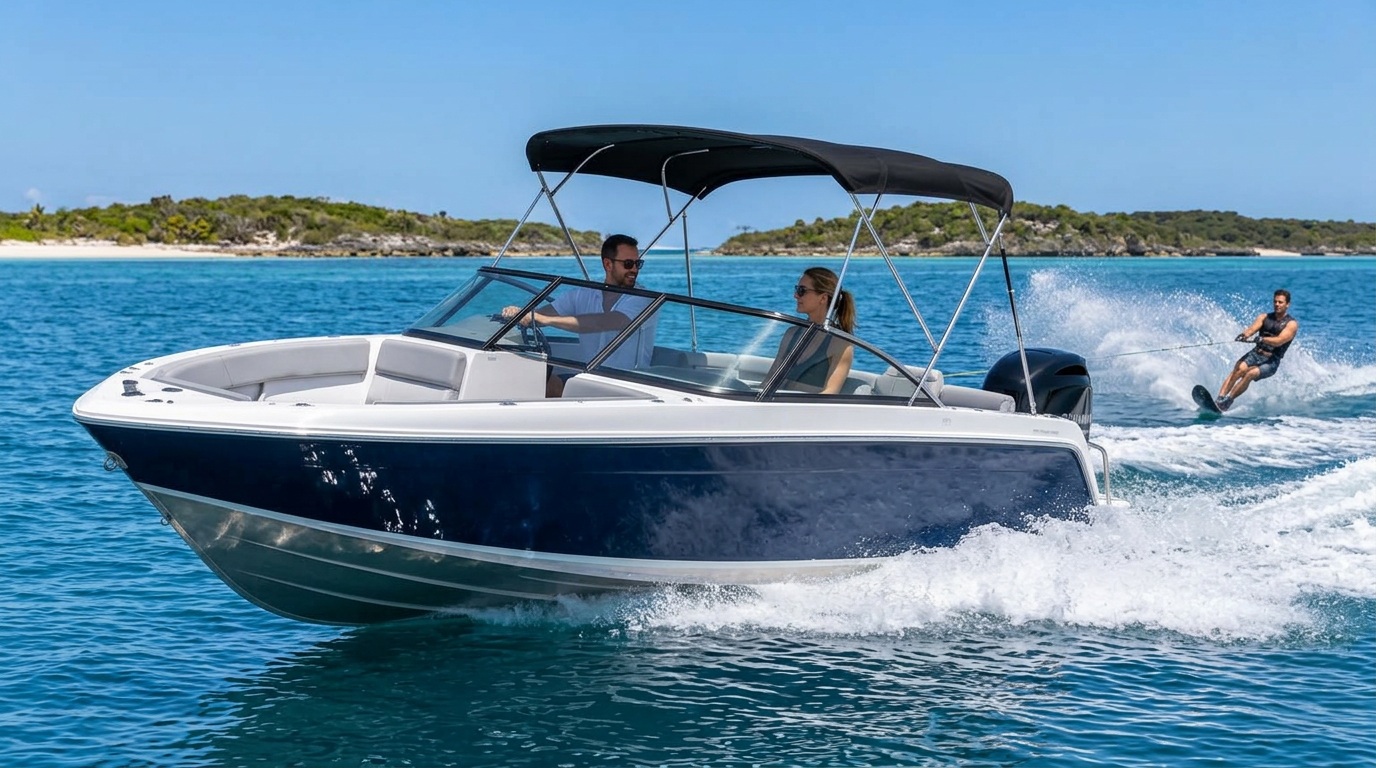
Slalom water skiing wants a small, hard, flat wake at 48-58 km/h (30-36 mph). That comes from a lighter boat, a direct-drive or sterndrive layout with the engine positioned to keep the stern from squatting, and a hull that runs level.
Wakeboarding wants the opposite: a bigger, cleaner, ramp-shaped wake at 30-38 km/h (19-24 mph), which means weight in the stern, ballast and a tower to lift the rope. Wake surfing goes further still, demanding an inboard V-drive, heavy asymmetric ballast and surf-gate technology to shape a rideable wave — something almost no conventional bowrider can produce safely with an outboard or sterndrive leg.
Hull and drive choices
For an all-round family towsports bowrider, a moderate-deadrise fibreglass hull of 5.5-6.7 m with a sterndrive is hard to beat. The inboard engine mass keeps the boat planted, the drive leg is protected, and the hull holds a plane cleanly at ski speeds.
Outboard bowriders tow perfectly well and are simpler to own, but the leg sits directly in the rider's path, so a longer rope and careful driving matter. If wake surfing is the goal, buy a purpose-built V-drive tow boat instead — the propeller position on an outboard or sterndrive makes surfing close behind the boat genuinely dangerous.
Features that make a real difference
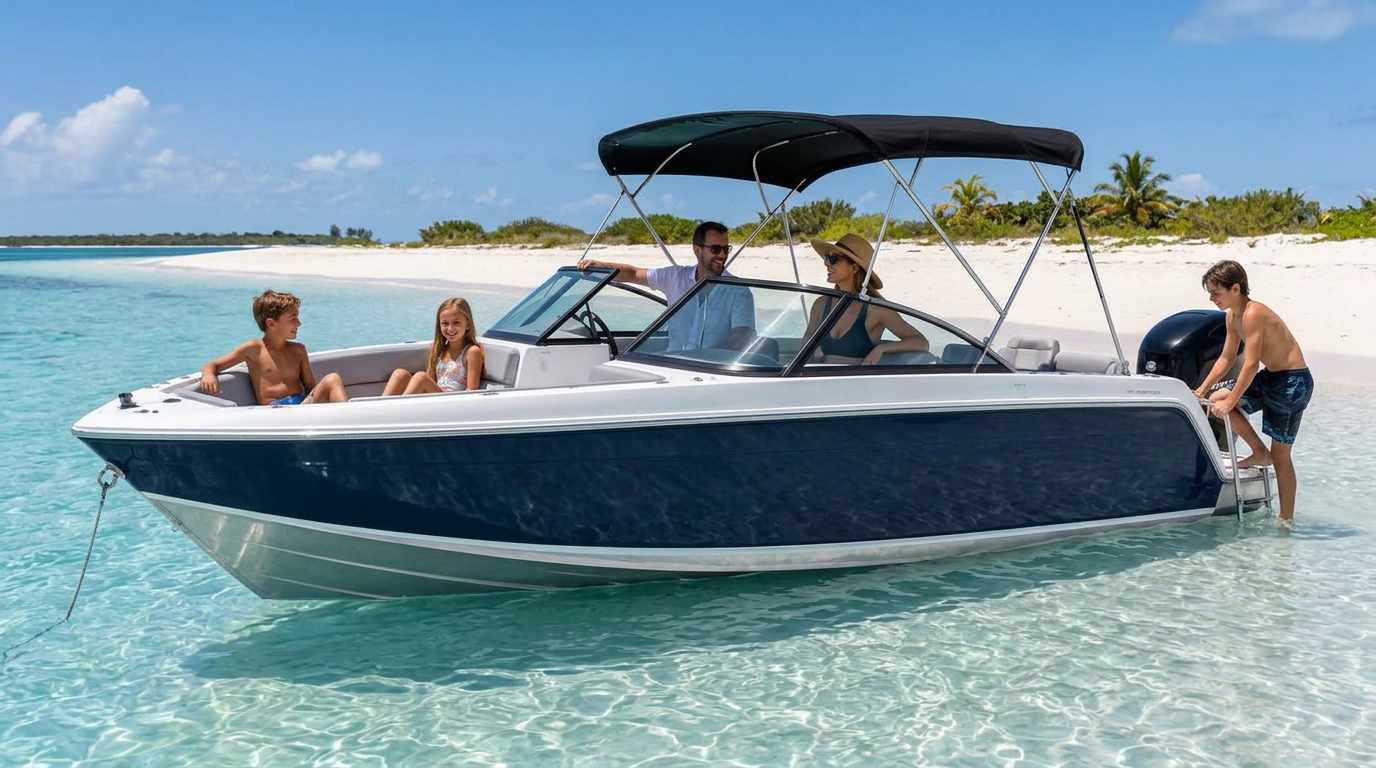
A proper tow point is first. A ski pylon or a tower is far better than a transom eye, because a high tow point reduces the boat's tendency to be pulled down at the stern and gives the rider a cleaner pull. Perfect-pass style speed control is the next upgrade, since consistent speed is what makes skiing enjoyable.
Beyond that, look for a walk-through transom, a large wet locker for boards and vests, an observer seat with a clear view aft, a mirror, and enough freeboard that a skier can climb aboard easily. Ballast tanks or removable weight bags let one boat serve both skiers and wakeboarders.
Choosing between a bowrider and a dedicated tow boat
Dedicated tow boats from builders such as Malibu, MasterCraft and Nautique produce better wakes, full stop. They also carry fewer people comfortably, cost far more, and are less pleasant as general-purpose day boats.
A bowrider is the right answer when towsports are one of several uses. Buy the biggest sensible engine, insist on a tower or pylon, add ballast if you wakeboard, and you will have a boat that tows the kids all morning and cruises the family to lunch afterwards — something no dedicated wake boat does as well.
Keep reading
On the Water
Which Bowriders Make the Best Day Boats?
Engines & Drives
Should I Buy a Stern Drive Bowrider?
Ownership
Bowrider Accessories Worth Buying
On the Water
Which Bowrider Is Best for Fishing?
On the Water
Can You Take a Bowrider Offshore?
On the Water
Bowrider Seating and Layout Explained
On the Water
How to Drive a Bowrider
On the Water
Best Bowrider Boats for Overnight Camping
Featured Boat of the Week
Bayliner Bayliner DX2000 — Our Featured Bowrider This Week

This week we are putting the Bayliner Bayliner DX2000 in the spotlight, and it earns the spot. At 20 ft 2 in (6.16 m) long on a 8 ft (2.44 m) beam, this is a bowrider that reads the water well and still feels roomy enough for a full day out. A 20-foot deck-boat-width bowrider with outboard power and a huge social cockpit. Power comes from 115-150 hp mercury fourstroke outboard through a outboard package, and the fibreglass hull keeps the ride settled when the afternoon breeze puts a chop on the surface.
Seating is rated for 8 people, so there is space for family, friends, towels, eskies and the tow rope without anyone climbing over gear. Owners tend to buy it for family, water ski, leisure — which is exactly where it shines. Fuel is 30 us gal (114 l), and on the second-hand and new market you should expect to land somewhere around US$42,000 - US$58,000 new depending on hours, trailer and options.
Our full deep dive covers the layout in detail: bow lounge comfort, helm ergonomics, the rear entertaining area, storage that actually swallows a weekend, plus standard features, popular options and honest notes on where the boat compromises. If the Bayliner DX2000 is on your shortlist, start there — and check back next week, because the featured boat changes every week as we complete more full model reviews.
Featured Bowrider Article
Saltwater vs Freshwater Bowrider Ownership
Ownership
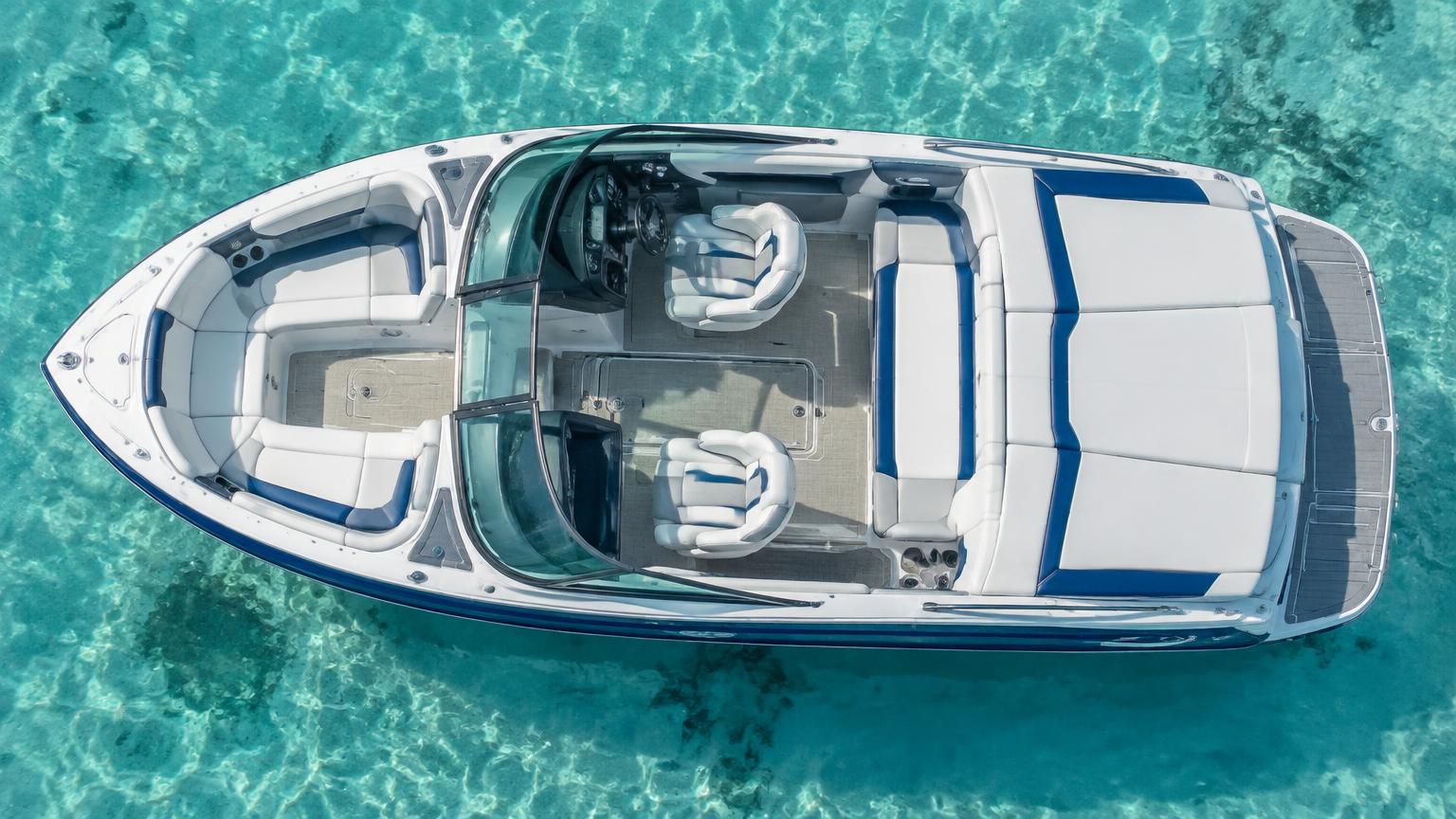
The same bowrider used in salt water and fresh water leads two very different lives. Salt does not merely age a boat faster; it attacks specific components relentlessly. The good news is that the defence is simple, cheap and entirely within your control. Cooling systems come first. Salt deposits build up inside engine passages, manifolds and risers, restricting flow and eventually causing overheating and internal corrosion. Sterndrives are more exposed than outboards because raw water passes through more of the engine. Then electrics: connectors, terminals, switch panels, trailer wiring and plugs corrode from salt-laden air even on boats that are never submerged. Aluminium components — outboard legs, trim rams, alloy hulls, trailer frames and fittings — face galvanic corrosion, and stainless fasteners in aluminium make it worse where no isolation exists. Flush the engine with fresh water after every single trip, without exception, using the correct flush connection and running long enough for water to leave clean. Hose the boat, trailer and especially the trailer brakes and lights thoroughly, and rinse the bilge. Wash and dry upholstery to remove salt crystals that abrade and dry out vinyl, then treat with a marine protectant. Spray a corrosion inhibitor on the engine cowling internals, battery terminals and…
Read the full article