Menu
Site Menu — Find Your Page
Bowrider Boats Mega Website
On the Water
Which Bowrider Is Best for Fishing?
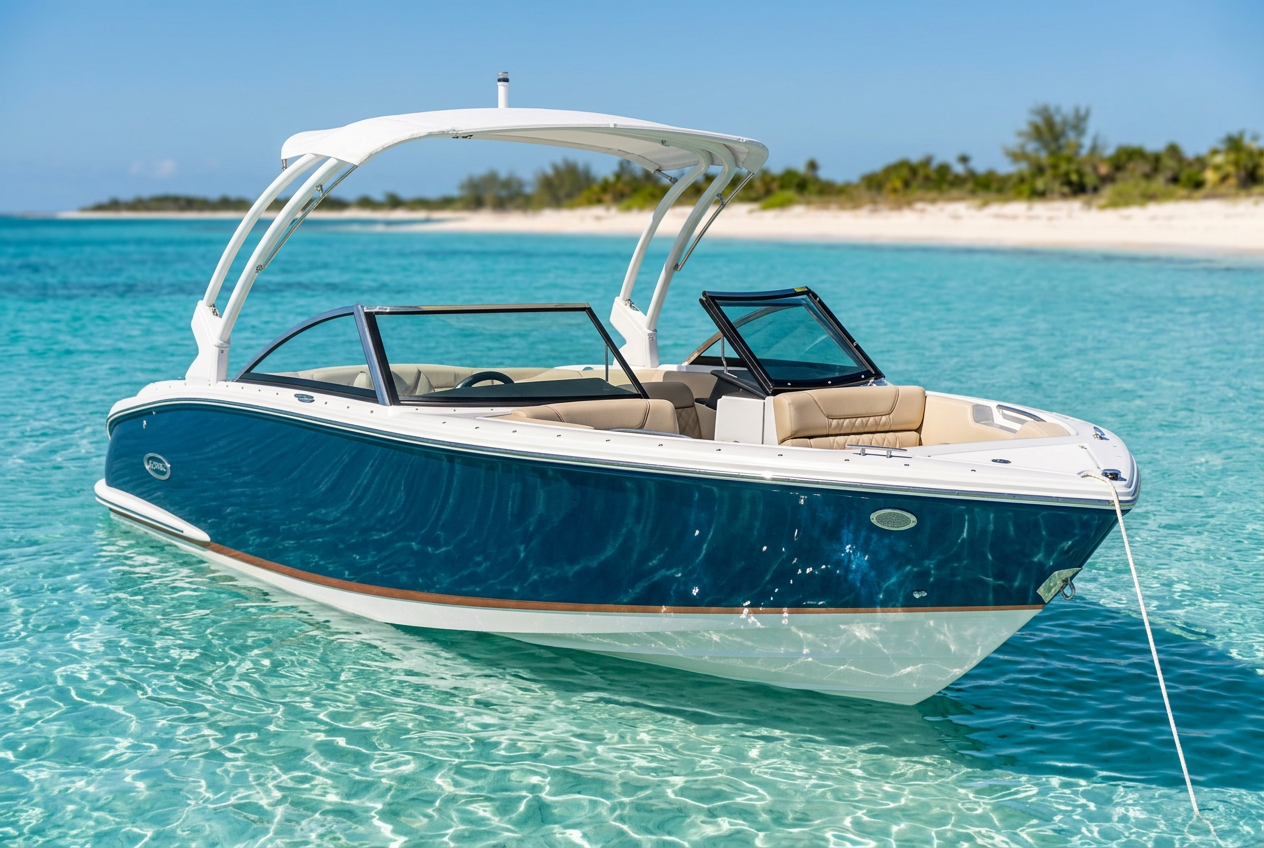
Bowriders are social boats first, which is why purists say they cannot fish. That is out of date. A well-specified bowrider fishes perfectly well for most people, provided you buy for the features that matter and accept the limits of an open-bow layout.
What makes a bowrider fish well
Start with the deck. Removable bow cushions and a flat, unobstructed bow floor turn the front of the boat into a casting platform in under a minute. Boats with fixed, moulded-in bow furniture cannot do this, and no accessory will fix it.
Next, look for a self-draining or easily washed floor, rod holders in the gunwales, a wet locker or fish box with a drain, and a transom you can land a fish over. A live well and a bait board are bonuses; a boat you can hose out is essential.
Aluminium bowriders often out-fish fibreglass here simply because owners treat them more casually. A hull you do not mind dropping a lead sinker onto is a hull you will actually fish from.
Hull and power choices
For estuary, bay and lake fishing, a moderate-deadrise hull in the 5.0-6.0 m range hits the balance between stability at rest and a comfortable run home. Deep-V hulls ride better offshore but roll more when you stop, which matters when three people are casting.
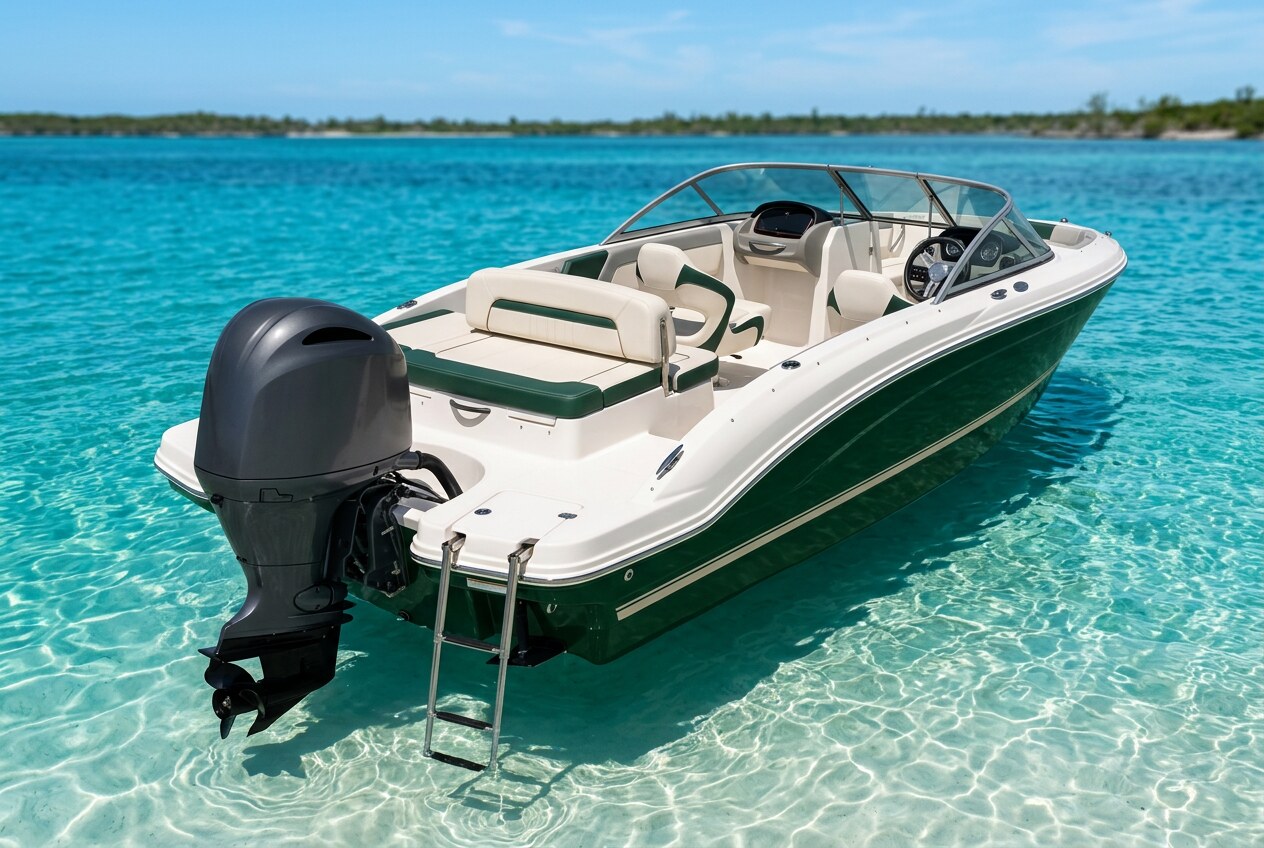
Outboard power is the natural fishing choice: it clears the cockpit, tilts up in shallows, idles cleanly for trolling and leaves the transom free for landing fish. Reverse chines and a wide beam add the at-rest stability that keeps everyone comfortable when the boat is not moving.
Convertible models are the sweet spot
The most useful fishing bowriders are the convertible ones — boats marketed for family use that also accept a bait board, extra rod holders and a portable live well. Many aluminium builders sell exactly this configuration, sometimes badged as a fish-and-ski or sports fisher bowrider.
Sunday it carries six people to the sandbar with the cushions in; Saturday morning it fishes with the cushions in the garage. That flexibility is why bowriders outsell dedicated fishing boats in most family markets.
Where bowriders fall short
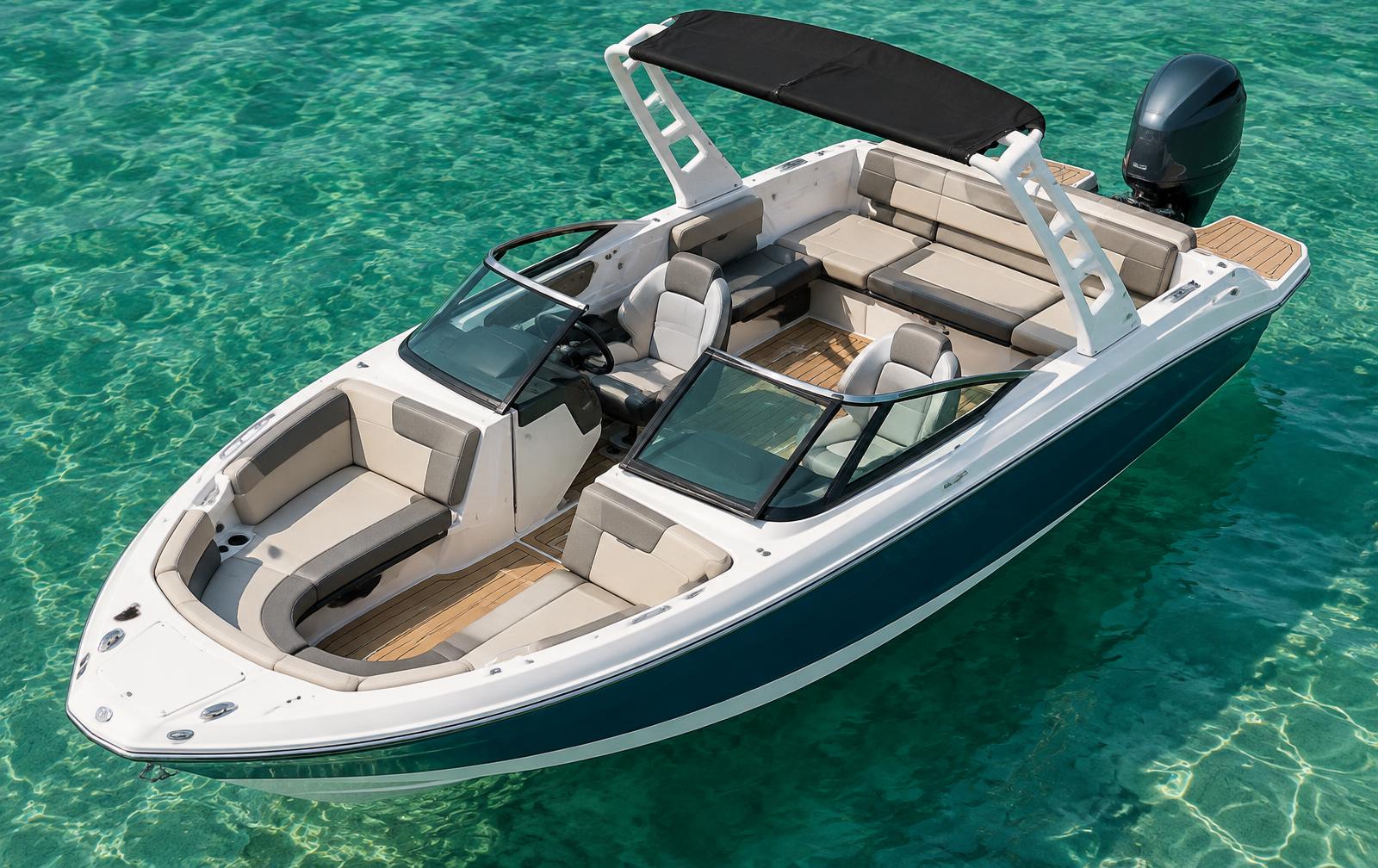
An open bow is wet and exposed in serious offshore conditions, and there is nowhere to shelter. Bowriders also lack the plumbed live wells, insulated kill tanks, casting platforms and deck space of a purpose-built fishing boat, so if you fish hard, far out and often, buy a fishing boat.
For the far larger group who fish twenty times a year and cruise with family the rest of the time, a well-chosen bowrider with a flat bow, rod holders, a wash-down system and a good sounder does the job with almost no compromise where it counts.
Keep reading
On the Water
Which Bowriders Make the Best Day Boats?
Ownership
Saltwater vs Freshwater Bowrider Ownership
On the Water
Bowrider Seating and Layout Explained
On the Water
The Best Bowriders for Wake and Water Ski
On the Water
Can You Take a Bowrider Offshore?
On the Water
How to Drive a Bowrider
On the Water
Best Bowrider Boats for Overnight Camping
Featured Boat of the Week
Bayliner Bayliner DX2000 — Our Featured Bowrider This Week

This week we are putting the Bayliner Bayliner DX2000 in the spotlight, and it earns the spot. At 20 ft 2 in (6.16 m) long on a 8 ft (2.44 m) beam, this is a bowrider that reads the water well and still feels roomy enough for a full day out. A 20-foot deck-boat-width bowrider with outboard power and a huge social cockpit. Power comes from 115-150 hp mercury fourstroke outboard through a outboard package, and the fibreglass hull keeps the ride settled when the afternoon breeze puts a chop on the surface.
Seating is rated for 8 people, so there is space for family, friends, towels, eskies and the tow rope without anyone climbing over gear. Owners tend to buy it for family, water ski, leisure — which is exactly where it shines. Fuel is 30 us gal (114 l), and on the second-hand and new market you should expect to land somewhere around US$42,000 - US$58,000 new depending on hours, trailer and options.
Our full deep dive covers the layout in detail: bow lounge comfort, helm ergonomics, the rear entertaining area, storage that actually swallows a weekend, plus standard features, popular options and honest notes on where the boat compromises. If the Bayliner DX2000 is on your shortlist, start there — and check back next week, because the featured boat changes every week as we complete more full model reviews.
Featured Bowrider Article
The Best Bowriders for Wake and Water Ski
On the Water
Towsports ask more of a hull than any other use. A boat that is perfect for slalom skiing is wrong for wakeboarding, and a wake-surf boat is useless for a beginner skier. Understanding what you tow, and at what speed, tells you exactly which bowrider to buy. Slalom water skiing wants a small, hard, flat wake at 48-58 km/h (30-36 mph). That comes from a lighter boat, a direct-drive or sterndrive layout with the engine positioned to keep the stern from squatting, and a hull that runs level. Wakeboarding wants the opposite: a bigger, cleaner, ramp-shaped wake at 30-38 km/h (19-24 mph), which means weight in the stern, ballast and a tower to lift the rope. Wake surfing goes further still, demanding an inboard V-drive, heavy asymmetric ballast and surf-gate technology to shape a rideable wave — something almost no conventional bowrider can produce safely with an outboard or sterndrive leg. For an all-round family towsports bowrider, a moderate-deadrise fibreglass hull of 5.5-6.7 m with a sterndrive is hard to beat. The inboard engine mass keeps the boat planted, the drive leg is protected, and the hull holds a plane cleanly at ski speeds. Outboard bowriders tow perfectly well and are simpler to own, but…
Read the full article