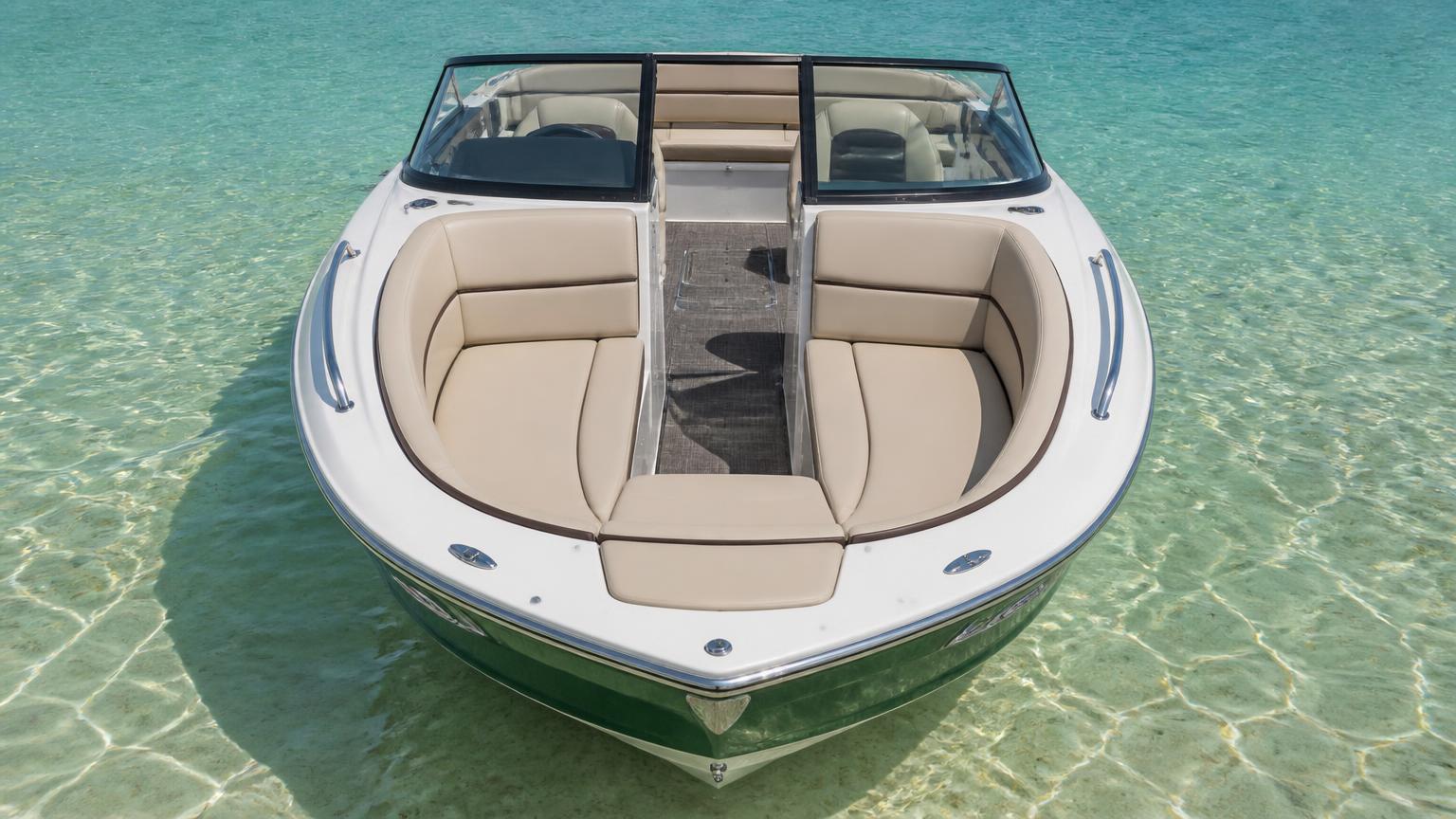
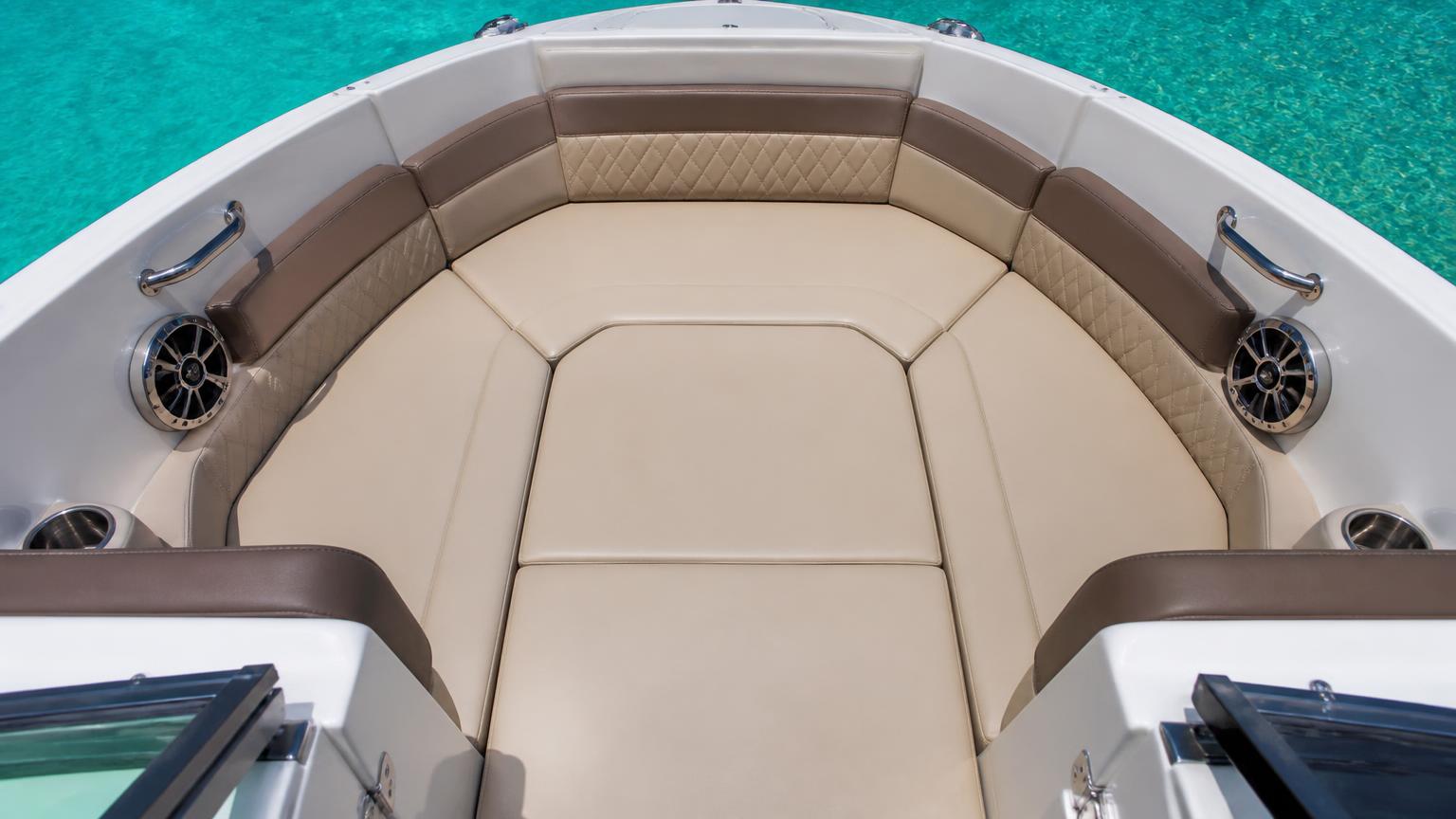
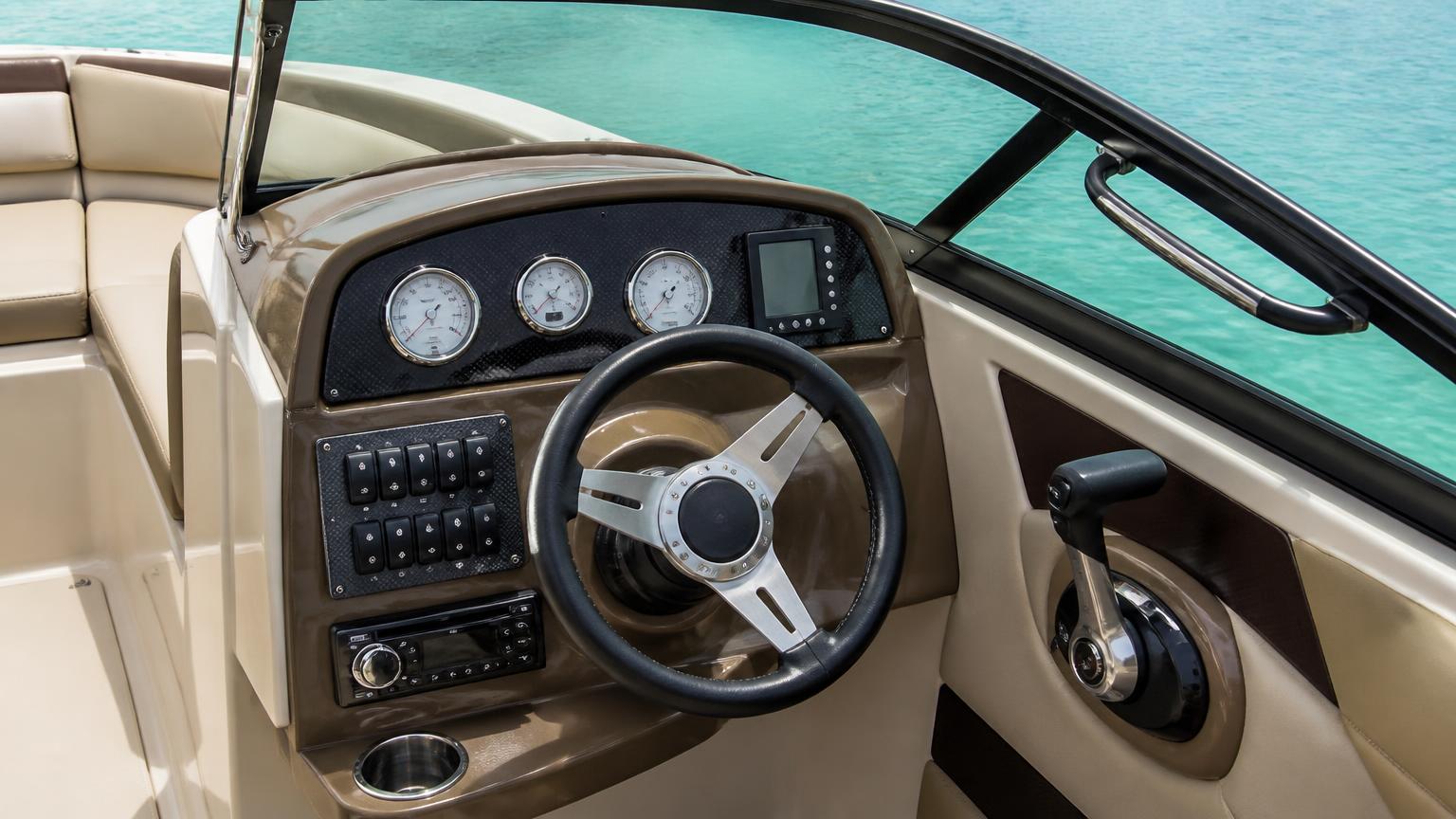
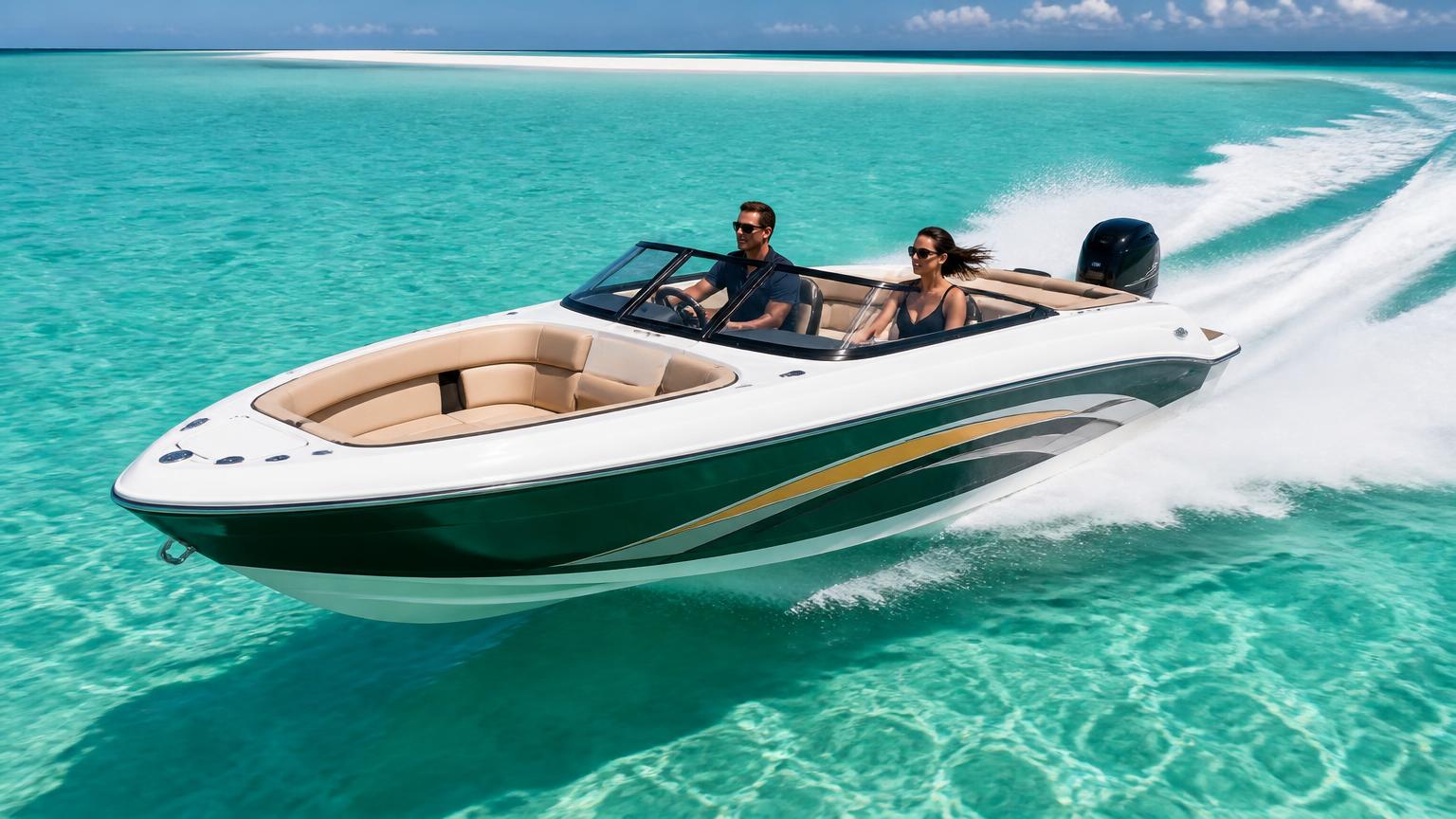
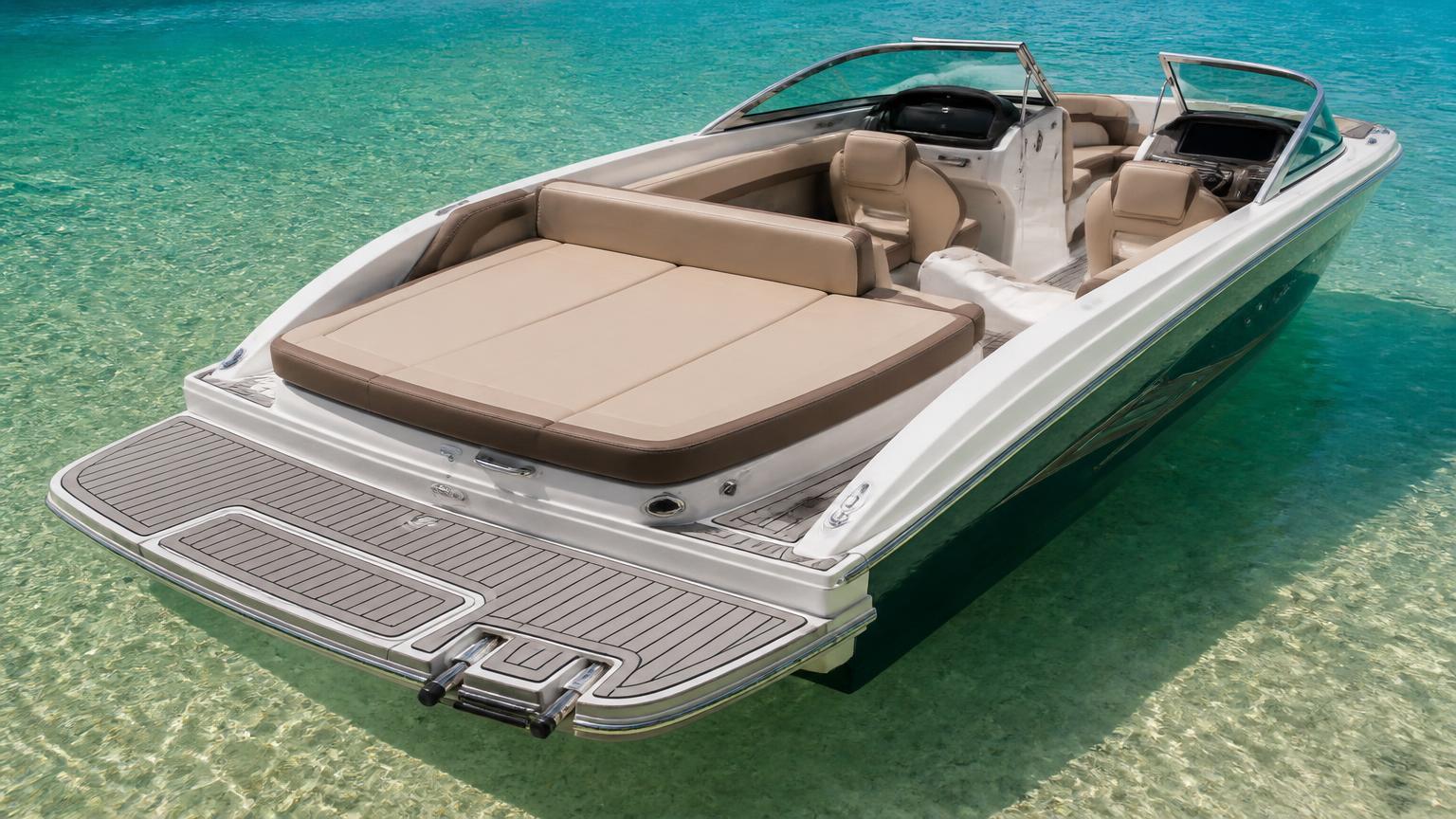
Sea Ray SPX 210
The refined mainstream benchmark: quiet, dry, and beautifully finished for the money.
- Length
- 21 ft 6 in (6.55 m)
- Drive
- Stern drive
- Seats
- 10 people
US$72,000 - US$95,000 new
Site Menu — Find Your Page
Bowrider Boats Mega Website

The Bayliner VR5 is, by volume, one of the most successful bowriders ever built, and the reason is simple: it delivers the entire bowrider promise at the lowest realistic price of entry. At just under 20 ft (6.02 m) with an 8 ft 1 in (2.46 m) beam, it sits in the size band that a mid-range SUV can tow, a single-axle trailer can carry, and a suburban garage can usually swallow.

The layout is textbook bowrider. Two forward lounges with moulded backrests run from the anchor locker to the walkthrough windscreen, twin bucket helm and companion seats sit amidships, and a full-width bench spans the transom with a convertible sun lounge cushion. Under almost every seat there is a locker, and the deepest of them will take skis, a wakeboard or a folded biscuit tube.

Bayliner's M-hull is a modified-V with a relatively flat run aft, which is exactly what a family boat wants: it planes early, holds plane at low tow speeds and feels stable when everyone stands up on one side to watch a skier. It is not the boat for genuinely rough open water, and Bayliner has never pretended otherwise, but in bays, estuaries and lakes it is well mannered and predictable.

Outboard power is the VR5's biggest advantage over the older stern drive Bayliners. A Mercury FourStroke between 115 hp and 150 hp keeps all the machinery outside the hull, which frees up stern storage, cuts winterising costs, makes servicing simple and removes the bellows and gimbal wear items that plague neglected sterndrive boats. Expect a comfortable 25-30 knot cruise and roughly 2.5-3.5 nautical miles per gallon at that pace with the 150 hp option.

As a used purchase the VR5 is one of the safest bets on the market, because there are always comparable boats listed and prices are therefore honest. Check the transom and stringers for softness, confirm the outboard's service history and hours, and inspect the upholstery seams, which are usually the first thing to fail on a boat that lives outside without a cover.


The refined mainstream benchmark: quiet, dry, and beautifully finished for the money.
US$72,000 - US$95,000 new

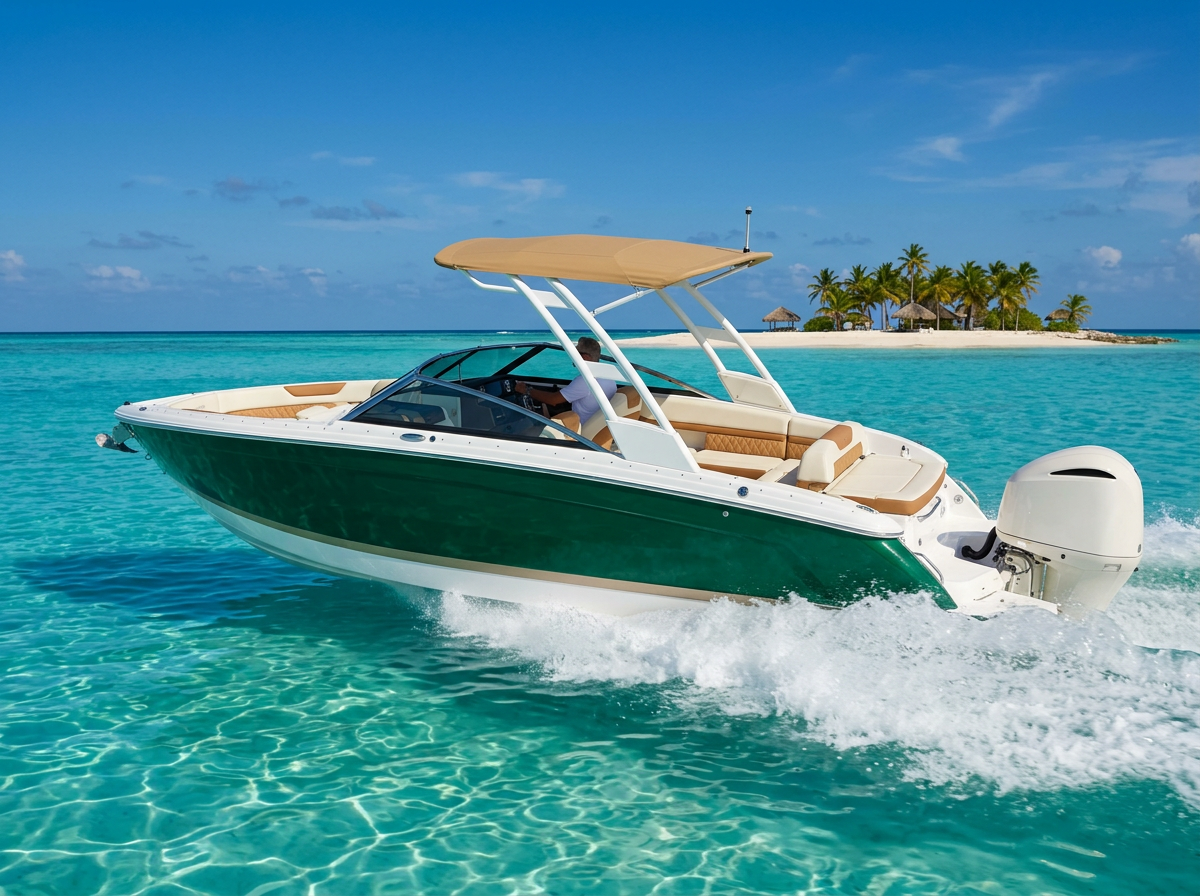
A premium 25-foot bowrider renowned for its deep seating, convertible lounges, refined ride and exceptional finish.
US$155,000 - US$210,000 new

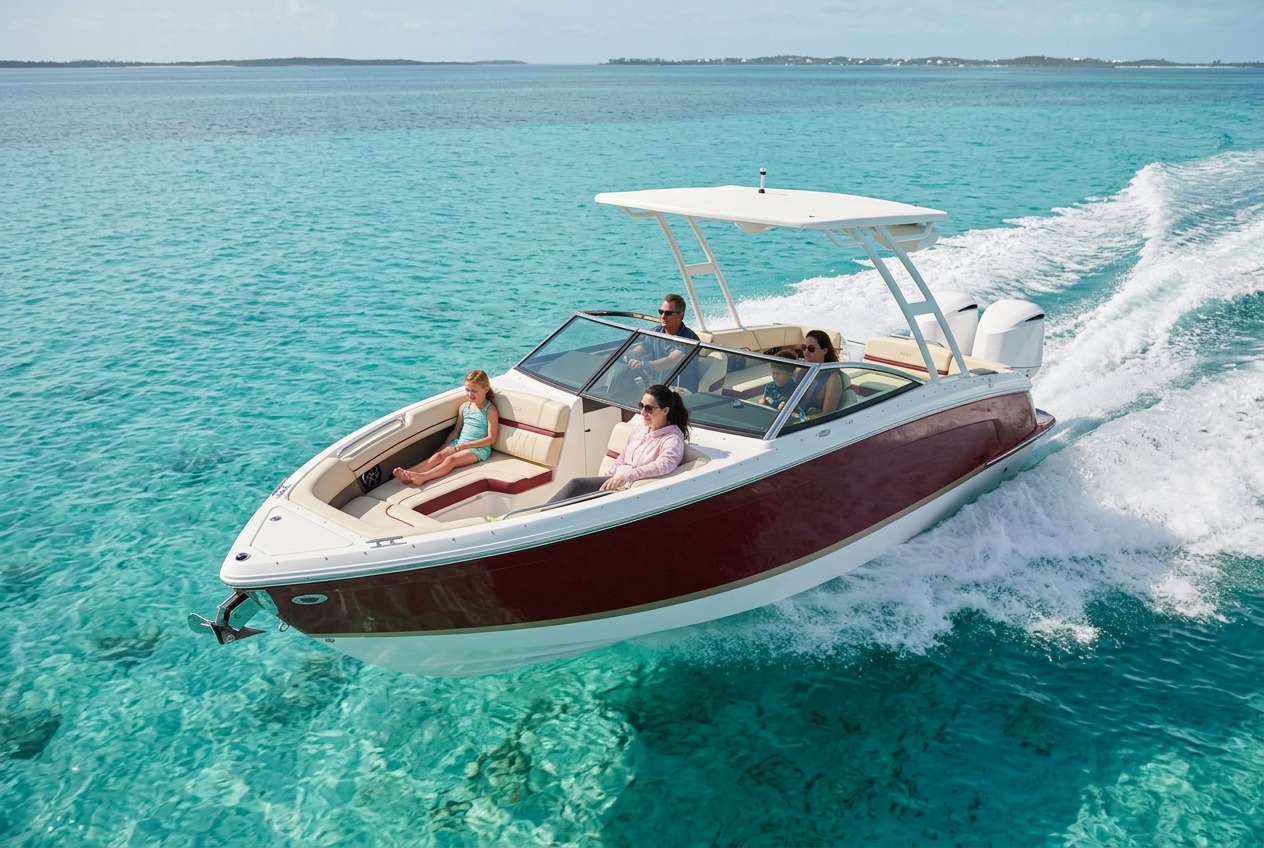
A flagship 28-foot luxury bowrider with expansive social seating, twin-outboard capability and yacht-grade finish.
US$245,000 - US$340,000 new, equipment dependent
Featured Boat of the Week

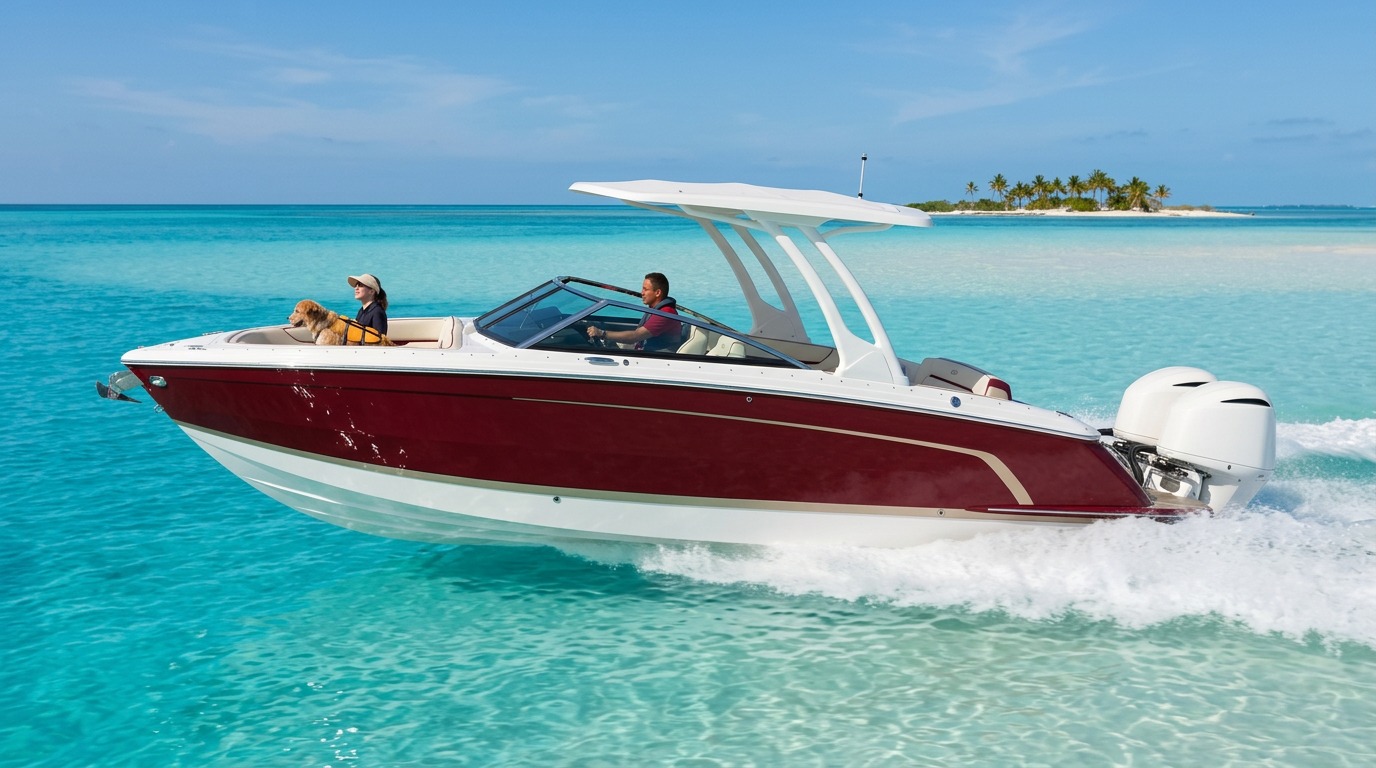
This week we are putting the Bayliner Bayliner DX2000 in the spotlight, and it earns the spot. At 20 ft 2 in (6.16 m) long on a 8 ft (2.44 m) beam, this is a bowrider that reads the water well and still feels roomy enough for a full day out. A 20-foot deck-boat-width bowrider with outboard power and a huge social cockpit. Power comes from 115-150 hp mercury fourstroke outboard through a outboard package, and the fibreglass hull keeps the ride settled when the afternoon breeze puts a chop on the surface.
Seating is rated for 8 people, so there is space for family, friends, towels, eskies and the tow rope without anyone climbing over gear. Owners tend to buy it for family, water ski, leisure — which is exactly where it shines. Fuel is 30 us gal (114 l), and on the second-hand and new market you should expect to land somewhere around US$42,000 - US$58,000 new depending on hours, trailer and options.
Our full deep dive covers the layout in detail: bow lounge comfort, helm ergonomics, the rear entertaining area, storage that actually swallows a weekend, plus standard features, popular options and honest notes on where the boat compromises. If the Bayliner DX2000 is on your shortlist, start there — and check back next week, because the featured boat changes every week as we complete more full model reviews.

Featured Bowrider Article
Comparisons

Resale is rarely the reason people buy a boat, and it is often the reason they regret one. Over the last decade the market has shifted decisively toward outboards, and that shift now shows up clearly in what used bowriders sell for and how quickly. Buyer demand for outboard-powered bowriders has grown steadily, driven by simpler maintenance, easier repowering, more cockpit space and quieter, cleaner modern four-strokes. Dealers report faster sales and firmer prices for outboard boats in most markets. Sterndrive bowriders, once the default, now attract a smaller pool of buyers. They still sell well when priced correctly and presented with good service history, but they typically sit longer and negotiate harder, especially in saltwater regions. The concern is maintenance rather than performance. Bellows, gimbal bearings, u-joints, exhaust manifolds and risers all have finite lives, and a neglected sterndrive can present a large bill. Buyers price that risk in even when the specific boat has been maintained impeccably. Repowering compounds it. Replacing an outboard is essentially a bolt-on job with a known price; replacing a sterndrive engine and leg is more involved, more expensive and often uneconomic on an older hull. That perception caps what older sterndrive boats can fetch.
Read the full article