Menu
Site Menu — Find Your Page
Bowrider Boats Mega Website
Ownership
Saltwater vs Freshwater Bowrider Ownership
The same bowrider used in salt water and fresh water leads two very different lives. Salt does not merely age a boat faster; it attacks specific components relentlessly. The good news is that the defence is simple, cheap and entirely within your control.
What salt actually attacks
Cooling systems come first. Salt deposits build up inside engine passages, manifolds and risers, restricting flow and eventually causing overheating and internal corrosion. Sterndrives are more exposed than outboards because raw water passes through more of the engine.
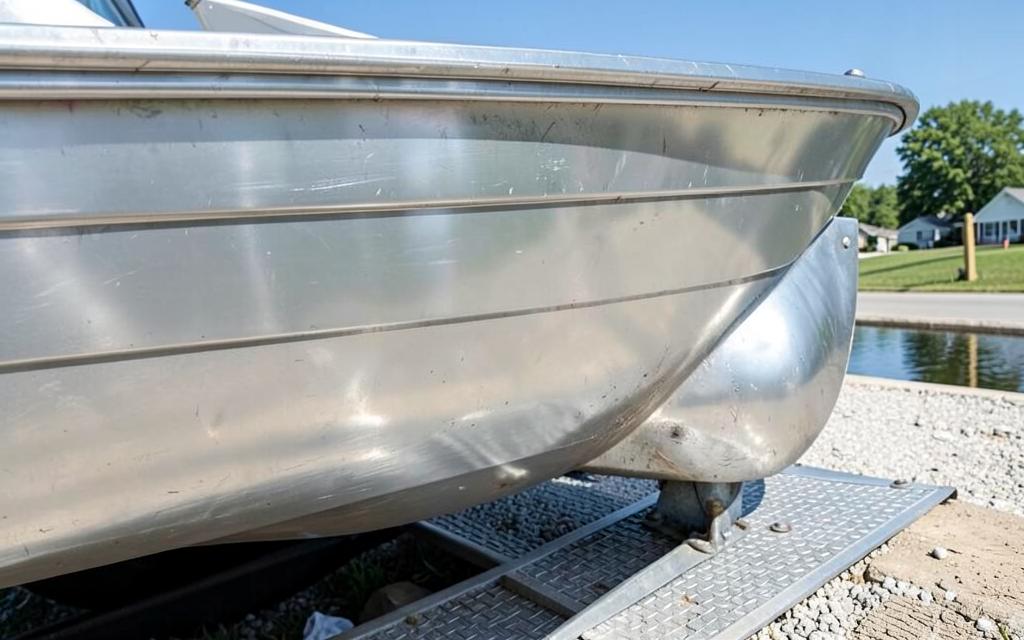
Then electrics: connectors, terminals, switch panels, trailer wiring and plugs corrode from salt-laden air even on boats that are never submerged. Aluminium components — outboard legs, trim rams, alloy hulls, trailer frames and fittings — face galvanic corrosion, and stainless fasteners in aluminium make it worse where no isolation exists.
The saltwater routine
Flush the engine with fresh water after every single trip, without exception, using the correct flush connection and running long enough for water to leave clean. Hose the boat, trailer and especially the trailer brakes and lights thoroughly, and rinse the bilge.
Wash and dry upholstery to remove salt crystals that abrade and dry out vinyl, then treat with a marine protectant. Spray a corrosion inhibitor on the engine cowling internals, battery terminals and electrical connections. Check anodes every few months and replace them at half-worn, not fully consumed.
Freshwater ownership is easier — but not free
Fresh water eliminates most corrosion concerns and dramatically extends the life of engines, drives, wiring and trailers. Sterndrives in particular last far longer in lakes, which is why the freshwater used market values them more highly.
The freshwater risks are different: UV damage on boats stored uncovered, ethanol fuel problems on boats used infrequently, freezing damage in cold climates, and invasive species rules that require cleaning, draining and drying between waterways. Silt and weed can also block cooling intakes in shallow rivers.
Buying and specifying for salt
For coastal use, prefer outboards, closed-cooling systems on sterndrive petrol engines, galvanised or alloy trailers with disc brakes and easy-flush fittings, quality tinned marine wiring, and generous anode provision. Avoid boats with corroded trailer frames or seized brakes, however cheap.
When buying used, always ask where the boat has lived and look for evidence of the flushing routine — clean cooling passages, healthy anodes, bright connectors and a tidy trailer. A freshwater boat of the same age and hours is genuinely worth more, and a salt boat with disciplined care can be just as sound.
Featured Boat of the Week
Bayliner Bayliner DX2000 — Our Featured Bowrider This Week

This week we are putting the Bayliner Bayliner DX2000 in the spotlight, and it earns the spot. At 20 ft 2 in (6.16 m) long on a 8 ft (2.44 m) beam, this is a bowrider that reads the water well and still feels roomy enough for a full day out. A 20-foot deck-boat-width bowrider with outboard power and a huge social cockpit. Power comes from 115-150 hp mercury fourstroke outboard through a outboard package, and the fibreglass hull keeps the ride settled when the afternoon breeze puts a chop on the surface.
Seating is rated for 8 people, so there is space for family, friends, towels, eskies and the tow rope without anyone climbing over gear. Owners tend to buy it for family, water ski, leisure — which is exactly where it shines. Fuel is 30 us gal (114 l), and on the second-hand and new market you should expect to land somewhere around US$42,000 - US$58,000 new depending on hours, trailer and options.
Our full deep dive covers the layout in detail: bow lounge comfort, helm ergonomics, the rear entertaining area, storage that actually swallows a weekend, plus standard features, popular options and honest notes on where the boat compromises. If the Bayliner DX2000 is on your shortlist, start there — and check back next week, because the featured boat changes every week as we complete more full model reviews.
Featured Bowrider Article
Why Length Matters: How Size and Weight Affect Ride Quality
Comparisons
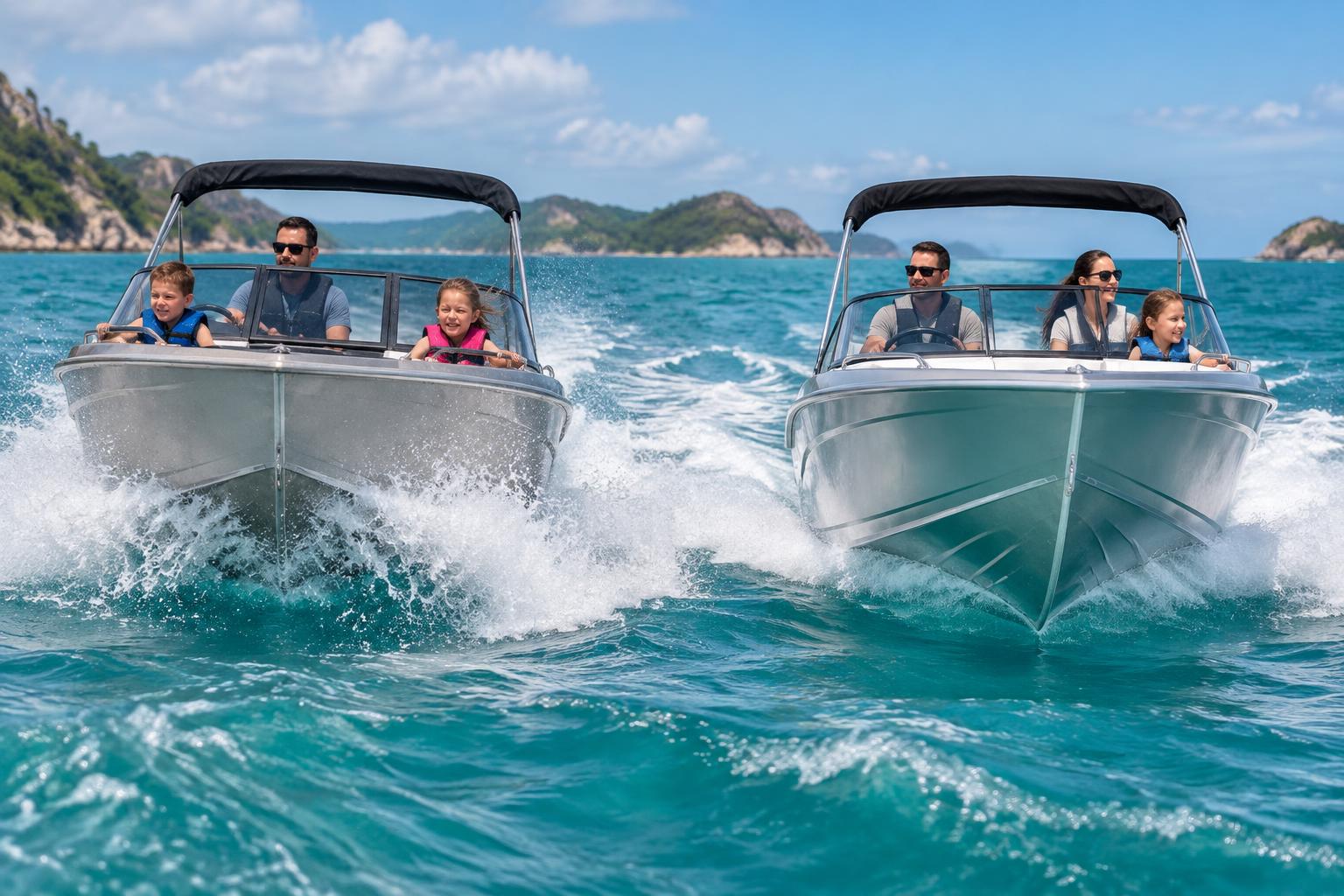
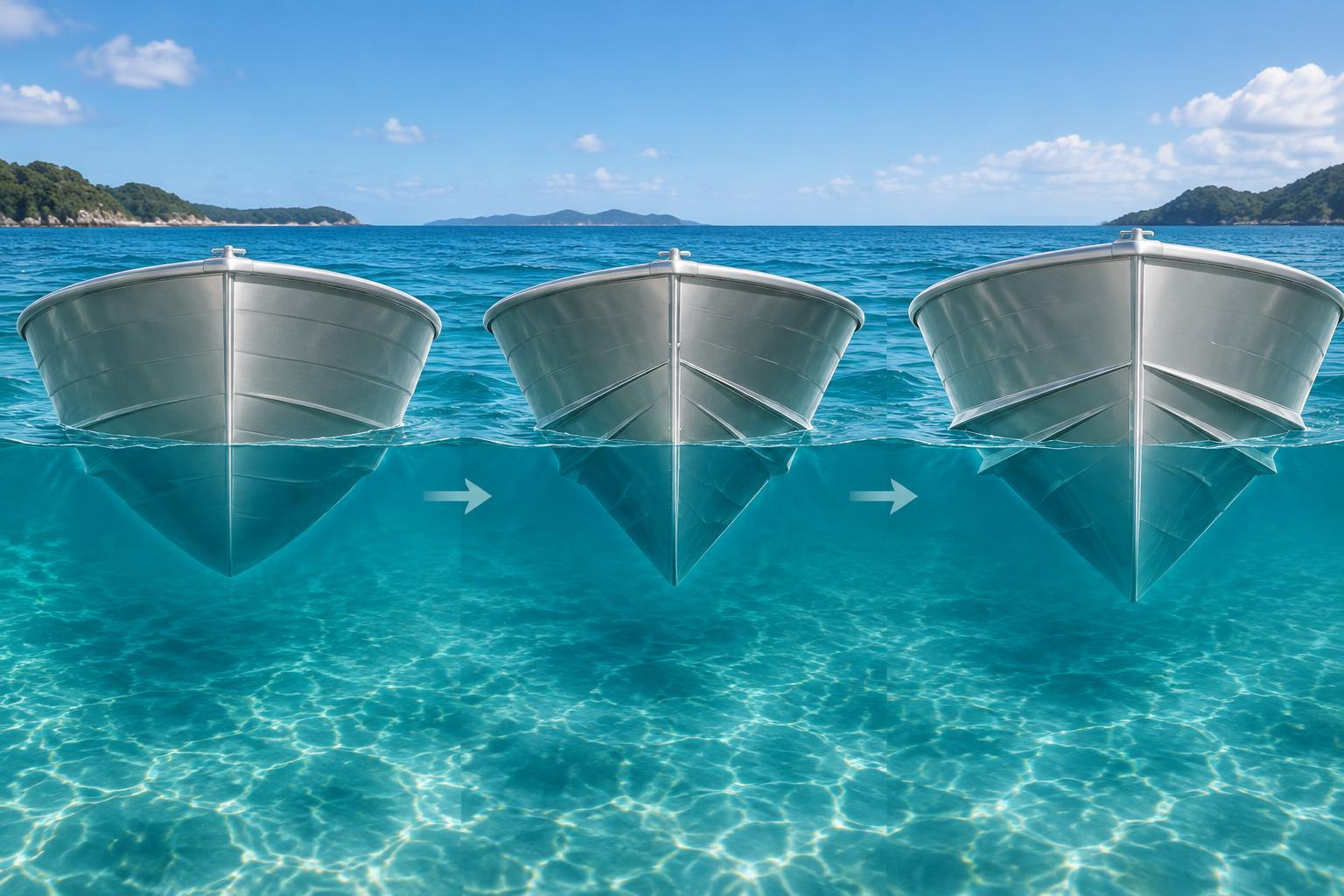
Ask any experienced boat owner what they would change about their first boat and most say the same thing: they would buy a bigger one. Length is the single strongest predictor of how a bowrider rides in real conditions. Hull design, deadrise and build quality all matter, but they work within the limits set by how long and how heavy the boat is. A longer hull spans more of the wave. Where a 4.5 m bowrider drops into every trough and climbs every face, a 6.5 m hull bridges the gap between crests, so the bow rises and falls less and the boat tracks through chop rather than over it. That is why the same 30 cm wind chop feels like hard work in a small boat and like nothing at all in a larger one. Waterline length also sets a longer, flatter running attitude and a bigger entry area, so the hull slices water progressively instead of arriving flat. And a longer boat carries a longer, finer forefoot: the sharp part of the bow does the work of splitting the wave before the wider mid-sections reach it, which is exactly what makes a ride feel soft rather than jarring.
Read the full article