Menu
Site Menu — Find Your Page
Bowrider Boats Mega Website
Buying Advice
Best Luxury Bowrider Boats
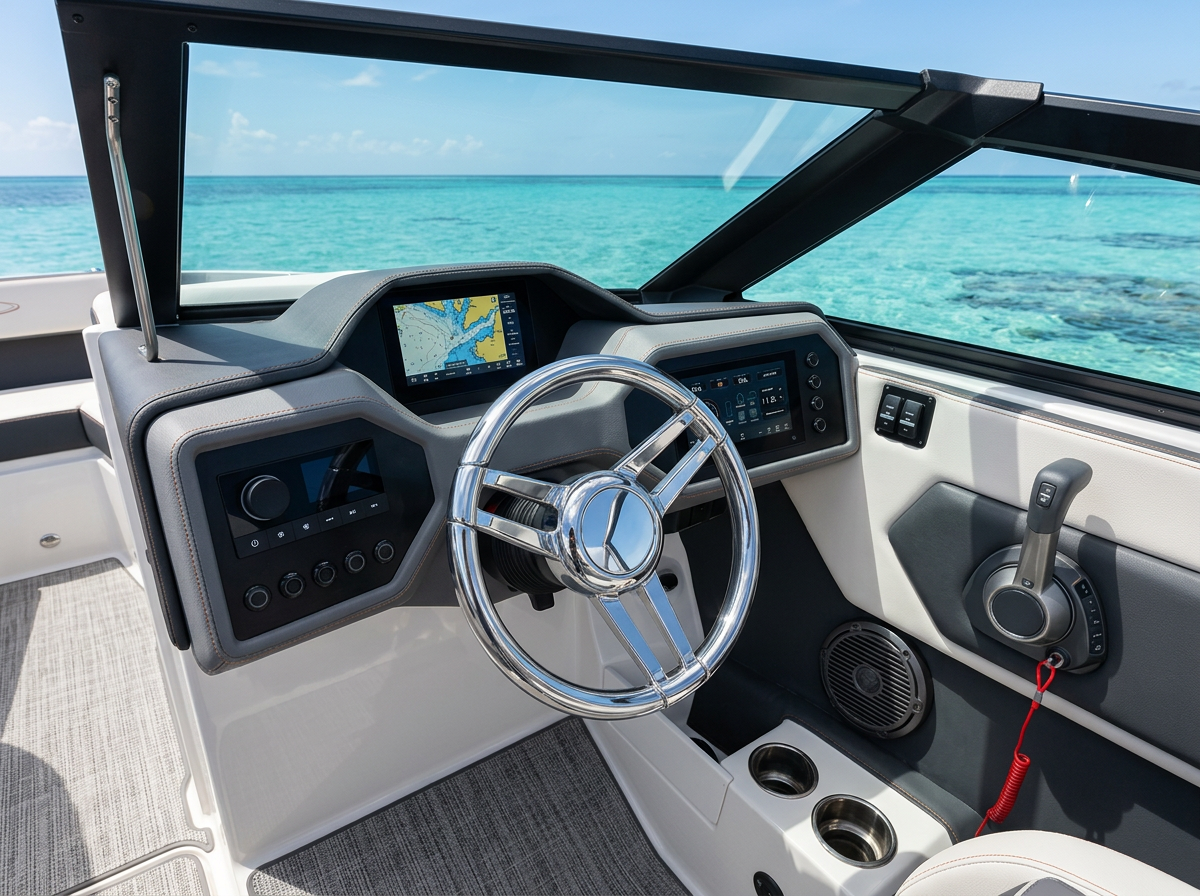
At the top of the bowrider market, boats stop competing on price and start competing on craftsmanship. The differences are real and immediately obvious the moment you step aboard, and they show up in ride quality, longevity and resale as much as in appearance.
What makes a bowrider luxurious
Build integrity comes first: closed-cell foam or composite coring rather than plywood, hand-laid or infused laminates, fully bonded stringer grids, and finished, gelcoated surfaces inside lockers and under hatches where cheaper boats leave rough glass.
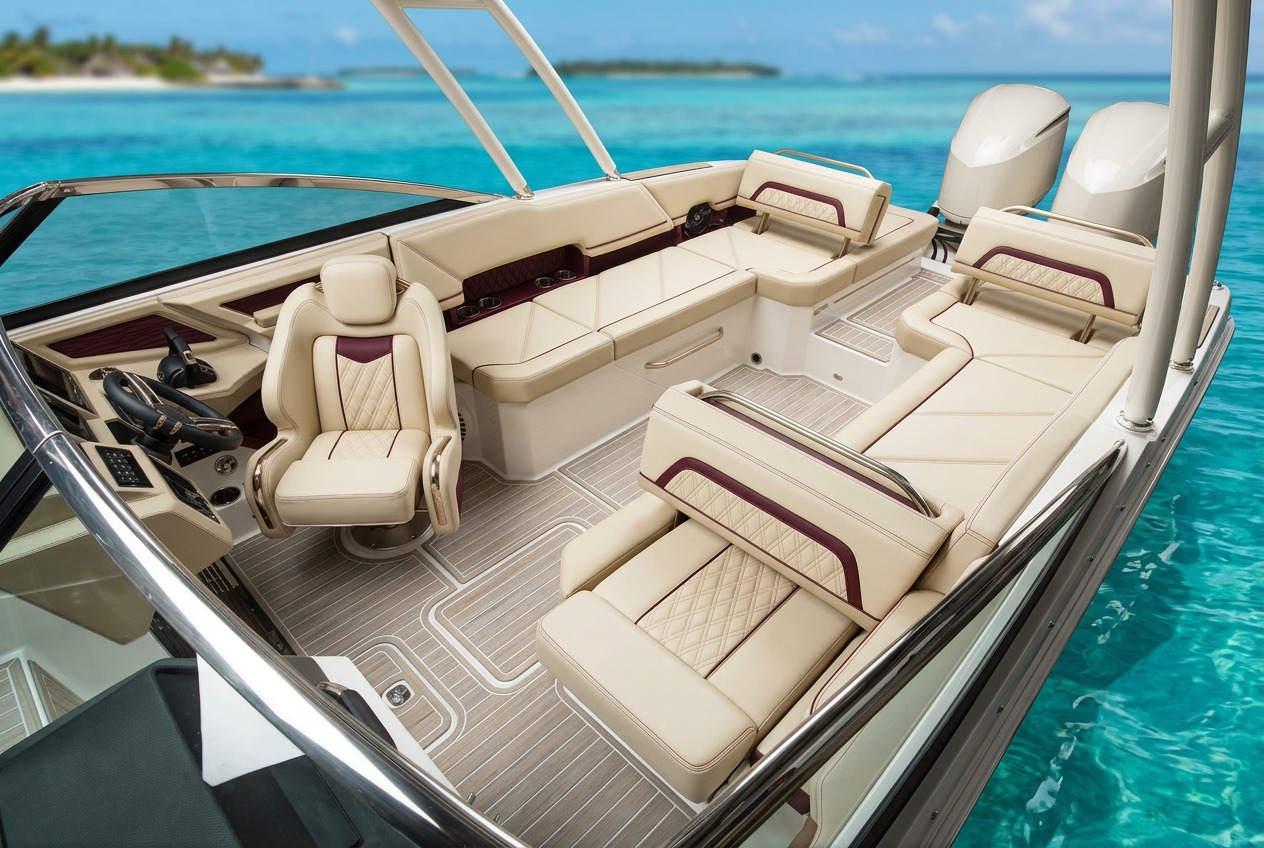
Then finish. Deep, flaw-free gelcoat, tight moulding tolerances, stainless rather than chromed plastic, hand-stitched upholstery with padded contours, soft-close hatches on gas struts and hidden wiring in labelled looms. These details cost money to build and are exactly what survives fifteen years of use.
Ride, power and technology
Premium bowriders usually carry more deadrise, more weight and more carefully developed hull shapes, which is why they feel planted in a chop where cheaper boats slam. Sound insulation and heavier laminates make them noticeably quieter as well.
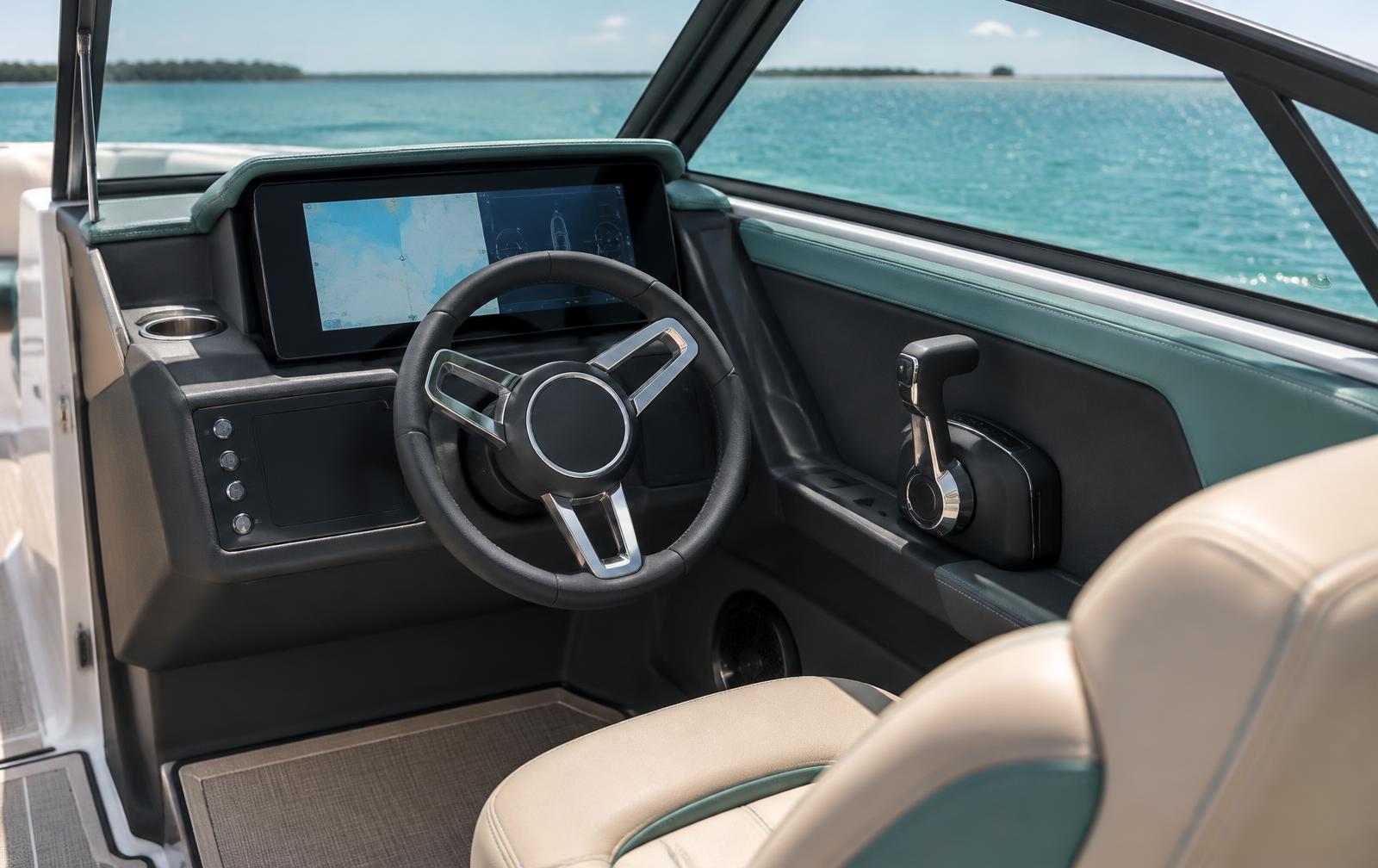
Equipment moves ahead too: joystick docking, digital throttles, dynamic positioning, touchscreen displays with integrated boat control, submersible swim platforms, powered biminis, underwater lighting, premium audio, refrigeration, hot showers and even air conditioning on larger models.
Who builds them
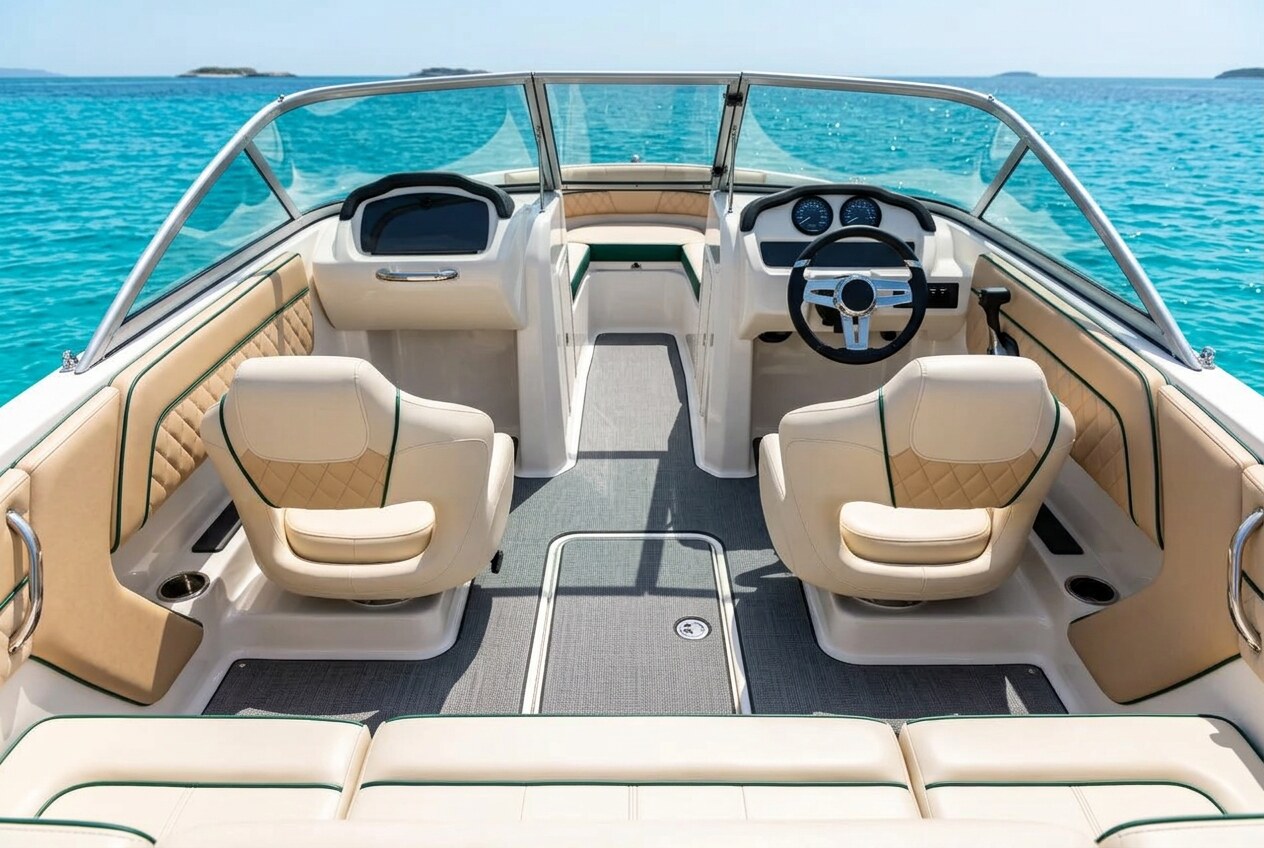
In the North American premium bowrider and sport-boat segment, Cobalt, Chaparral in its upper series, Regal, Monterey, Sea Ray in its larger SDX and SLX models and Nautique in the tow-sport space are the names most often cited for finish and ride.
European builders bring a different flavour of luxury — Scandinavian day boats and Mediterranean-style sport boats from builders such as Axopar, Saxdor, Nimbus, Karnic and Italian yards emphasise design, sea-keeping and clever multi-role layouts. Any of these boats will feel a generation ahead of an entry-level model of the same length.
Is the premium worth it?
If you boat frequently, in open water, with guests aboard, then yes. Better ride means more days used, better build means fewer problems, and premium brands historically hold a larger share of their value, which narrows the real cost gap considerably.
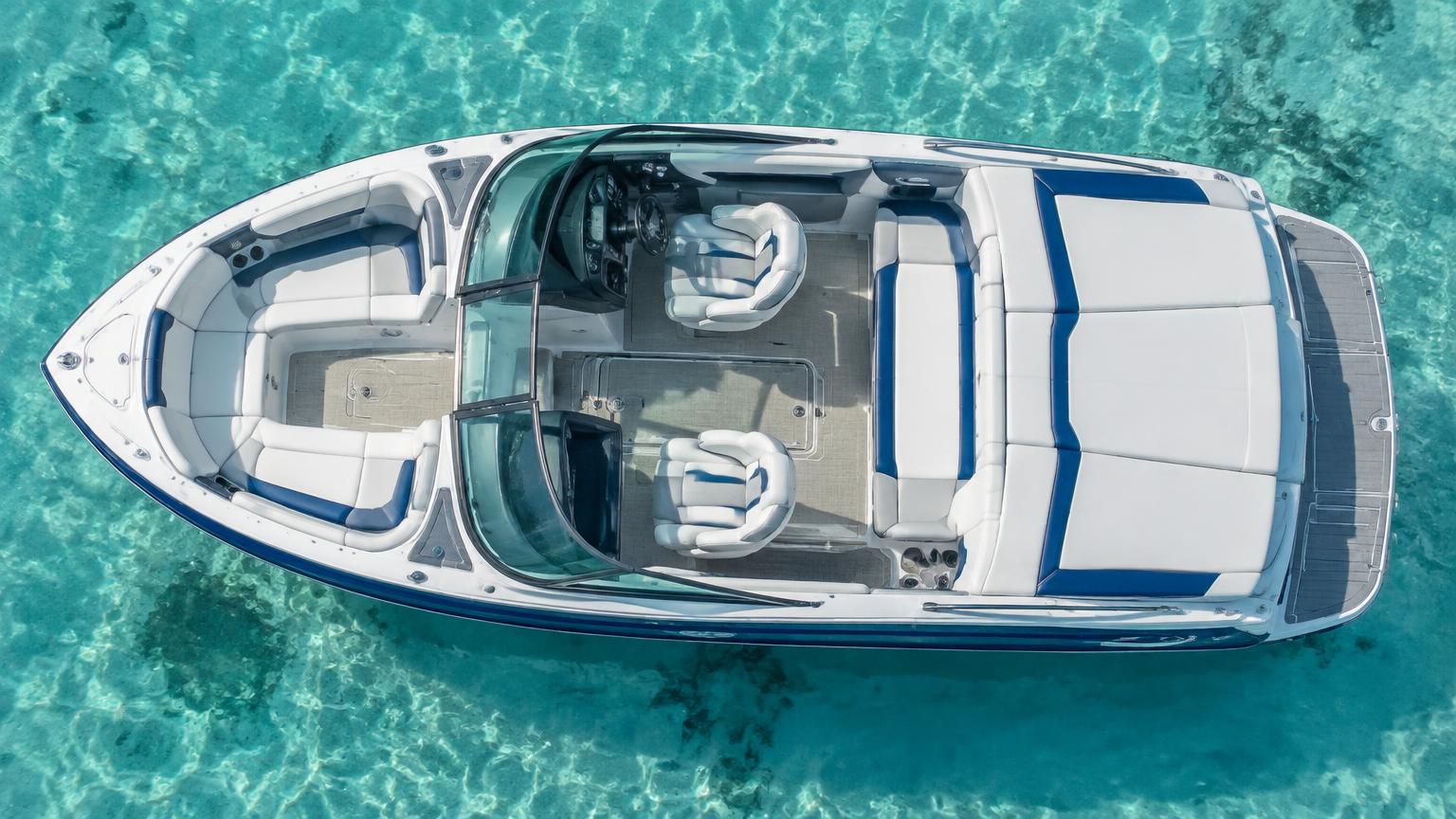
If you boat a dozen times a year on calm water, the premium buys pleasure rather than practicality. A smart middle path is buying a five-to-ten-year-old premium bowrider instead of a new entry-level one: the same money buys far more boat, and quality construction is precisely what ages best.
Keep reading
On the Water
Which Bowriders Make the Best Day Boats?
Buying Advice
Best Bowrider Boats Under $50,000
Comparisons
Aluminium vs Fibreglass Bowriders
Buying Advice
Which Is the Lightest Bowrider Boat ?
Buying Advice
Old Bowriders vs New Bowrider Designs
Buying Advice
Choosing Your First Bowrider Boat
Buying Advice
How Many People Fit in a Bowrider?
Buying Advice
The Best Bowrider Size for Families
Featured Boat of the Week
Bayliner Bayliner DX2000 — Our Featured Bowrider This Week

This week we are putting the Bayliner Bayliner DX2000 in the spotlight, and it earns the spot. At 20 ft 2 in (6.16 m) long on a 8 ft (2.44 m) beam, this is a bowrider that reads the water well and still feels roomy enough for a full day out. A 20-foot deck-boat-width bowrider with outboard power and a huge social cockpit. Power comes from 115-150 hp mercury fourstroke outboard through a outboard package, and the fibreglass hull keeps the ride settled when the afternoon breeze puts a chop on the surface.
Seating is rated for 8 people, so there is space for family, friends, towels, eskies and the tow rope without anyone climbing over gear. Owners tend to buy it for family, water ski, leisure — which is exactly where it shines. Fuel is 30 us gal (114 l), and on the second-hand and new market you should expect to land somewhere around US$42,000 - US$58,000 new depending on hours, trailer and options.
Our full deep dive covers the layout in detail: bow lounge comfort, helm ergonomics, the rear entertaining area, storage that actually swallows a weekend, plus standard features, popular options and honest notes on where the boat compromises. If the Bayliner DX2000 is on your shortlist, start there — and check back next week, because the featured boat changes every week as we complete more full model reviews.
Featured Bowrider Article
How to Drive a Bowrider
On the Water
Bowriders are among the easiest boats to learn on. They plane readily, turn predictably and respond well to trim. Most beginner difficulty happens at the ramp and the dock rather than out on the water, so those are the skills worth practising first. Prepare away from the ramp: fit the drain plug, remove tie-downs, load gear, connect the battery, raise the drive or outboard and lower the cover. Then back down in one steady movement, keeping the tow vehicle's rear wheels out of the water where possible. Float the boat off with a bow line held, start the engine only once the drive is deep enough for cooling water, then move clear of the ramp before sorting anything else out. Ramp courtesy is simple: everything you can do in the car park, do in the car park. To plane, trim the drive fully down, apply throttle firmly, and hold it as the bow rises and then settles. Once the boat levels out, ease the throttle back to cruise and trim the drive up gradually. You will feel the boat lighten, the rpm rise slightly and the speed increase for the same throttle. Too much trim makes the bow bounce or the prop ventilate; too little…
Read the full article