Menu
Site Menu — Find Your Page
Bowrider Boats Mega Website
Buying Advice
Old Bowriders vs New Bowrider Designs
A 1998 bowrider and a 2026 bowrider look superficially similar: open bow, walkthrough windscreen, rear bench. Underneath, almost everything has changed. Knowing what improved, what did not, and what you actually pay for is the key to buying well at any budget.
Hulls and ride quality
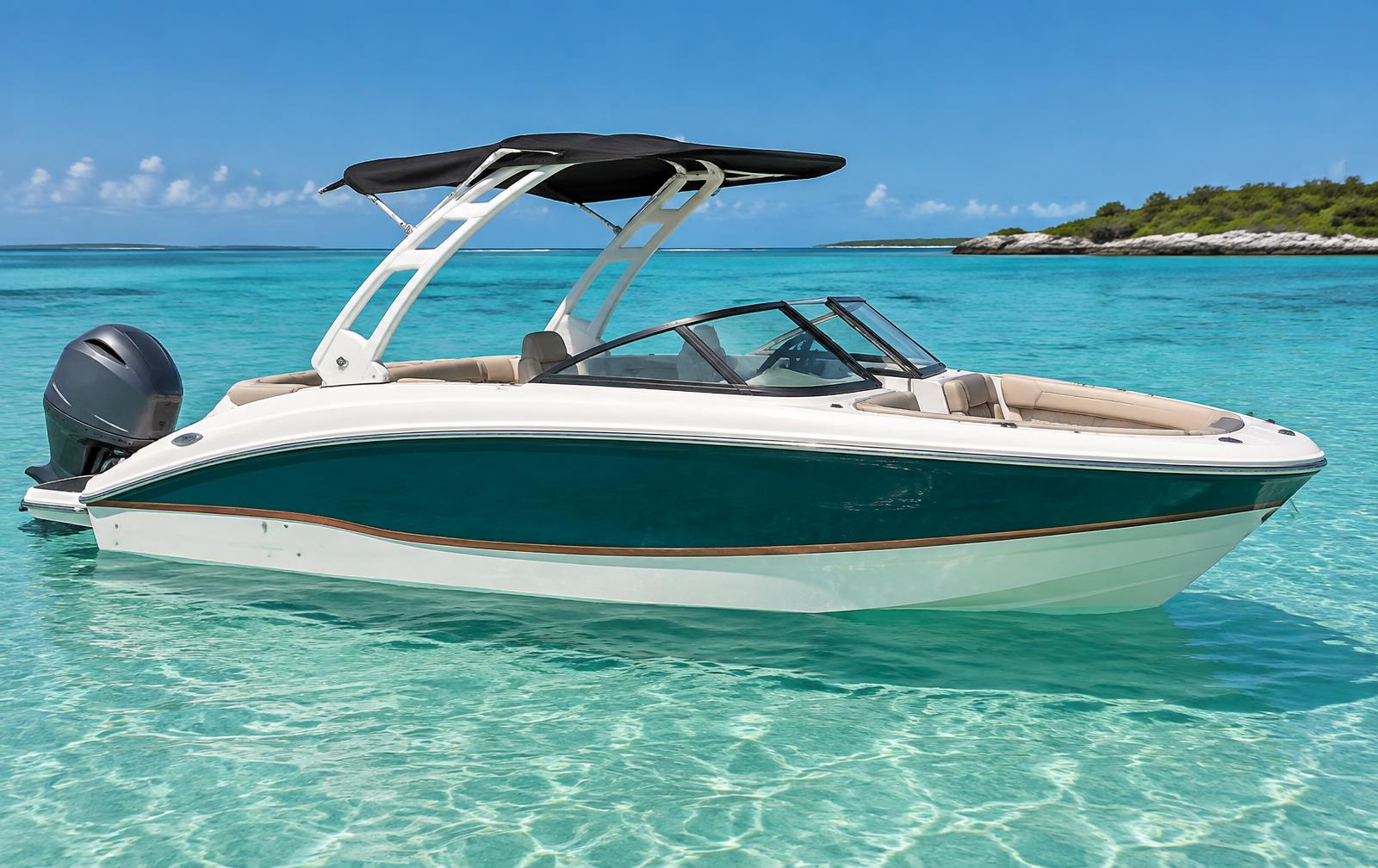
Older bowriders were commonly built with modest deadrise and simple running surfaces, tuned for calm lakes and easy planing. Modern hulls carry sharper entries, better-developed strakes and wider chines, giving a drier ride, flatter turns and more predictable behaviour in a chop.
Aluminium has moved furthest. Pressed flat-panel hulls from the 1990s slapped in waves; today's roll-formed hulls carry curved, fine-entry bows that slice rather than pound. If ride comfort is your main complaint about older aluminium boats, a modern hull is a genuine step change rather than a marketing claim.
Drives and fuel use
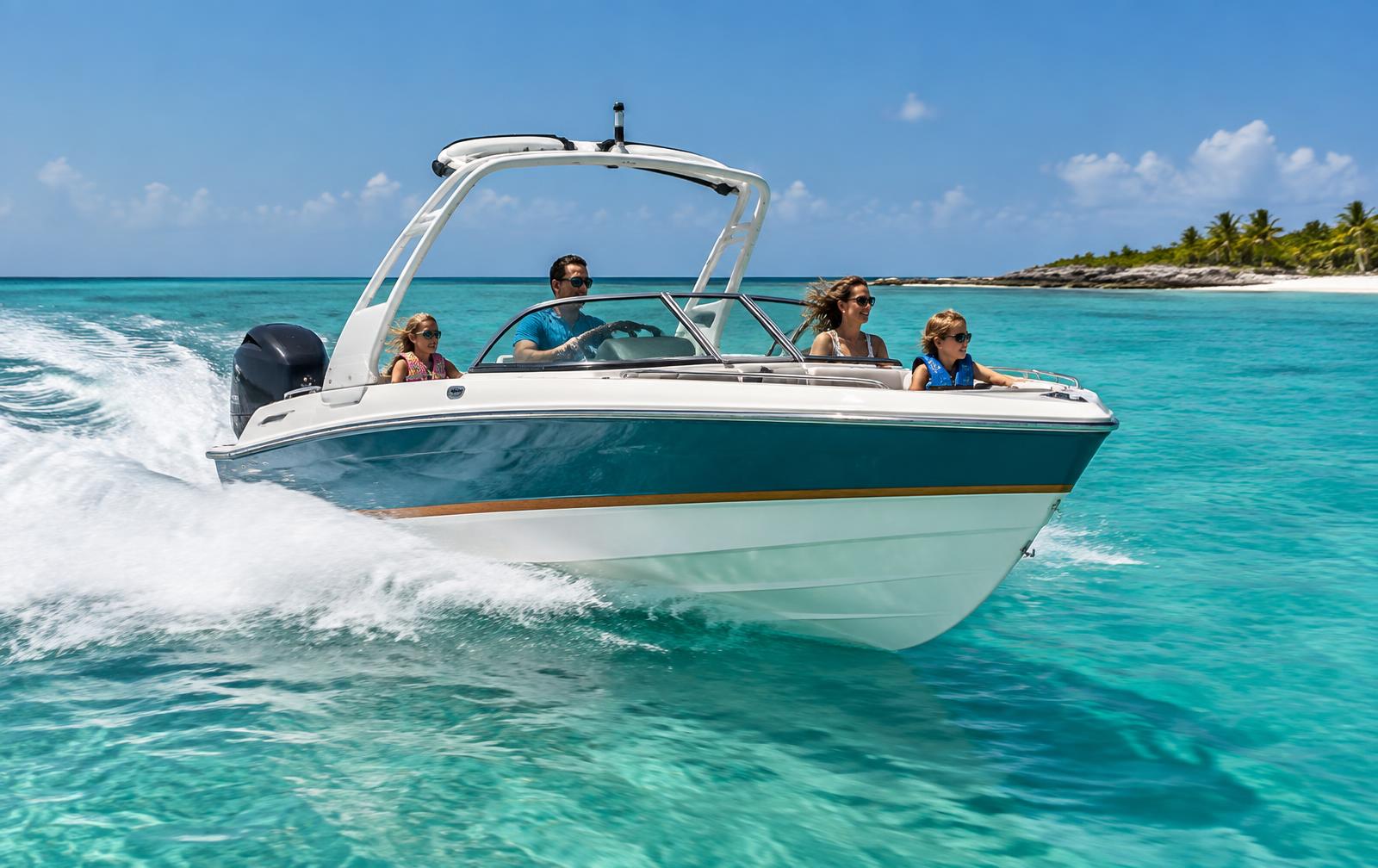
Older bowriders were mostly sterndrive, often with carburetted petrol V6 or V8 engines. They were torquey and cheap to buy, but thirsty, and they demanded regular tuning. Modern outboard packages deliver similar performance while using noticeably less fuel and starting reliably every time.
Fuel economy improvements are real. A modern 150-200 hp four-stroke pushing a 6 m hull at a relaxed cruise typically uses substantially less fuel per hour than an older carburetted sterndrive doing the same job, and it does so with far less noise inside the boat.
Layouts, comfort and electronics
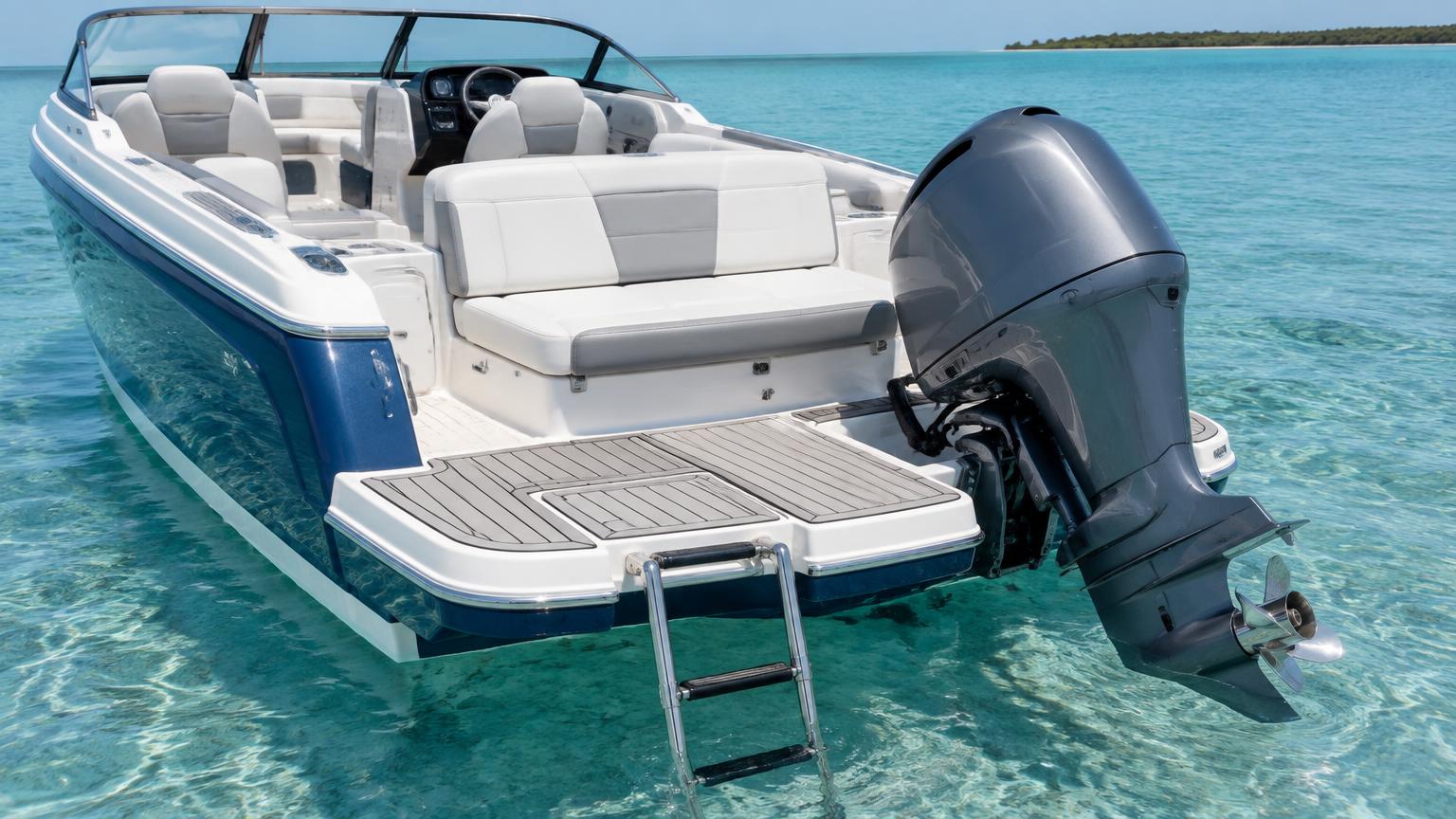
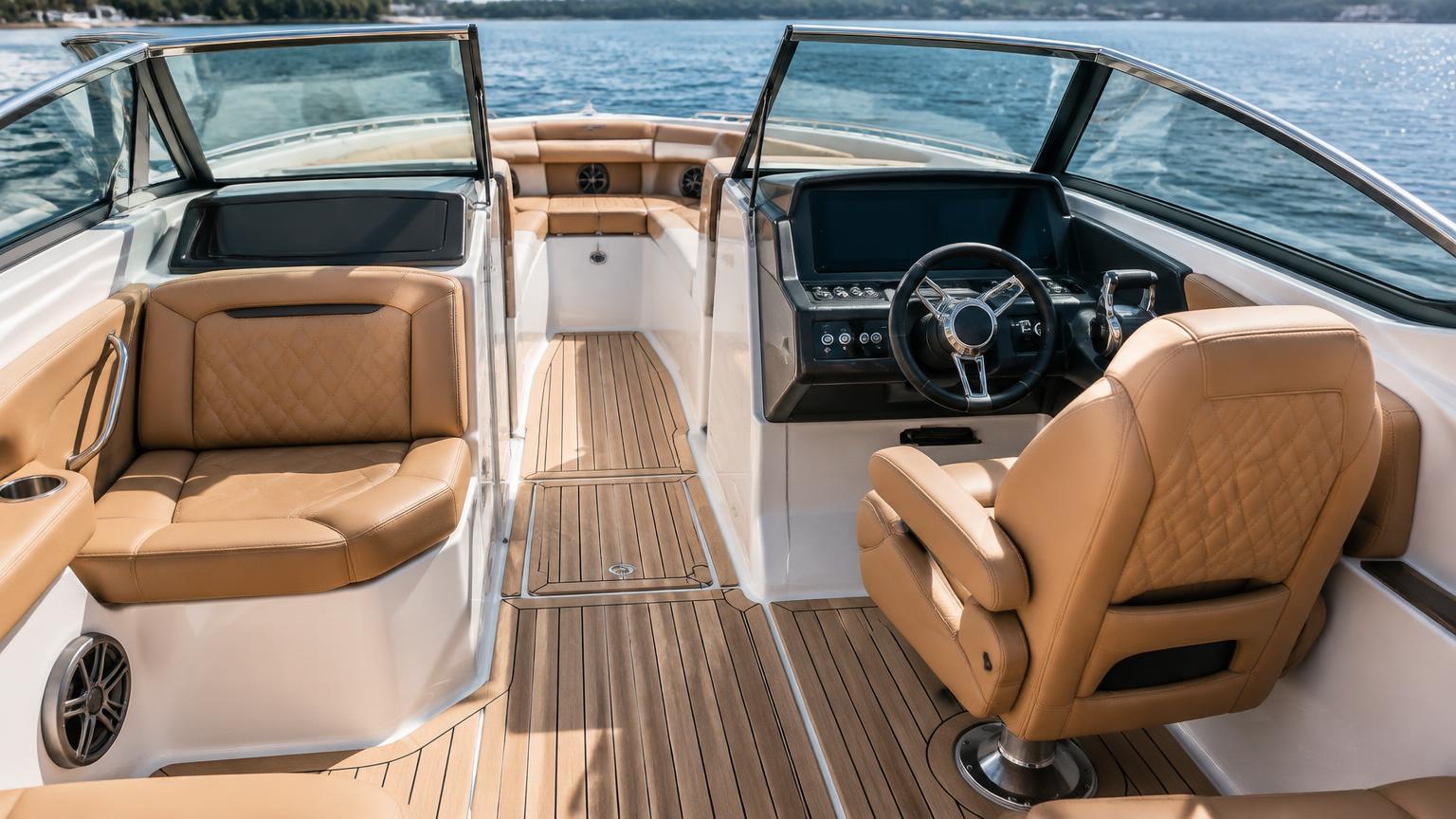
New boats win comfortably on layout. Walkthrough transoms, convertible rear lounges, filler cushions, wet lockers, powered biminis, submersible swim platforms and USB charging everywhere are now normal. Bow lounges are longer and deeper, and storage is properly moulded rather than improvised.
Electronics have changed even faster. Touchscreen multifunction displays, digital engine gauges, GPS, chart overlays, sonar, joystick docking and app-based monitoring were unavailable at any price on a 1990s bowrider.
Where older bowriders still win
Price is the obvious one. A tidy twenty-year-old fibreglass bowrider can cost a fifth of a new equivalent, and the depreciation curve has already flattened. Simplicity is the second: fewer systems means fewer expensive electronic failures and repairs you can often do yourself.
Some older hulls are also genuinely well built, with thicker laminates than budget modern boats. The catch is condition. Stringers, transom cores, floors, wiring and upholstery are the expensive parts, and they are exactly what age attacks. An older bowrider with a sound structure and a recent engine is excellent value; the same boat with a soft floor is a money pit.
Keep reading
Buying Advice
What to Check When Buying a Used Bowrider
Ownership
How Long Do Bowrider Boats Last?
Buying Advice
Best Bowrider Boats Under $50,000
Buying Advice
Which Is the Lightest Bowrider Boat ?
Buying Advice
Choosing Your First Bowrider Boat
Buying Advice
How Many People Fit in a Bowrider?
Buying Advice
The Best Bowrider Size for Families
Featured Boat of the Week
Bayliner Bayliner DX2000 — Our Featured Bowrider This Week

This week we are putting the Bayliner Bayliner DX2000 in the spotlight, and it earns the spot. At 20 ft 2 in (6.16 m) long on a 8 ft (2.44 m) beam, this is a bowrider that reads the water well and still feels roomy enough for a full day out. A 20-foot deck-boat-width bowrider with outboard power and a huge social cockpit. Power comes from 115-150 hp mercury fourstroke outboard through a outboard package, and the fibreglass hull keeps the ride settled when the afternoon breeze puts a chop on the surface.
Seating is rated for 8 people, so there is space for family, friends, towels, eskies and the tow rope without anyone climbing over gear. Owners tend to buy it for family, water ski, leisure — which is exactly where it shines. Fuel is 30 us gal (114 l), and on the second-hand and new market you should expect to land somewhere around US$42,000 - US$58,000 new depending on hours, trailer and options.
Our full deep dive covers the layout in detail: bow lounge comfort, helm ergonomics, the rear entertaining area, storage that actually swallows a weekend, plus standard features, popular options and honest notes on where the boat compromises. If the Bayliner DX2000 is on your shortlist, start there — and check back next week, because the featured boat changes every week as we complete more full model reviews.
Featured Bowrider Article
How Many People Fit in a Bowrider?
Buying Advice
Capacity is the question every family asks first, and brochures answer it optimistically. There is a legal number, a physical number and a comfortable number, and they are rarely the same. Here is how to work out how many people your bowrider really carries. As a rough guide, a 4.8-5.2 m bowrider is rated for four to six people, a 5.5-6.0 m boat for six to eight, a 6.4-7.0 m boat for eight to ten, and a 7.6 m-plus bowrider for ten to twelve. Beam matters as much as length: a wide 6 m hull can seat more comfortably than a narrow 6.5 m one. Comfortable capacity is usually two people fewer than the rated maximum. A boat rated for eight is pleasant with six adults, cramped with eight, and unpleasant with eight adults plus eskies, boards and towels. Most bowriders carry a builder's plate stating maximum persons, maximum load in kilograms or pounds, and maximum engine power. The persons figure is calculated using an assumed average weight per person, which is often lower than real adult weights. The load figure is the one that matters. It covers people, fuel, gear and any accessories, so a full tank of fuel and a loaded esky reduce…
Read the full article