Menu
Site Menu — Find Your Page
Bowrider Boats Mega Website
Buying Advice
Best Bowrider Boats Under $50,000
Fifty thousand is a genuinely useful bowrider budget. It buys a new boat with a warranty, a nearly new mid-size boat, or a large premium boat a decade old. Which route gives you the best boat depends on how much maintenance risk you are willing to carry.
New boats in the budget
At this level, new means entry-level: aluminium bowriders around 4.8-5.5 m with 90-115 hp outboards, or the smallest fibreglass models from mainstream builders with modest sterndrive or outboard power. Trailer, basic bimini and a simple sound system typically fit inside the figure.
You get a warranty, dealer support and zero unknown history — real value for first-time buyers. What you sacrifice is size and equipment: expect vinyl floors, manual canvas, single-battery wiring and few luxury touches.
Nearly new is the value sweet spot
Two to five years old is where the budget stretches furthest. The same money buys a 5.8-6.4 m boat with 150-200 hp, a better-finished interior, a decent bimini, upgraded upholstery and often remaining warranty on the engine.
Depreciation has already taken its biggest bite, reliability is still high, and the trailer, cover and safety gear are usually included. For most families this is the smartest fifty thousand in the market.
Premium used: more boat, more risk
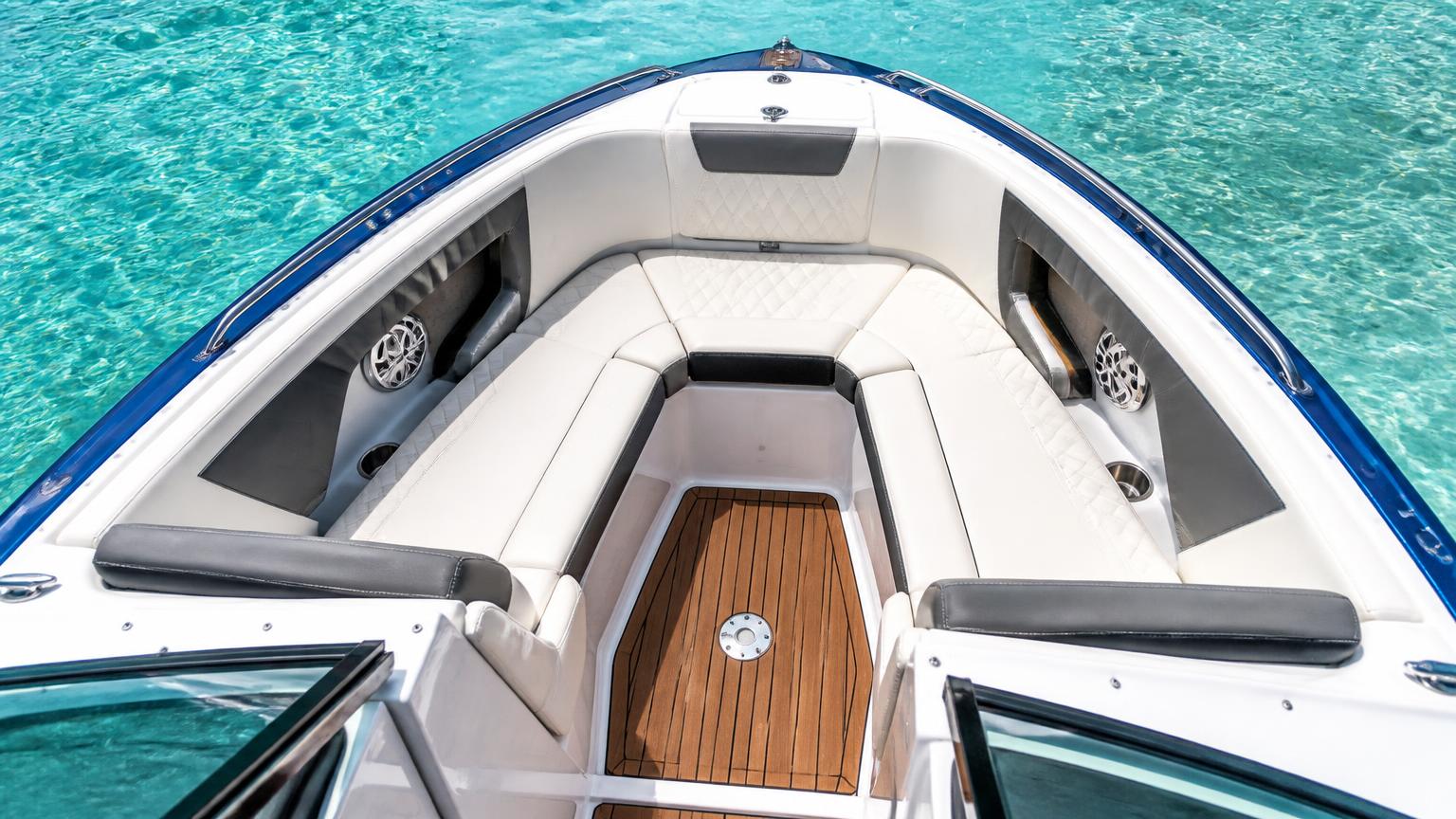
The same budget also buys a ten-to-fifteen-year-old premium bowrider of 7 m or more — the kind of boat with deep bow lounges, a powered bimini, a big sun pad and beautiful joinery that cost three times as much when new.
The catch is running cost and condition. A larger engine, heavier trailer, higher storage costs and older systems all add up, and structural problems on a boat this size are expensive. Buy one only after a thorough inspection of the floor, transom, stringers and drive, ideally with a professional survey.
How to get the most for your money
Buy at the end of the season when dealers and private sellers are motivated. Prioritise engine hours and service records over cosmetics, because upholstery is cheap to improve while engines are not. Check the trailer carefully; a good one is worth thousands.
Finally, leave five to ten per cent of the budget unspent for a service, safety gear, a cover and registration. Buyers who spend every dollar on the boat itself usually spend their first season fixing small things instead of using it.
Keep reading
Buying Advice
Choosing Your First Bowrider Boat
Buying Advice
What to Check When Buying a Used Bowrider
Ownership
How Much Does a Bowrider Cost to Run?
Buying Advice
Which Is the Lightest Bowrider Boat ?
Buying Advice
Old Bowriders vs New Bowrider Designs
Buying Advice
How Many People Fit in a Bowrider?
Buying Advice
The Best Bowrider Size for Families
Featured Boat of the Week
Bayliner Bayliner DX2000 — Our Featured Bowrider This Week

This week we are putting the Bayliner Bayliner DX2000 in the spotlight, and it earns the spot. At 20 ft 2 in (6.16 m) long on a 8 ft (2.44 m) beam, this is a bowrider that reads the water well and still feels roomy enough for a full day out. A 20-foot deck-boat-width bowrider with outboard power and a huge social cockpit. Power comes from 115-150 hp mercury fourstroke outboard through a outboard package, and the fibreglass hull keeps the ride settled when the afternoon breeze puts a chop on the surface.
Seating is rated for 8 people, so there is space for family, friends, towels, eskies and the tow rope without anyone climbing over gear. Owners tend to buy it for family, water ski, leisure — which is exactly where it shines. Fuel is 30 us gal (114 l), and on the second-hand and new market you should expect to land somewhere around US$42,000 - US$58,000 new depending on hours, trailer and options.
Our full deep dive covers the layout in detail: bow lounge comfort, helm ergonomics, the rear entertaining area, storage that actually swallows a weekend, plus standard features, popular options and honest notes on where the boat compromises. If the Bayliner DX2000 is on your shortlist, start there — and check back next week, because the featured boat changes every week as we complete more full model reviews.
Featured Bowrider Article
Which Bowriders Make the Best Day Boats?
On the Water
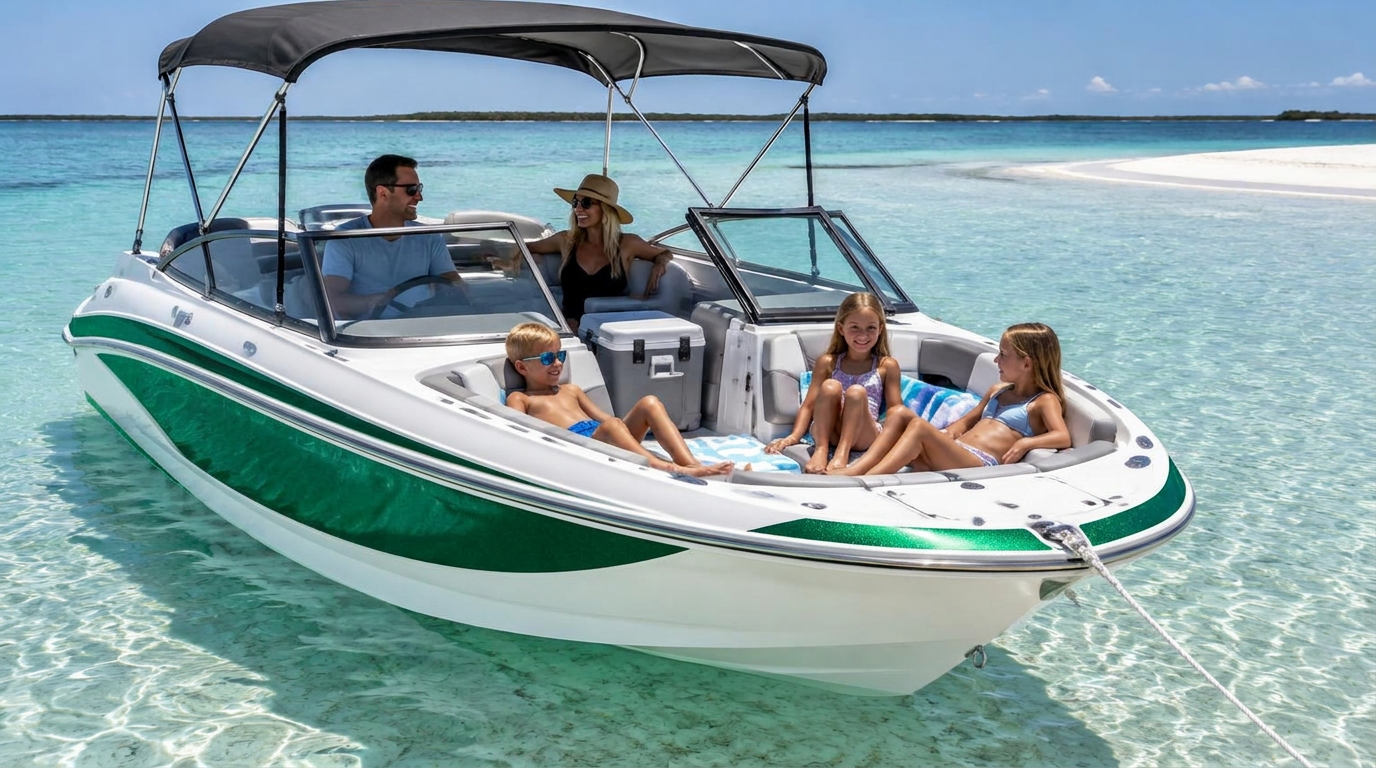
A day boat has one job: carry people comfortably from breakfast until sunset. No sleeping, no towing tournaments, no offshore ambitions — just shade, seating, swimming and a cooler that stays cold. Bowriders are arguably the best day boats ever built, and a handful of features separate the great ones from the merely adequate. The best day-boat bowriders are wide for their length. Extra beam turns the bow into a genuine lounge instead of two narrow benches, and lets the cockpit carry facing seats rather than a single rear bench. Look for continuous, well-padded cushions, high backrests and armrests you can actually lean on for hours. Convertible seating multiplies the boat's usefulness. Rear benches that flip into aft-facing lounges, filler cushions that turn the cockpit into a sun pad, and reversible helm seats let one boat suit sunbathing, conversation, dining and watching a skier. Shade is the most under-rated day-boat feature. A large, quickly deployed bimini — ideally powered, ideally covering both the helm and part of the cockpit — decides whether you stay out until five o'clock or head home at one. Bow shades and cockpit awnings extend that further. Swim access matters just as much. A wide platform, a sturdy telescopic ladder and…
Read the full article