Menu
Site Menu — Find Your Page
Bowrider Boats Mega Website
Ownership
Towing a Bowrider: What Vehicle Do You Need?
Getting towing right is the difference between spontaneous weekends and a boat that stays home. The mistake almost everyone makes is comparing the brochure hull weight to their vehicle's tow rating — two numbers that have almost nothing to do with real towing.
Work out your real towing weight
Start with the dry hull weight, then add the engine if it is quoted separately, then fuel at roughly 0.75 kg per litre, plus batteries, safety gear, water sports equipment, an esky and the trailer itself. Trailers add 250-450 kg for single-axle and 400-700 kg for tandem.
A 5.5 m aluminium bowrider quoted at 600 kg dry usually tows at 1,200-1,400 kg. A 6.5 m fibreglass boat quoted at 1,600 kg often tows at 2,400-2,700 kg. Always use the loaded figure and aim to stay well under your vehicle's rating rather than at it.
Matching vehicles to boat sizes
Up to about 1,200 kg loaded — small aluminium bowriders to 5 m — a mid-size sedan, wagon or compact SUV with a proper tow package is usually sufficient. Between 1,200 and 2,000 kg, mid-size SUVs and utes handle the job comfortably.
Above 2,000 kg, which covers most fibreglass bowriders over 6 m, you want a full-size SUV, ute or truck rated for 2,500-3,500 kg. Beyond 2,500 kg, tow ball load, braking and stability matter more than raw engine power, and a vehicle with a long wheelbase makes a noticeable difference.
Brakes, ball weight and the legal details
Most regions require trailer brakes above a threshold — often around 750 kg — and many require breakaway systems above about 2,000 kg. Check your local rules, because insurance follows compliance.
Tow ball load should typically be around 7-10 per cent of the trailer's total weight. Too little makes the trailer sway; too much overloads the rear axle and lightens the steering. Position the boat on the trailer so the load is right, and check that your vehicle's ball load limit is not exceeded even when the tow rating is fine.
Practical towing tips
Set tyre pressures for towing, check bearings and lights before every trip, and carry a spare trailer wheel with the correct tools. Extended mirrors are cheap and transform reversing at busy ramps.
Drive to the load: slower into corners, longer following distances, and gentle braking on descents. Practise reversing in an empty car park before your first ramp attempt. Owners who tow confidently use their boats twice as often as those who dread the trip, so choosing a package your vehicle handles easily is one of the best boating decisions you can make.
Keep reading
Buying Advice
Which Is the Lightest Bowrider Boat ?
Buying Advice
The Best Bowrider Size for Families
Ownership
Winterising and Storing a Bowrider
Ownership
Which Bowriders Need the Least Maintenance?
Ownership
How Much Does a Bowrider Cost to Run?
Ownership
How Long Do Bowrider Boats Last?
Ownership
Saltwater vs Freshwater Bowrider Ownership
Ownership
Bowrider Accessories Worth Buying
Featured Boat of the Week
Bayliner Bayliner DX2000 — Our Featured Bowrider This Week

This week we are putting the Bayliner Bayliner DX2000 in the spotlight, and it earns the spot. At 20 ft 2 in (6.16 m) long on a 8 ft (2.44 m) beam, this is a bowrider that reads the water well and still feels roomy enough for a full day out. A 20-foot deck-boat-width bowrider with outboard power and a huge social cockpit. Power comes from 115-150 hp mercury fourstroke outboard through a outboard package, and the fibreglass hull keeps the ride settled when the afternoon breeze puts a chop on the surface.
Seating is rated for 8 people, so there is space for family, friends, towels, eskies and the tow rope without anyone climbing over gear. Owners tend to buy it for family, water ski, leisure — which is exactly where it shines. Fuel is 30 us gal (114 l), and on the second-hand and new market you should expect to land somewhere around US$42,000 - US$58,000 new depending on hours, trailer and options.
Our full deep dive covers the layout in detail: bow lounge comfort, helm ergonomics, the rear entertaining area, storage that actually swallows a weekend, plus standard features, popular options and honest notes on where the boat compromises. If the Bayliner DX2000 is on your shortlist, start there — and check back next week, because the featured boat changes every week as we complete more full model reviews.
Featured Bowrider Article
Bowrider Accessories Worth Buying
Ownership
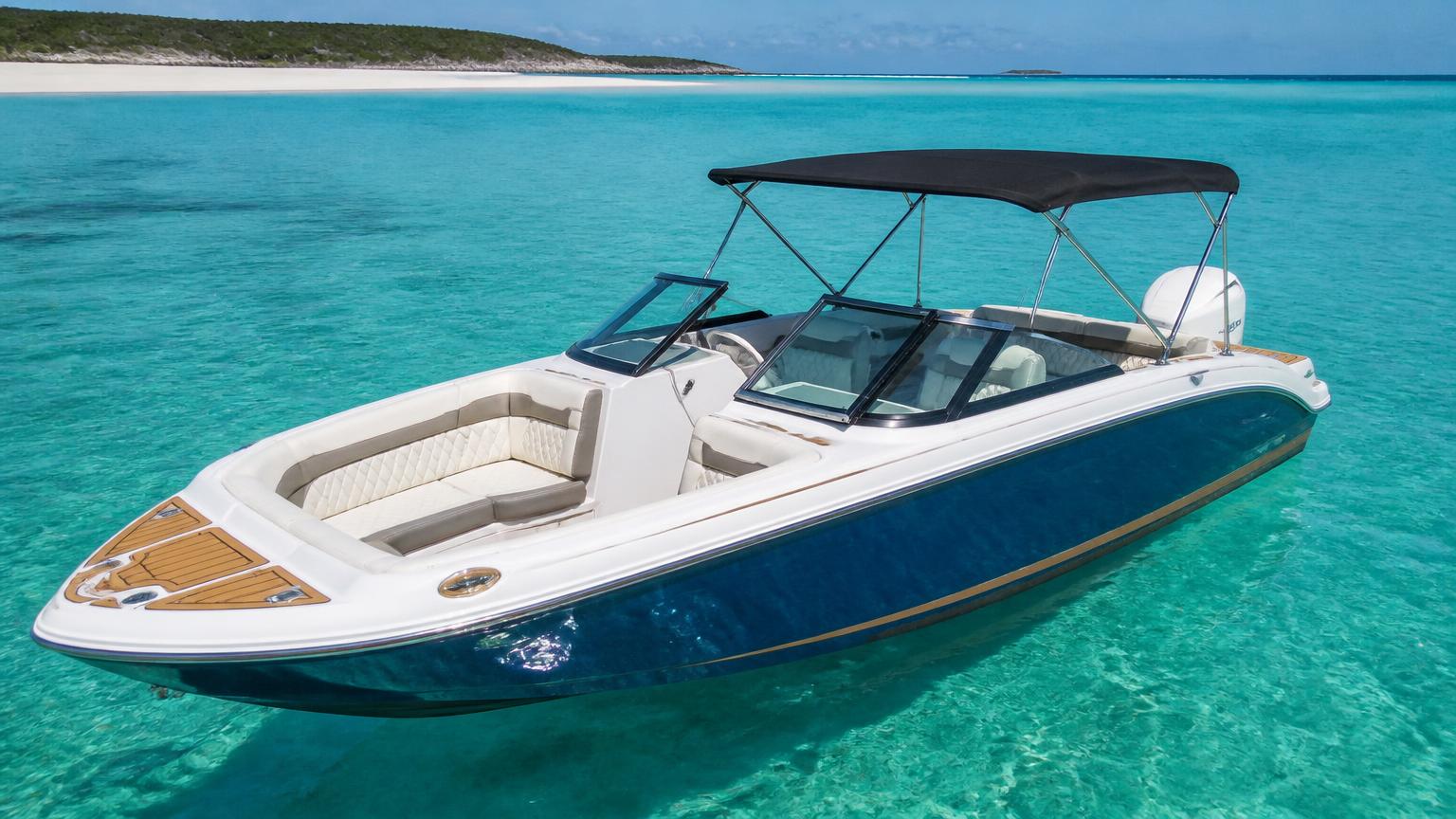
Every boat comes with an options list twice as long as it needs to be. After a season on the water, owners tend to agree strongly about which extras earn their keep and which never leave the locker. Here is where the money is well spent. A properly fitted cover is the highest-value accessory in boating. It protects upholstery, keeps rain out of the bilge, slows gelcoat fade and preserves resale. A supported travel cover that suits both towing and storage is worth paying extra for. Next, a bimini top. Shade turns a hot afternoon into a full day out, especially with children aboard, and modern quick-fold or powered biminis stow neatly. Then a good boarding ladder if the standard one is short, and quality lifejackets that people will actually wear rather than tolerate. Beyond the legal minimum, the gear that genuinely matters is a reliable anchor with adequate chain and rope for your water, a second battery with an isolator, a handheld VHF, a decent hand bilge pump, a torch, a basic tool and spares kit, and a fuel filter you can change. For coastal use add an EPIRB or PLB and a chartplotter with sonar. Being able to see depth, mark a ramp…
Read the full article