Menu
Site Menu — Find Your Page
Bowrider Boats Mega Website
Ownership
Which Bowriders Need the Least Maintenance?
Maintenance is where boat ownership either stays fun or turns into a chore. Two boats of the same size can differ enormously in how many hours and dollars they demand each season, and almost all of that difference comes down to three choices: hull material, drive type and how much complexity you buy.
Hull material sets the baseline
A painted or bare aluminium hull is the low-maintenance benchmark. There is no gelcoat to oxidise, no osmosis risk, and abrasion at the ramp is cosmetic rather than structural. A hose-down after saltwater use, an anode check and an annual inspection of welds and rivets covers most of it.
Fibreglass asks for more. Gelcoat needs washing, polishing and waxing to stay glossy, and neglected gelcoat chalks within a few seasons. Chips need filling before water reaches the laminate. It is not difficult work, but it is recurring work.
Polyethylene and thermoplastic bowriders sit in a category of their own: essentially maintenance-free skins that shrug off knocks, at the cost of styling options and resale depth.
Outboards beat stern drives on upkeep
An outboard hangs outside the boat, tilts clear of the water when parked, and needs an annual service that is broadly comparable to a car service: oil, filters, plugs, gear oil, impeller and anodes. Nothing about it lives below the waterline permanently.
A stern drive splits the work in two. You service the engine inside the boat and the drive leg outside it. Bellows, gimbal bearings, U-joints, drive oil and anodes all sit in or near the water, and the bellows in particular are a wear item with a real replacement interval. That is why outboard-powered bowriders generally cost less to keep and are easier to sell.
The details that quietly add hours
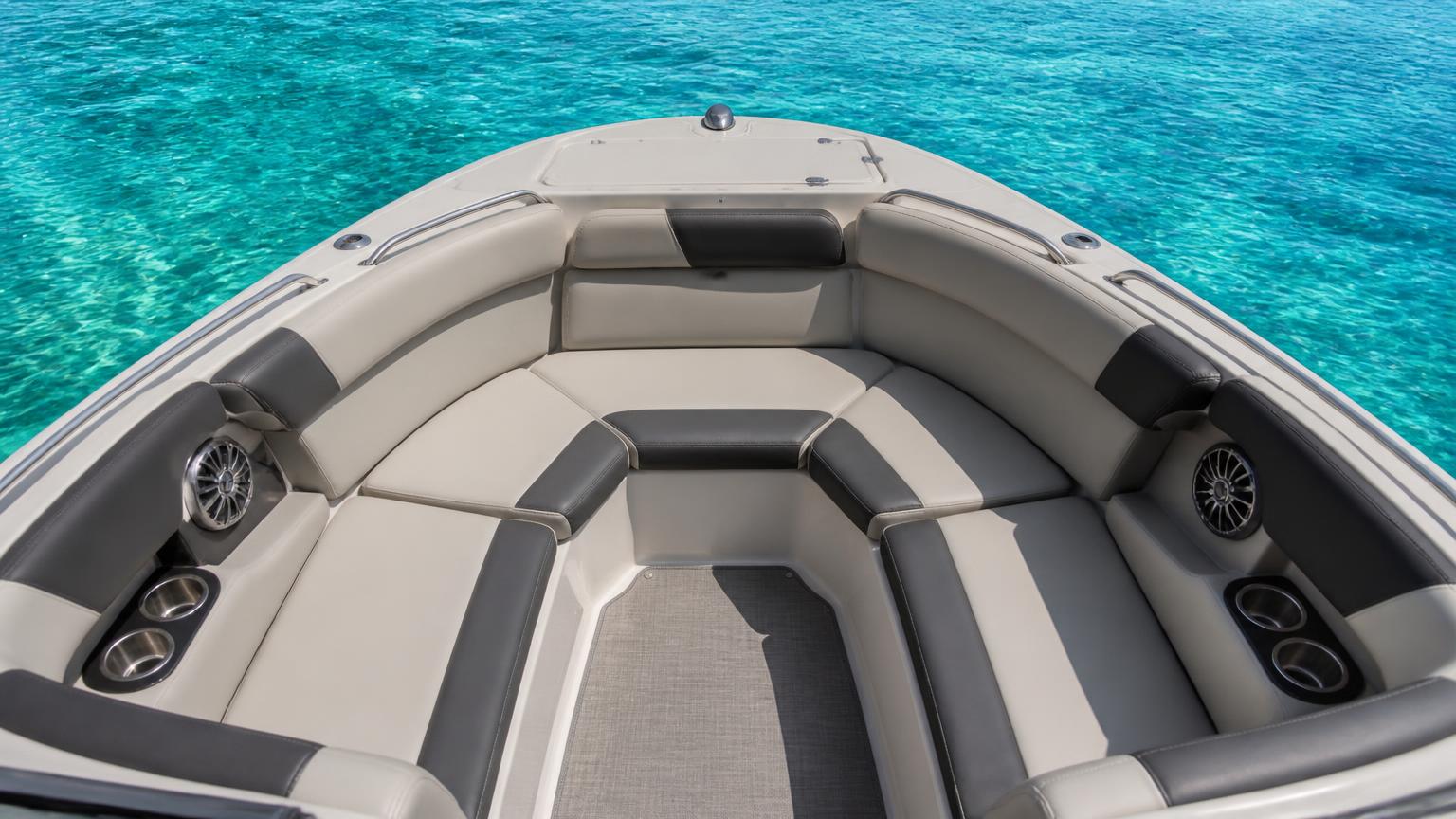
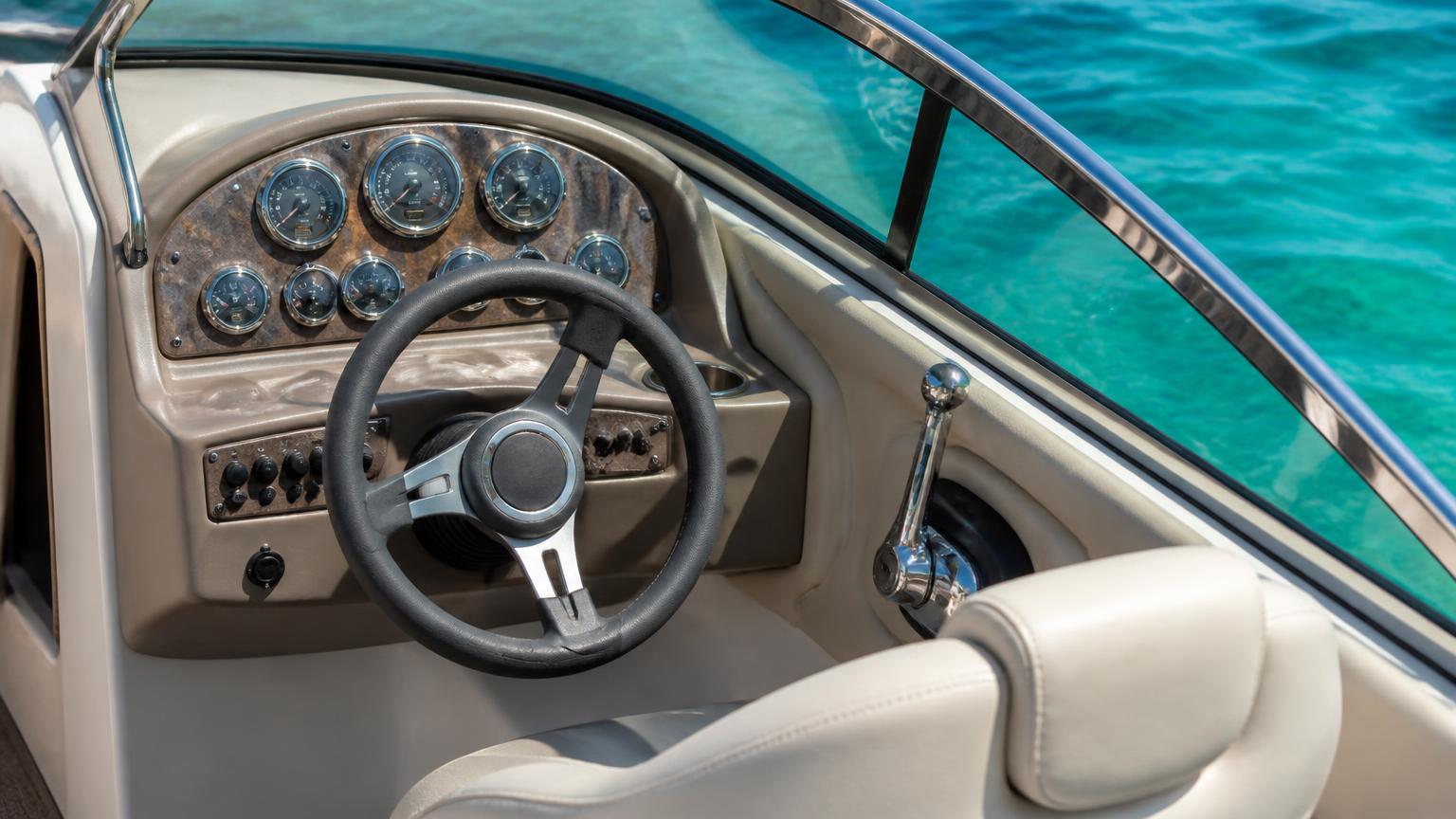
Every feature you add becomes something to maintain. Snap-in carpet, teak-look decking, powered biminis, ski pylons, sound systems, fridges, freshwater showers and ballast systems all have their own failure modes. A simple boat with vinyl floors, a manual bimini and a basic head unit will be ready for the water years longer with far less fuss.
Upholstery is the sleeper cost. Marine vinyl left in the sun without covers or protectant cracks and stains, and re-trimming a bowrider interior can cost more than a full engine service. A good cover is the cheapest maintenance decision you will ever make.
The lowest-maintenance combination
If minimum upkeep is the priority, the answer is consistent: an aluminium hull, a single modern four-stroke outboard, simple wiring, vinyl or self-draining floors and a well-fitted cover. Freshwater use lowers the workload again, since salt is what drives corrosion, anode consumption and flushing routines.
Add a wash-down after every trip, a flush after saltwater, an annual service and a winter cover, and that boat will ask very little of you. The heavier the boat and the more systems it carries, the more of your season you spend maintaining it rather than using it.
Keep reading
Engines & Drives
Should I Buy a Stern Drive Bowrider?
Comparisons
Aluminium vs Fibreglass Bowriders
Ownership
Winterising and Storing a Bowrider
Ownership
How Much Does a Bowrider Cost to Run?
Ownership
How Long Do Bowrider Boats Last?
Ownership
Towing a Bowrider: What Vehicle Do You Need?
Ownership
Saltwater vs Freshwater Bowrider Ownership
Ownership
Bowrider Accessories Worth Buying
Featured Boat of the Week
Bayliner Bayliner DX2000 — Our Featured Bowrider This Week

This week we are putting the Bayliner Bayliner DX2000 in the spotlight, and it earns the spot. At 20 ft 2 in (6.16 m) long on a 8 ft (2.44 m) beam, this is a bowrider that reads the water well and still feels roomy enough for a full day out. A 20-foot deck-boat-width bowrider with outboard power and a huge social cockpit. Power comes from 115-150 hp mercury fourstroke outboard through a outboard package, and the fibreglass hull keeps the ride settled when the afternoon breeze puts a chop on the surface.
Seating is rated for 8 people, so there is space for family, friends, towels, eskies and the tow rope without anyone climbing over gear. Owners tend to buy it for family, water ski, leisure — which is exactly where it shines. Fuel is 30 us gal (114 l), and on the second-hand and new market you should expect to land somewhere around US$42,000 - US$58,000 new depending on hours, trailer and options.
Our full deep dive covers the layout in detail: bow lounge comfort, helm ergonomics, the rear entertaining area, storage that actually swallows a weekend, plus standard features, popular options and honest notes on where the boat compromises. If the Bayliner DX2000 is on your shortlist, start there — and check back next week, because the featured boat changes every week as we complete more full model reviews.
Featured Bowrider Article
How Many People Fit in a Bowrider?
Buying Advice
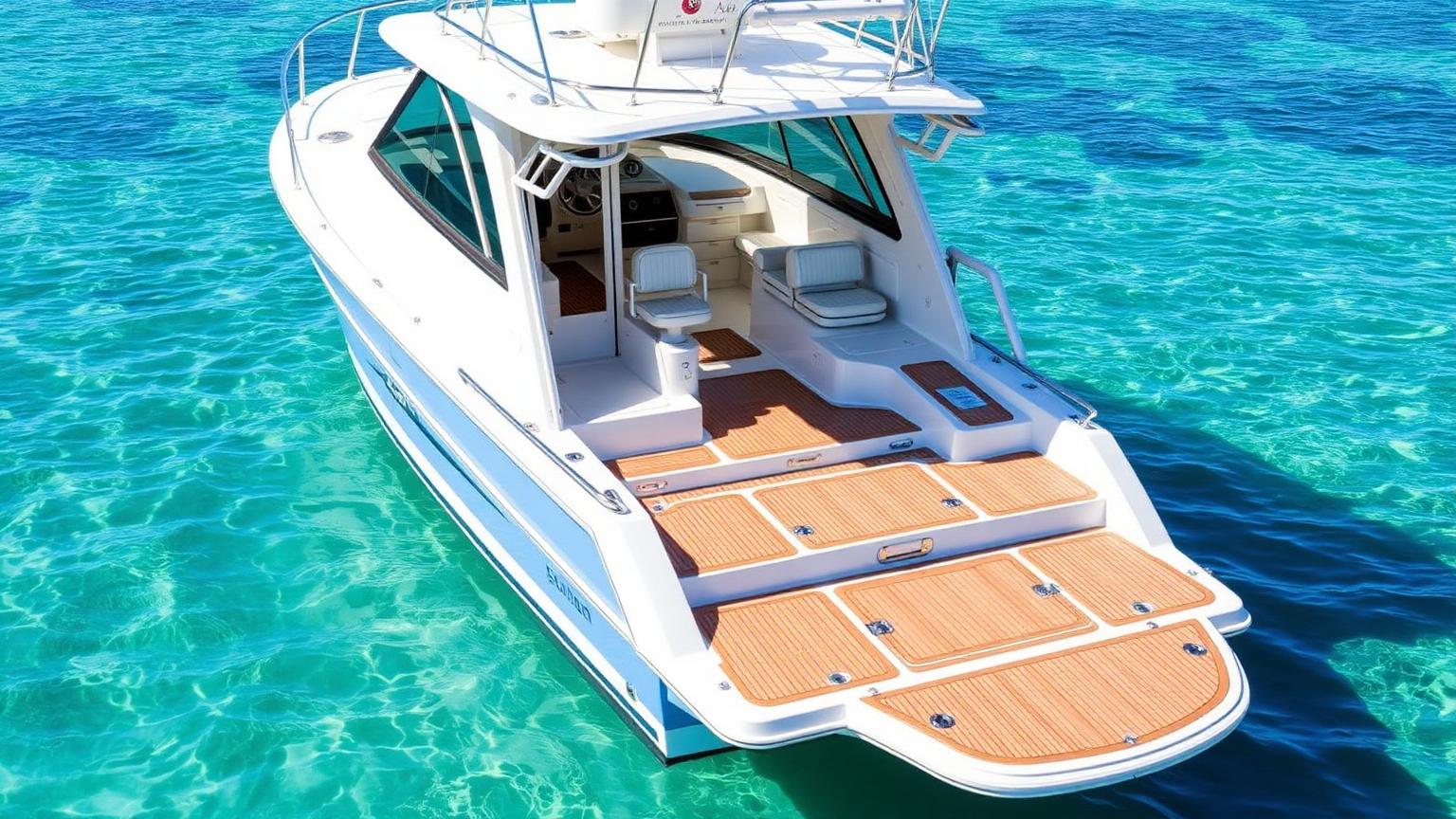
Capacity is the question every family asks first, and brochures answer it optimistically. There is a legal number, a physical number and a comfortable number, and they are rarely the same. Here is how to work out how many people your bowrider really carries. As a rough guide, a 4.8-5.2 m bowrider is rated for four to six people, a 5.5-6.0 m boat for six to eight, a 6.4-7.0 m boat for eight to ten, and a 7.6 m-plus bowrider for ten to twelve. Beam matters as much as length: a wide 6 m hull can seat more comfortably than a narrow 6.5 m one. Comfortable capacity is usually two people fewer than the rated maximum. A boat rated for eight is pleasant with six adults, cramped with eight, and unpleasant with eight adults plus eskies, boards and towels. Most bowriders carry a builder's plate stating maximum persons, maximum load in kilograms or pounds, and maximum engine power. The persons figure is calculated using an assumed average weight per person, which is often lower than real adult weights. The load figure is the one that matters. It covers people, fuel, gear and any accessories, so a full tank of fuel and a loaded esky reduce…
Read the full article