Menu
Site Menu — Find Your Page
Bowrider Boats Mega Website
Ownership
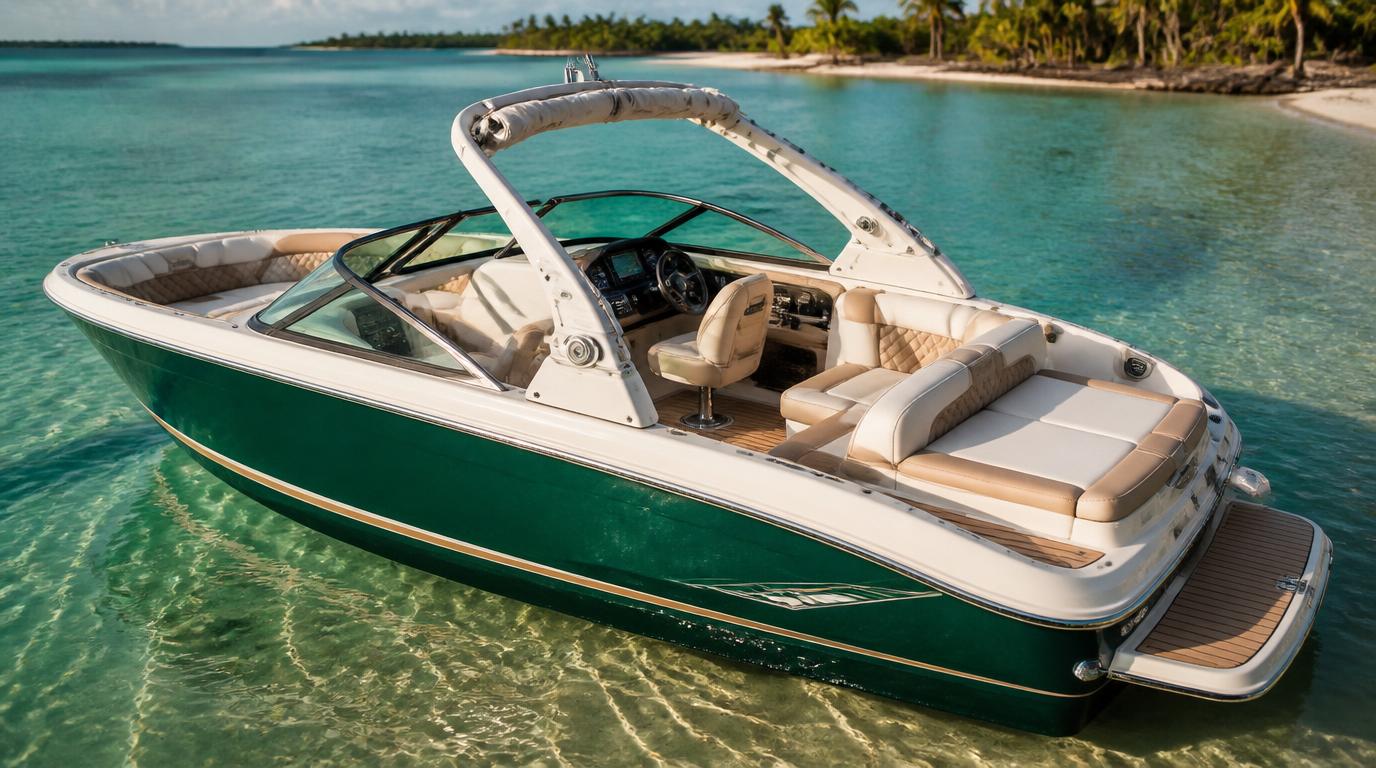
Bimini and Shade Options for Bowrider Boats
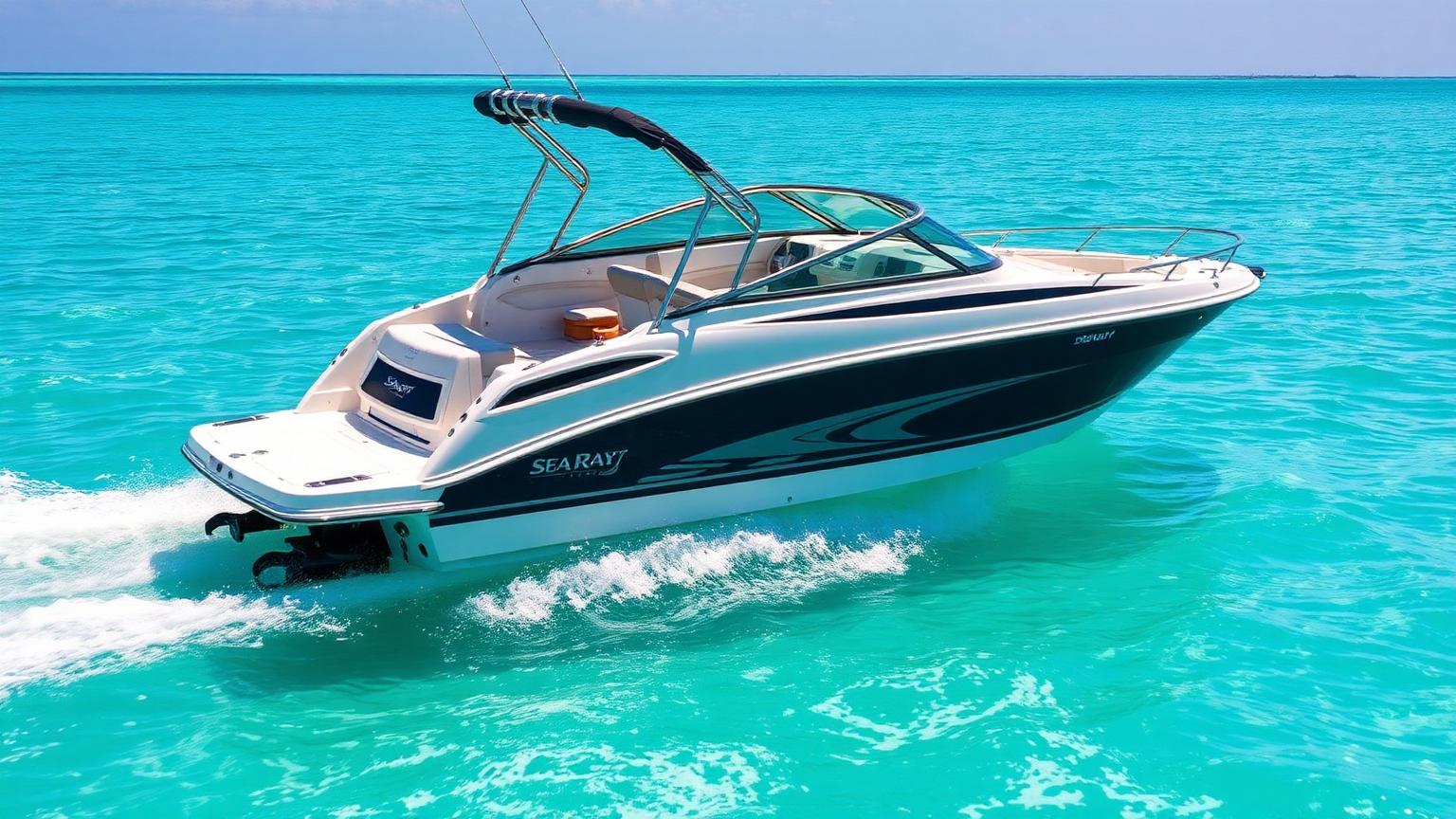
Shade is the single upgrade that most extends a day on a bowrider. Without it, the crew rotates through the only shadow on board and everyone is finished by early afternoon; with it, the boat becomes a floating verandah and you stay out until the light goes. Bowriders have three broad shade families — the centre bimini, tower and hard-top shade, and the convertible bow shade over the front lounge — and most well-set-up boats end up with two of them.
The classic middle bimini
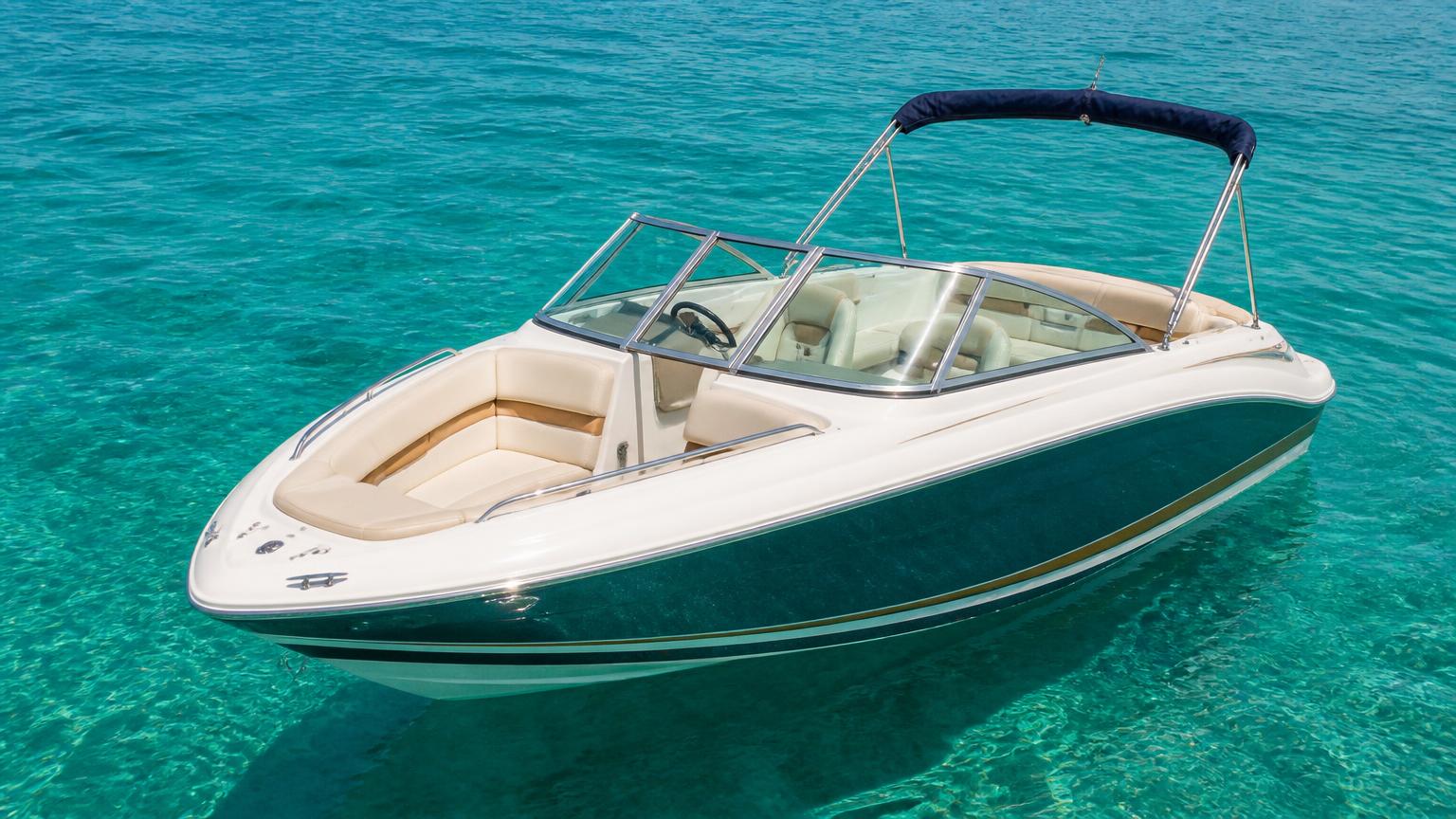
The standard bimini is a folding fabric top on stainless or aluminium bows, mounted amidships so it shades the helm and the passenger seat, and usually part of the rear lounge as well. It is the cheapest, lightest and most universal option, it folds flat into a boot when you want open sky, and it can be raised or dropped by one person in under a minute.
Choose acrylic canvas over cheaper polyester if you can: it holds colour, resists mildew and lasts far longer in strong sun. Look at the geometry rather than just the size — a three-bow top gives a shorter shaded footprint than a four-bow, and a top mounted too low will interfere with the windscreen or force taller passengers to duck. Also check that the boot and straps stow somewhere sensible, because a bimini that is awkward to fold is a bimini that never gets used.
The limitations are real. A centre bimini gives no shade at all forward of the windscreen, so the bow lounge — often the most popular seat on the boat — bakes. It also flogs and rattles at speed on many boats, and most manufacturers ask you to drop it above a certain speed or in strong wind.
Wake tower shade, T-tops and hard tops
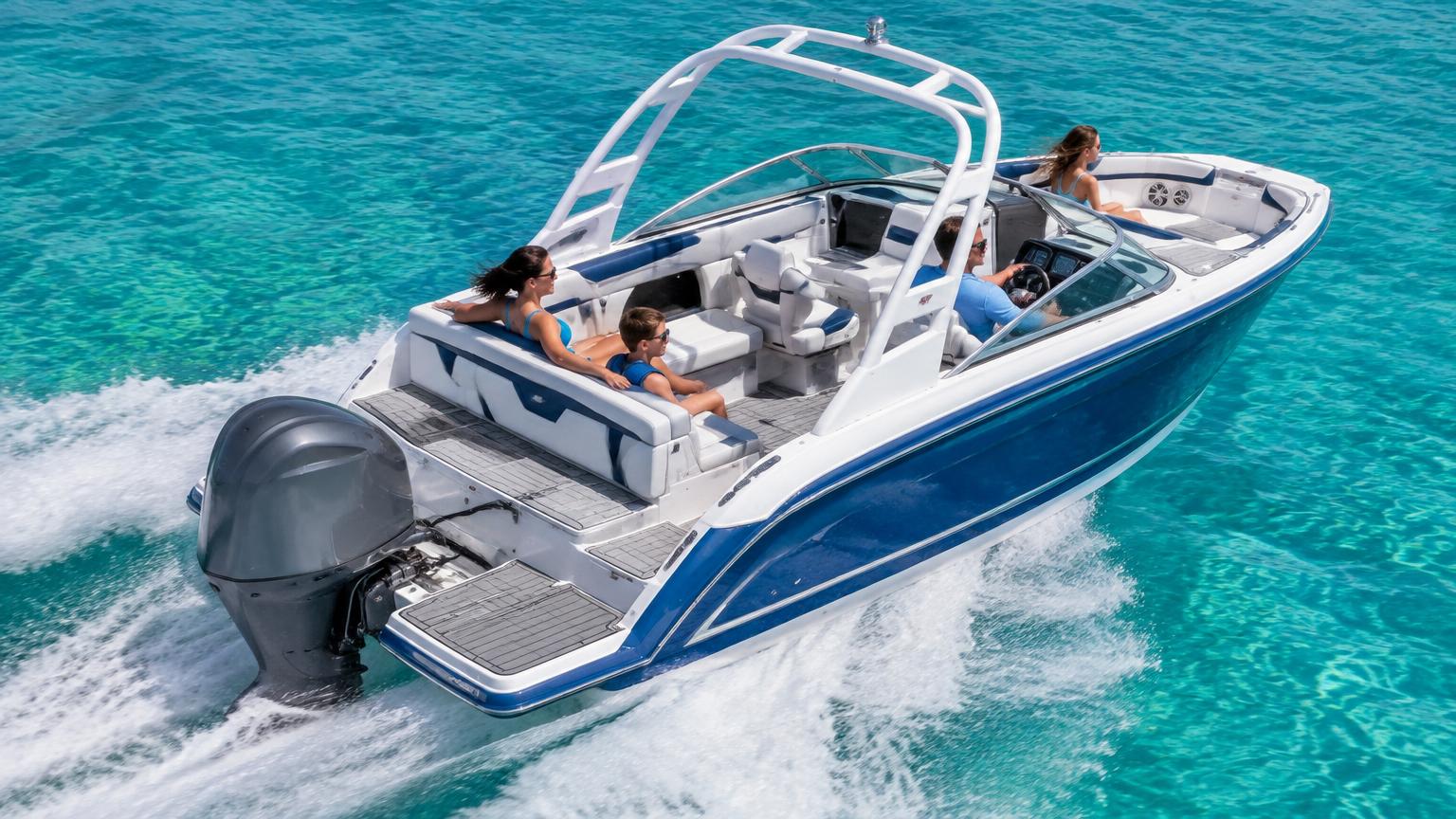
On a bowrider fitted with a wake tower, the tower itself becomes the shade frame. A tower bimini stretches between the tower legs, sits far higher than a conventional top, and shades a much larger area of the cockpit without cluttering headroom. Because it is high and taut, it usually stays up at cruising speed and it does not need to be folded away when you tow a skier or wakeboarder.
A T-top is the same idea in a rigid form: a fixed fabric or moulded panel on a stainless frame over the helm, borrowed from fishing boats and increasingly popular on crossover bowriders. Full hard tops in fibreglass or moulded composite go further again, adding rigid protection from sun and rain, mounting points for lights, speakers, a radar arch or rod holders, and no canvas to replace every few seasons.
The trade-offs are weight, height and cost. Anything rigid and high raises the centre of gravity, which is felt most on lighter aluminium hulls, and it can push the boat over the height limit for a garage, carport or low bridge. Hard tops and towers also cost several times what a fabric bimini costs, so they make most sense on larger bowriders that are already carrying tower-mounted water-sport gear.
The convertible four-pole bow shade
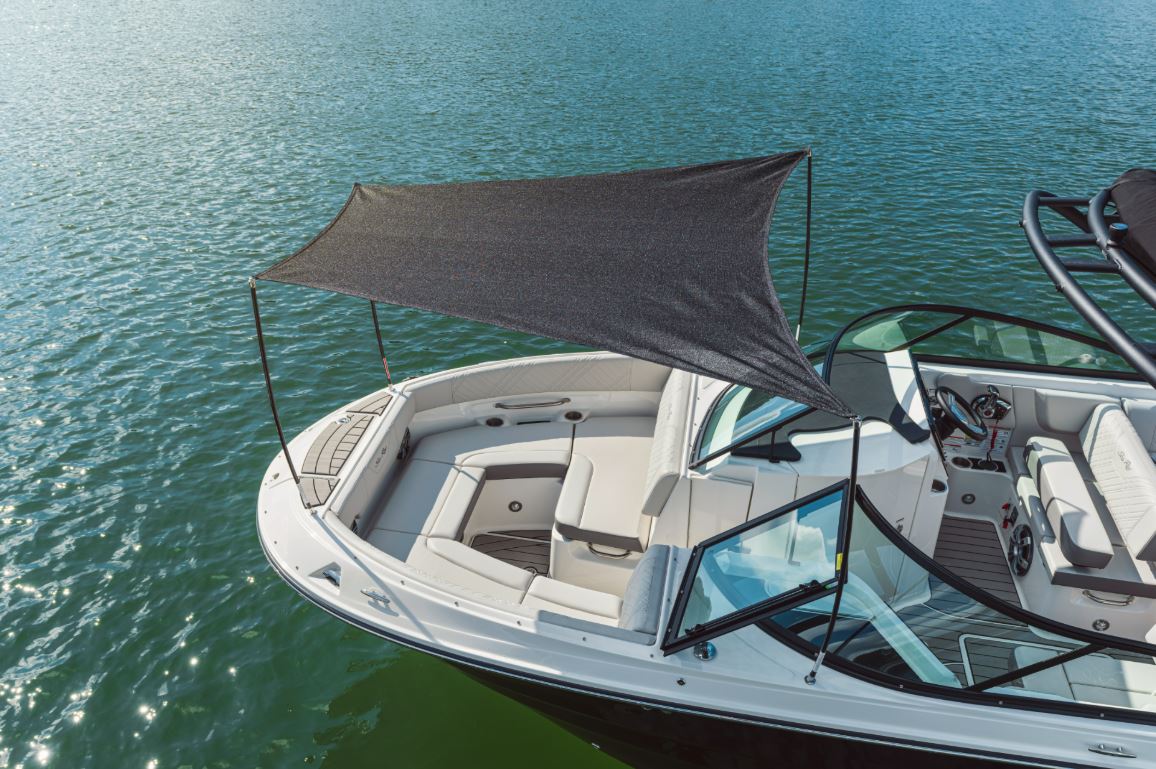
The most useful and least known option is the convertible bow shade: a temporary canopy erected over the bow lounge on four poles that socket into fittings in the gunwales and bow rails. It spans the full width of the forward cockpit and turns the bow cushions — normally the sunniest place on the boat — into the coolest and most sheltered seat aboard.
It goes up in a couple of minutes at anchor, packs down into a bag no bigger than a folded camp chair, and adds almost no weight or windage because it is only used when the boat is stationary or idling. For families it is transformative: babies, toddlers, older relatives and anyone with sun-sensitive skin can sit up front on a sandbar all afternoon instead of crowding under the bimini.
Some builders offer it as a factory bow shade or bow sun canopy that matches the bimini fabric and clips to the same rails; others sell an aftermarket kit with adjustable poles and guy straps. Set it up before you leave the ramp the first time, mark the poles for length, and always drop it before you get under way — these canopies are not designed for planing speeds.
Curtains, camper canvas and full enclosures
Shade panels can also be zipped together into weather protection. A front curtain between the bimini and the windscreen stops wind and spray on cool mornings, side curtains close the cockpit off, and an aft curtain completes a camper enclosure that makes overnighting on board genuinely comfortable.
Full enclosures with clear vinyl windows extend the season noticeably in cooler climates and keep dew, insects and rain out of the upholstery. They are heavy to handle, and clear vinyl needs careful cleaning and must never be rolled tightly or left folded on a hot day, but for owners who use their bowrider year-round they are the highest-value canvas on the boat.
How to choose, and how to look after it
For most owners the ideal combination is a good four-bow acrylic bimini for the helm and cockpit plus a convertible bow shade for the front lounge. If you already have a wake tower, spend the money on a tower bimini instead and you get more shade for less clutter. Choose a hard top only if you boat in relentless sun, fish seriously, or want a permanent mounting platform, and can accept the extra height and weight.
Whatever you fit, rinse the canvas with fresh water, let it dry fully before folding, keep zips waxed and re-treat the fabric with a proofing spray each season. Check the bow tips, hinges and fasteners for wear at the start of every summer, and carry a spare strap and a couple of split rings — the cheapest part of a shade system is always the one that fails first, usually on the hottest day of the year.
Keep reading
Comparisons
Why Length Matters: How Size and Weight Affect Ride Quality
On the Water
Bowrider Seating and Layout Explained
On the Water
Which Bowriders Make the Best Day Boats?
Ownership
Which Bowriders Need the Least Maintenance?
Ownership
How Much Does a Bowrider Cost to Run?
Ownership
How Long Do Bowrider Boats Last?
Ownership
Towing a Bowrider: What Vehicle Do You Need?
Ownership
Winterising and Storing a Bowrider
Featured Boat of the Week
Bayliner Bayliner DX2000 — Our Featured Bowrider This Week

This week we are putting the Bayliner Bayliner DX2000 in the spotlight, and it earns the spot. At 20 ft 2 in (6.16 m) long on a 8 ft (2.44 m) beam, this is a bowrider that reads the water well and still feels roomy enough for a full day out. A 20-foot deck-boat-width bowrider with outboard power and a huge social cockpit. Power comes from 115-150 hp mercury fourstroke outboard through a outboard package, and the fibreglass hull keeps the ride settled when the afternoon breeze puts a chop on the surface.
Seating is rated for 8 people, so there is space for family, friends, towels, eskies and the tow rope without anyone climbing over gear. Owners tend to buy it for family, water ski, leisure — which is exactly where it shines. Fuel is 30 us gal (114 l), and on the second-hand and new market you should expect to land somewhere around US$42,000 - US$58,000 new depending on hours, trailer and options.
Our full deep dive covers the layout in detail: bow lounge comfort, helm ergonomics, the rear entertaining area, storage that actually swallows a weekend, plus standard features, popular options and honest notes on where the boat compromises. If the Bayliner DX2000 is on your shortlist, start there — and check back next week, because the featured boat changes every week as we complete more full model reviews.
Featured Bowrider Article
Old Bowriders vs New Bowrider Designs
Buying Advice
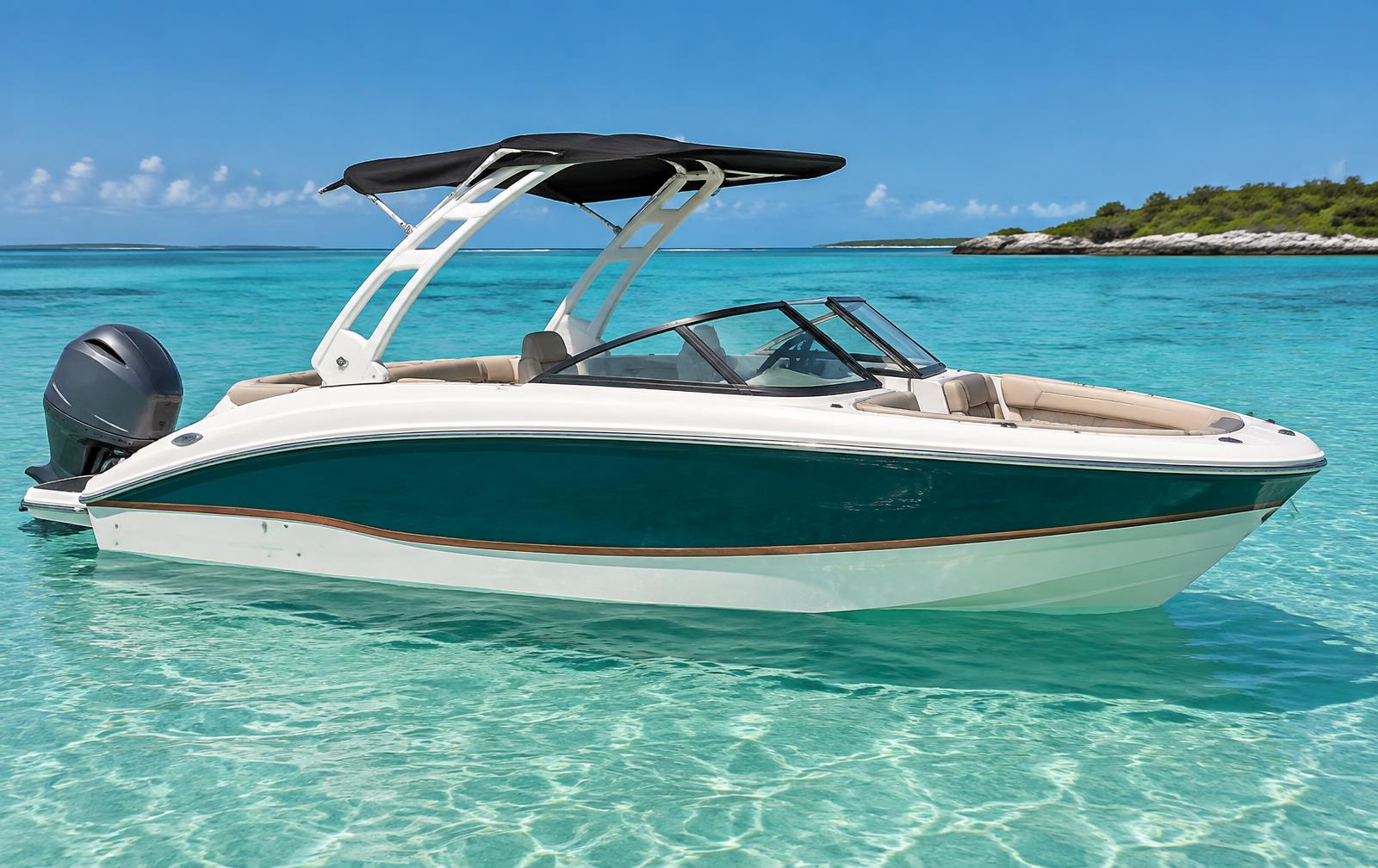
A 1998 bowrider and a 2026 bowrider look superficially similar: open bow, walkthrough windscreen, rear bench. Underneath, almost everything has changed. Knowing what improved, what did not, and what you actually pay for is the key to buying well at any budget. Older bowriders were commonly built with modest deadrise and simple running surfaces, tuned for calm lakes and easy planing. Modern hulls carry sharper entries, better-developed strakes and wider chines, giving a drier ride, flatter turns and more predictable behaviour in a chop. Aluminium has moved furthest. Pressed flat-panel hulls from the 1990s slapped in waves; today's roll-formed hulls carry curved, fine-entry bows that slice rather than pound. If ride comfort is your main complaint about older aluminium boats, a modern hull is a genuine step change rather than a marketing claim. Older bowriders were mostly sterndrive, often with carburetted petrol V6 or V8 engines. They were torquey and cheap to buy, but thirsty, and they demanded regular tuning. Modern outboard packages deliver similar performance while using noticeably less fuel and starting reliably every time. Fuel economy improvements are real. A modern 150-200 hp four-stroke pushing a 6 m hull at a relaxed cruise typically uses substantially less fuel per hour than an older…
Read the full article