Menu
Site Menu — Find Your Page
Bowrider Boats Mega Website
Engines & Drives
Bowrider Fuel Economy Explained
Fuel is usually the biggest running cost of a bowrider, and it is also the one you control most directly. Two identical boats can differ by forty per cent in consumption depending on how they are propped, trimmed, loaded and driven.
Typical consumption figures
A 4.8-5.2 m bowrider with a 90-115 hp four-stroke uses roughly 10-18 litres per hour at cruise. A 5.5-6.2 m boat with 150-200 hp uses about 18-30 litres per hour. A 7 m-plus boat with 250-350 hp typically uses 30-55 litres per hour, and twin-engine boats more again.
The useful measure is litres per nautical mile rather than per hour, because it accounts for speed. Most bowriders find their best efficiency just above planing speed, commonly in the 18-25 knot range at 3,500-4,000 rpm, where the hull is fully supported but not fighting drag.
Why speed dominates everything
Below planing speed a hull drags a large wake behind it and burns fuel inefficiently. Once on the plane, consumption per mile drops sharply, then rises again as speed climbs because drag increases rapidly. Wide-open throttle can easily double consumption for a twenty per cent speed gain.
Finding your boat's efficiency window is a fifteen-minute exercise. Run at increasing rpm, note speed and fuel flow, and calculate litres per mile at each step. Most owners discover a comfortable cruise setting they never knew existed.
Propeller, trim and hull condition
The propeller is the cheapest performance upgrade available. A prop that lets the engine reach its rated wide-open rpm with a normal load will out-perform a mismatched prop by ten per cent or more in economy, and improve planing and handling as well.
Trim matters nearly as much. Running bow-down increases wetted surface and drag; running correctly trimmed reduces both. A clean hull is essential too — even light fouling or a growth-covered outboard leg can cost double-digit percentages in fuel.
Practical ways to use less fuel
Reduce weight: half a tank instead of a full one on short trips, and leave gear you never use at home. Distribute passengers so the boat sits level. Fit trim tabs on boats that struggle to hold a plane at low speed.
Then adjust habits. Plane early and cruise steadily rather than accelerating and slowing repeatedly, idle less at the ramp, and plan trips with wind and tide instead of against them. None of these cost anything, and together they routinely save twenty to thirty per cent of a season's fuel bill.
Featured Boat of the Week
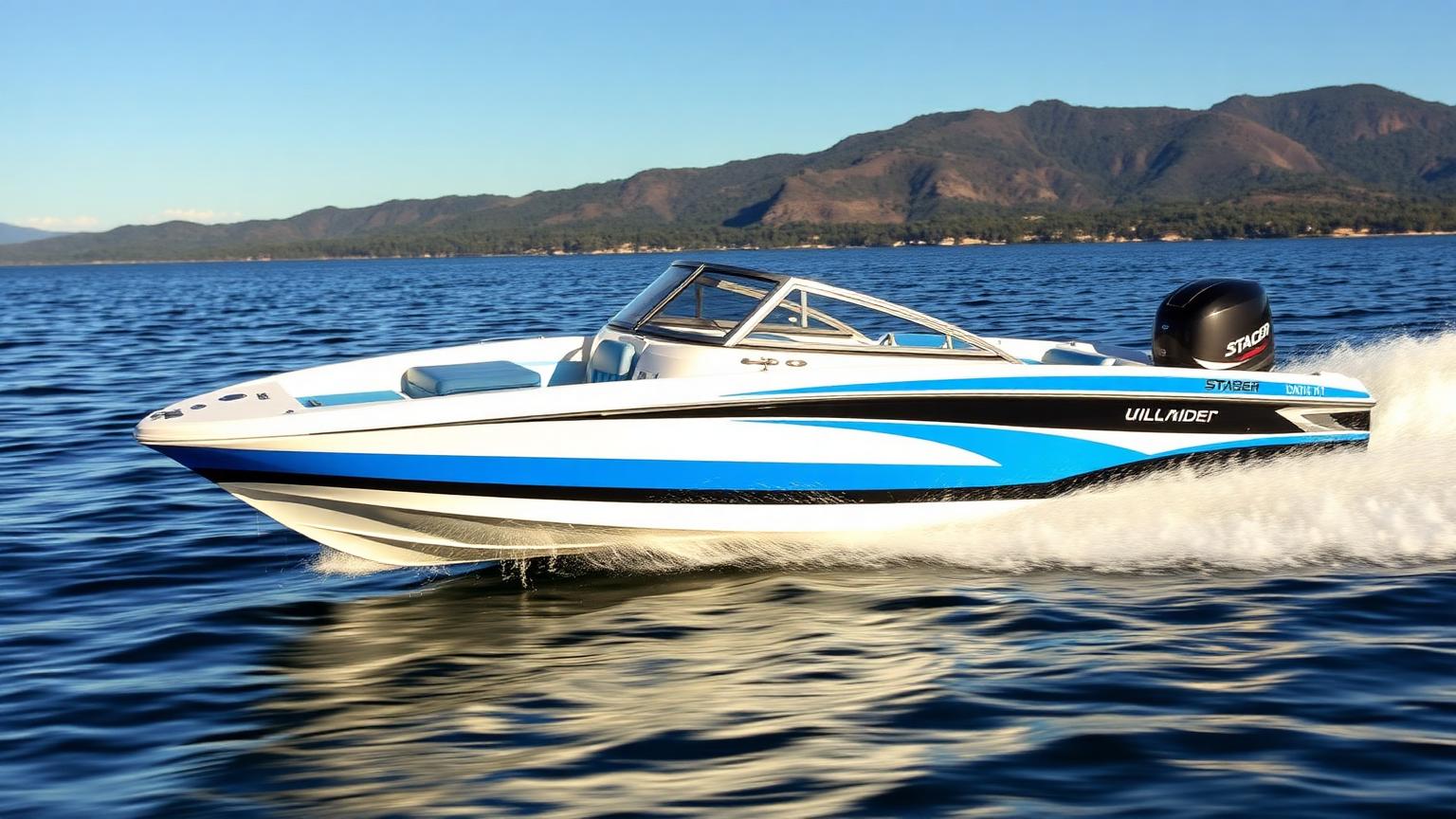
Bayliner Bayliner DX2000 — Our Featured Bowrider This Week

This week we are putting the Bayliner Bayliner DX2000 in the spotlight, and it earns the spot. At 20 ft 2 in (6.16 m) long on a 8 ft (2.44 m) beam, this is a bowrider that reads the water well and still feels roomy enough for a full day out. A 20-foot deck-boat-width bowrider with outboard power and a huge social cockpit. Power comes from 115-150 hp mercury fourstroke outboard through a outboard package, and the fibreglass hull keeps the ride settled when the afternoon breeze puts a chop on the surface.
Seating is rated for 8 people, so there is space for family, friends, towels, eskies and the tow rope without anyone climbing over gear. Owners tend to buy it for family, water ski, leisure — which is exactly where it shines. Fuel is 30 us gal (114 l), and on the second-hand and new market you should expect to land somewhere around US$42,000 - US$58,000 new depending on hours, trailer and options.
Our full deep dive covers the layout in detail: bow lounge comfort, helm ergonomics, the rear entertaining area, storage that actually swallows a weekend, plus standard features, popular options and honest notes on where the boat compromises. If the Bayliner DX2000 is on your shortlist, start there — and check back next week, because the featured boat changes every week as we complete more full model reviews.
Featured Bowrider Article
Bowrider Seating and Layout Explained
On the Water
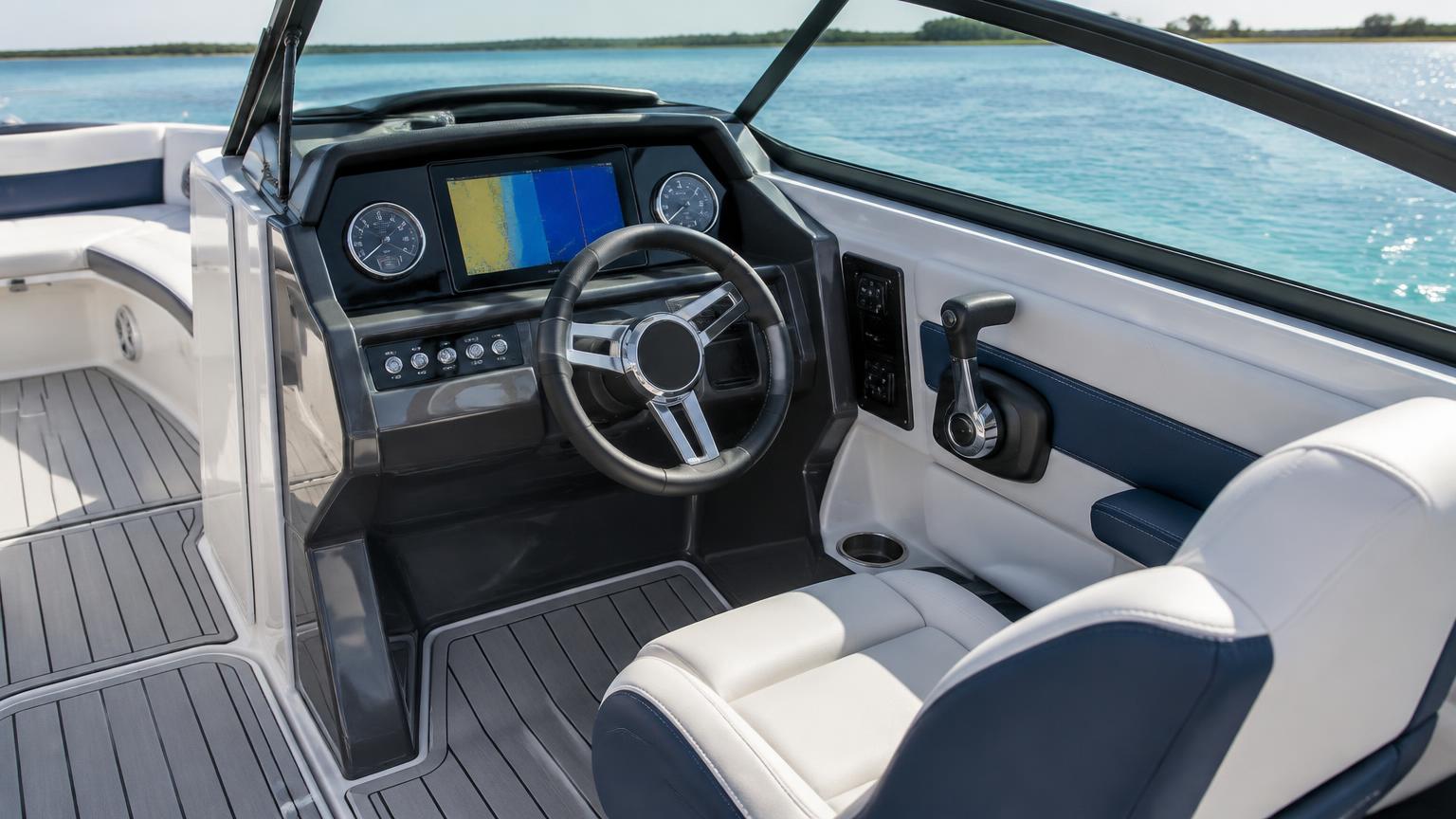
The layout is the whole point of a bowrider. Open the bow, seat people where the view is best, and the same hull becomes a picnic boat, a swim platform, a ski boat and a fishing boat. Here is what each area does and what to look for. Two facing lounges run forward from the windscreen, usually seating two to four people, with backrests moulded into the hull sides and cushions over deep storage lockers. Longer lounges are worth seeking out because they allow adults to stretch out and double as sun beds at anchor. Good bow areas include filler cushions that turn the whole space into a single sun pad, an insert table for picnics, drink holders, speakers, a bow ladder or step-through gate, and a cover or tonneau for towing and rougher water. Check the depth of the bow sides too — shallow sides feel exposed at speed. The helm seat should adjust fore and aft, offer a flip-up bolster for standing, and give a clear sightline over the bow when the boat is planing. A dash with room for a chartplotter, clean switch layout and readable gauges makes every trip easier. Opposite it, the companion seat may be a simple bucket, a…
Read the full article