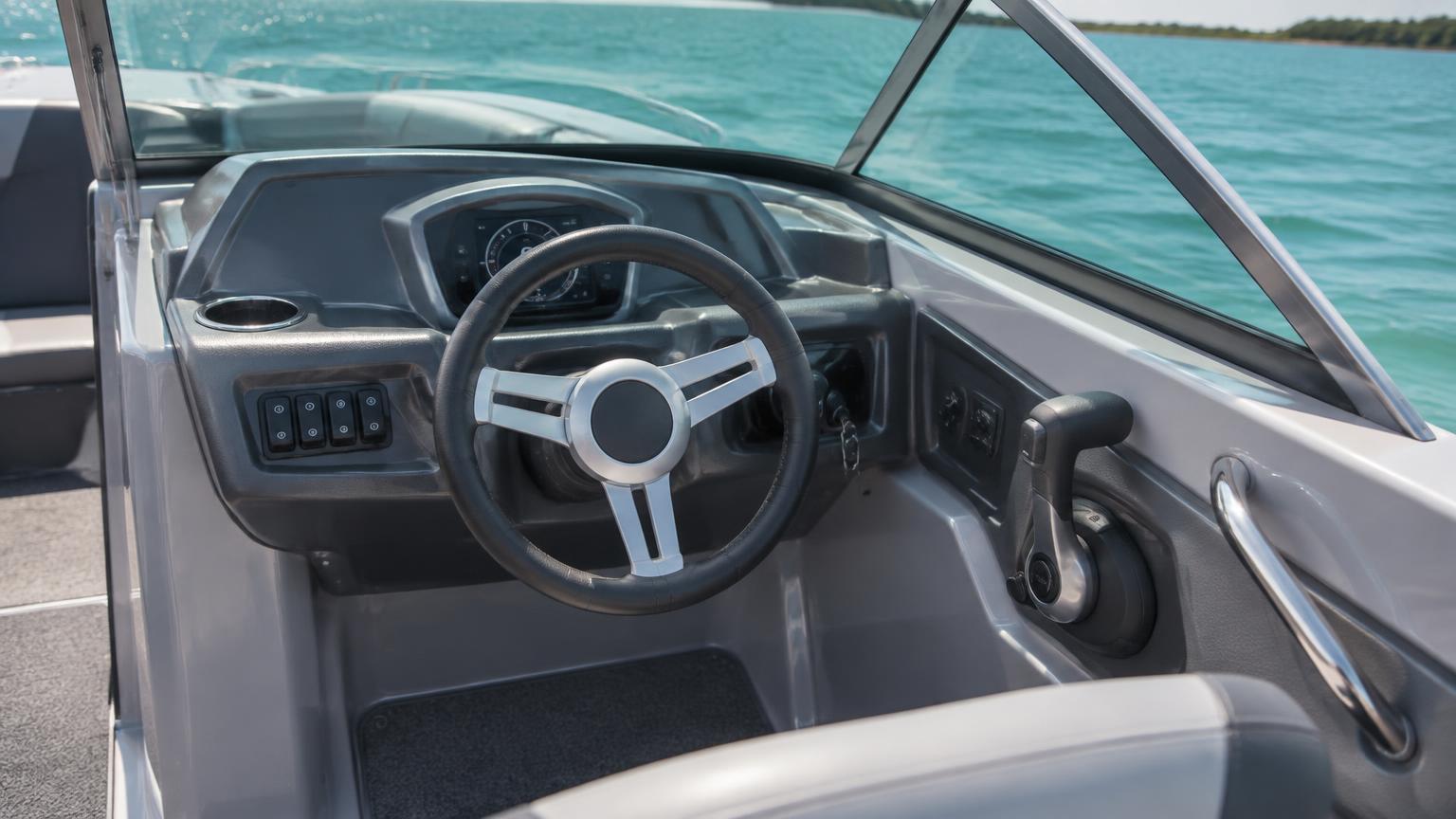
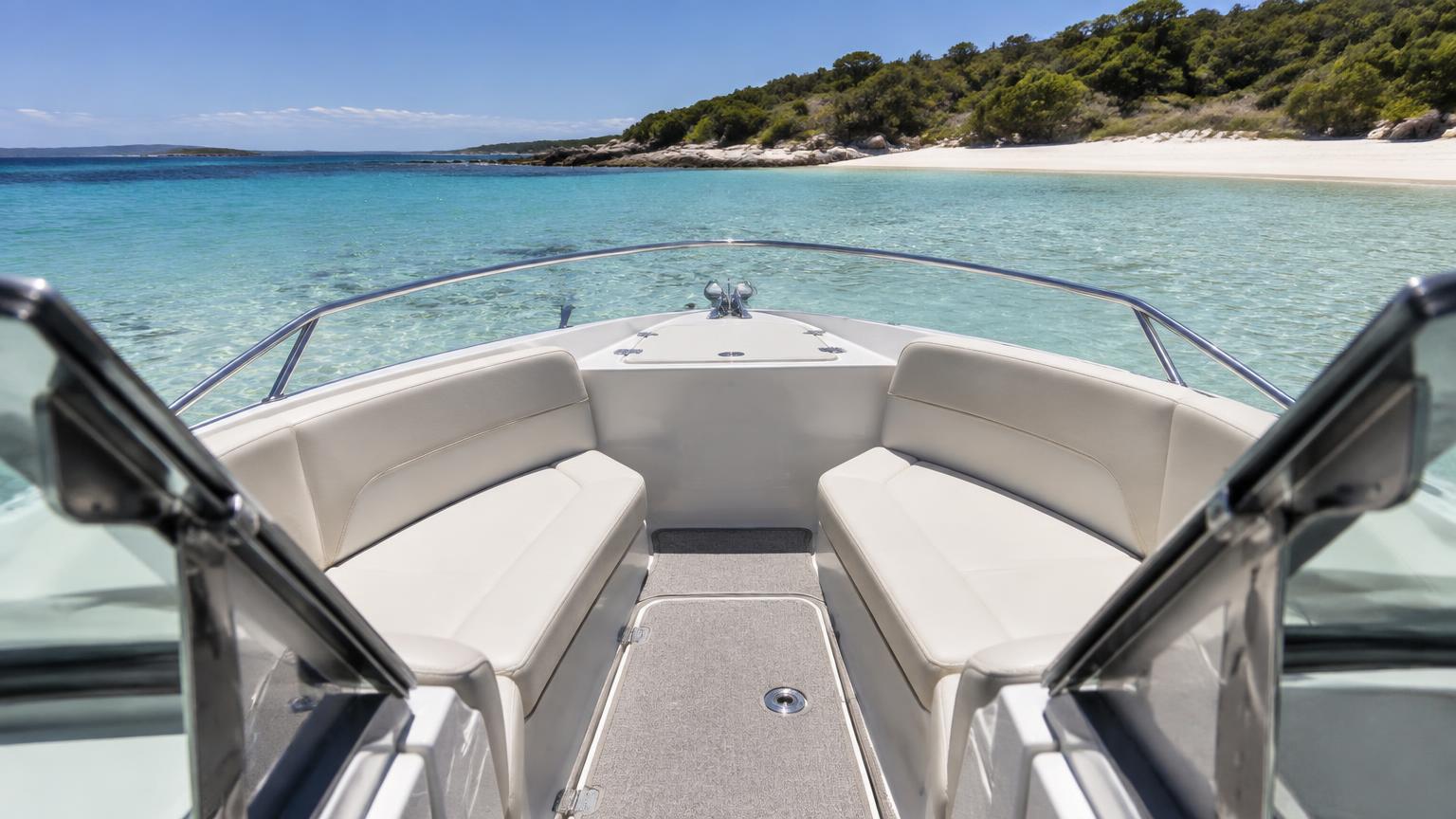
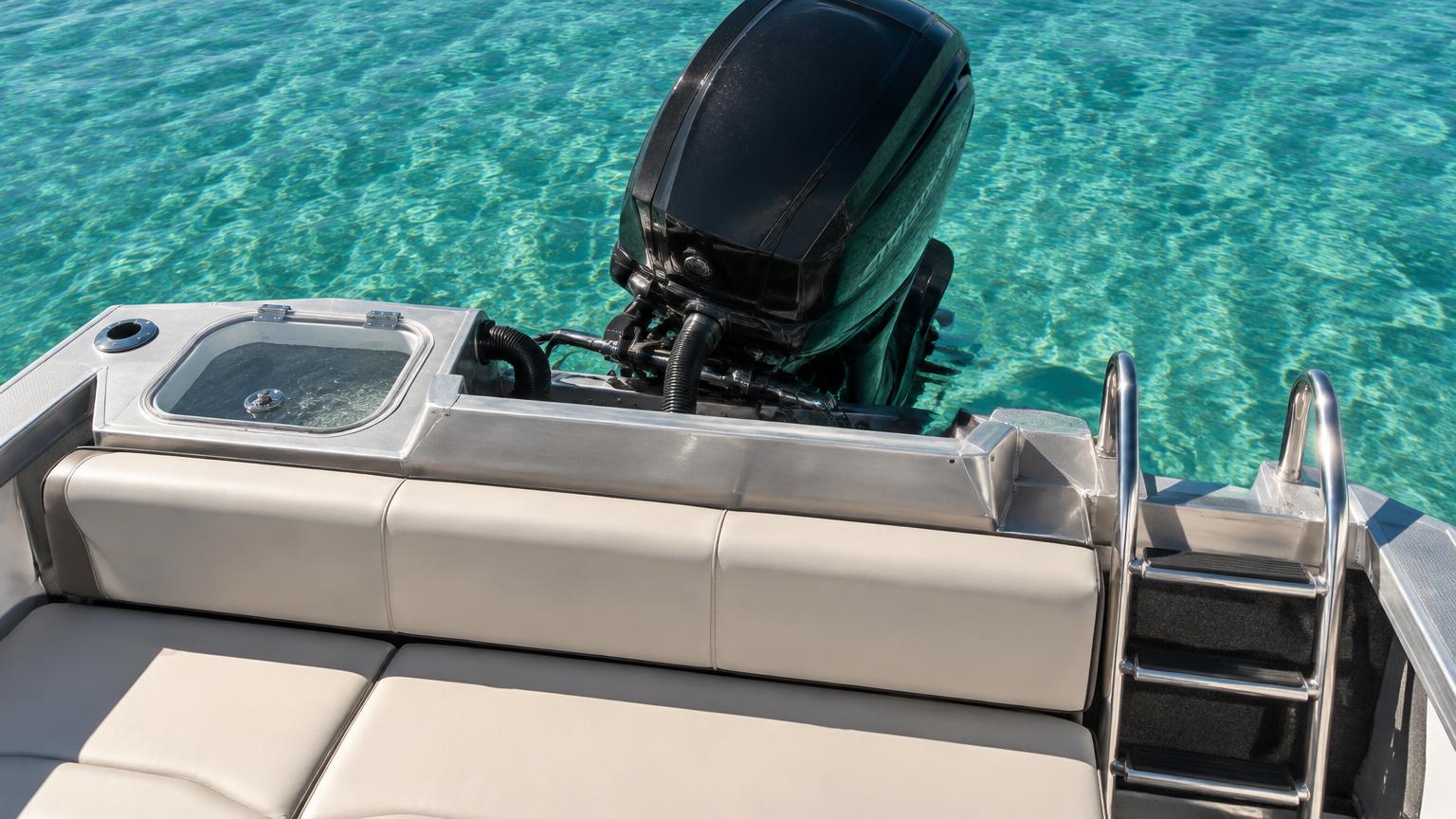
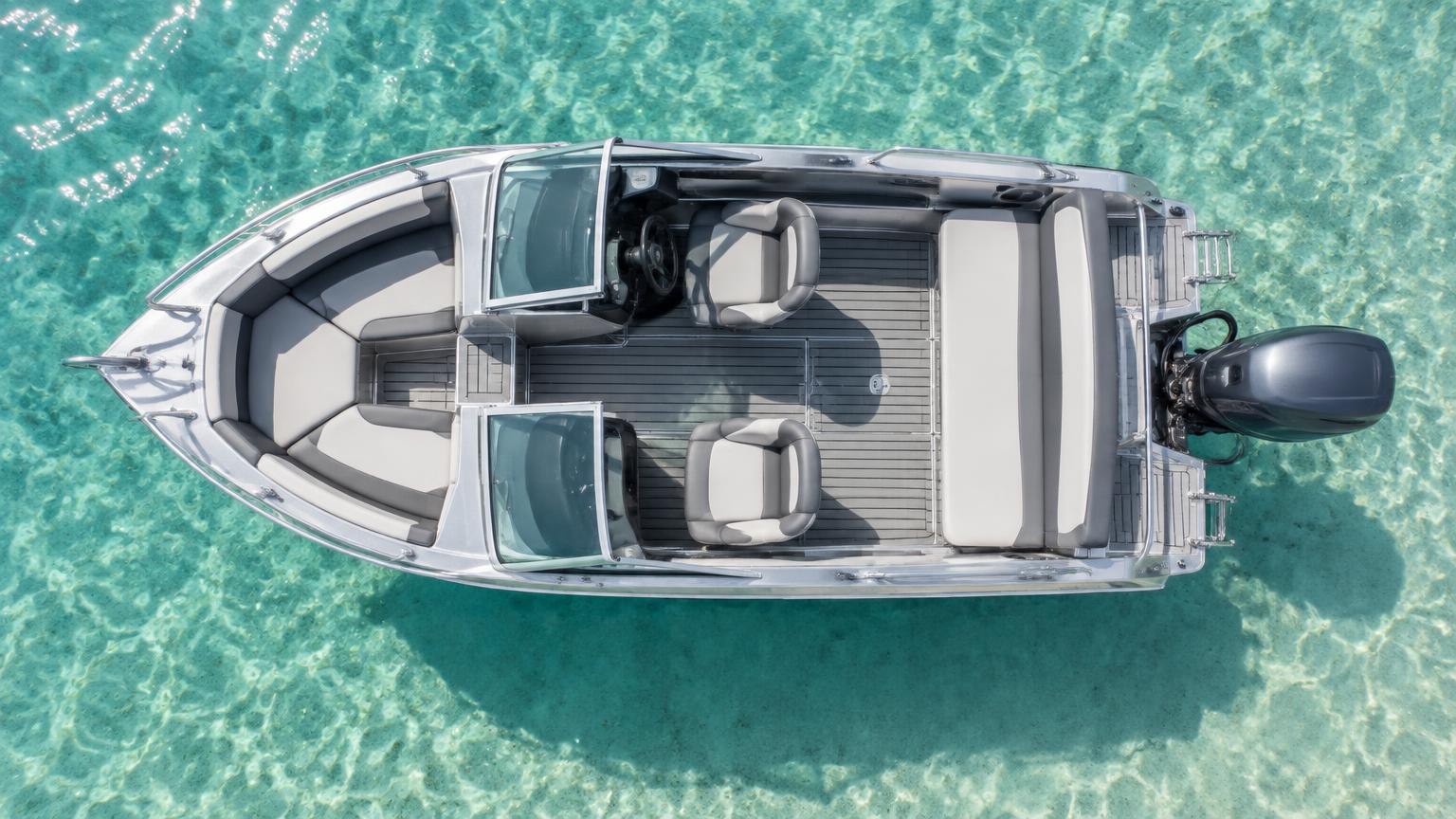
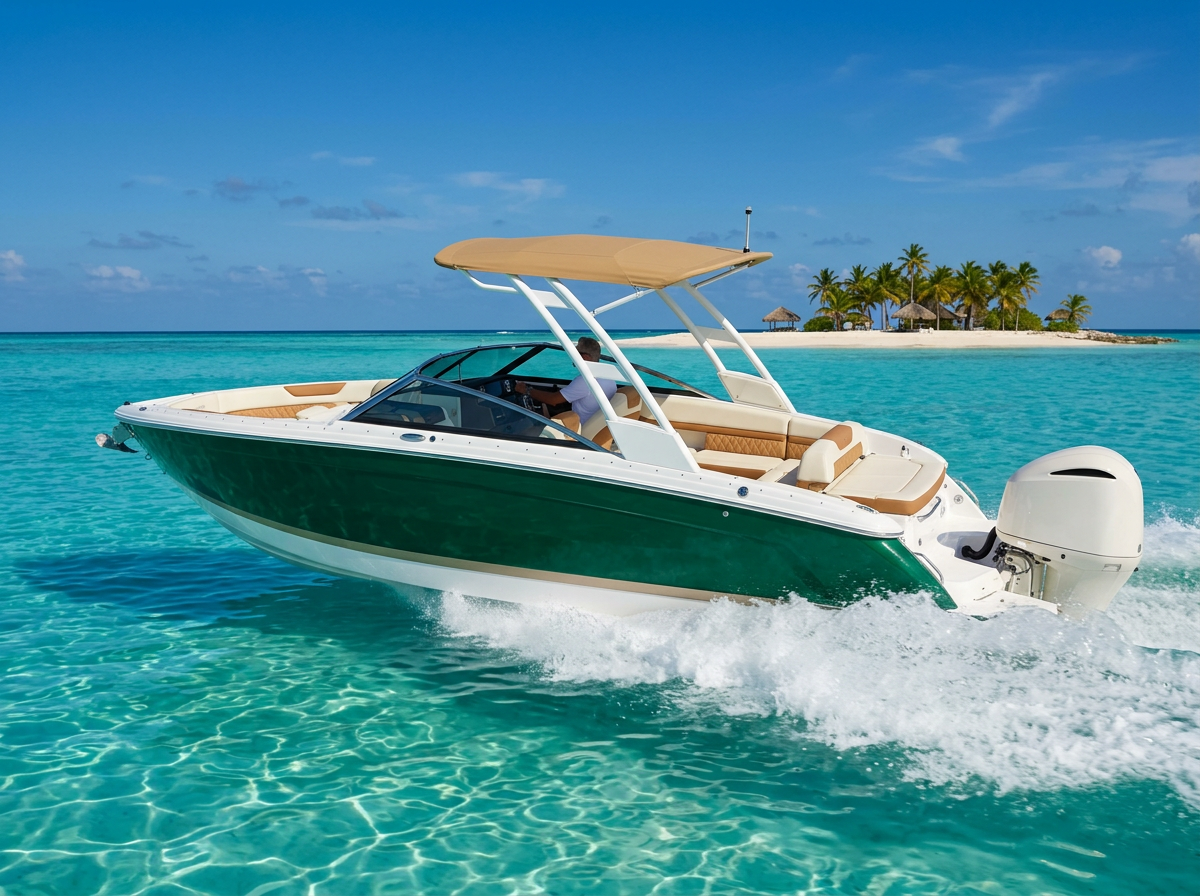
Bayliner VR5
The world's best selling bowrider size, Light, simple and easy to tow.
- Length
- 19 ft 9 in (6.02 m)
- Drive
- Outboard
- Seats
- 8 people / 1,150 lb
US$38,000 - US$52,000 new
Site Menu — Find Your Page
Bowrider Boats Mega Website

The Rinker Captiva 226 is a large bowrider built in moulded fibreglass by Rinker of United States, a builder trading since 1945. On our measurements it works out at roughly 22 ft 7 in (6.89 m) of hull with a beam near 9 ft 8 in (2.95 m), which places it squarely in the trailerable family bowrider class: one vehicle, one trailer, one afternoon of prep, and the boat is in the water. Family-run builder offering more standard equipment per dollar than most rivals.

Layout is classic bowrider and that is the whole point of the boat. Twin lounges run forward of the windscreen with a walk-through to the anchor well, the helm and companion seats sit amidships behind a wrap screen, and a full-width lounge spans the transom for sunbathing and socialising. Around 11 people fit aboard comfortably in sheltered water. Cushions lift out, backrests fold and filler pads convert the cockpit from a conversation pit into one long sun bed in a couple of minutes.

On the water the Captiva 226 is easy to like because nothing about it is demanding. Trim it out, settle into a mid-throttle cruise and it holds course with a finger on the wheel. Turns are progressive rather than sharp, wake crossings are soft, and the boat is forgiving of an inexperienced driver — an underrated quality in a family bowrider.

Power is a 185-280 hp four-stroke outboard package, and that suits both the hull and the way these boats are used. Keeping the machinery outside the hull frees up stern storage, simplifies servicing and removes the bellows and gimbal wear items that punish neglected stern drive boats. It also lifts the swim platform clear of the exhaust.

Watersports are well covered. A tow point is standard on almost every boat in this class, and Rinker owners regularly add a pylon or a folding tower for wakeboarding. A healthy outboard package pulls a slalom skier out of the water cleanly and tows children on an inflatable biscuit all day without protest. Skis, ropes and vests live in the under-floor and under-seat lockers so nothing sits underfoot while the boat is loaded.
Fishing is the quiet strength of this hull. Pull the bow cushions and the forward lounge becomes an open casting platform with clear access all the way around the bow, and the rear lounge lifts out to open up the transom and side gunwales. Ten minutes of work turns the family boat into a genuinely capable fishing boat, and ten minutes the other way turns it back again before anyone gets home.
Build and finish sit where you would expect for a mid range boat from United States. Rinker has been building boats since 1945 and has always positioned itself as the value-for-equipment choice: a Captiva bowrider typically arrives with features that cost extra elsewhere, including cockpit carpet, ski lockers, upgraded stereo, bimini and swim platform hardware. Hulls are moderate deep-V designs tuned for stability and a dry ride rather than headline speed, and the boats feel solid because Rinker uses full fibreglass stringer grids and hand-laid laminate. The Captiva 21, 22 and 24 sizes are the mainstays, available in stern drive and increasingly in outboard form, and the layouts are generous — deep bow seating with proper backrests, wide walk-through and big transom sunpads. Interior finish is a step below Chaparral or Cobalt but comfortably above the entry brands. On the used market Rinker offers strong value because brand recognition is lower than Sea Ray, and there is a healthy supply from the 2000s and 2010s in North America and Europe.
Options worth having on the Captiva 226 are the practical ones: a bimini for shade, a decent bow and cockpit cover so the upholstery survives being stored outside, an upgraded sounder if you fish, and a stereo package that can be heard over the engine. On fibreglass, a ceramic coat or a good polish once a season keeps the gelcoat looking new and protects resale.
As a used buy, check the same things you would on any bowrider in this size band: transom firmness, stringer and floor soundness, hours and service history on the engine, steering and trim function, and the state of the upholstery seams, which are the first thing to fail on a boat that lives uncovered. Boats from this builder hold their money well, so a tidy example will not be cheap, and that is usually a sign you are buying the right one.
Our price guide for the Captiva 226 is US$59,000 - US$77,000 new, which moves with engine choice, trailer, tower and how recently the boat was refreshed. Judged as a whole, it does what people buy a bowrider for: cruise, tow, swim, fish and entertain in one boat, without asking the family to compromise on any of them. Rinker has been refining that formula since 1945, and the Captiva 226 is a straightforward, well-judged expression of it.

The world's best selling bowrider size, Light, simple and easy to tow.
US$38,000 - US$52,000 new

The refined mainstream benchmark: quiet, dry, and beautifully finished for the money.
US$72,000 - US$95,000 new

A premium 25-foot bowrider renowned for its deep seating, convertible lounges, refined ride and exceptional finish.
US$155,000 - US$210,000 new
Featured Boat of the Week

This week we are putting the Bayliner Bayliner DX2000 in the spotlight, and it earns the spot. At 20 ft 2 in (6.16 m) long on a 8 ft (2.44 m) beam, this is a bowrider that reads the water well and still feels roomy enough for a full day out. A 20-foot deck-boat-width bowrider with outboard power and a huge social cockpit. Power comes from 115-150 hp mercury fourstroke outboard through a outboard package, and the fibreglass hull keeps the ride settled when the afternoon breeze puts a chop on the surface.
Seating is rated for 8 people, so there is space for family, friends, towels, eskies and the tow rope without anyone climbing over gear. Owners tend to buy it for family, water ski, leisure — which is exactly where it shines. Fuel is 30 us gal (114 l), and on the second-hand and new market you should expect to land somewhere around US$42,000 - US$58,000 new depending on hours, trailer and options.
Our full deep dive covers the layout in detail: bow lounge comfort, helm ergonomics, the rear entertaining area, storage that actually swallows a weekend, plus standard features, popular options and honest notes on where the boat compromises. If the Bayliner DX2000 is on your shortlist, start there — and check back next week, because the featured boat changes every week as we complete more full model reviews.
Featured Bowrider Article
On the Water

A bowrider is not a cabin cruiser, yet plenty of owners spend nights aboard in sheltered anchorages and love it. With filler cushions, camper canvas and a small amount of planning, a day boat becomes a very comfortable floating tent. Look for a flat sleeping platform. Boats whose bow lounges level out with filler cushions, or whose rear seats fold into a full sun pad, give you two sleeping areas roughly the size of a double bed. Length helps: 6 m and above generally allows an adult to stretch out fully. Then look for camper canvas availability — a bimini with front, side and aft curtains that enclose the cockpit. This is the single feature that turns overnighting from an endurance test into a pleasure, keeping out dew, wind and insects. A boat with a factory camper option is far easier than retrofitting. Self-inflating camping mats over the cushions transform sleep quality and protect upholstery. Add sleeping bags or a fitted sheet set, plus a light blanket, because it gets cooler on the water than ashore. A portable toilet stowed under a seat, a 12 V fridge or good esky, LED lantern lighting on a second battery, insect screens, a small gas stove used on…
Read the full article