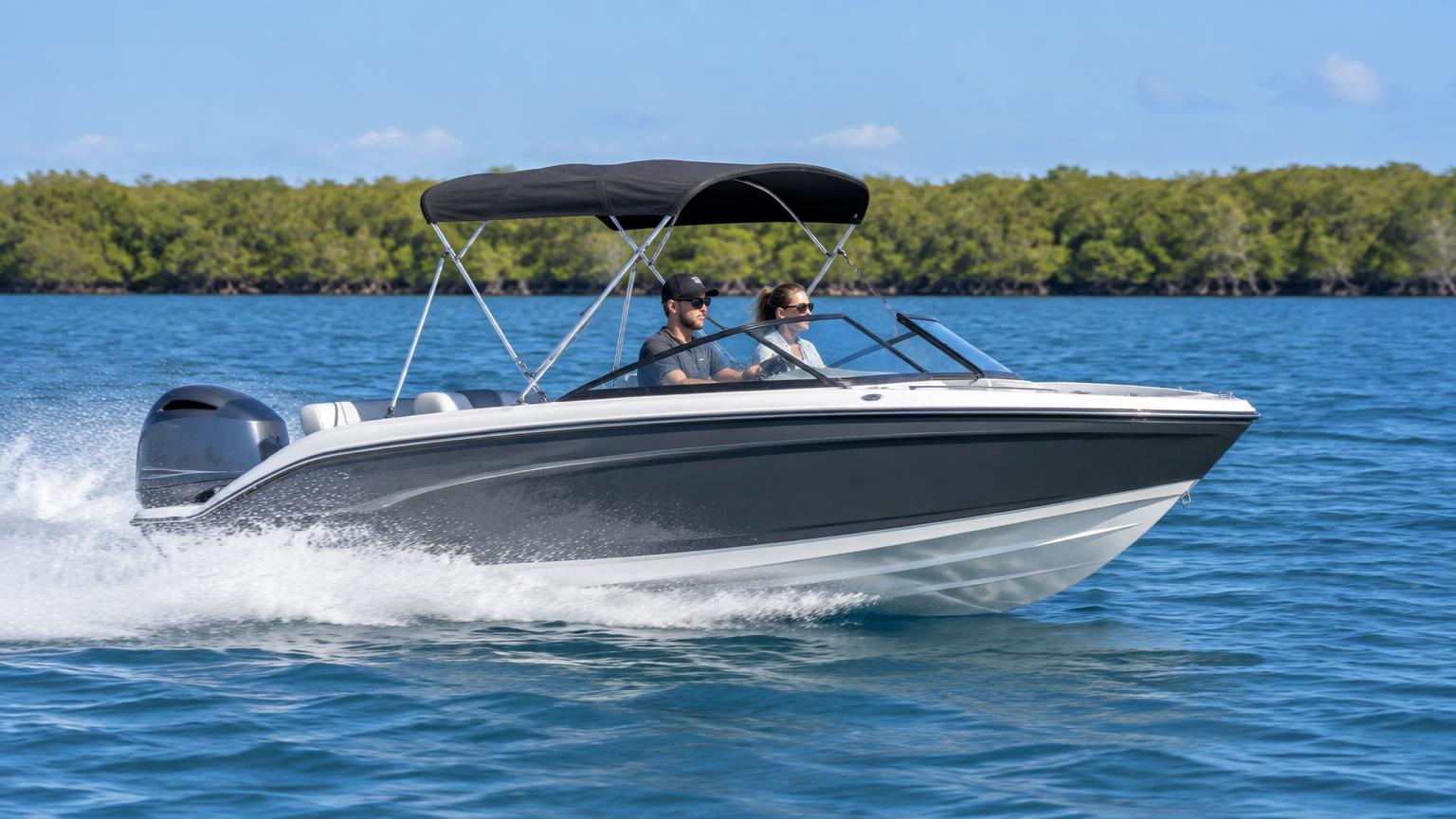
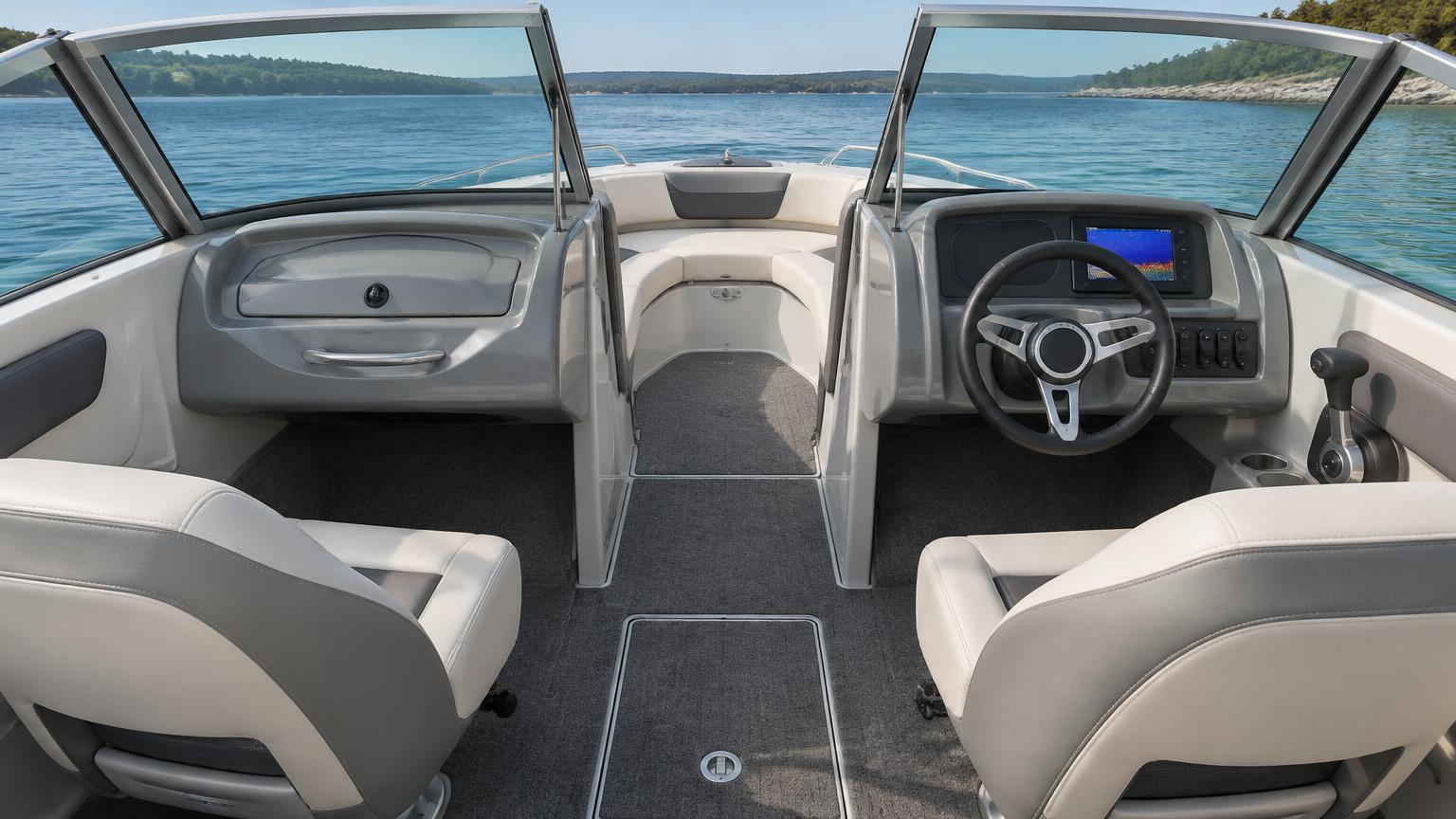
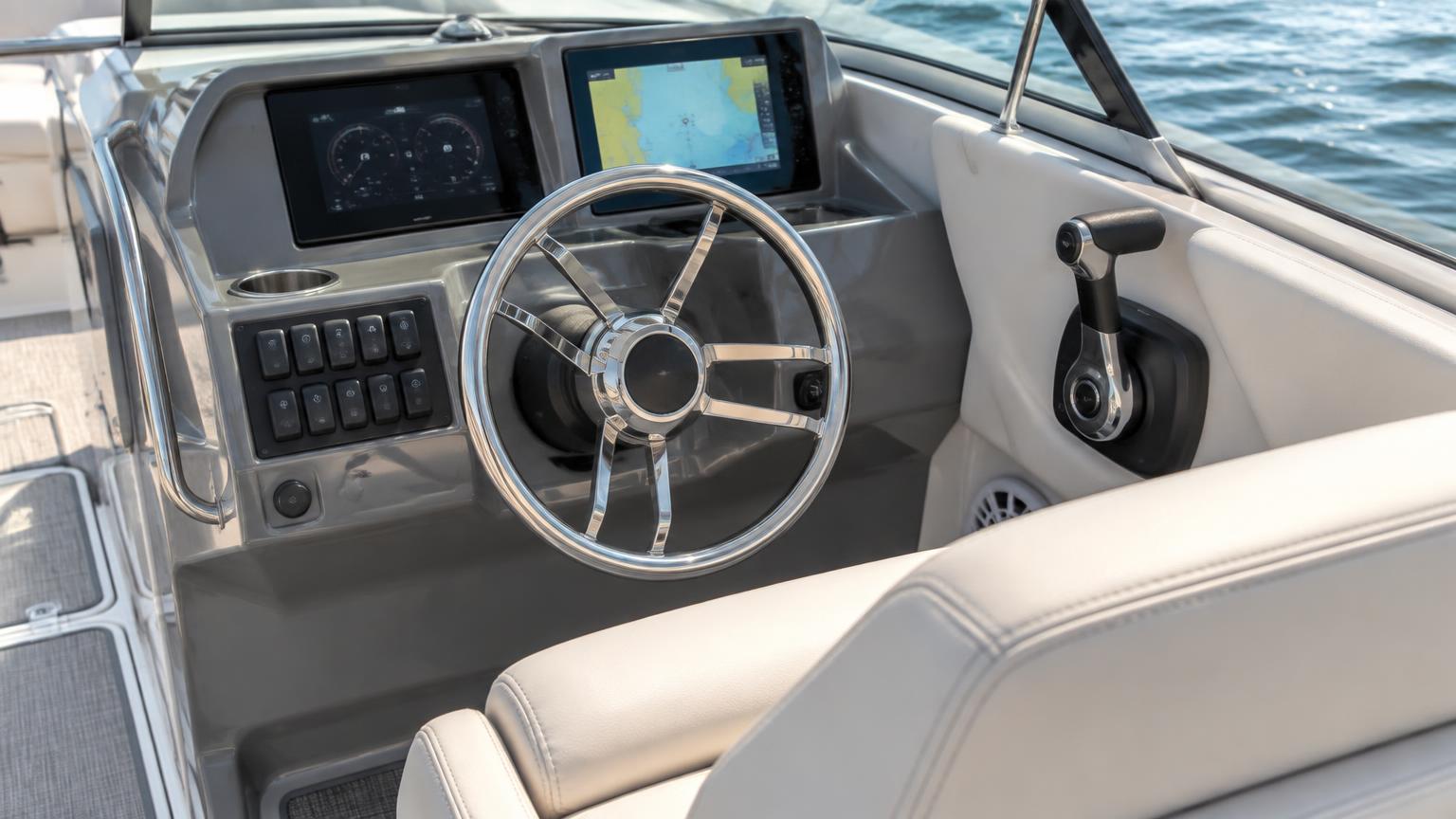
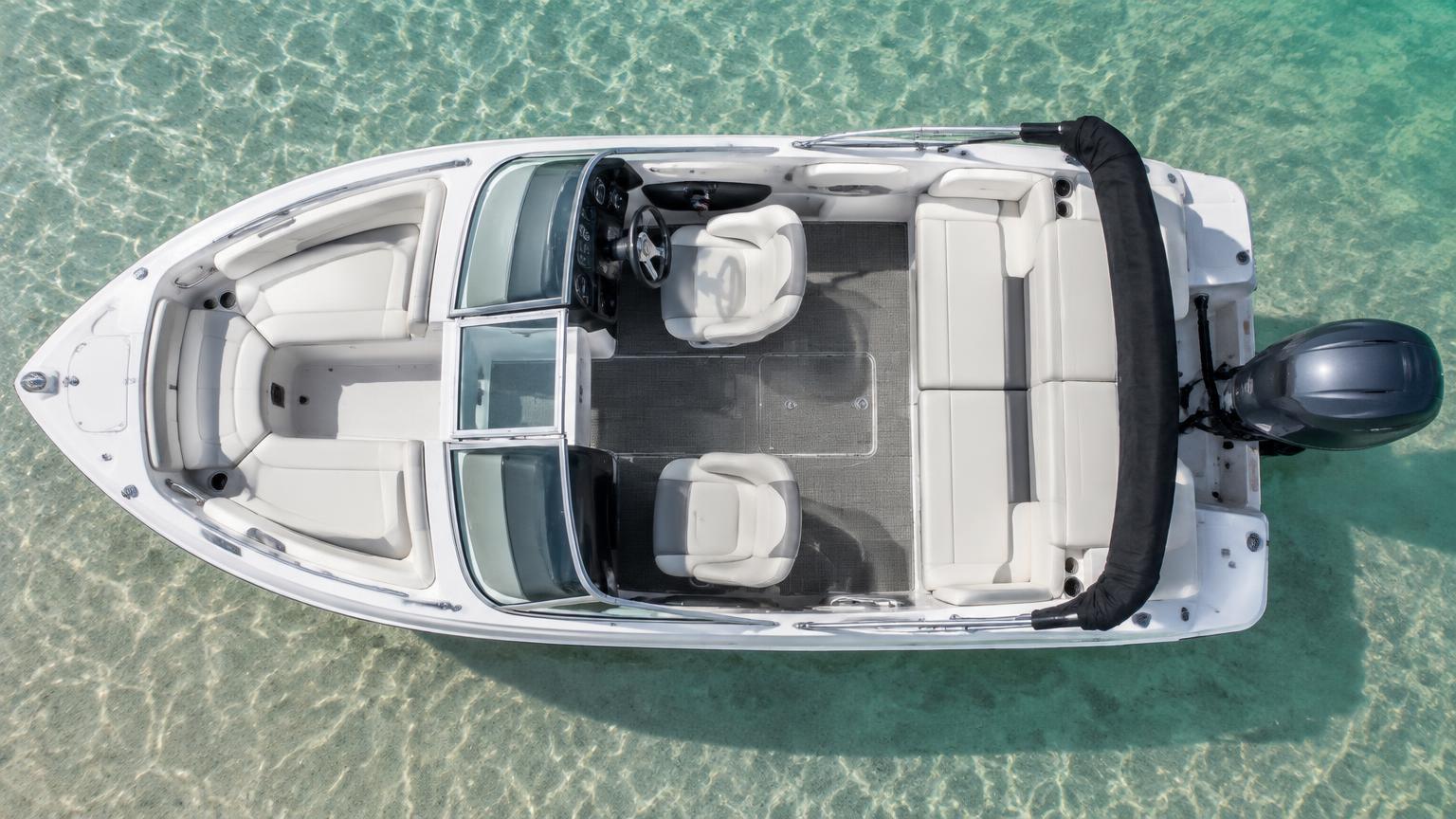
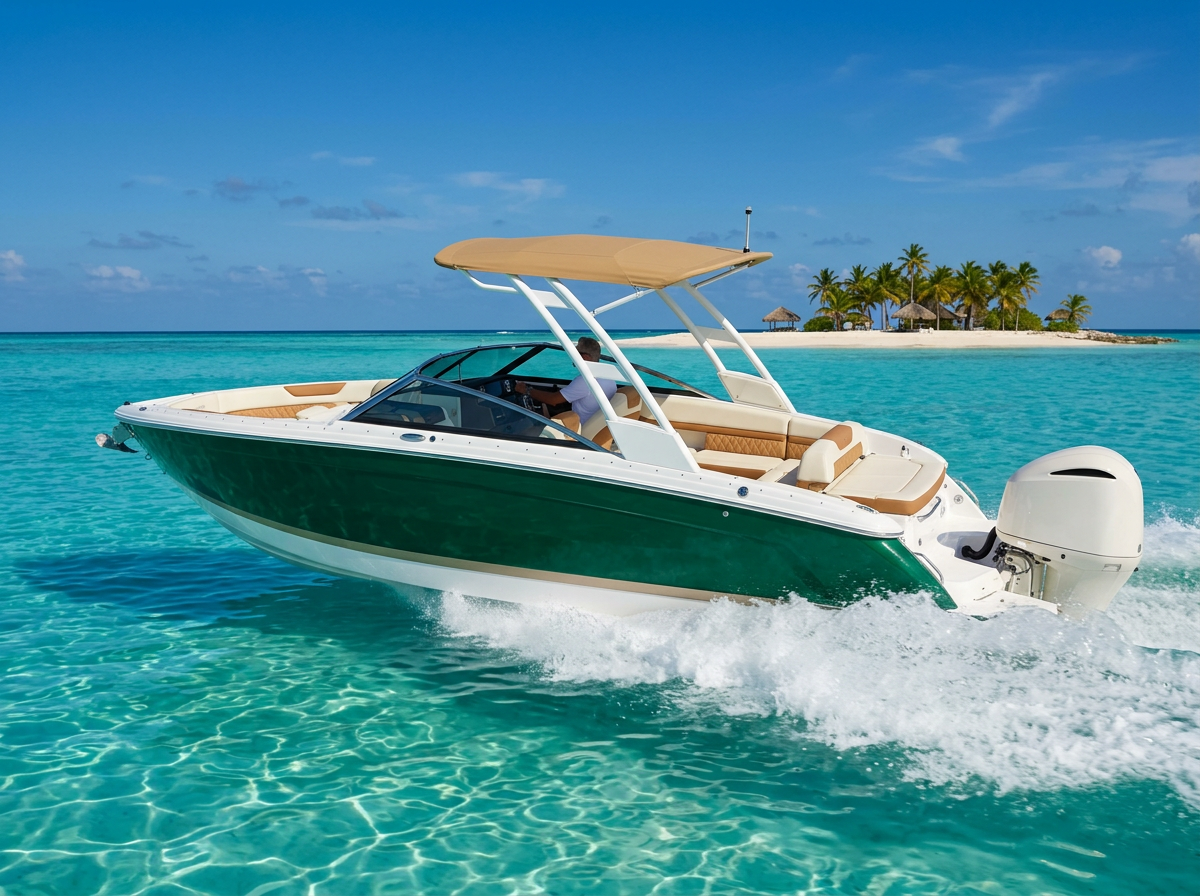
Bayliner VR5
The world's best selling bowrider size, Light, simple and easy to tow.
- Length
- 19 ft 9 in (6.02 m)
- Drive
- Outboard
- Seats
- 8 people / 1,150 lb
US$38,000 - US$52,000 new
Site Menu — Find Your Page
Bowrider Boats Mega Website

The Quintrex 520 Cruiseabout is the next step up from the 481, and for most growing families it is the size that finally stops feeling like a compromise. At 5.2 m (17 ft) hull length on a 2.3 m (7 ft 7 in) beam, it adds close to 40 cm of length and a wider chine-to-chine footprint over the 481 — which sounds small on paper but changes almost everything about how the boat feels with six people aboard.

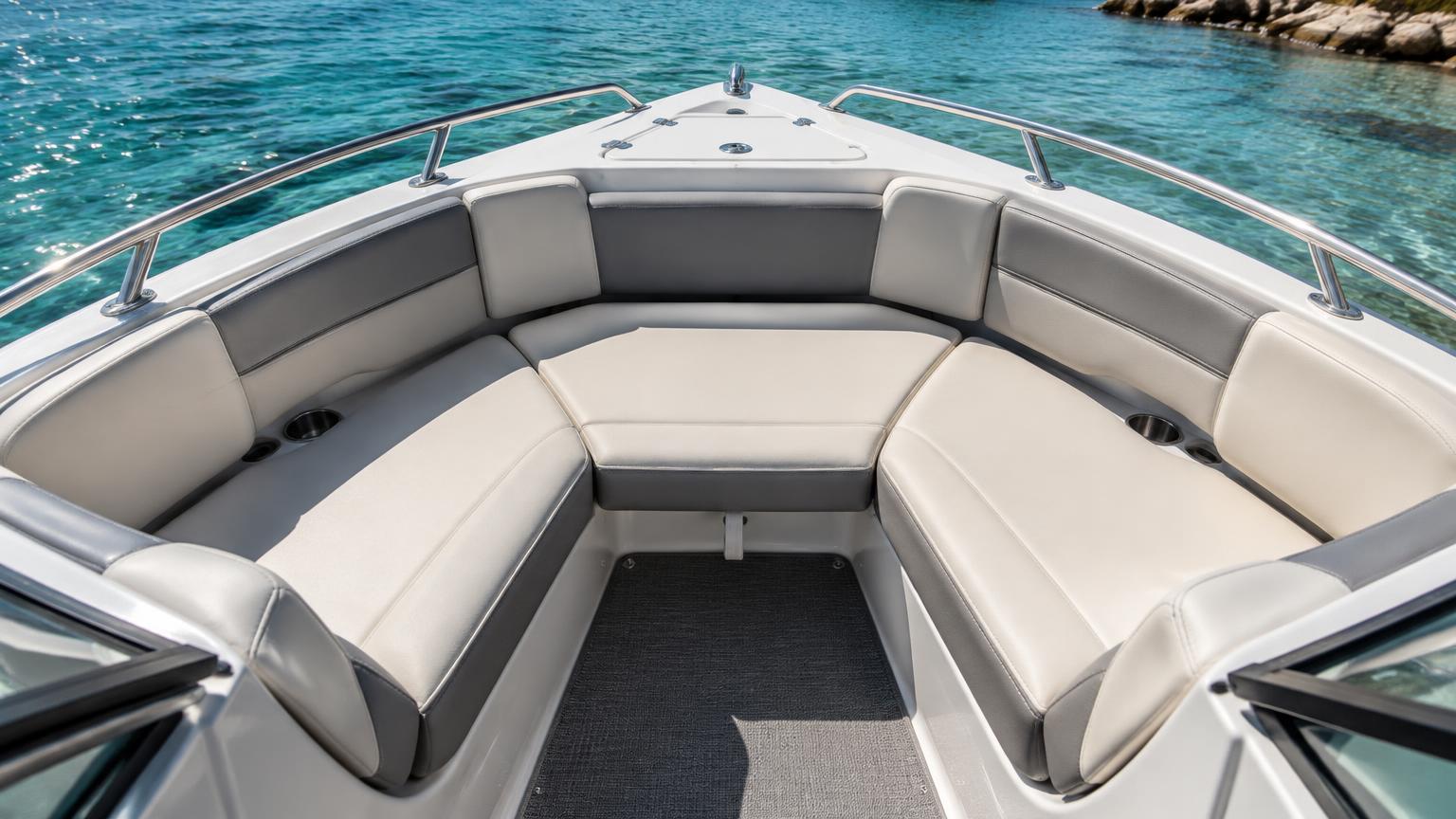
The extra length goes where it counts. The bow lounge is genuinely wide enough for two adults to stretch out rather than sit knee-to-knee, and the optional filler cushion turns the whole forward section into a padded sun lounge at anchor. Behind the split walk-through windscreen the cockpit is longer, so the pedestal or bolster seats can slide further aft and there is real standing room between the helm and the rear lounge — the space you notice when three people are moving around while somebody gets a ski on.

The dash is a step up too. Where the 481 runs a compact digital engine display, the 520 has room for a proper multifunction sounder or chartplotter alongside digital gauges, a full rocker switch panel and a side-mount single-lever throttle. Deeper side pockets swallow longer rods, and the underfloor tank grows to around 90 litres, which turns a half-day range into a comfortable full day of running.

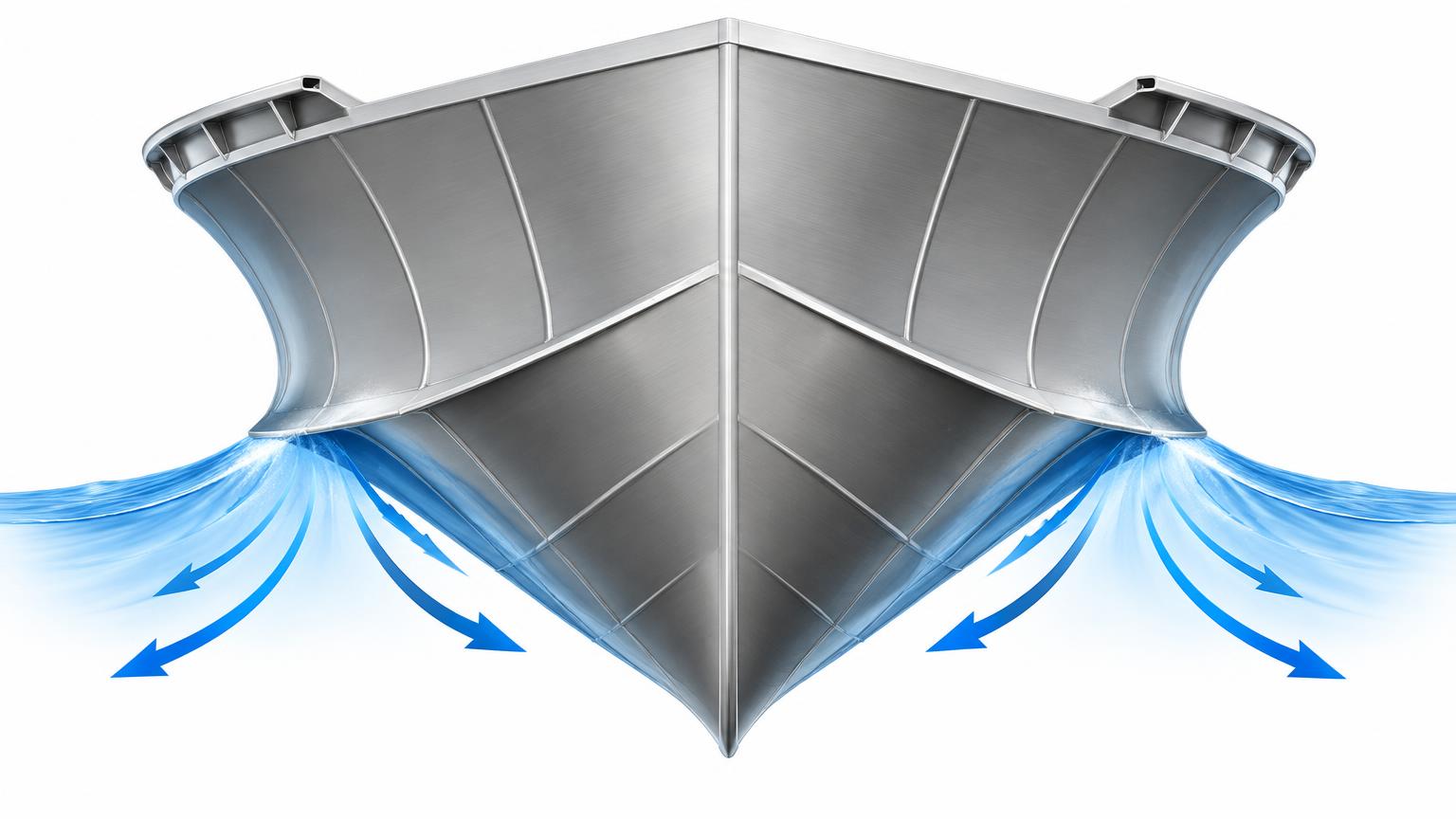
On the water the difference is ride, not speed. A longer waterline spans more of the wave, so the 520 carries its trim better through a wind chop and does not fall between short, steep swells the way a shorter hull can. The same Quintrex roll-formed construction is at work — curved concave side sheets, a fine sharp entry at the stem, variable deadrise carried well aft, a Carolina-style flared bow that throws spray sideways and down, and pronounced reverse chines that push a cushion of water outboard for lift underway and reassuring stability at rest. With more hull to distribute the load, the 520 slices where an older flat-sided tinnie slaps, and the aerated water it drags along the running surface softens the landings again.

Power is where the 520 separates itself most clearly. A 90 hp four-stroke is the sensible minimum and will cruise the boat happily in the low-to-mid 20-knot range; 115 hp is the sweet spot, giving a quicker hole-shot with six aboard, a genuine mid-20s cruise at around 16-20 litres per hour and enough grunt to pull an adult skier out of the water rather than merely tow a biscuit. That single upgrade is what makes the 520 a credible water-sports boat where the 481 is a family day boat that can also tow.

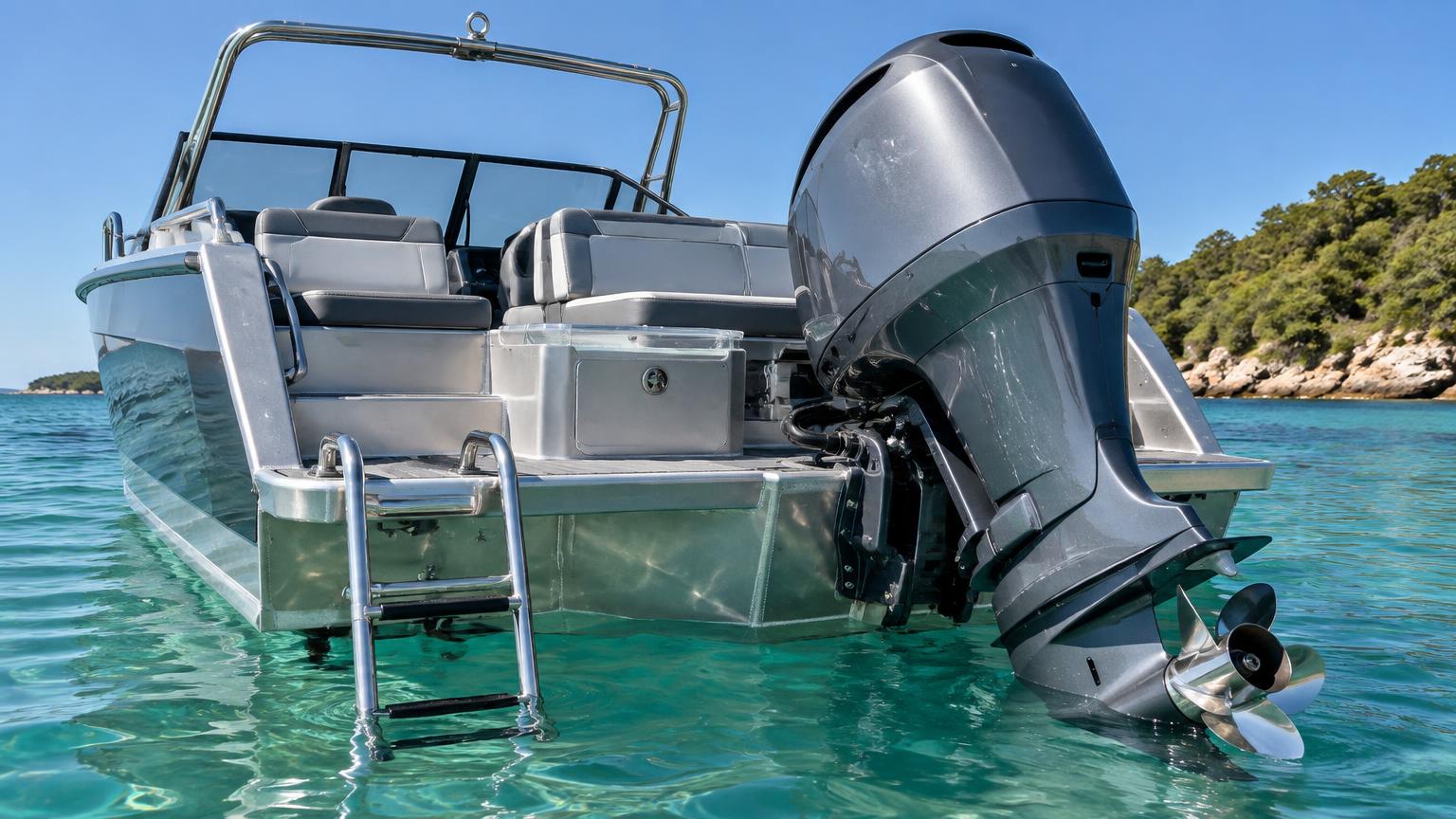
As a day boat it is fully equipped: bimini top with side and front clears, transom boarding ladder, live bait tank in the stern moulding, drained underfloor ski locker, generous dry storage under the lounges and a convertible rear lounge whose cushions lift out to expose a flat alloy casting platform for fishing. It still launches and retrieves single-handed, still noses onto sand without the anxiety of gelcoat, and still fits in most double garages — although at roughly 300 kg heavier on the trailer than the 481, you want a mid-size SUV or dual-cab rather than a small wagon to tow it comfortably.

Buying used, the same aluminium checks apply as any Cruiseabout: run your eye along the chine and transom welds, look for electrolysis blistering or lifting paint around through-hull fittings and the bung, check the transom for softness under a heavier 115 hp outboard, and lift the floor hatch to see whether the bilge has been left wet. Inspect the trailer as carefully as the boat — in salt water the trailer usually dies first, and the 520's extra weight is harder on bearings, springs and brakes.

Against the 481 the 520 costs roughly AU$10,000 more, tows heavier and drinks a little more fuel. In exchange you get a drier, flatter, more composed ride, room for six instead of five, a bow lounge adults actually use and enough power to run real water sports — which is exactly why the mid-5-metre Cruiseabout is the volume seller in the range across Australia and New Zealand.

Quintrex hulls are roll-formed rather than simply pressed, so the side sheets can be curved into concave and convex shapes instead of folded flat. That single manufacturing difference is what allows a fine, sharp entry at the stem, a deep variable deadrise carried well aft, and a bow that flares outward Carolina-style to throw spray sideways and down instead of back into the cockpit.
The Millennium hull introduced the softer, finer entry; the Blade hull sharpened it further with a deeper forefoot that slices chop rather than slapping it; and the APEX hull refined the topsides and chine geometry again for more lift and less spray. Pronounced reverse chines push a cushion of water outboard, which adds lift underway and makes the boat feel notably steadier at rest when everyone stands on one side. The aerated, foamy water the hull drags along its running surface acts as a cushion, taking much of the sting out of landings — the difference between slicing through a wave and belly-flopping onto it.


The world's best selling bowrider size, Light, simple and easy to tow.
US$38,000 - US$52,000 new

The refined mainstream benchmark: quiet, dry, and beautifully finished for the money.
US$72,000 - US$95,000 new

A premium 25-foot bowrider renowned for its deep seating, convertible lounges, refined ride and exceptional finish.
US$155,000 - US$210,000 new
Featured Boat of the Week

This week we are putting the Bayliner Bayliner DX2000 in the spotlight, and it earns the spot. At 20 ft 2 in (6.16 m) long on a 8 ft (2.44 m) beam, this is a bowrider that reads the water well and still feels roomy enough for a full day out. A 20-foot deck-boat-width bowrider with outboard power and a huge social cockpit. Power comes from 115-150 hp mercury fourstroke outboard through a outboard package, and the fibreglass hull keeps the ride settled when the afternoon breeze puts a chop on the surface.
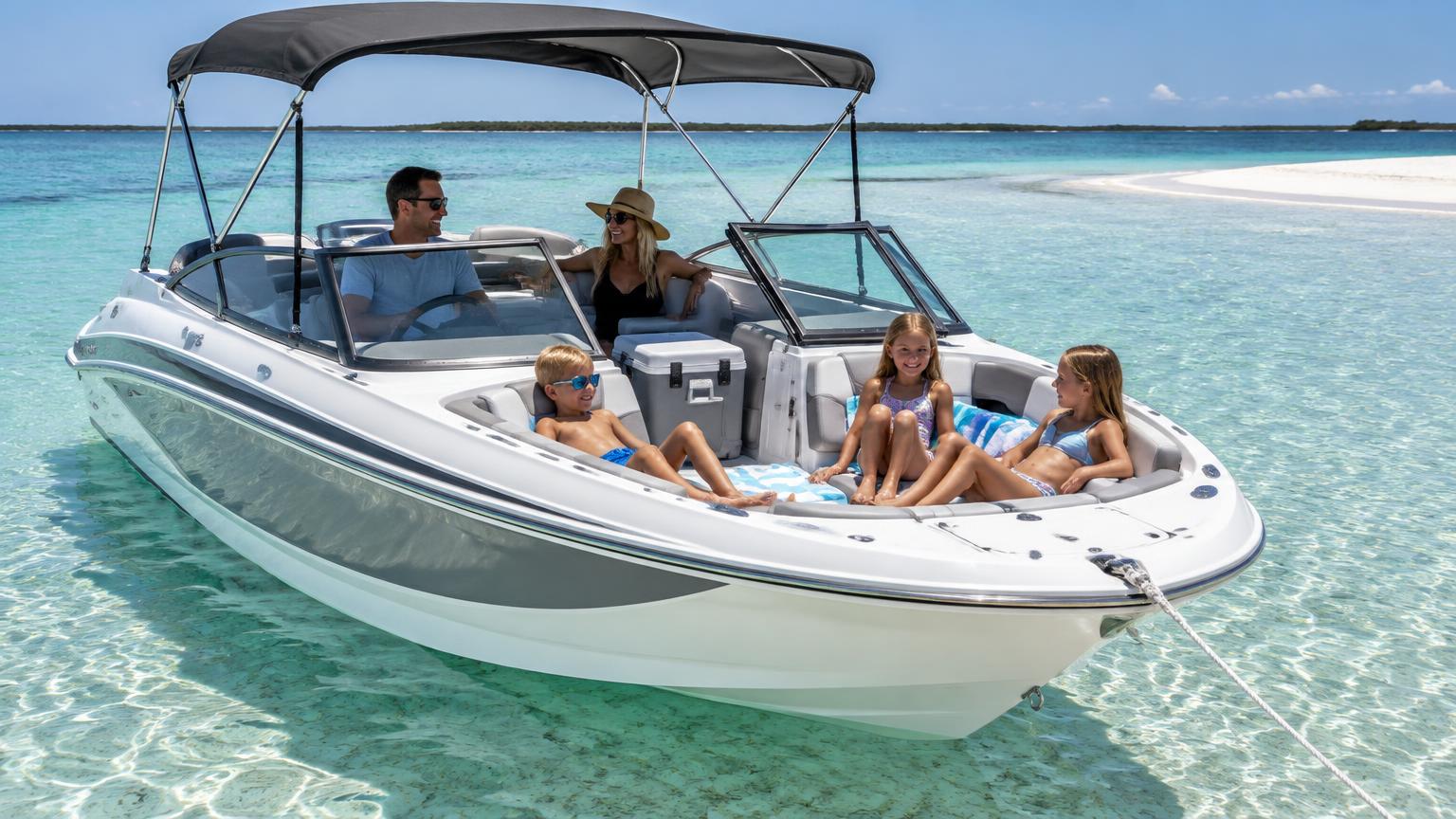
Seating is rated for 8 people, so there is space for family, friends, towels, eskies and the tow rope without anyone climbing over gear. Owners tend to buy it for family, water ski, leisure — which is exactly where it shines. Fuel is 30 us gal (114 l), and on the second-hand and new market you should expect to land somewhere around US$42,000 - US$58,000 new depending on hours, trailer and options.
Our full deep dive covers the layout in detail: bow lounge comfort, helm ergonomics, the rear entertaining area, storage that actually swallows a weekend, plus standard features, popular options and honest notes on where the boat compromises. If the Bayliner DX2000 is on your shortlist, start there — and check back next week, because the featured boat changes every week as we complete more full model reviews.
Featured Bowrider Article
On the Water

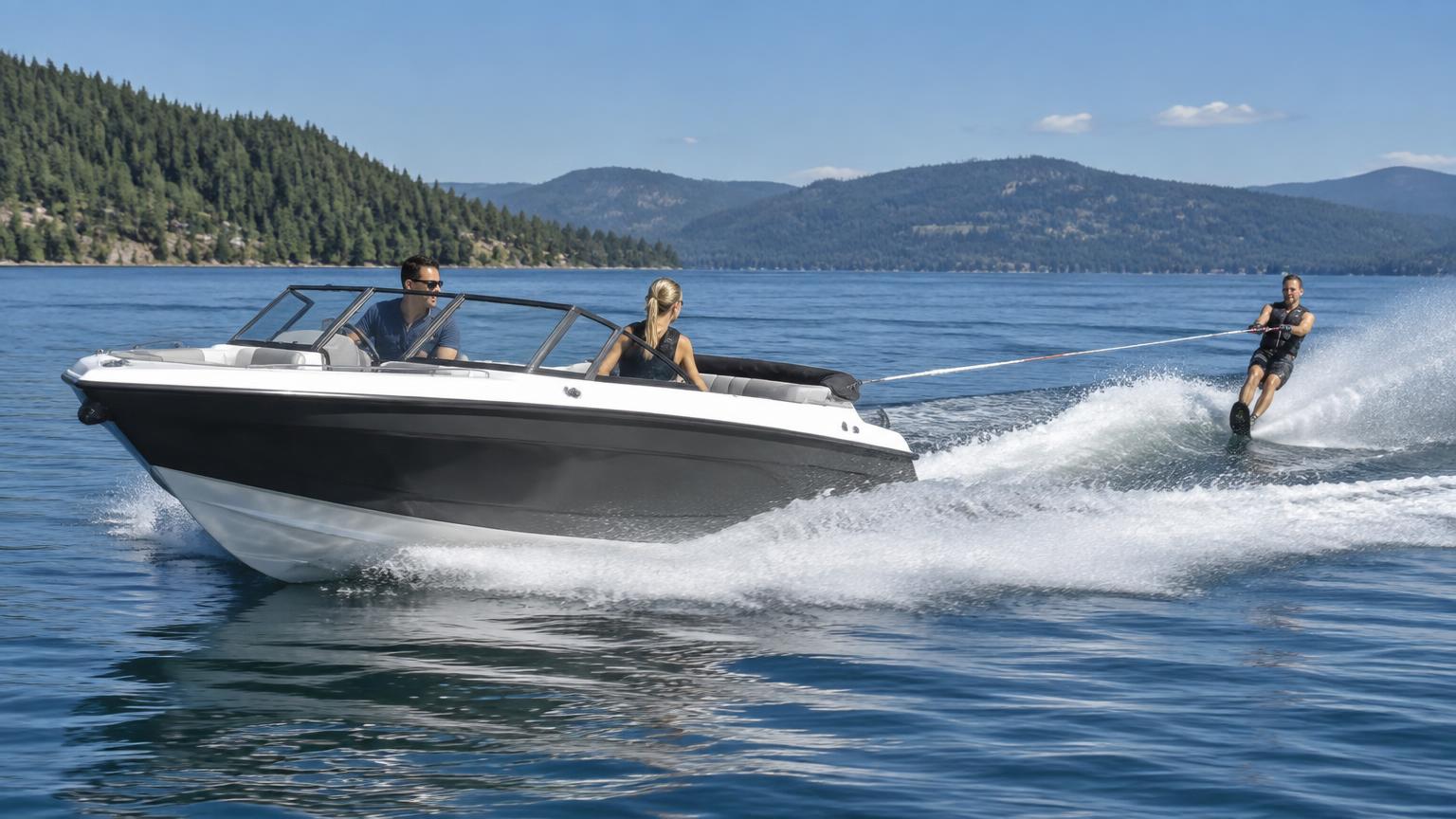
Towsports ask more of a hull than any other use. A boat that is perfect for slalom skiing is wrong for wakeboarding, and a wake-surf boat is useless for a beginner skier. Understanding what you tow, and at what speed, tells you exactly which bowrider to buy. Slalom water skiing wants a small, hard, flat wake at 48-58 km/h (30-36 mph). That comes from a lighter boat, a direct-drive or sterndrive layout with the engine positioned to keep the stern from squatting, and a hull that runs level. Wakeboarding wants the opposite: a bigger, cleaner, ramp-shaped wake at 30-38 km/h (19-24 mph), which means weight in the stern, ballast and a tower to lift the rope. Wake surfing goes further still, demanding an inboard V-drive, heavy asymmetric ballast and surf-gate technology to shape a rideable wave — something almost no conventional bowrider can produce safely with an outboard or sterndrive leg. For an all-round family towsports bowrider, a moderate-deadrise fibreglass hull of 5.5-6.7 m with a sterndrive is hard to beat. The inboard engine mass keeps the boat planted, the drive leg is protected, and the hull holds a plane cleanly at ski speeds. Outboard bowriders tow perfectly well and are simpler to own, but…
Read the full article