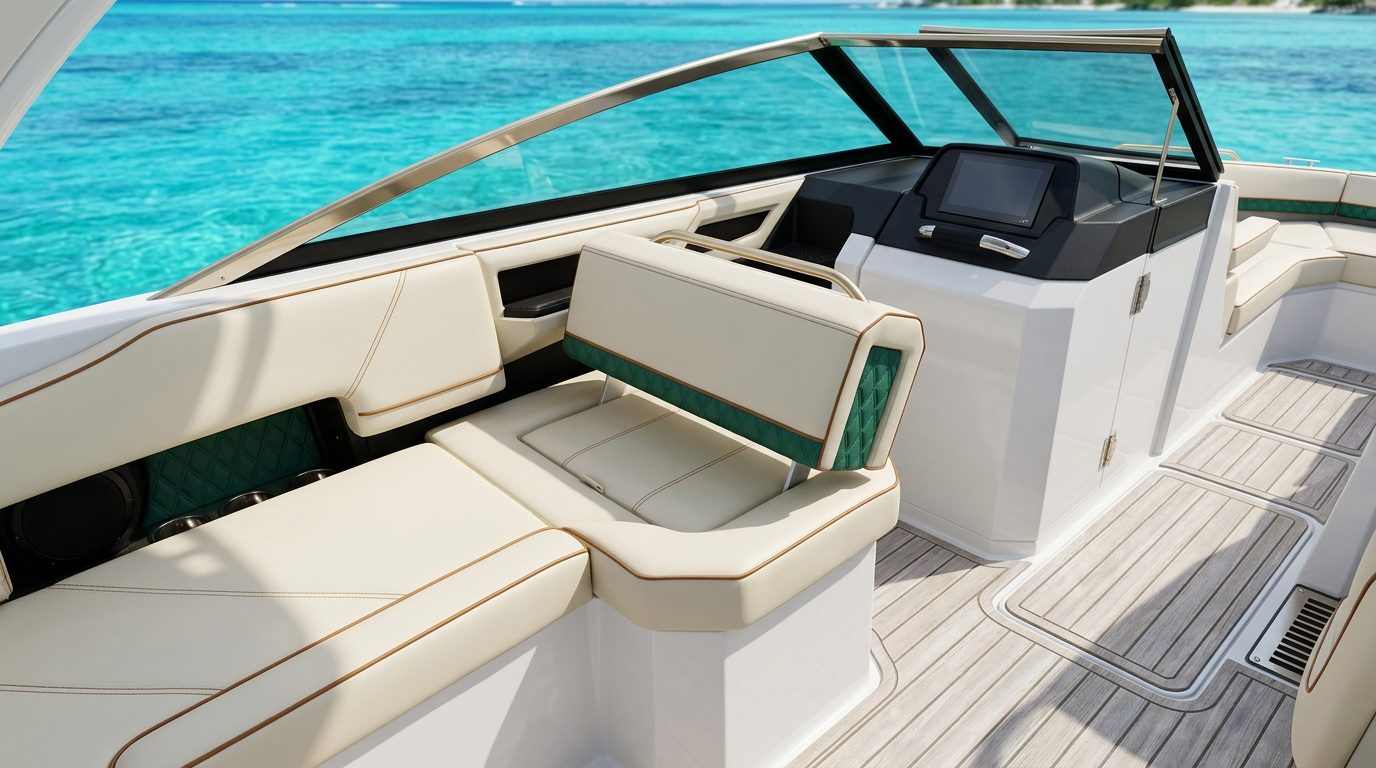
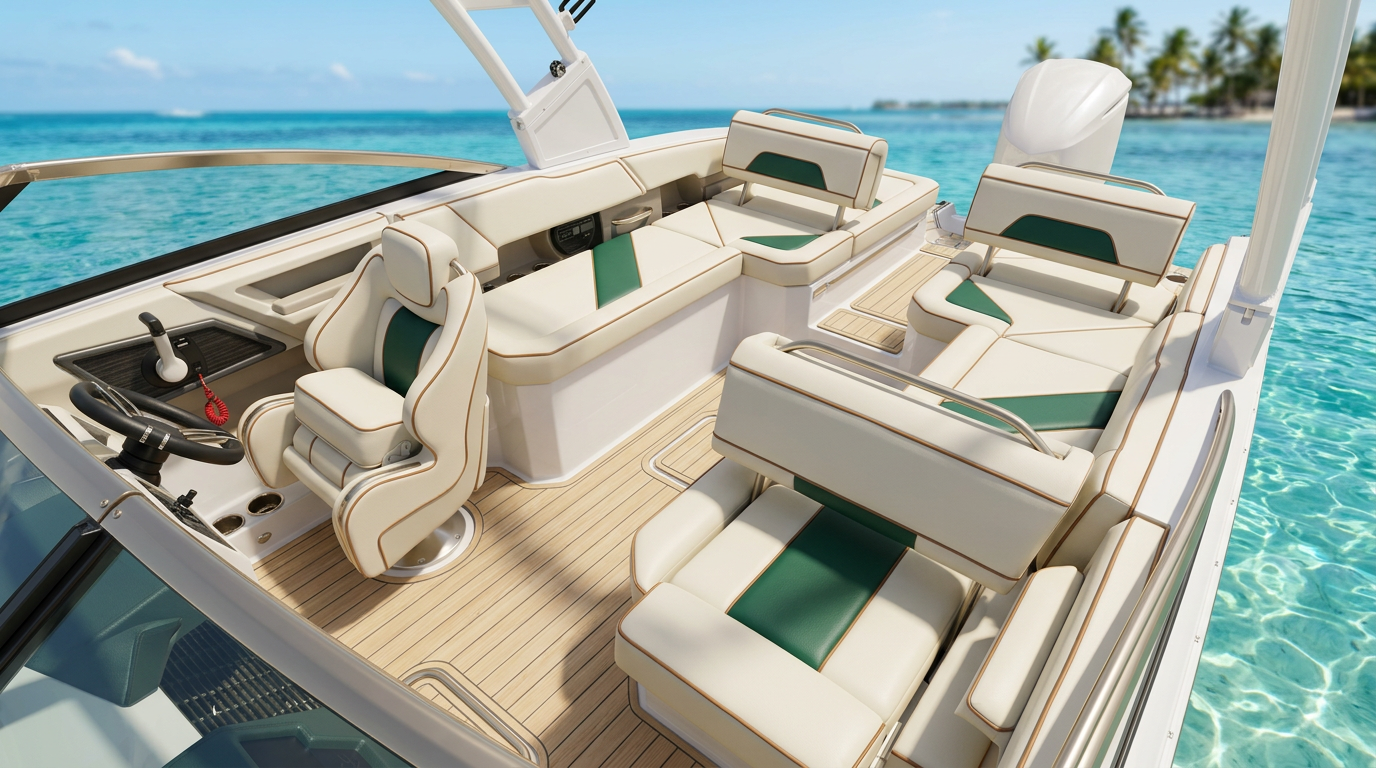
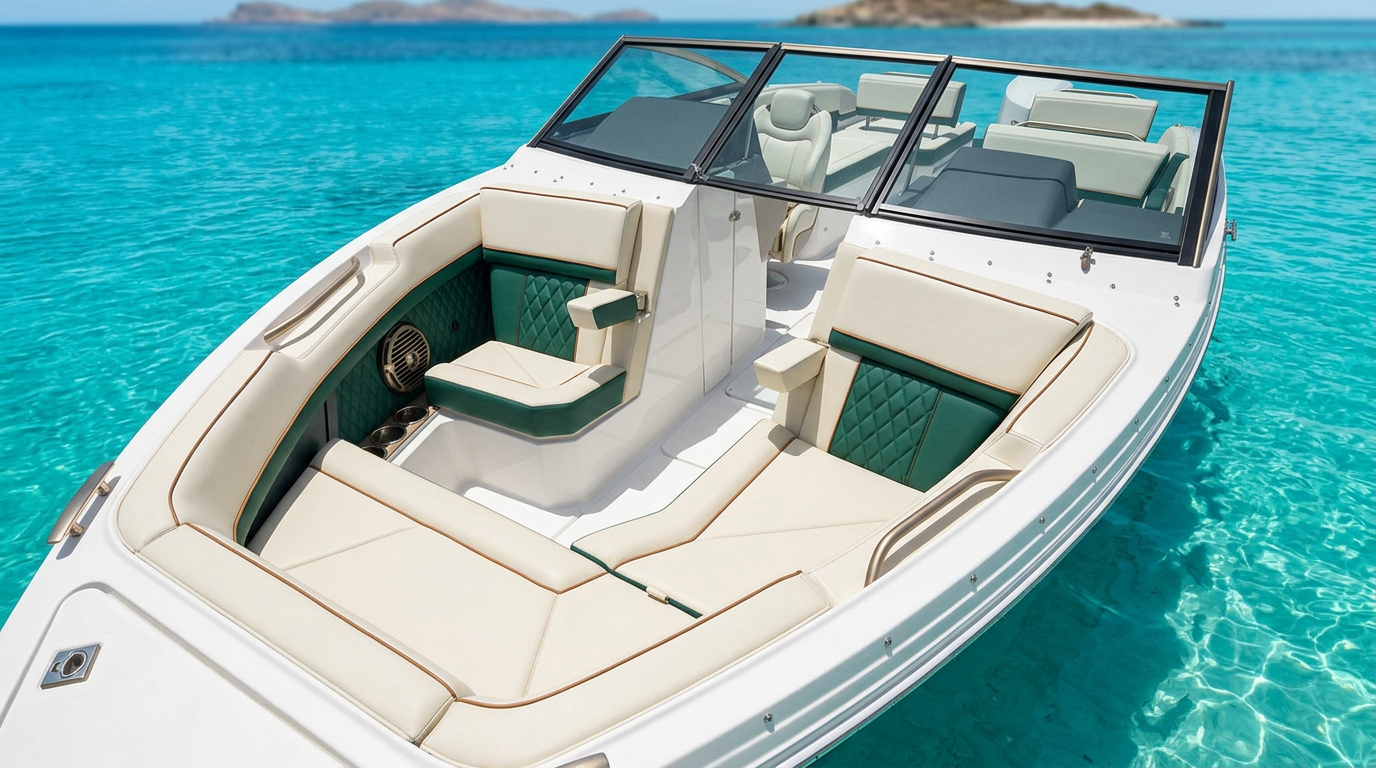
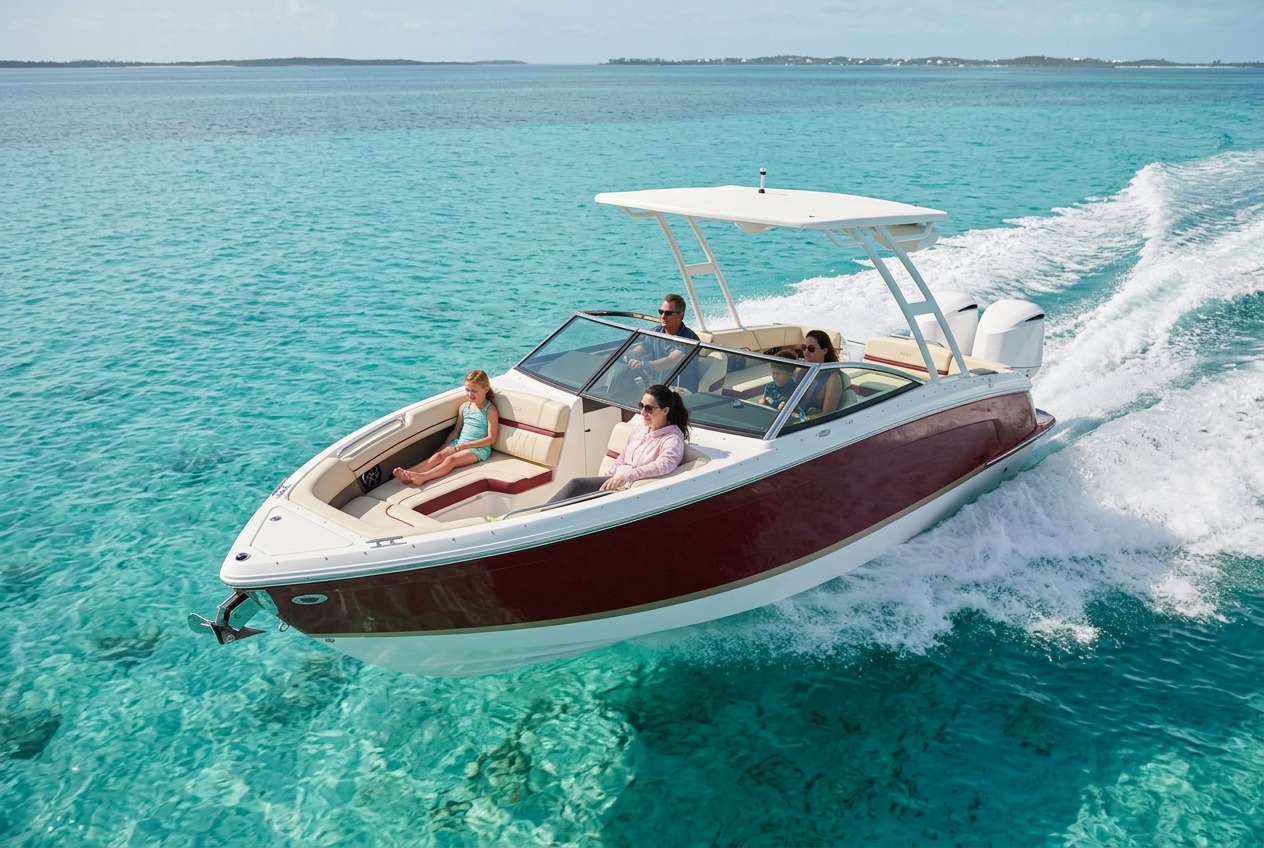
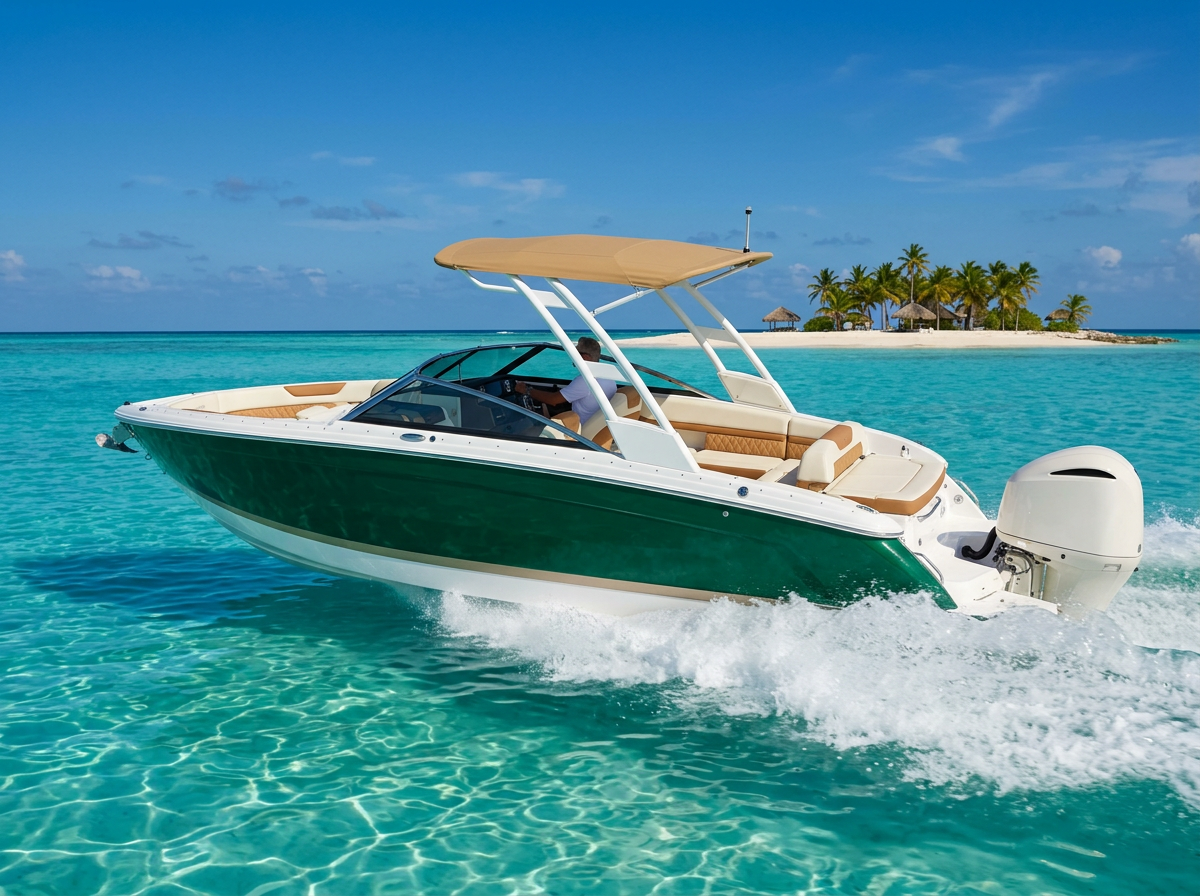
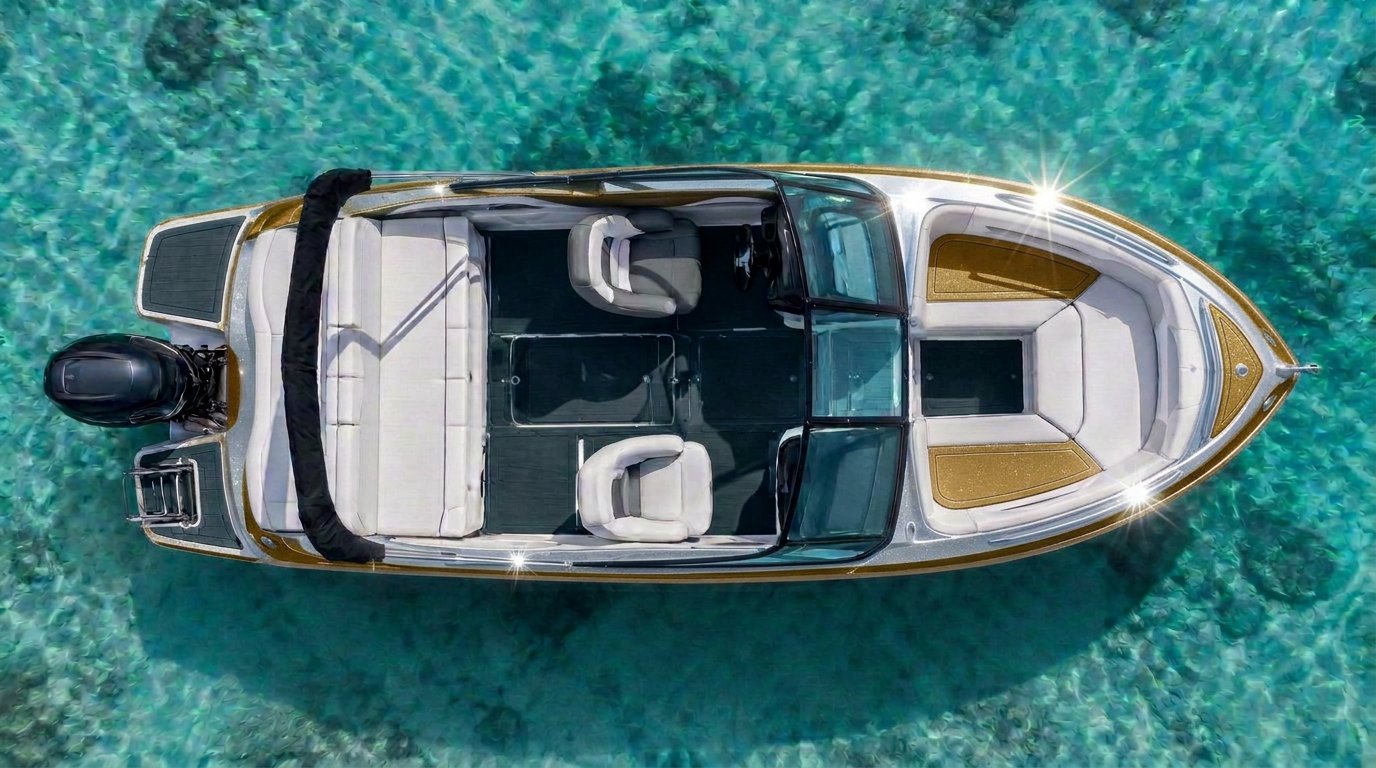
Bayliner VR5
The world's best selling bowrider size, Light, simple and easy to tow.
- Length
- 19 ft 9 in (6.02 m)
- Drive
- Outboard
- Seats
- 8 people / 1,150 lb
US$38,000 - US$52,000 new
Site Menu — Find Your Page
Bowrider Boats Mega Website

The Karnic SL 602 is built for coastlines rather than lakes. It carries substantially more deadrise than a typical family bowrider, and the payoff is obvious the moment a sea breeze puts a metre of chop on the water.

At 6.1 m (20 ft) with a 2.5 m (8 ft 2 in) beam, it is a solid, heavy-feeling boat for its length. That weight is deliberate: it keeps the bow down, reduces slamming and lets the hull carve a turn instead of skating through it.

The deck plan is a conventional bowrider with a Mediterranean accent. Deep bow lounges with high coamings, a sturdy walkthrough, twin helm seats with bolsters and an aft bench that converts to a sunpad. Freeboard is high, which matters if children are aboard in open water.

Outboard power of 150-200 hp gives a 35-40 knot top end and a comfortable 24-26 knot cruise. Because the hull is heavier, resist the temptation to under-power it; the 200 hp option is the one owners consistently recommend.

The SL 602 is a specialist choice: less cavernous than an American 20-footer, but noticeably more capable when conditions turn. If your home water is an exposed bay or open coast, that trade is well worth making.

The world's best selling bowrider size, Light, simple and easy to tow.
US$38,000 - US$52,000 new

The refined mainstream benchmark: quiet, dry, and beautifully finished for the money.
US$72,000 - US$95,000 new

A premium 25-foot bowrider renowned for its deep seating, convertible lounges, refined ride and exceptional finish.
US$155,000 - US$210,000 new
Featured Boat of the Week

This week we are putting the Bayliner Bayliner DX2000 in the spotlight, and it earns the spot. At 20 ft 2 in (6.16 m) long on a 8 ft (2.44 m) beam, this is a bowrider that reads the water well and still feels roomy enough for a full day out. A 20-foot deck-boat-width bowrider with outboard power and a huge social cockpit. Power comes from 115-150 hp mercury fourstroke outboard through a outboard package, and the fibreglass hull keeps the ride settled when the afternoon breeze puts a chop on the surface.
Seating is rated for 8 people, so there is space for family, friends, towels, eskies and the tow rope without anyone climbing over gear. Owners tend to buy it for family, water ski, leisure — which is exactly where it shines. Fuel is 30 us gal (114 l), and on the second-hand and new market you should expect to land somewhere around US$42,000 - US$58,000 new depending on hours, trailer and options.
Our full deep dive covers the layout in detail: bow lounge comfort, helm ergonomics, the rear entertaining area, storage that actually swallows a weekend, plus standard features, popular options and honest notes on where the boat compromises. If the Bayliner DX2000 is on your shortlist, start there — and check back next week, because the featured boat changes every week as we complete more full model reviews.
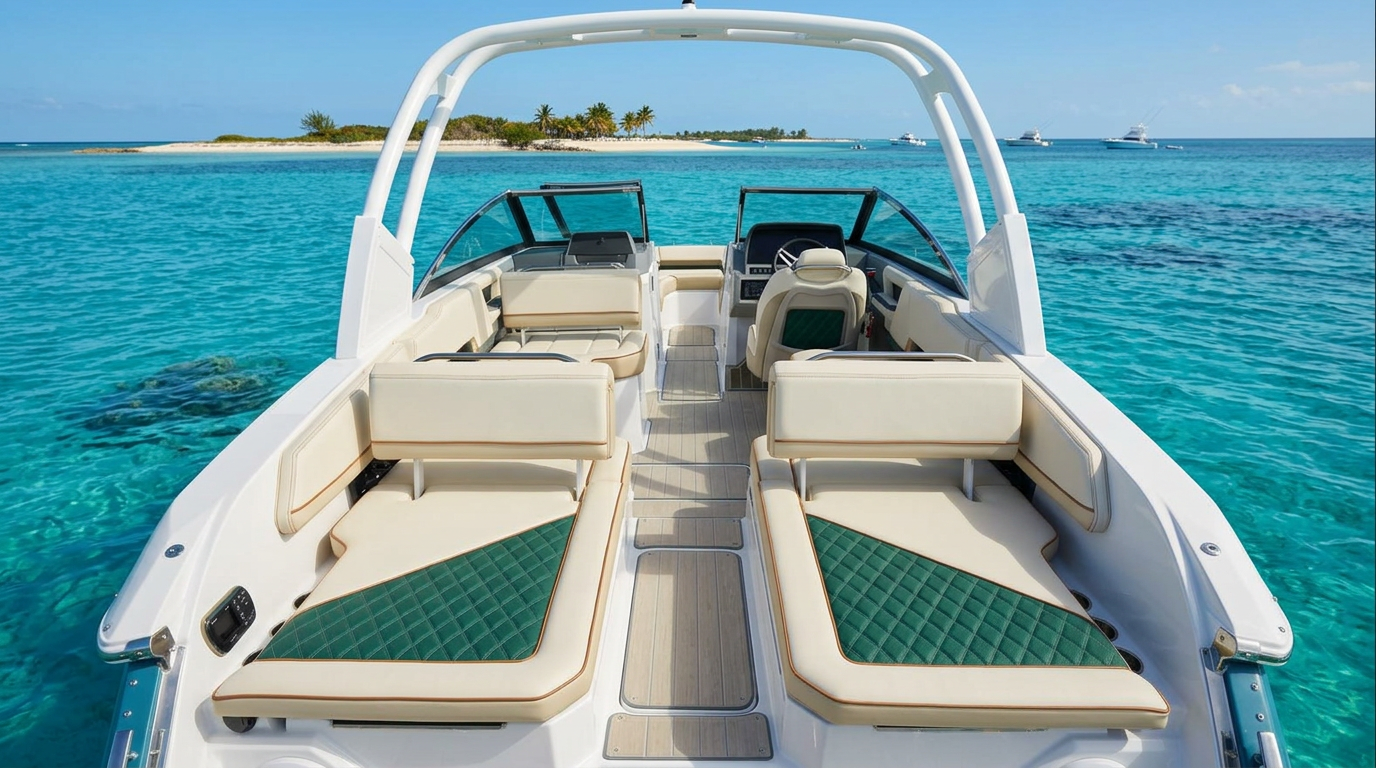
Featured Bowrider Article
Engines & Drives

Fuel is usually the biggest running cost of a bowrider, and it is also the one you control most directly. Two identical boats can differ by forty per cent in consumption depending on how they are propped, trimmed, loaded and driven. A 4.8-5.2 m bowrider with a 90-115 hp four-stroke uses roughly 10-18 litres per hour at cruise. A 5.5-6.2 m boat with 150-200 hp uses about 18-30 litres per hour. A 7 m-plus boat with 250-350 hp typically uses 30-55 litres per hour, and twin-engine boats more again. The useful measure is litres per nautical mile rather than per hour, because it accounts for speed. Most bowriders find their best efficiency just above planing speed, commonly in the 18-25 knot range at 3,500-4,000 rpm, where the hull is fully supported but not fighting drag. Below planing speed a hull drags a large wake behind it and burns fuel inefficiently. Once on the plane, consumption per mile drops sharply, then rises again as speed climbs because drag increases rapidly. Wide-open throttle can easily double consumption for a twenty per cent speed gain. Finding your boat's efficiency window is a fifteen-minute exercise. Run at increasing rpm, note speed and fuel flow, and calculate litres per mile…
Read the full article