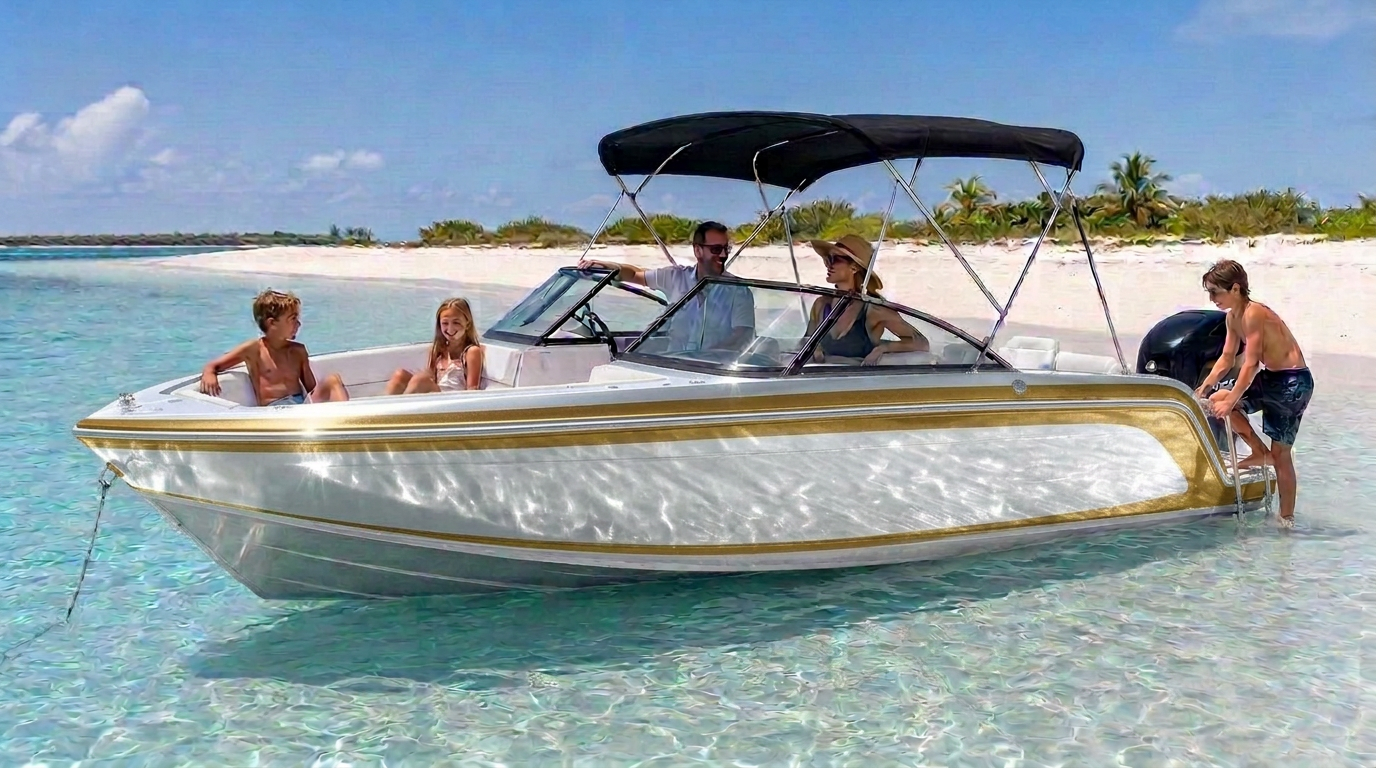
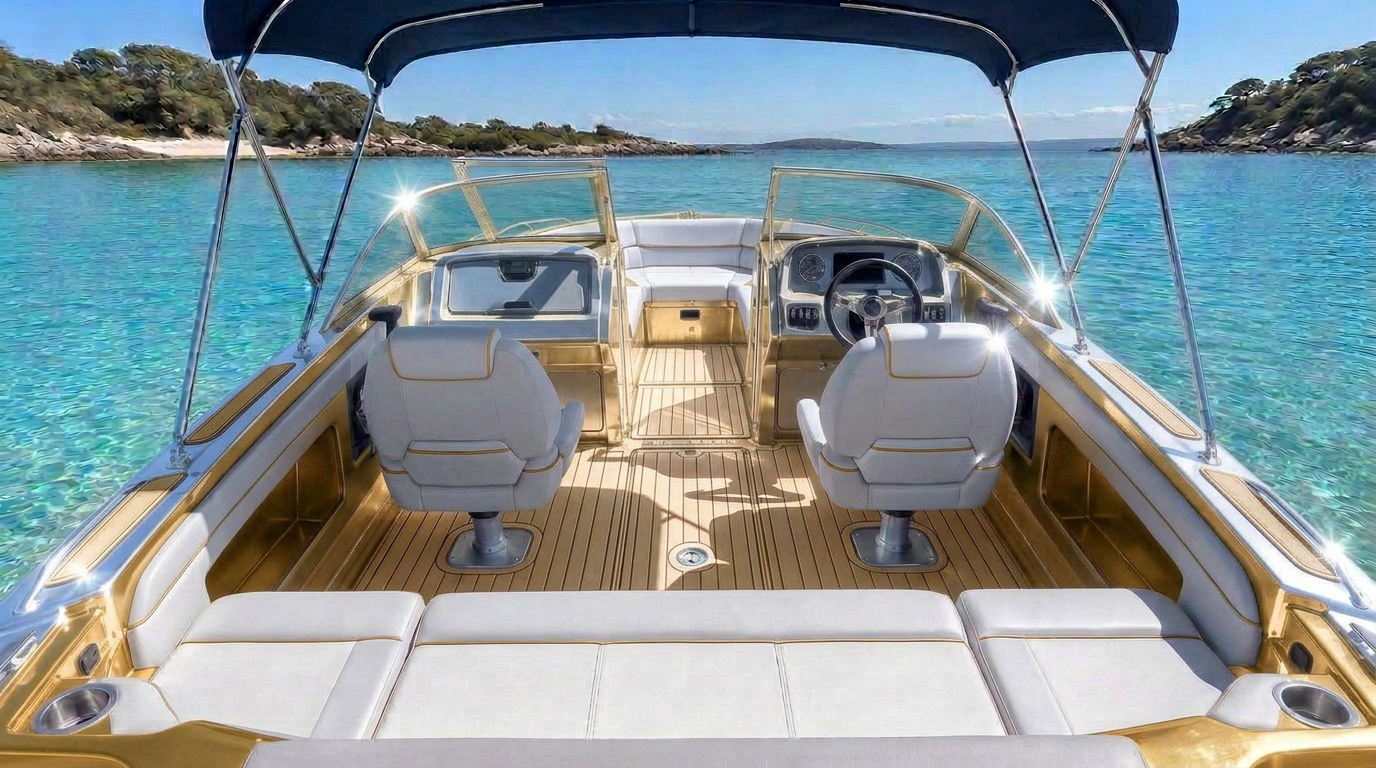
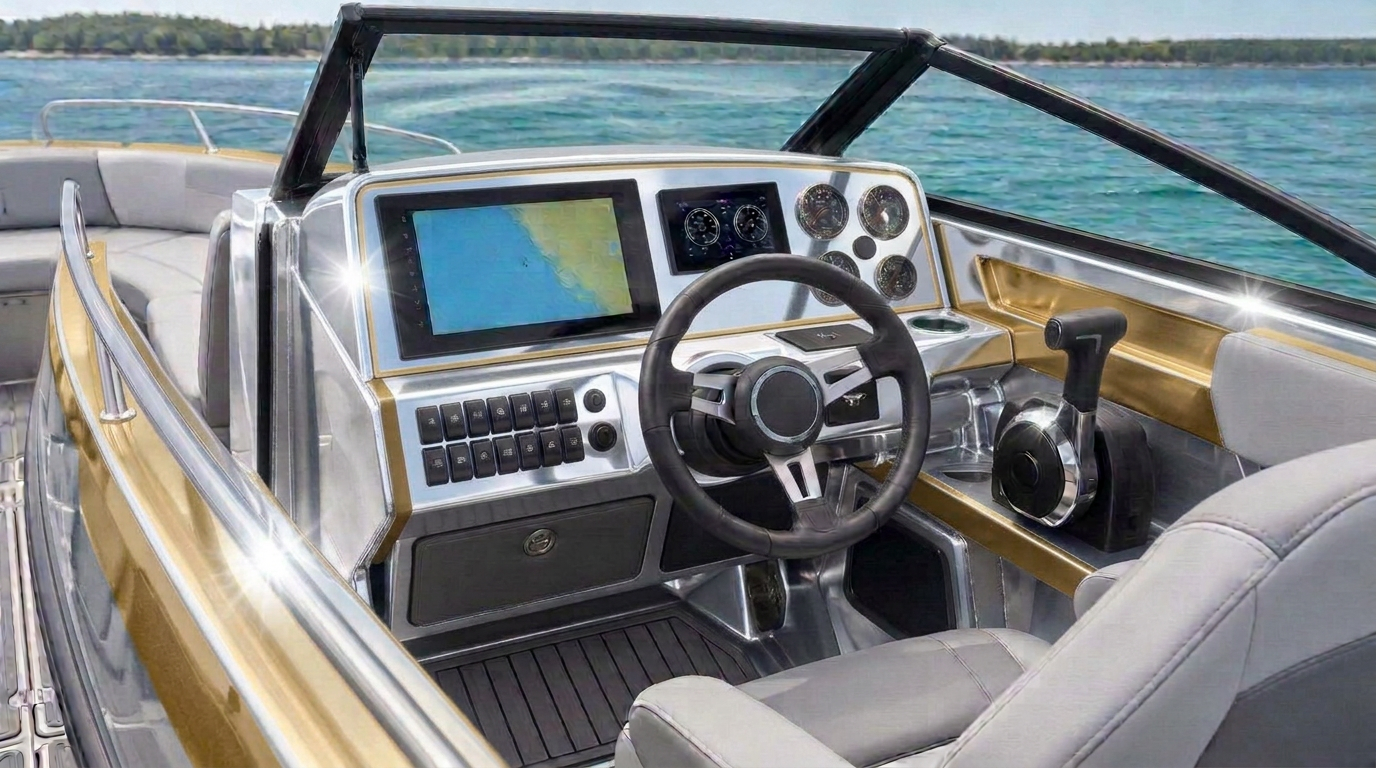
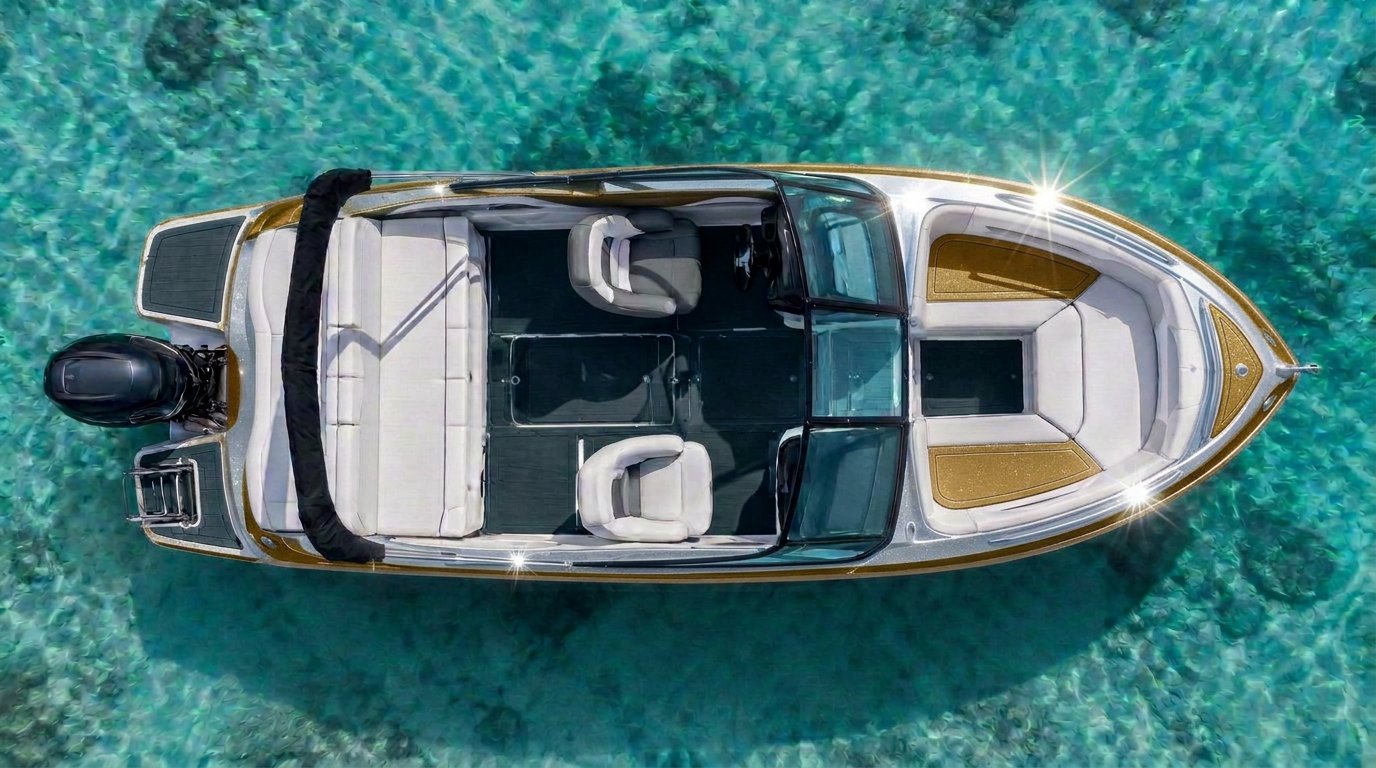
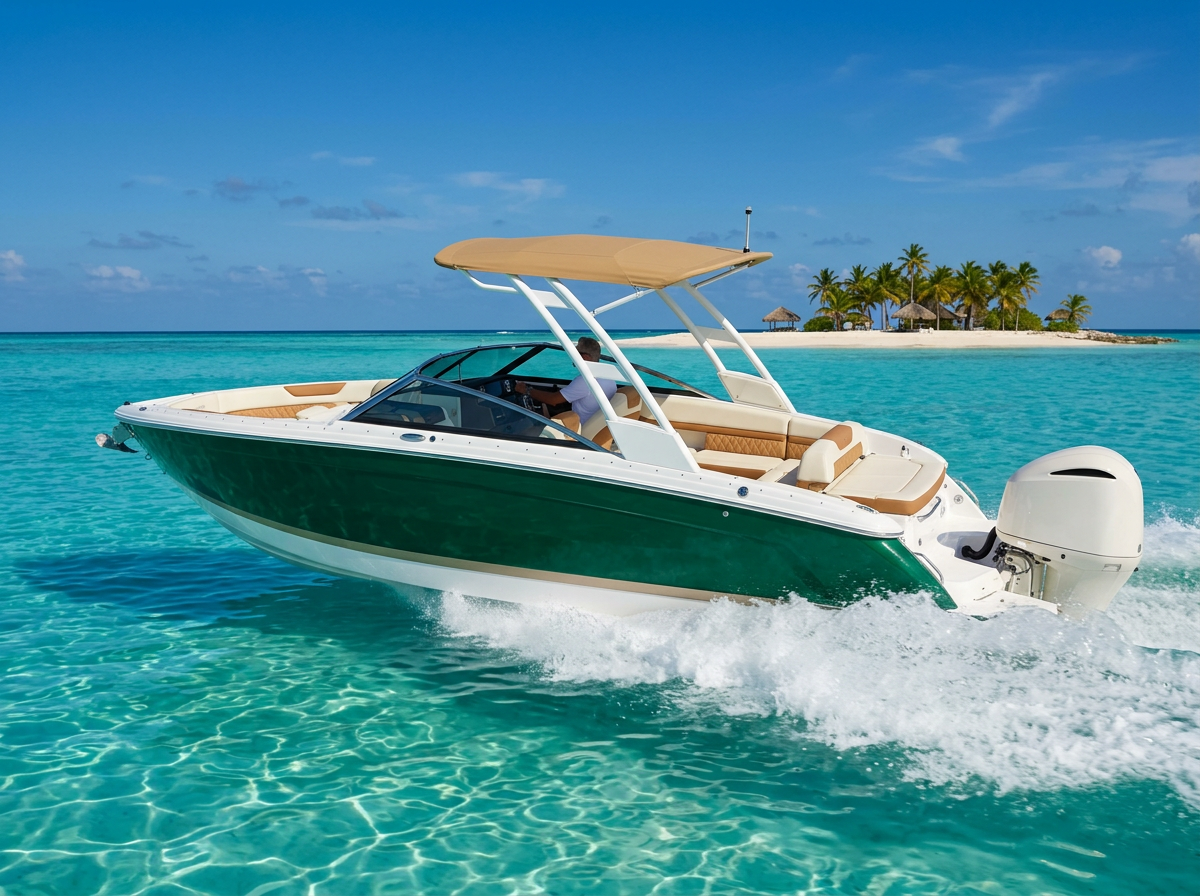
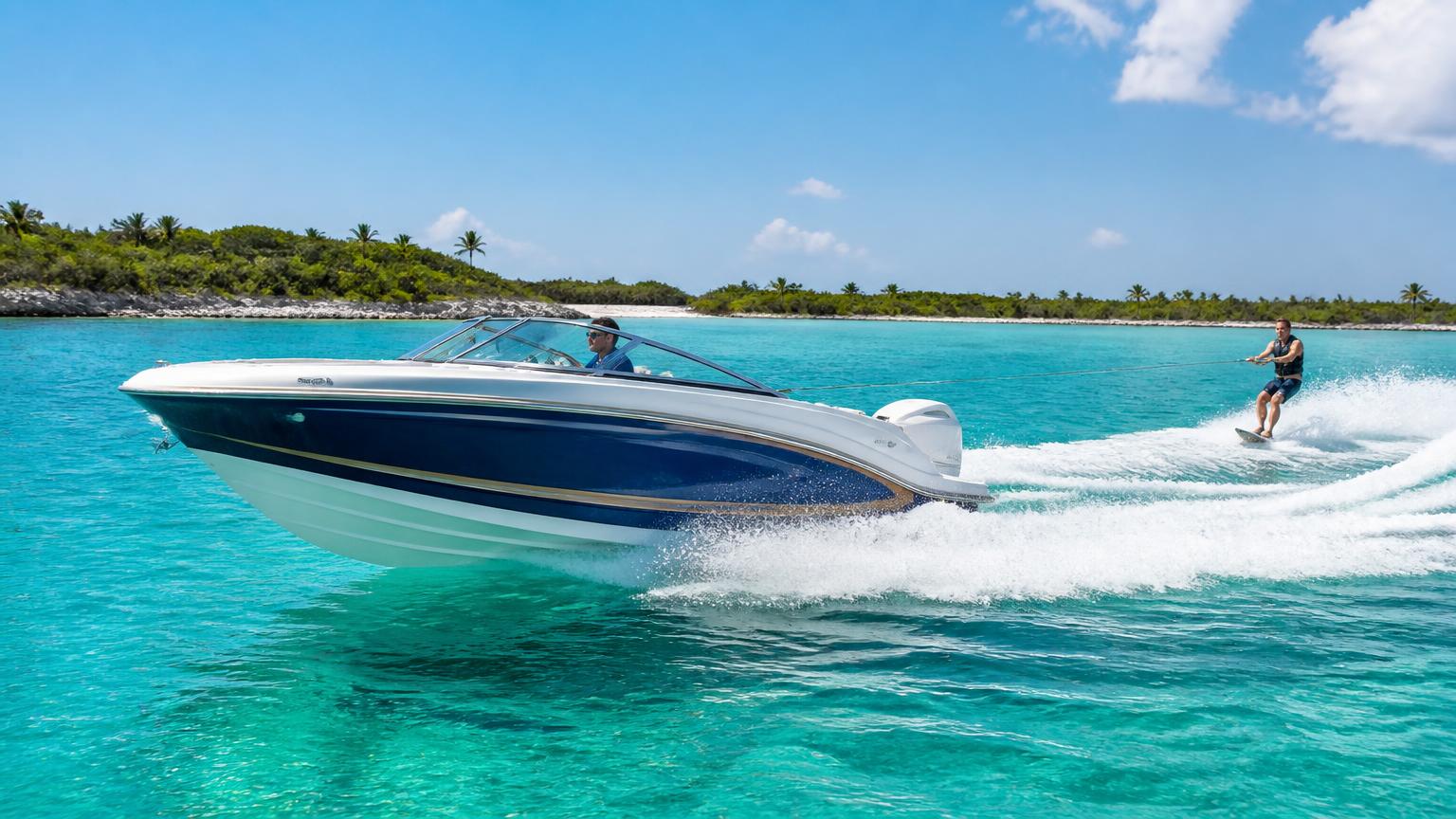
Bayliner VR5
The world's best selling bowrider size, Light, simple and easy to tow.
- Length
- 19 ft 9 in (6.02 m)
- Drive
- Outboard
- Seats
- 8 people / 1,150 lb
US$38,000 - US$52,000 new
Site Menu — Find Your Page
Bowrider Boats Mega Website

The Four Winns H4 is a compact bowrider built in moulded fibreglass by Four Winns of United States, a builder trading since 1962. On our measurements it works out at roughly 15 ft 6 in (4.72 m) of hull with a beam near 6 ft 9 in (2.06 m), which places it squarely in the trailerable family bowrider class: one vehicle, one trailer, one afternoon of prep, and the boat is in the water. Wide-beam bowriders with big cockpits and strong watersports credentials.

Layout is classic bowrider and that is the whole point of the boat. Twin lounges run forward of the windscreen with a walk-through to the anchor well, the helm and companion seats sit amidships behind a wrap screen, and a full-width lounge spans the transom for sunbathing and socialising. Around 8 people fit aboard comfortably in sheltered water. Cushions lift out, backrests fold and filler pads convert the cockpit from a conversation pit into one long sun bed in a couple of minutes.

Underway the H4 behaves the way a well-sorted compact bowrider should. It comes onto the plane early, holds a low tow speed without wallowing and tracks flat through a hard turn instead of skating out. In short chop you slow down and let the hull do the work, and it stays surprisingly dry for the size.

Power is a 70-105 hp petrol stern drive package, and that suits both the hull and the way these boats are used. A stern drive keeps the transom clean and the engine low in the hull, which lowers the centre of gravity and gives that quiet, torquey feel off the mark that skiers appreciate.

Watersports are well covered. A tow point is standard on almost every boat in this class, and Four Winns owners regularly add a pylon or a folding tower for wakeboarding. A modest stern drive package pulls a slalom skier out of the water cleanly and tows children on an inflatable biscuit all day without protest. Skis, ropes and vests live in the under-floor and under-seat lockers so nothing sits underfoot while the boat is loaded.
Anglers do well out of the H4. The bow converts to a casting deck once the cushions are stowed, there is room to swing a rod without hitting the screen, and lockers swallow tackle, nets and a cooler. It is not a dedicated fishing boat, but it catches fish and it still takes the family out the next morning — which is the entire argument for owning a bowrider.
Build and finish sit where you would expect for a mid range boat from United States. Four Winns has always chased interior volume, and the H-series (H1, H2, H4, H6) shows it: beam is carried well forward so the bow lounge is unusually roomy, freeboard is high enough to feel secure with kids aboard, and the cockpit swallows an esky, a tower and a full set of watersports gear without anyone tripping over it. The hulls are competent all-rounders — not the softest ride in the class, but stable at rest and predictable in a following sea, which is exactly what families notice. Optional tow pylons, ballast, surf systems and towers mean a Four Winns can be specified as a genuine watersports boat rather than a cruiser with a rope hook. Pricing sits mid-market, undercutting Cobalt and Regal while offering more standard equipment than the entry brands, and the outboard HD models have broadened the appeal in markets that prefer no engine box in the cockpit. Used examples are plentiful in North America and increasingly common in Europe.
Options worth having on the H4 are the practical ones: a bimini for shade, a decent bow and cockpit cover so the upholstery survives being stored outside, an upgraded sounder if you fish, and a stereo package that can be heard over the engine. On fibreglass, a ceramic coat or a good polish once a season keeps the gelcoat looking new and protects resale.
As a used buy, check the same things you would on any bowrider in this size band: transom firmness, stringer and floor soundness, hours and service history on the engine, steering and trim function, and the state of the upholstery seams, which are the first thing to fail on a boat that lives uncovered. Boats from this builder hold their money well, so a tidy example will not be cheap, and that is usually a sign you are buying the right one.
Our price guide for the H4 is US$29,000 - US$38,000 new, which moves with engine choice, trailer, tower and how recently the boat was refreshed. Judged as a whole, it does what people buy a bowrider for: cruise, tow, swim, fish and entertain in one boat, without asking the family to compromise on any of them. Four Winns has been refining that formula since 1962, and the H4 is a straightforward, well-judged expression of it.

The world's best selling bowrider size, Light, simple and easy to tow.
US$38,000 - US$52,000 new

The refined mainstream benchmark: quiet, dry, and beautifully finished for the money.
US$72,000 - US$95,000 new

A premium 25-foot bowrider renowned for its deep seating, convertible lounges, refined ride and exceptional finish.
US$155,000 - US$210,000 new
Featured Boat of the Week

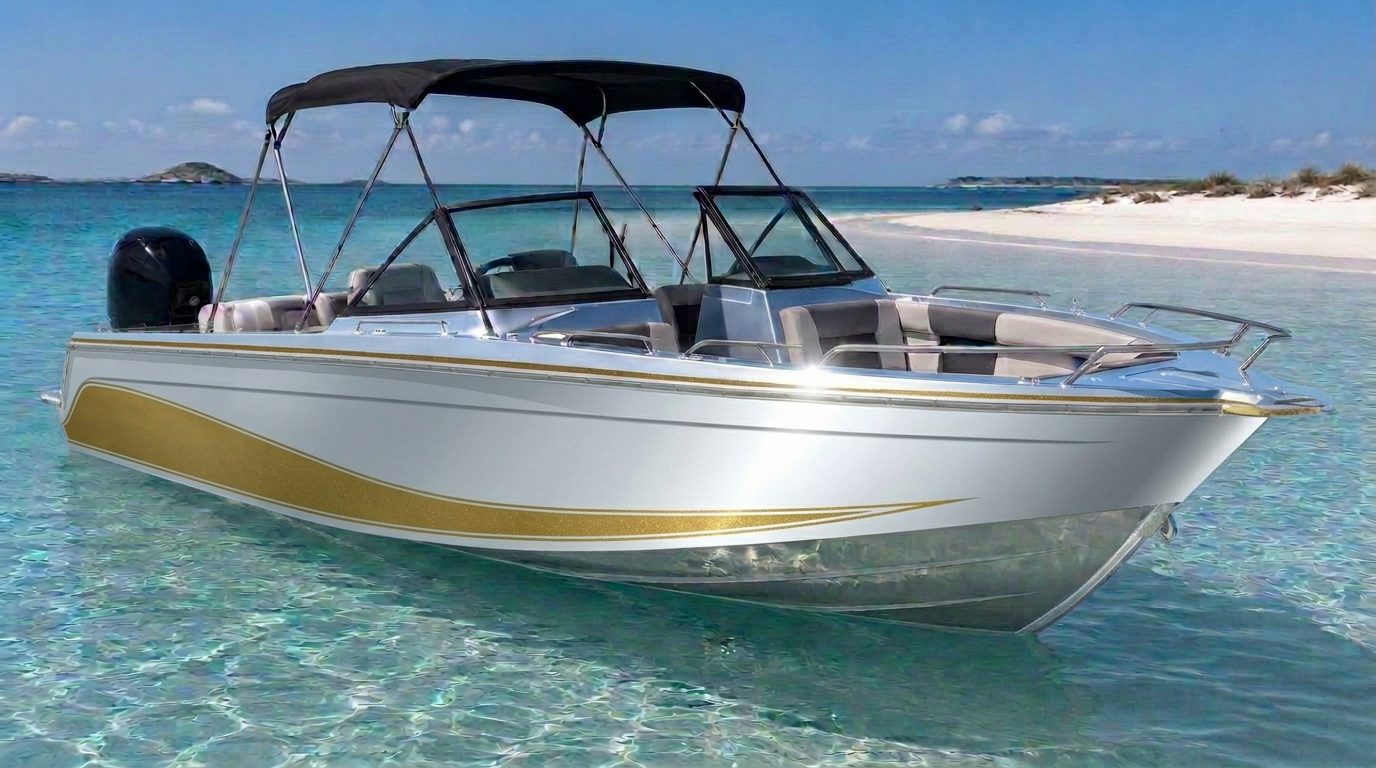
This week we are putting the Bayliner Bayliner DX2000 in the spotlight, and it earns the spot. At 20 ft 2 in (6.16 m) long on a 8 ft (2.44 m) beam, this is a bowrider that reads the water well and still feels roomy enough for a full day out. A 20-foot deck-boat-width bowrider with outboard power and a huge social cockpit. Power comes from 115-150 hp mercury fourstroke outboard through a outboard package, and the fibreglass hull keeps the ride settled when the afternoon breeze puts a chop on the surface.
Seating is rated for 8 people, so there is space for family, friends, towels, eskies and the tow rope without anyone climbing over gear. Owners tend to buy it for family, water ski, leisure — which is exactly where it shines. Fuel is 30 us gal (114 l), and on the second-hand and new market you should expect to land somewhere around US$42,000 - US$58,000 new depending on hours, trailer and options.
Our full deep dive covers the layout in detail: bow lounge comfort, helm ergonomics, the rear entertaining area, storage that actually swallows a weekend, plus standard features, popular options and honest notes on where the boat compromises. If the Bayliner DX2000 is on your shortlist, start there — and check back next week, because the featured boat changes every week as we complete more full model reviews.
Featured Bowrider Article
Comparisons

Bowriders and deck boats look related, and many buyers cross-shop them. The difference sits entirely in the bow: a bowrider tapers to a pointed entry, while a deck boat carries its beam right forward to a broad, blunt bow. That one change alters space, ride and personality completely. The deck boat wins on volume. Carrying full beam to the bow creates a large forward lounge area, often with a walk-through gate and space for four or five people up front. Total capacity on a deck boat is typically two to four higher than a bowrider of the same length. The bowrider trades that volume for a narrower, more sheltered bow. Its forward lounges are more intimate, better protected from spray, and more comfortable at speed because they sit further inboard. A pointed bow parts waves. That is why bowriders ride more comfortably in a chop, stay drier at speed and handle open water better. Deck boats with blunt bows can pound and throw spray when conditions get lumpy, though modern deck boat hulls are far better than early designs. Deck boats are more stable at rest, thanks to that carried-forward beam, and they plane easily. For calm lakes and rivers they are excellent. For coastal…
Read the full article