Cobalt CS23 Bowrider — Cobalt's 23-foot CS-series sport bowrider — luxury-grade finish and a full social cockpit in a genuinely easy-to-tow package.
Length
23 ft 6 in (7.16 m)
Beam
8 ft 6 in (2.59 m)
Capacity
Typically 10-12 people, configuration and certification dependent
Drive
Stern drive
Power
Single sterndrive from around 300 hp, or a single outboard to roughly 400 hp
Fuel
Approximately 60-65 US gal (227-246 L), configuration dependent
Hull
Fibreglass
Price guide
US$130,000 - US$185,000 new, equipment dependent
Cobalt CS23 Bowrider — Information and Specifications
The Cobalt CS23 sits in the sweet spot of the modern bowrider market: a boat with premium construction, a deep open bow and full-size social seating, packaged at a length and beam most families can tow behind a mid-size vehicle and store at home. Exact dimensions, seating counts and equipment vary by model year and configuration, but the platform is broadly 23 feet with a trailerable 8 ft 6 in beam. Where Cobalt's larger R-series models chase big-day-boat volume, the CS-series concentrates on delivering the same fit and finish in a hull that stays easy to launch, dock and maintain.
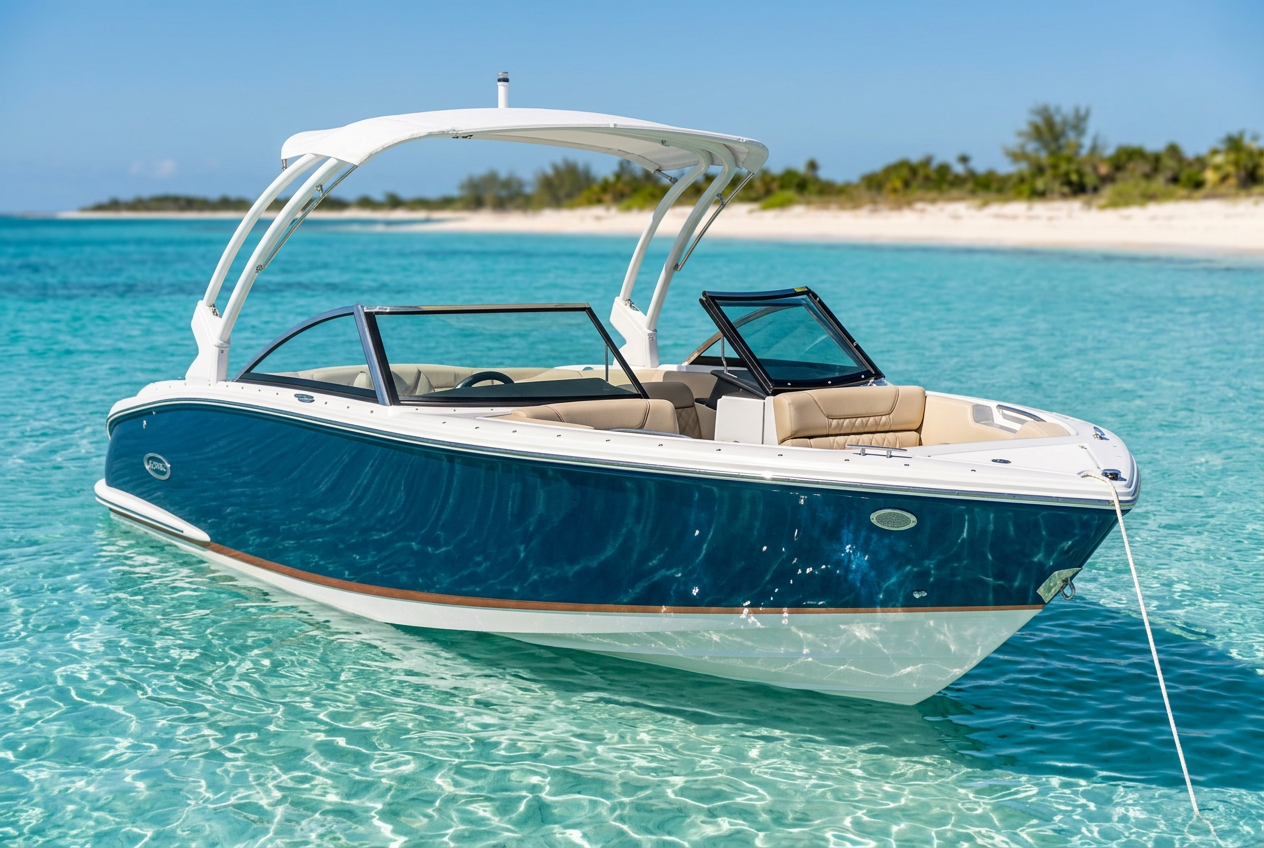
Cobalt CS23 — front three-quarter view showing the deep open bow
Construction is the first thing owners notice. Cobalt uses heavy laminates, fully finished locker interiors, stainless hardware and thick, supportive upholstery rather than thin foam over plywood. Hatches lift on quality gas struts, latches close positively, wiring is loomed and labelled, and the surfaces passengers touch most are padded or trimmed instead of being left as raw fibreglass. That extra structure gives the CS23 a quiet, solid feel underway and is a large part of why used Cobalts tend to hold their value better than lighter volume-built runabouts of similar size.
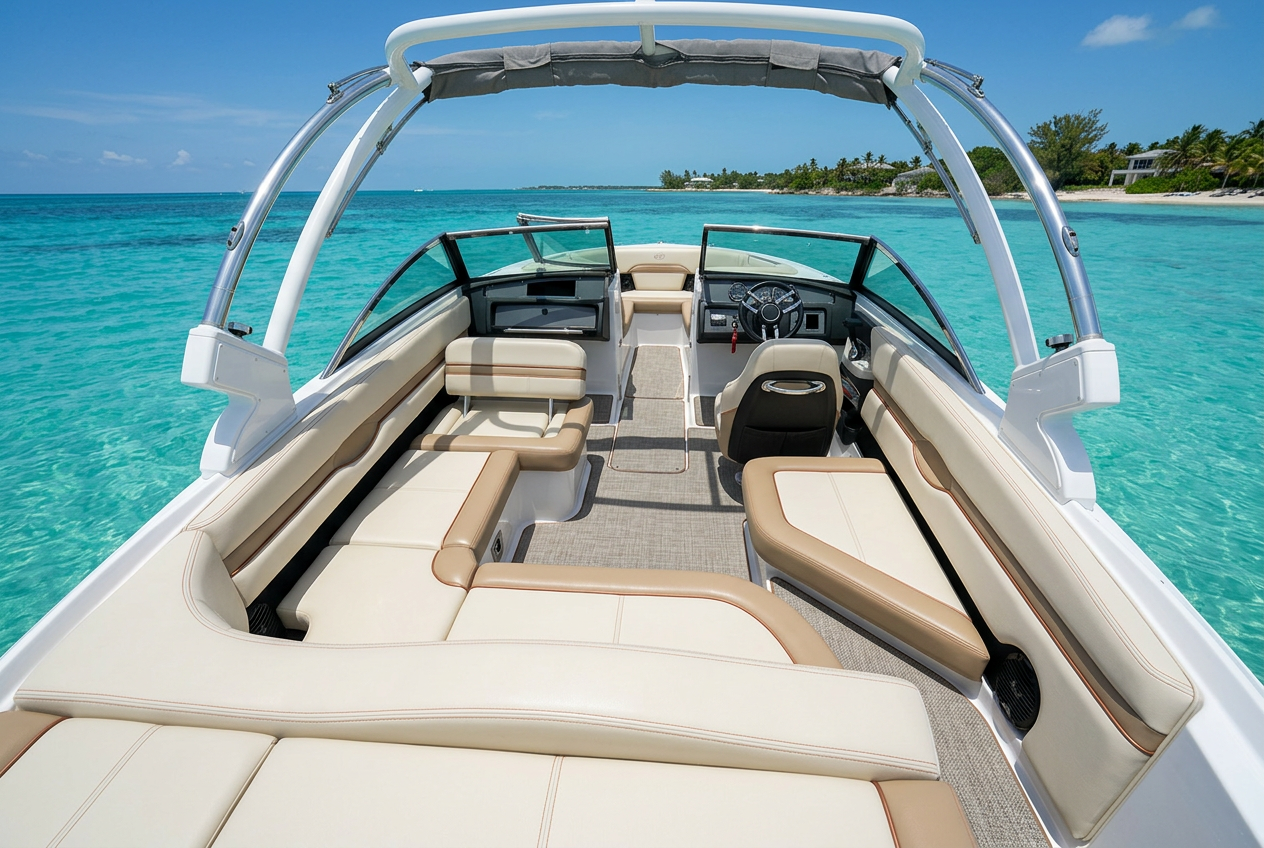
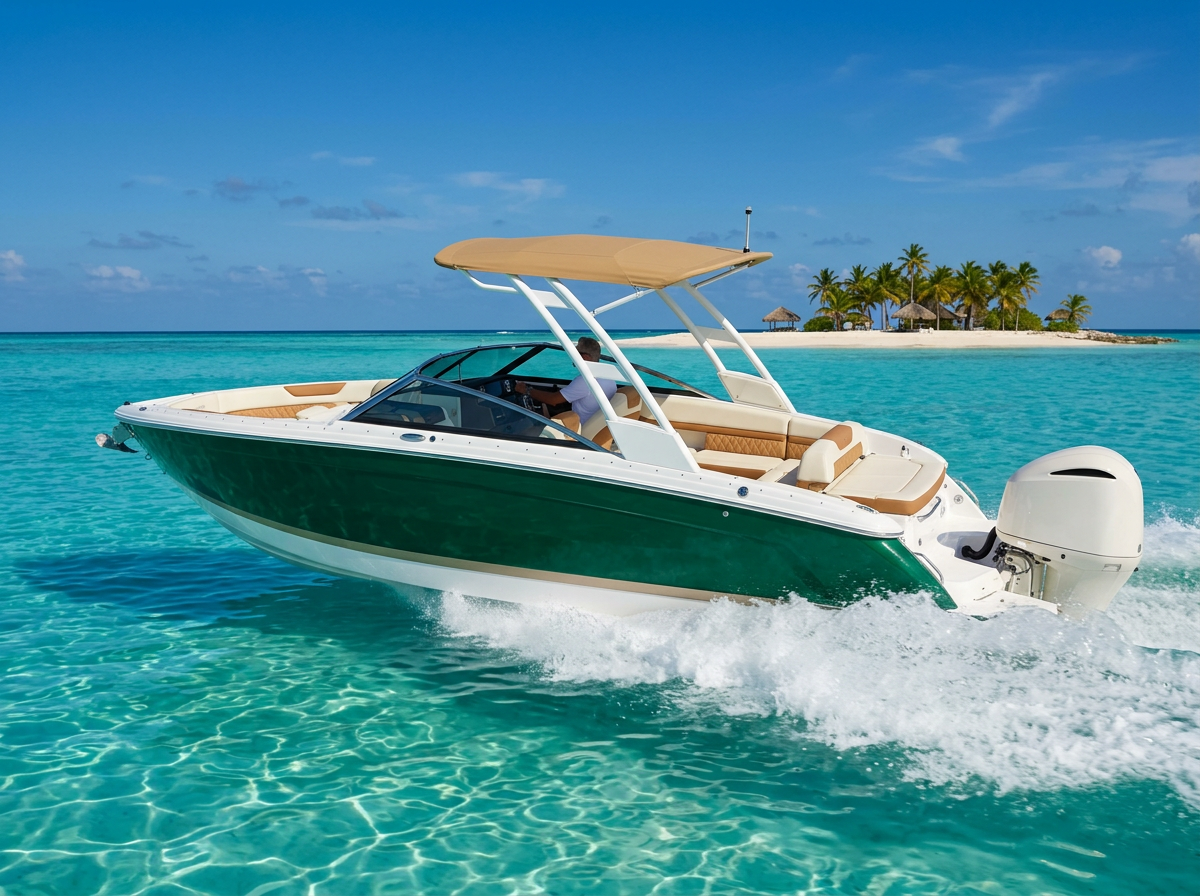
Cobalt CS23 — rear-facing cockpit view under the shade arch
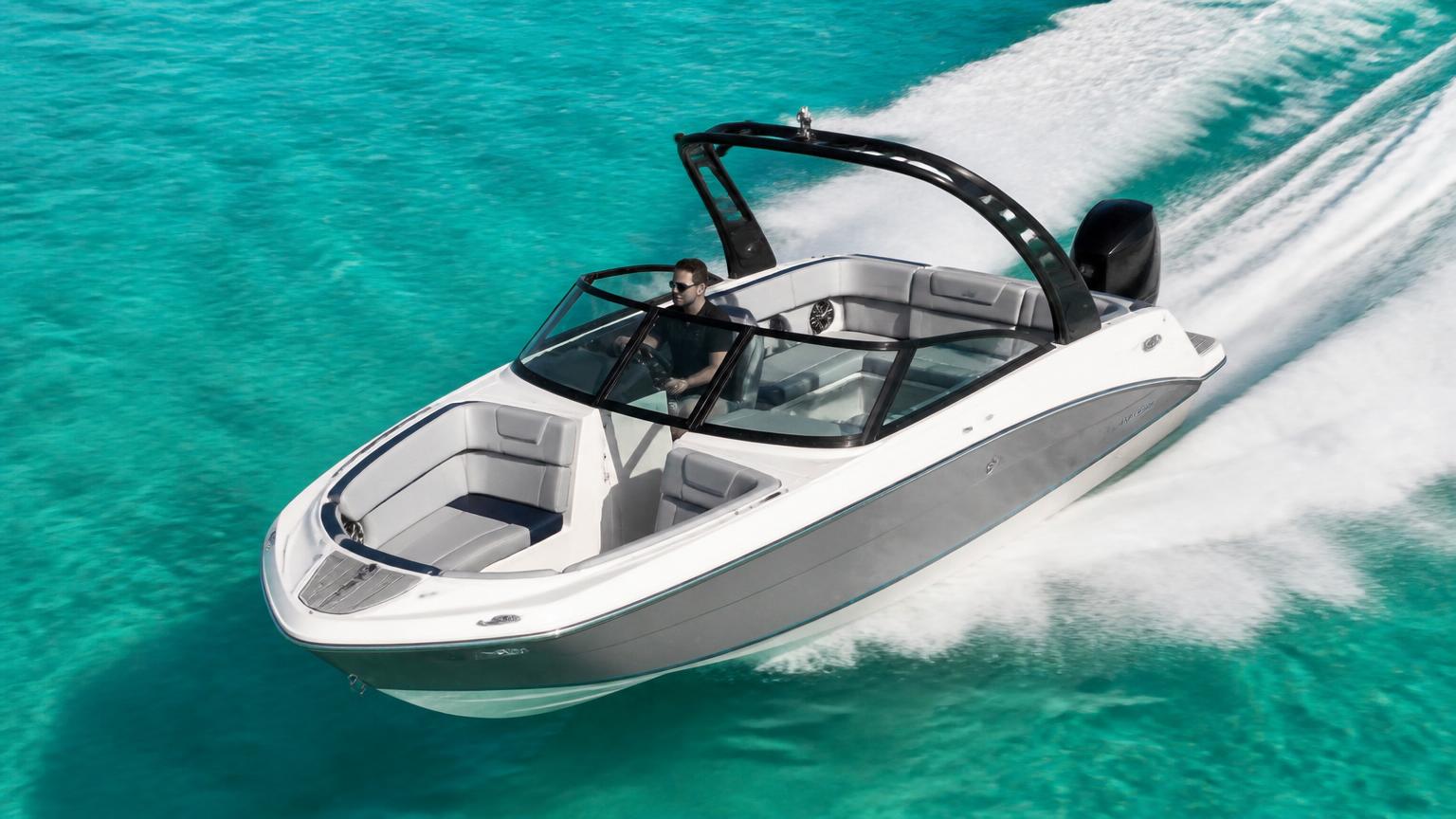
The bow is a proper second lounge rather than a token pair of seats. Long opposing chaises give adults real back and thigh support, coamings are high enough to feel secure with children aboard, and the forward floor stays wide enough for feet and a cooler. Deep storage sits beneath the cushions for towels, life jackets and day bags, and speakers, grab rails, drink holders and charging points are placed where they are actually used. A walkthrough windshield with a wind-block door keeps the area usable on cooler mornings, while an optional filler cushion and table turn it into a sun pad or dining space at anchor.
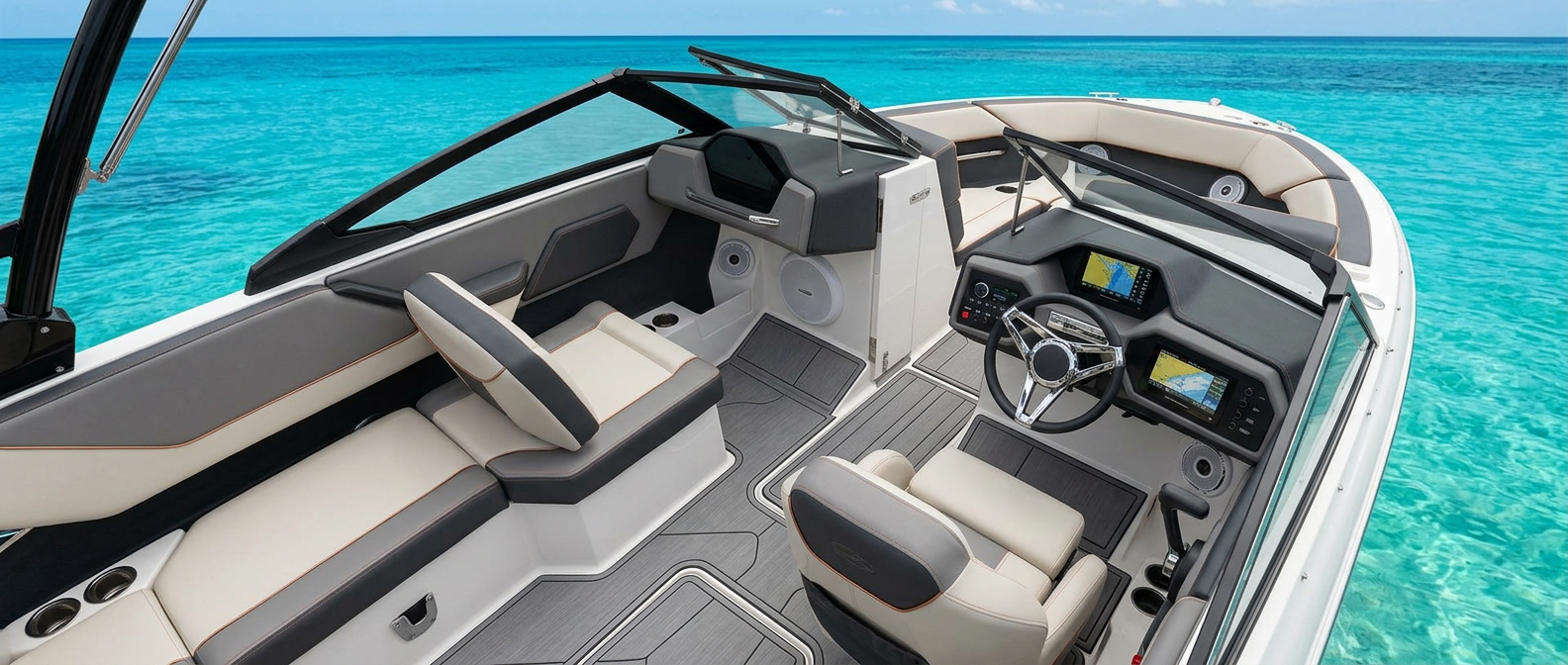
Cobalt CS23 — elevated overview of the bow lounge, helm and cockpit
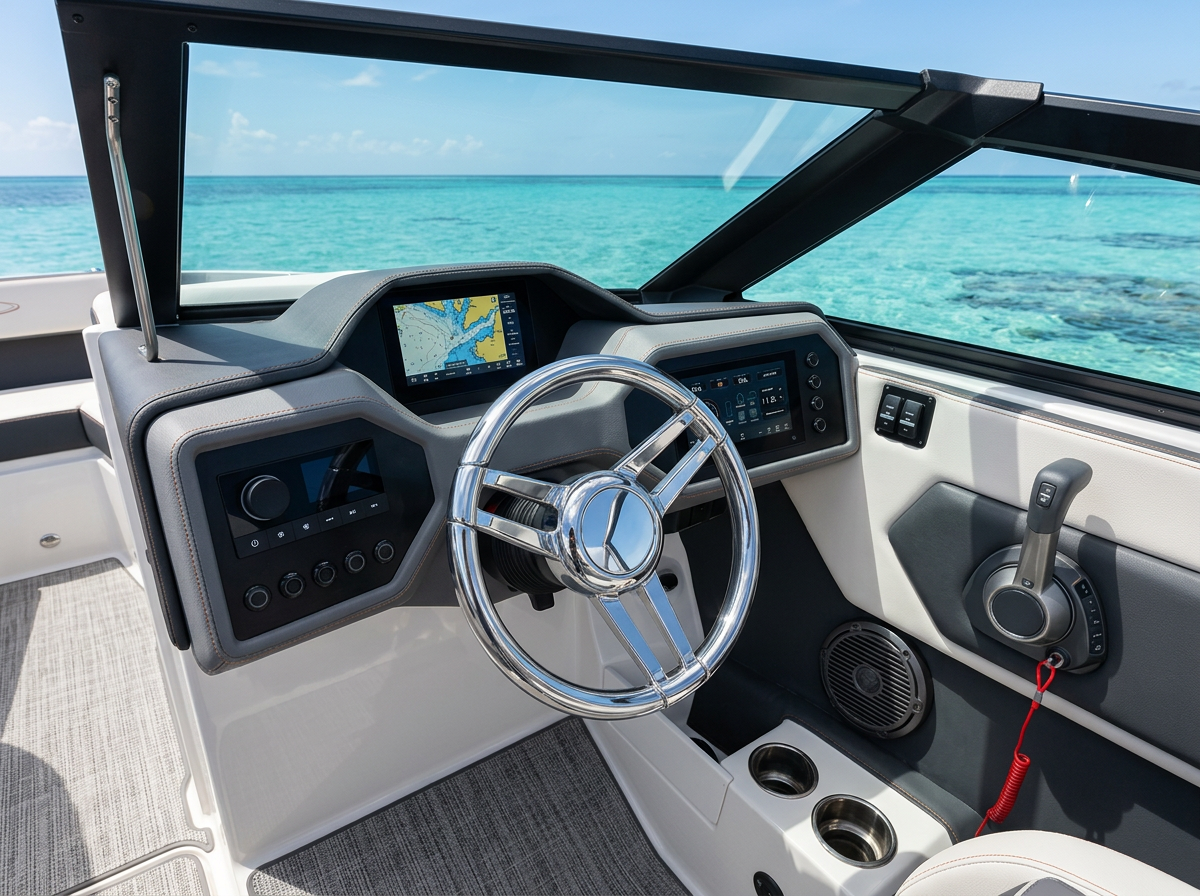
The helm is deliberately sporty. Twin glass displays can carry charts, depth, engine data, audio and digital switching in one sightline, with the essentials still on physical controls close to the wheel. The captain's chair swivels and slides with a flip-up bolster for standing visibility around ramps and moorings, and the low, well-angled dash gives a clear view over the bow when climbing onto plane. Power-assisted steering and digital throttle make the CS23 feel considerably lighter on the wheel than its build weight suggests.
Cobalt CS23 — twin-screen sport helm and digital throttle
Cockpit flexibility is where the layout earns its keep on a family boat. Twin helm seats sit ahead of broad side lounges with reversible backrests, so passengers can travel facing forward securely and then turn to face the water at anchor. The stern corners convert to sun lounges overlooking the swim platform, and a removable table drops into place for lunch. Because everything folds and stows into the moulded furniture, the deck never fills with loose cushions and cooler boxes, which matters on a boat this size where floor space is the resource in shortest supply.
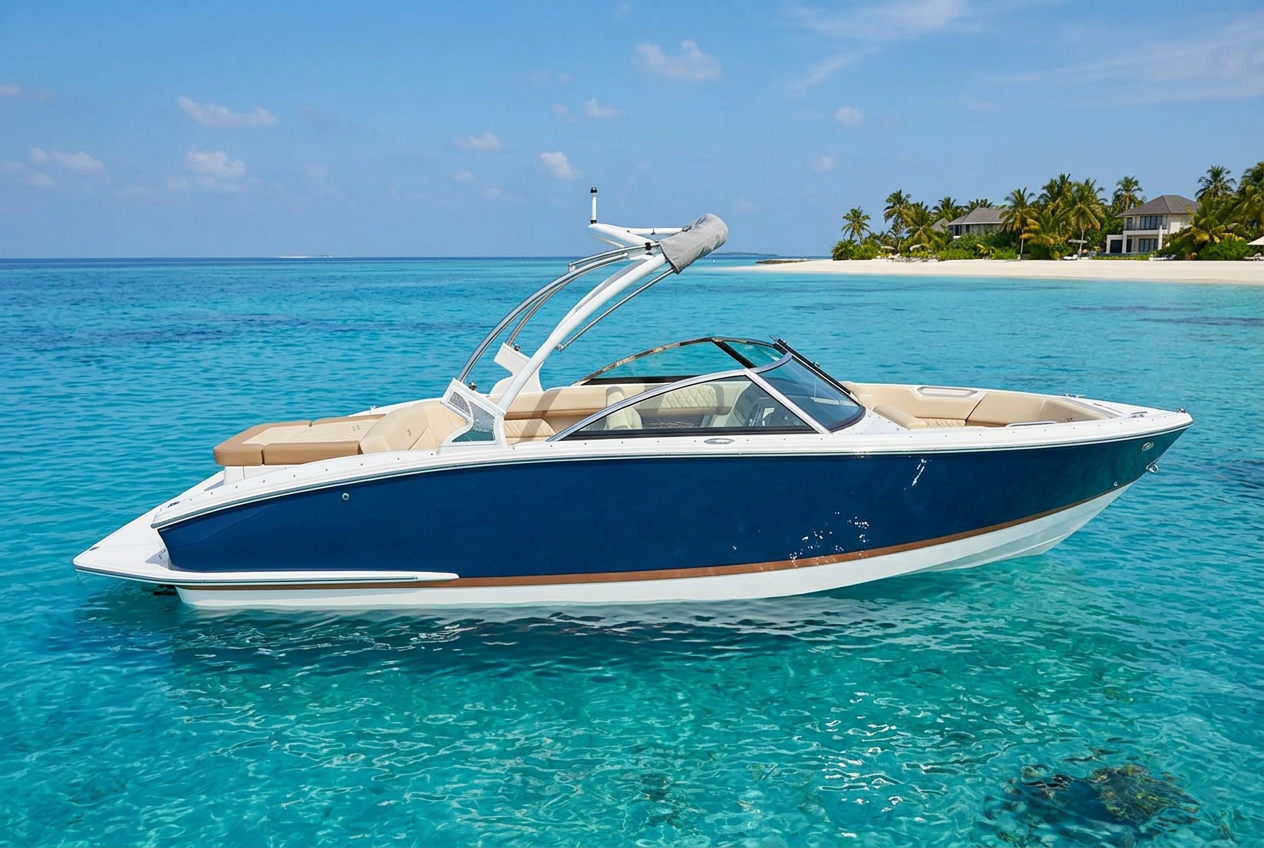
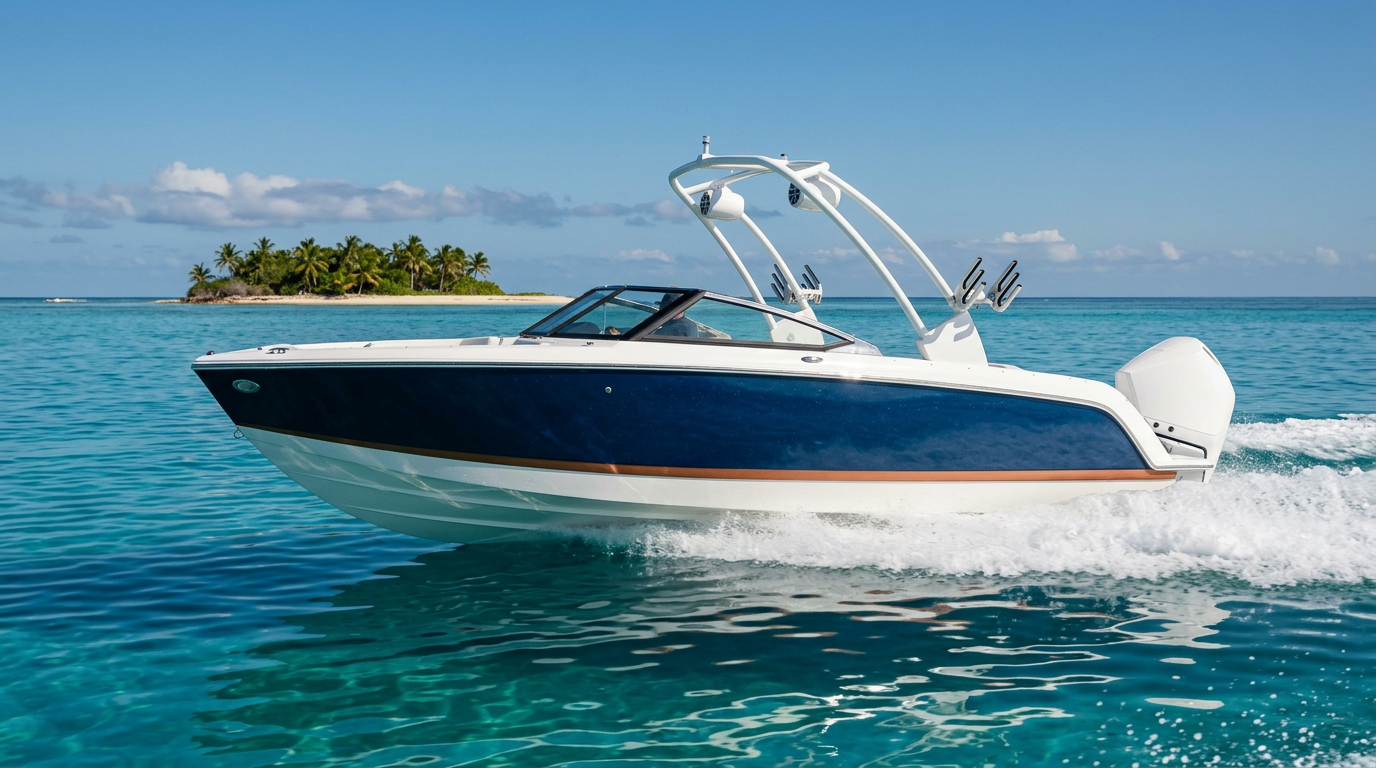
Cobalt CS23 — running at speed with the wake tower raised
Propulsion is a genuine choice, and it is worth comparing carefully rather than assuming every CS23 is the same. Sterndrive versions put the engine beneath the aft deck, giving a clean full-width sun pad, a low stern profile and a very natural feel behind a tow rope. Outboard versions free up interior volume, keep machinery outside the passenger space, simplify flushing and service, and cut through weeds and shallow water more happily. Fuel capacity, top speed, weight on the trailer and stern layout all shift with the choice, so check the specific hull and engine package in front of you.
Underway the CS23 behaves like a well-sorted deep-V sport boat. It leans into turns rather than skating, settles onto plane without excessive bow rise, and its weight and forward sections let it push through closely spaced chop that has lighter 23-footers slamming. Trimmed correctly it holds a comfortable cruise in the high-20s to mid-30s knot range depending on power and load, and it stays composed with a full complement of passengers aboard, which is the condition most family bowriders actually operate in.
Watersports and swimming are well catered for. The transom offers a broad platform, a telescoping boarding ladder and aft-facing seating so adults can watch swimmers and skiers without leaving their seat. In-floor and under-seat lockers swallow skis, wakeboards, ropes and tubes so wet gear stays out of the cockpit, and a freshwater shower rinses salt and sand at the platform. With a tower fitted, the CS23 gives an elevated tow point, shade over the cockpit and convenient board racks — enough for genuinely good recreational skiing, wakeboarding and tubing, though dedicated surf riders should look at purpose-built surf hulls instead.
Options move both the price and the day-to-day usefulness considerably. The ones owners rarely regret are a tower or bimini for shade, upgraded navigation screens, premium amplified audio, an electric windlass, refrigeration, synthetic teak-look flooring, underwater and cockpit lighting, bow filler cushions and a full cover package. Colour and upholstery choices are personal, but protection is not: proper covers, ventilation and regular freshwater washing preserve presentation far better than any decorative extra, and salt-water owners should budget for diligent flushing and anode replacement.
Buying used, the CS23 rewards a systematic inspection and a fully loaded sea trial. Confirm the model year, drive package and factory option list, then run every screen, pump, seat mechanism, light, speaker and accessory. Check upholstery seams and stitching, flooring adhesion, locker drainage, tower fasteners and the gelcoat around cleats, ladder brackets and tow points. Sterndrive boats need bellows, anodes and drive service records; outboard boats need engine diagnostic reports and hour counts. A well-kept CS23 is not the cheapest 23-foot bowrider on the market, but it is one of the most satisfying to own and one of the easiest to sell on.
Standard features
• Deep-V fibreglass hull with substantial freeboard for a 23-footer
• Full wraparound bow lounge with deep storage beneath
• Walk-through windshield with wind-block door
• Adjustable captain and companion chairs with flip-up bolsters
• Twin-screen digital helm with engine and audio integration
• Convertible cockpit lounges with reversible backrests
• Aft sun pad or aft-facing transom seating by configuration
• Telescoping boarding ladder and freshwater transom shower
• In-floor and under-seat watersports storage
• Premium marine audio in bow and cockpit
• Fully finished lockers, stainless hardware and loomed wiring
• Trailerable 8 ft 6 in beam requiring no wide-load permits
Popular options
• Upgraded sterndrive or high-output single outboard packages
• Watersports tower with board racks and speakers
• Bimini or folding shade arch
• Enhanced navigation and sonar display package
• Premium amplified audio with transom speakers
• Cockpit refrigerator or cooler package
• Electric windlass and stainless anchor package
• Underwater and configurable cockpit LED lighting
• Synthetic teak-look or woven cockpit flooring
• Bow filler cushion, cockpit table and sun-lounge conversions
• Bow, cockpit and full mooring cover package
• Matched tandem-axle trailer with brakes and swing-away tongue
A premium 25-foot bowrider renowned for its deep seating, convertible lounges, refined ride and exceptional finish.
Length
24 ft 3 in (7.39 m)
Drive
Outboard
Seats
Up to 14 people (configuration and model-year dependent)
US$155,000 - US$210,000 new
Featured Boat of the Week
Bayliner Bayliner DX2000 — Our Featured Bowrider This Week
Bayliner Bayliner DX2000 — three-quarter bow view on crystal clear water. Images Created by www.Bowrider-Boats.com
This week we are putting the Bayliner Bayliner DX2000 in the spotlight, and it earns the spot. At 20 ft 2 in (6.16 m) long on a 8 ft (2.44 m) beam, this is a bowrider that reads the water well and still feels roomy enough for a full day out. A 20-foot deck-boat-width bowrider with outboard power and a huge social cockpit. Power comes from 115-150 hp mercury fourstroke outboard through a outboard package, and the fibreglass hull keeps the ride settled when the afternoon breeze puts a chop on the surface.
Seating is rated for 8 people, so there is space for family, friends, towels, eskies and the tow rope without anyone climbing over gear. Owners tend to buy it for family, water ski, leisure — which is exactly where it shines. Fuel is 30 us gal (114 l), and on the second-hand and new market you should expect to land somewhere around US$42,000 - US$58,000 new depending on hours, trailer and options.
Our full deep dive covers the layout in detail: bow lounge comfort, helm ergonomics, the rear entertaining area, storage that actually swallows a weekend, plus standard features, popular options and honest notes on where the boat compromises. If the Bayliner DX2000 is on your shortlist, start there — and check back next week, because the featured boat changes every week as we complete more full model reviews.
Can You Take a Bowrider Offshore Safely? — Images Created by www.Bowrider-Boats.com
Bowriders are designed for protected water, but plenty of owners run them along the coast, out to islands and offshore to fish. It can be done safely with the right boat, the right conditions and the right discipline — and it goes badly wrong when any one of those is missing. Size and deadrise come first. A 6.5-8.0 m hull with 19-22 degrees of transom deadrise handles offshore swell far better than a 5 m lake boat with a shallow V. Higher freeboard, a deep cockpit and self-draining decks matter just as much as length. The open bow is the weak point. Boats designed for coastal use offer a full bow cover or tonneau that closes the forward seating, preventing green water entering the boat. A bowrider without one should never be driven into head seas offshore, because a wave over the bow puts water straight into the hull. Twin outboards, a reliable bilge pump, a battery isolator and a proper anchoring setup all add real margin when you are hours from a ramp. Weather discipline is what keeps bowrider owners safe. A benign morning with under ten knots of wind and a low, long-period swell is very different from a fifteen-to-twenty-knot afternoon seabreeze with…