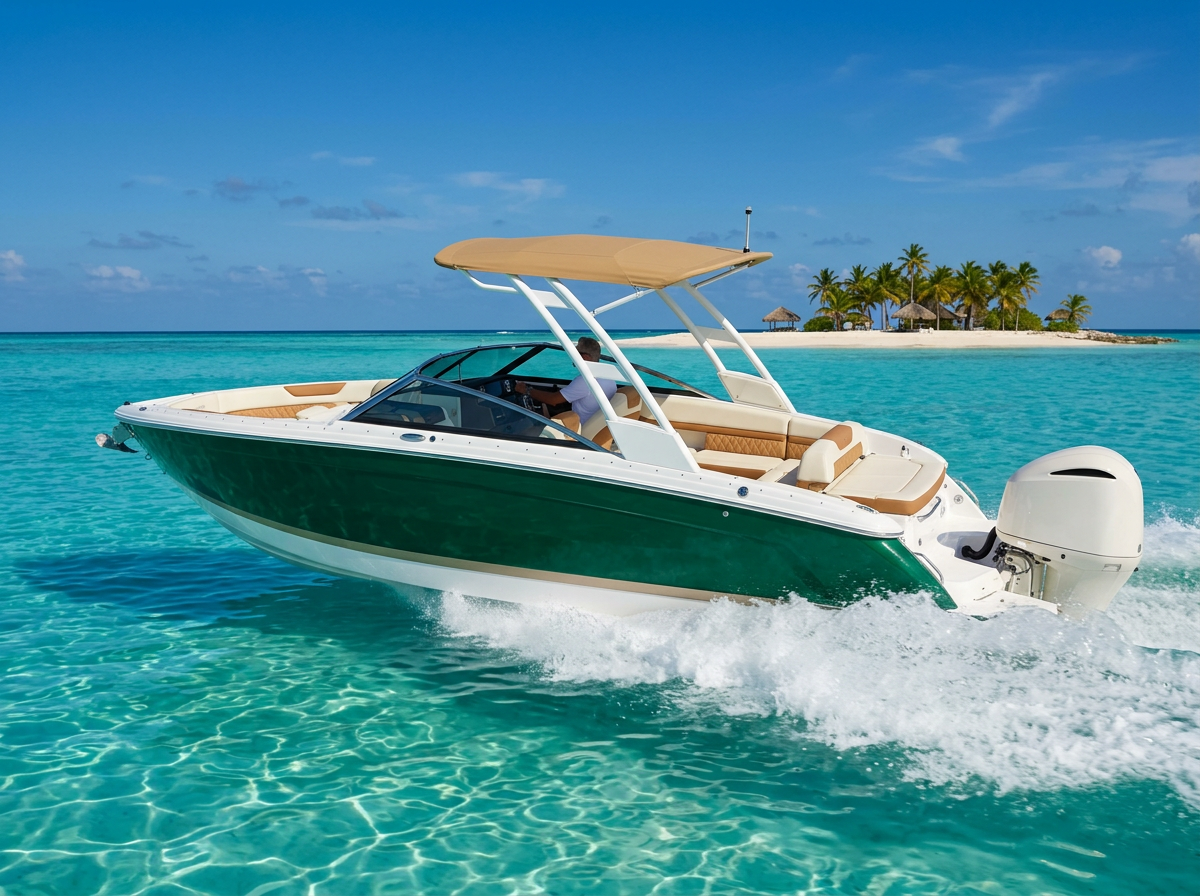
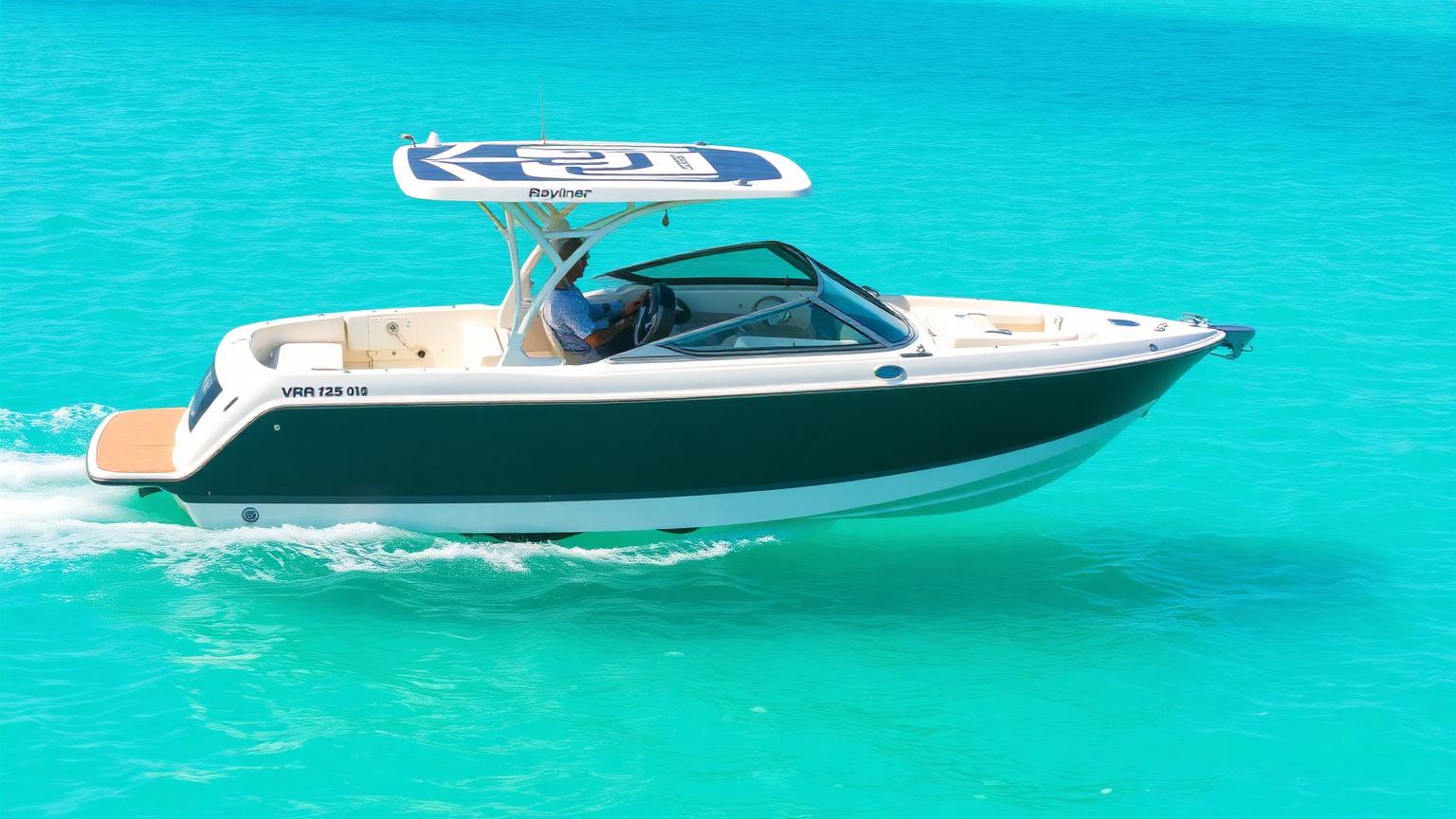
Bayliner VR5
The world's best selling bowrider size, Light, simple and easy to tow.
- Length
- 19 ft 9 in (6.02 m)
- Drive
- Outboard
- Seats
- 8 people / 1,150 lb
US$38,000 - US$52,000 new
Site Menu — Find Your Page
Bowrider Boats Mega Website

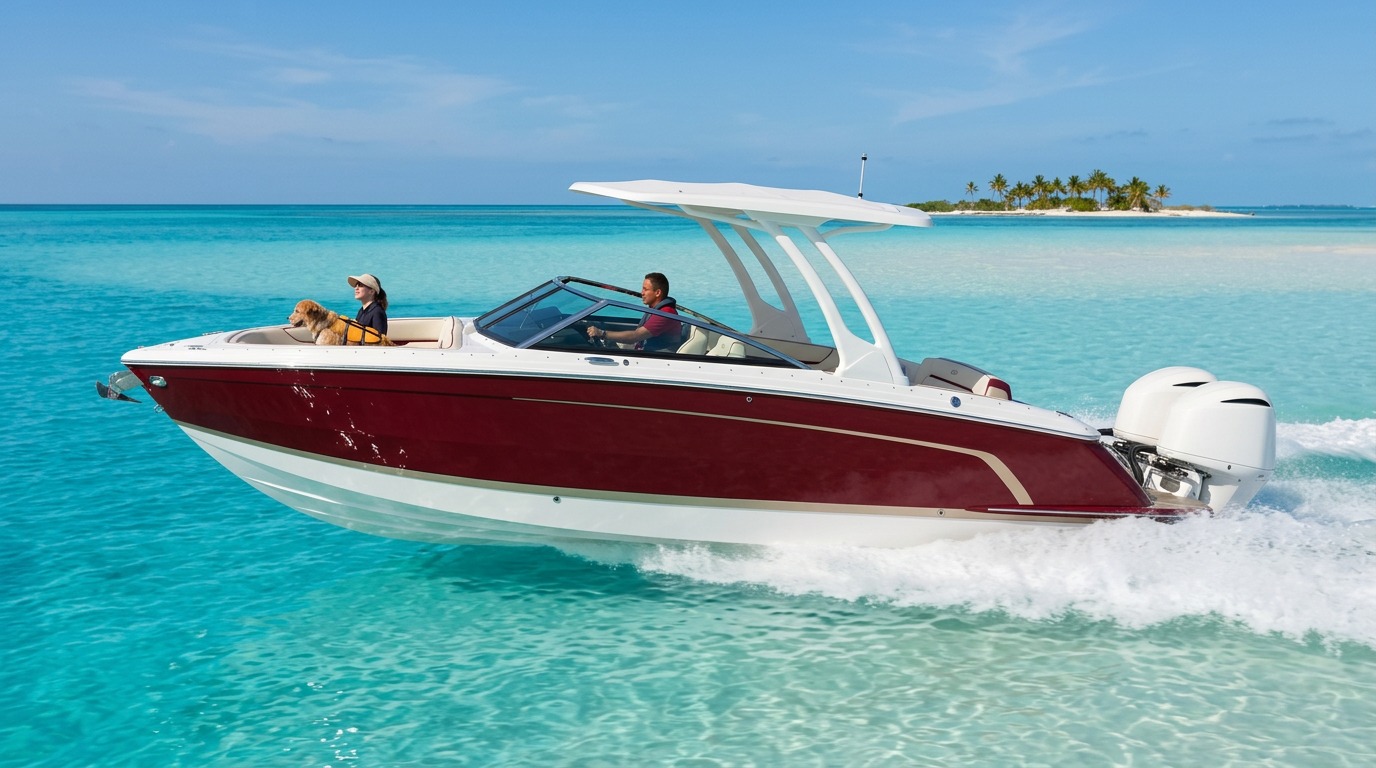
The Cobalt R8 takes the familiar open-bow runabout formula into genuine big-day-boat territory. Exact measurements and equipment change between the R8 sterndrive, R8 Outboard, R8 Surf and individual model years, but the platform is roughly 28 feet long with a trailerable 8 ft 6 in beam. That extra length is used for passenger space rather than cabin accommodation: adults can stretch out in the bow, move through the cockpit without climbing over one another and still leave a useful stern activity zone for swimming, watersports and watching the sunset.

Construction and finish are central to the R8's appeal. Cobalt uses substantial mouldings, carefully finished locker interiors, through-bolted stainless hardware and thick upholstery intended to remain supportive through long days aboard. Hatches lift on quality struts, latches feel positive and frequently touched surfaces are padded or trimmed rather than left as bare fibreglass. The weight and rigidity that result are noticeable underway, where the boat feels quiet and solid instead of allowing the rattles and flex that can develop in lighter high-volume runabouts.

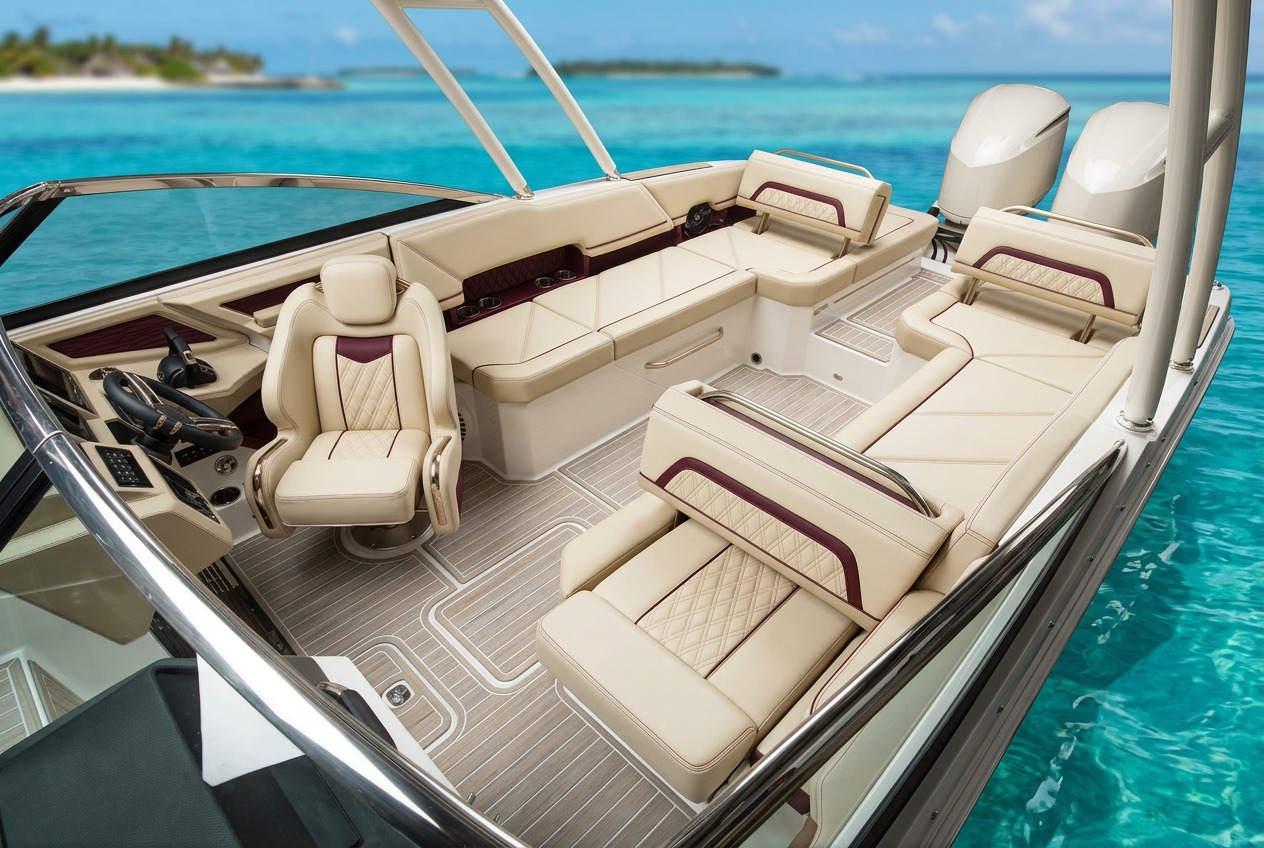
The bow is a separate social zone rather than a token pair of seats. Long opposing chaises provide full back and thigh support, deep coamings add security, and the broad forward floor leaves room for passengers' feet. Storage below the cushions takes towels, life jackets and day bags, while speakers, grab rails, charging points and drink holders are positioned for actual use underway. A wind-block door can close the walkthrough in cool conditions, and available filler cushions and a table let owners change the area from travelling seats to a sun lounge or dining space.

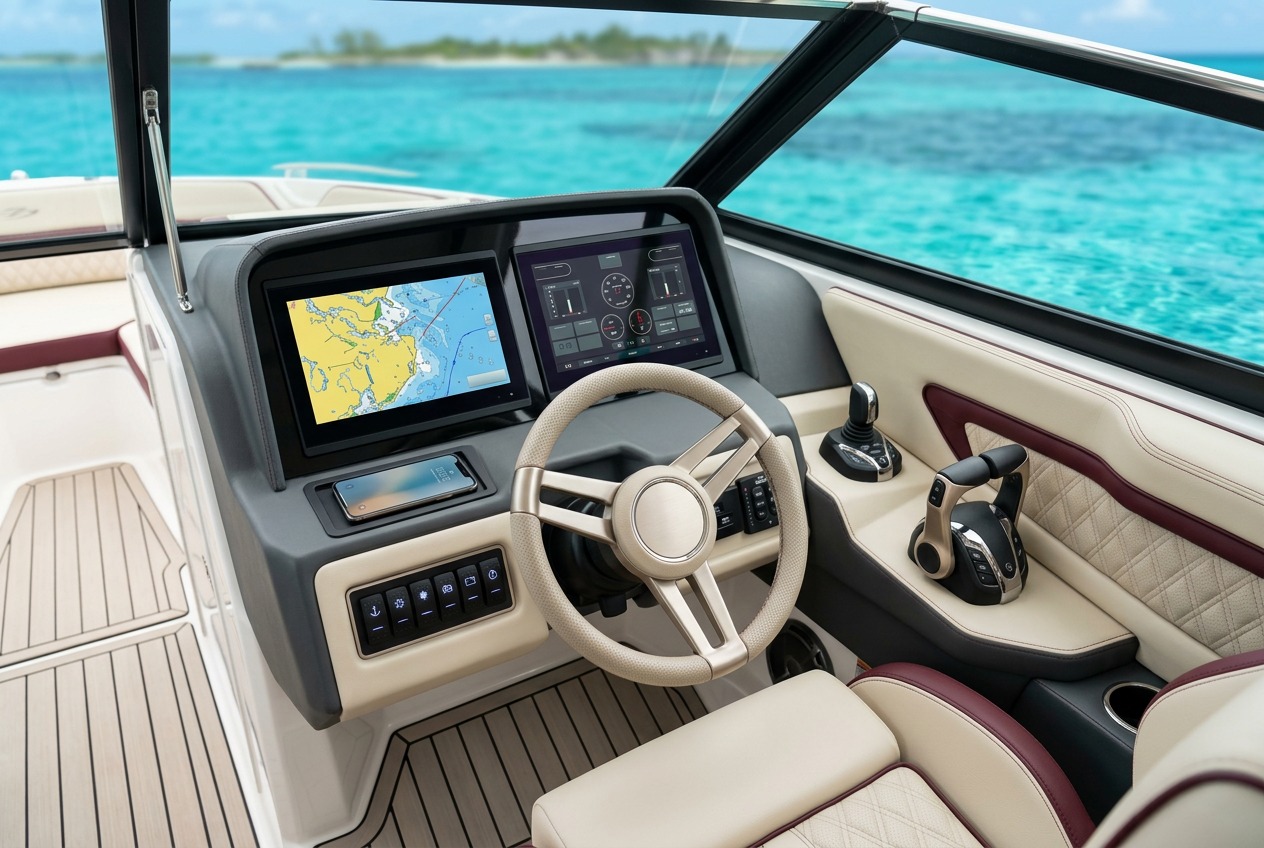
The helm matches the scale of the boat. Dual glass displays can combine charts, depth, engine data, audio and switching in one sightline, while essential controls remain grouped within easy reach. The captain's chair swivels, slides and uses a flip-up bolster for close manoeuvring. Digital throttle and power-assisted steering make the R8 much easier to drive than its size suggests, and joystick-equipped outboard versions can independently direct the engines when moving sideways, turning within the boat's length or easing into a crowded marina berth.

Cockpit flexibility is one of the R8's defining strengths. Twin helm seats sit ahead of broad side lounges, reversible backrests create forward-facing travel seats or aft-facing chaises, and the rear corners can become individual sun lounges overlooking the water. The result is a layout that changes character without loose furniture filling the deck. Families can travel with everyone facing securely forward, gather around a removable table for lunch, then turn the stern into a waterside lounge while swimmers use the platforms behind it.
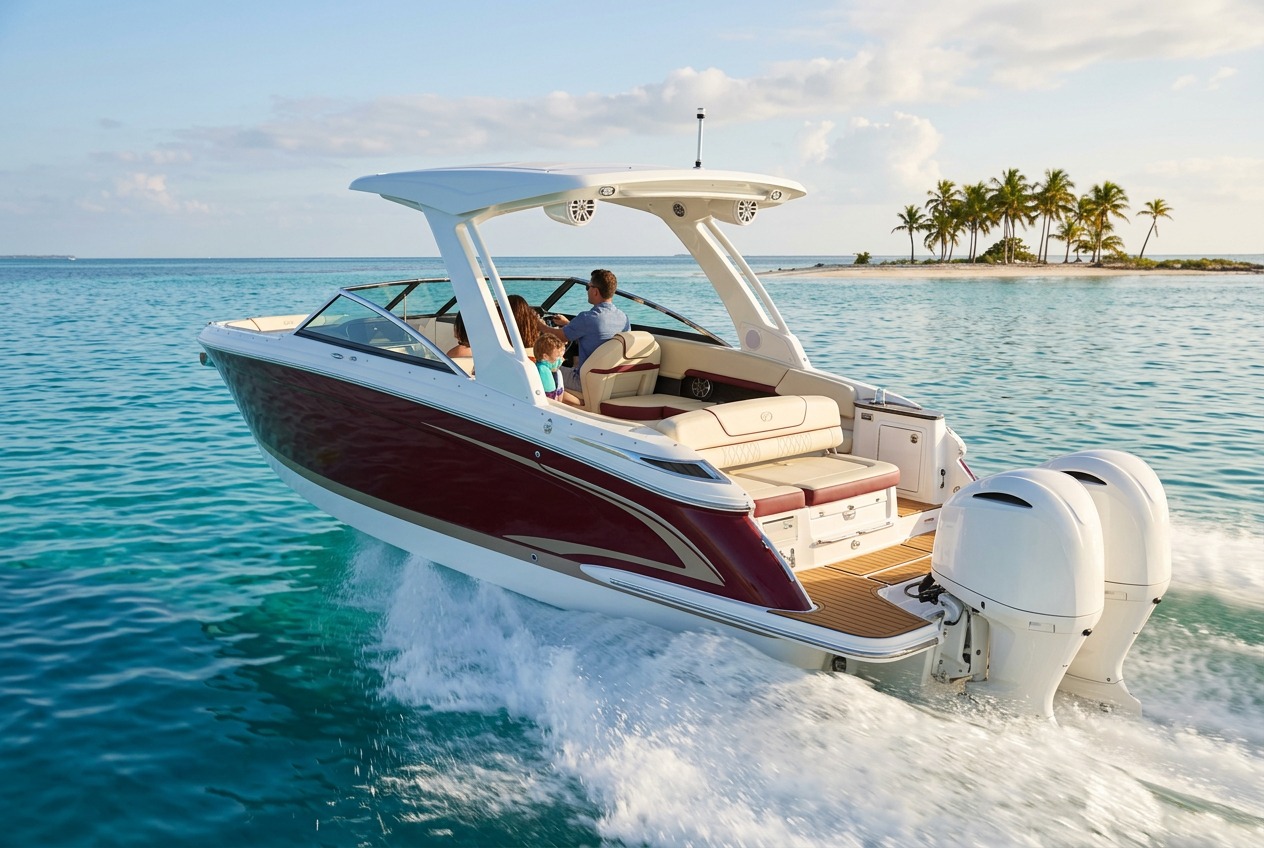
Propulsion varies substantially, so buyers should compare the exact version rather than treating every R8 as mechanically identical. The R8 Outboard is designed around twin high-output engines, providing redundancy, strong acceleration and straightforward service access while keeping machinery outside the passenger space. Sterndrive versions place their engines beneath the aft deck to create a cleaner full-width platform and a lower-profile stern. Surf variants add specialised drive and wave-control hardware. Fuel capacity, performance, storage and passenger ratings therefore need to be checked against the year and configuration being considered.
Underway, the R8 prioritises composure and passenger comfort. Its length, weight and deep forward sections help bridge closely spaced chop, while the running surface settles into a confident cruise rather than feeling nervous at the wheel. Twin outboards provide immediate planing power even with a full social load, and correctly adjusted trim releases the hull once established on plane. It is still a large open boat that rewards sensible speed in rough water, but its freeboard, windscreen protection and substantial structure make exposed bays and long lake crossings far more comfortable than they are in a compact bowrider.
Swimming and watersports are built into the stern arrangement. Outboard versions use broad platforms around the engines, an integrated boarding ladder and aft-facing seats that let adults supervise children in the water. A freshwater shower, transom audio controls and generous wet storage reduce the need to cross the cockpit with dripping equipment. With suitable power the R8 can tow skiers, wakeboarders and tubes with ease, and a hard-top or tower provides an elevated tow point, shade and board storage. Dedicated surf buyers should choose the purpose-equipped Surf configuration rather than expecting a conventional outboard hull to shape the same wave.
Equipment choices can move both price and usability considerably. High-value options include joystick docking, a hard-top or folding shade, upgraded navigation screens, premium audio, refrigeration, electric windlass, underwater lighting, synthetic teak-look flooring, cockpit heating and fitted bow and cockpit covers. The most attractive colour and upholstery package is subjective, but protection is not: strong covers, ventilation and regular freshwater cleaning do more for long-term presentation than any decorative option. Owners keeping the boat in salt water should also budget for meticulous engine flushing and corrosion protection.
A used R8 deserves a detailed systems inspection and a fully loaded sea trial. Confirm the model year, propulsion layout and factory option list, then operate every screen, pump, seat mechanism, refrigerator, light, speaker and powered accessory. Inspect upholstery seams, deck flooring, locker drainage, tower fasteners and the gelcoat around high-load fittings. Engine diagnostic reports and service records are essential on twin-outboard boats; sterndrive examples also need careful inspection of bellows, anodes and drive servicing. A well-maintained R8 is expensive, but it delivers the space of a much larger day boat with the immediate, sociable character that makes a bowrider so appealing.

The world's best selling bowrider size, Light, simple and easy to tow.
US$38,000 - US$52,000 new

The refined mainstream benchmark: quiet, dry, and beautifully finished for the money.
US$72,000 - US$95,000 new

A premium 25-foot bowrider renowned for its deep seating, convertible lounges, refined ride and exceptional finish.
US$155,000 - US$210,000 new
Featured Boat of the Week

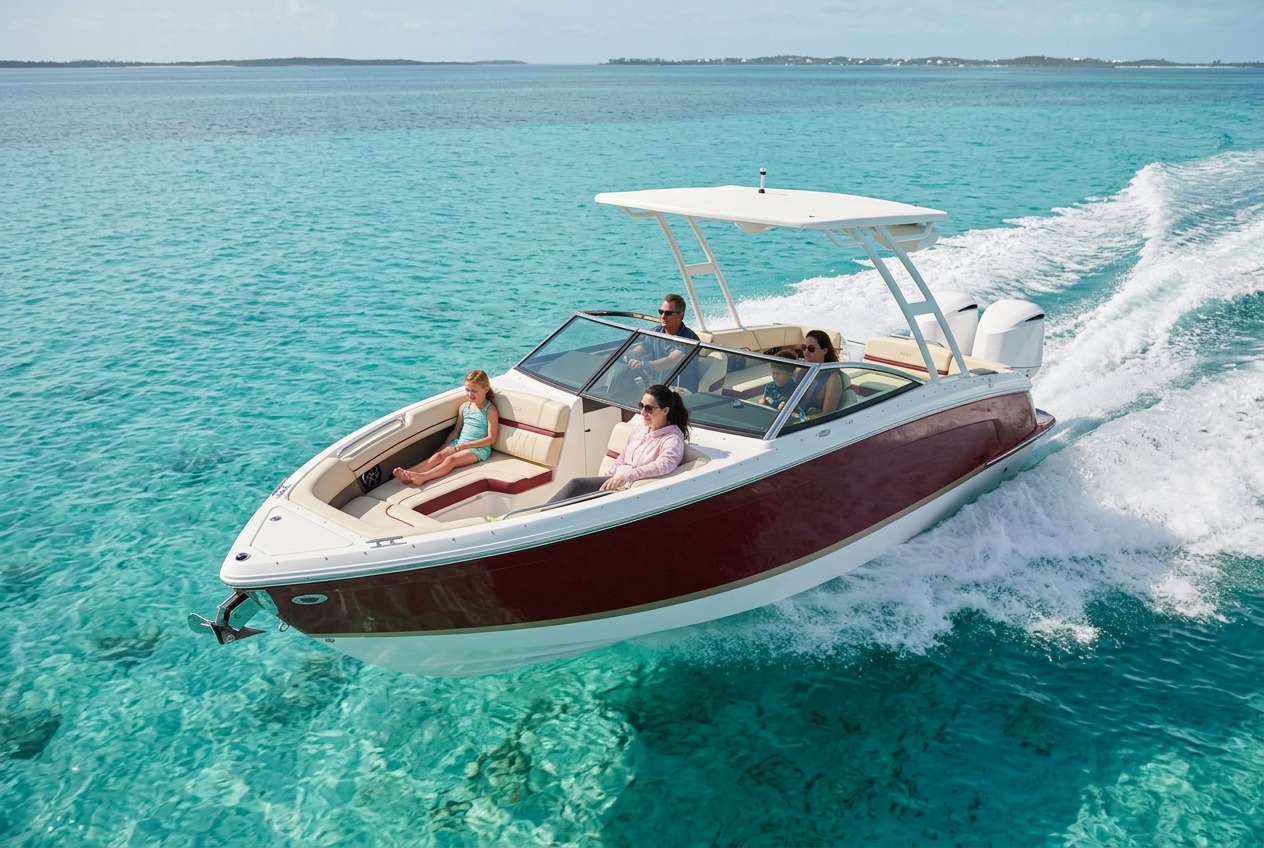
This week we are putting the Bayliner Bayliner DX2000 in the spotlight, and it earns the spot. At 20 ft 2 in (6.16 m) long on a 8 ft (2.44 m) beam, this is a bowrider that reads the water well and still feels roomy enough for a full day out. A 20-foot deck-boat-width bowrider with outboard power and a huge social cockpit. Power comes from 115-150 hp mercury fourstroke outboard through a outboard package, and the fibreglass hull keeps the ride settled when the afternoon breeze puts a chop on the surface.
Seating is rated for 8 people, so there is space for family, friends, towels, eskies and the tow rope without anyone climbing over gear. Owners tend to buy it for family, water ski, leisure — which is exactly where it shines. Fuel is 30 us gal (114 l), and on the second-hand and new market you should expect to land somewhere around US$42,000 - US$58,000 new depending on hours, trailer and options.
Our full deep dive covers the layout in detail: bow lounge comfort, helm ergonomics, the rear entertaining area, storage that actually swallows a weekend, plus standard features, popular options and honest notes on where the boat compromises. If the Bayliner DX2000 is on your shortlist, start there — and check back next week, because the featured boat changes every week as we complete more full model reviews.
Featured Bowrider Article
Engines & Drives

Stern drives — sometimes called inboard/outboards or I/Os — powered the bowrider boom for forty years. Today the market is shifting hard towards outboards, which leaves buyers asking whether a sterndrive is a bargain or a liability. The honest answer is that it depends entirely on how and where you boat. The engine sits under the rear sun pad inside the hull, with only the drive leg outside. That layout produces a clean transom, an uninterrupted swim platform and a quiet, low centre of gravity. For families who swim, board and lounge off the back of the boat, a sterndrive transom is genuinely nicer to live with. Weight distribution helps the ride too. A few hundred kilograms of iron sitting low and forward of the transom keeps the hull settled in a chop and reduces the porpoising that light, transom-heavy boats can suffer. Sterndrive bowriders also tend to hold a plane at lower speeds, which matters for water skiers. There is also value. A well-kept sterndrive bowrider often costs 20-30 per cent less than an equivalent outboard model of the same age, simply because of market fashion. Servicing is the main penalty. Bellows, gimbal bearings, U-joints, drive lubricant, anodes and the transom seal all need…
Read the full article