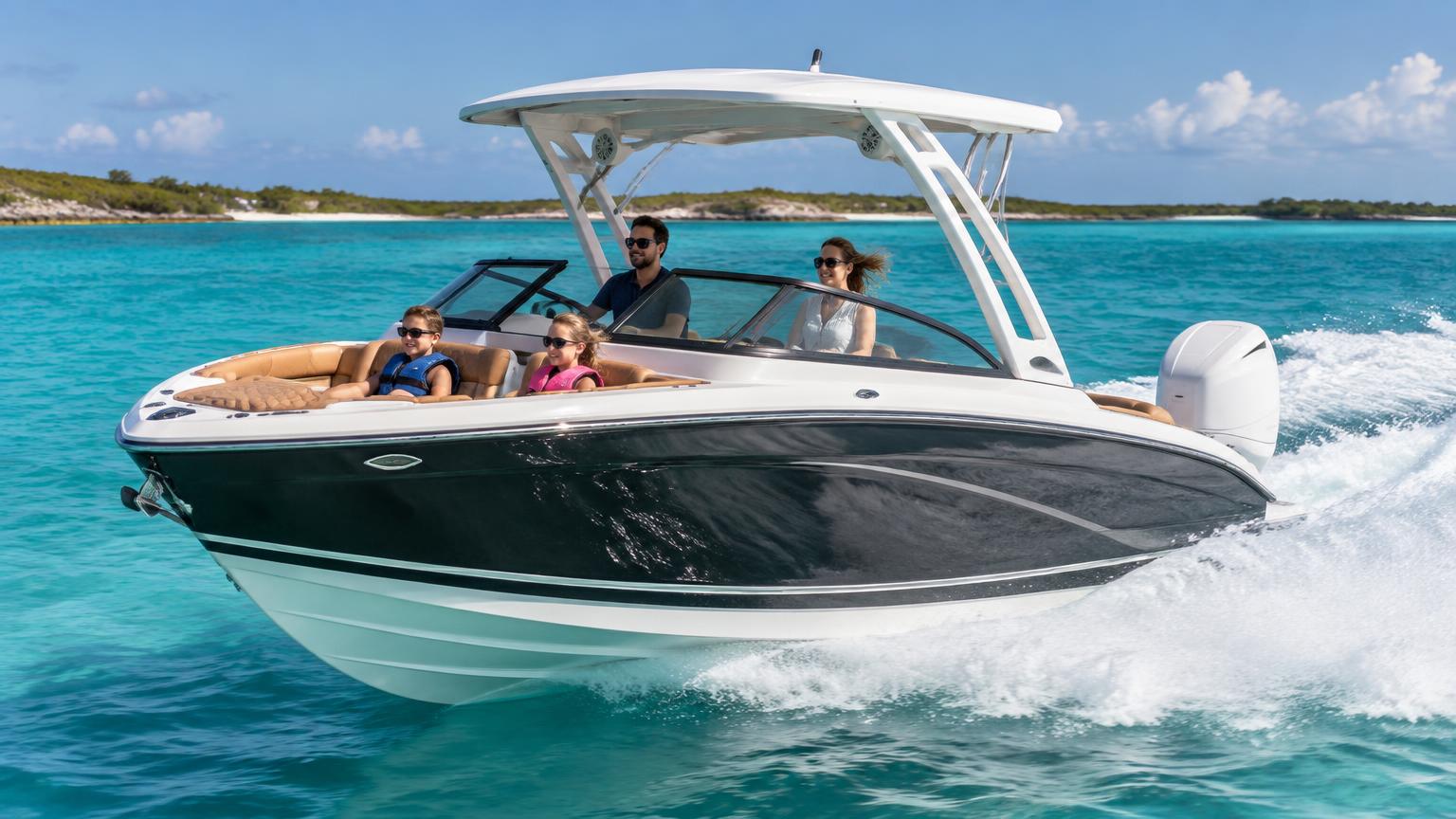
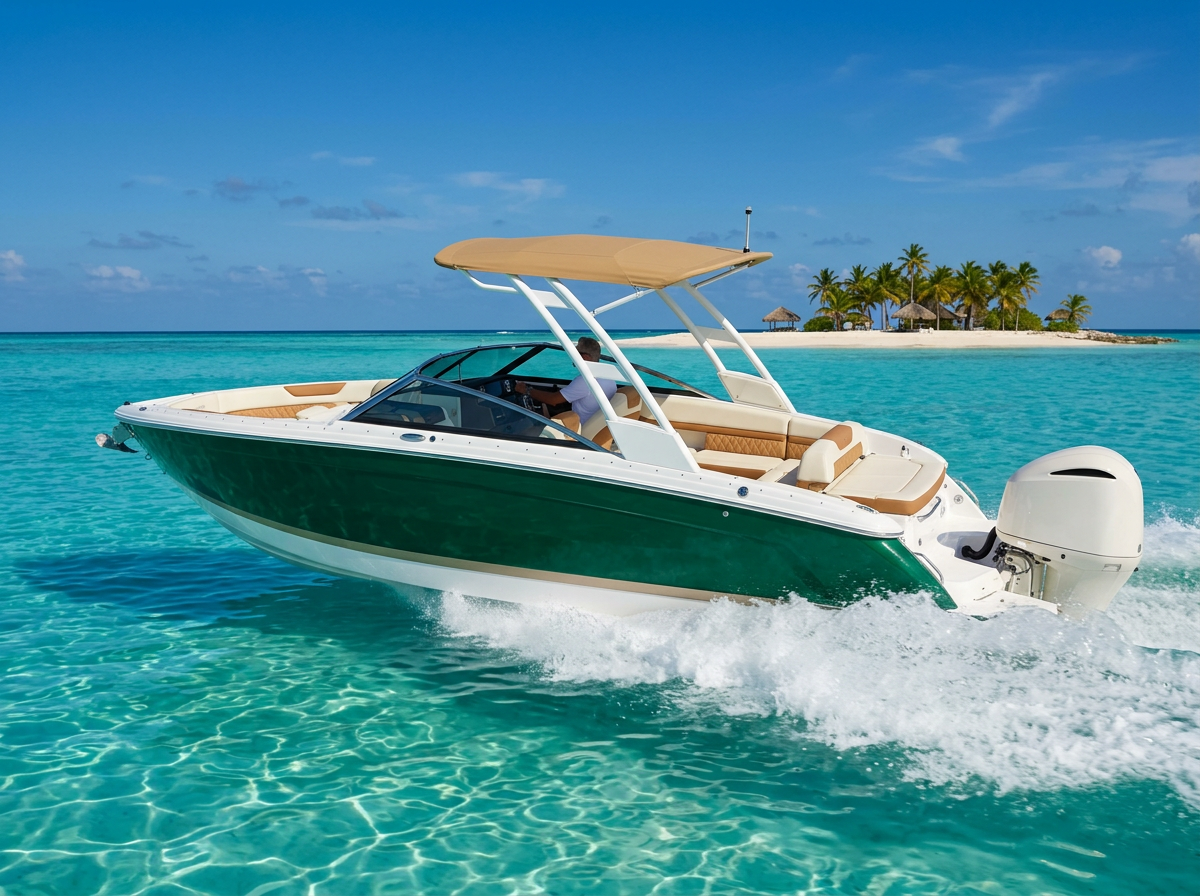
Chaparral 25 SURF Bowrider — Chaparral's surf-and-wake flagship bowrider: a 25-footer with tower, big aft lounge and enough shaped wake for surfing behind a day boat.
Length
25 ft 6 in (7.77 m)
Beam
8 ft 6 in (2.59 m)
Capacity
12 people / check local capacity plate
Drive
Outboard
Power
Approx. 300-425 hp outboard, or 380-430 hp stern drive, depending on model year and market
Fuel
75 US gal (284 L), approximately
Hull
Fibreglass
Price guide
Approx. US$160,000 - US$230,000 new or late-model used
Chaparral 25 SURF Bowrider — Information and Specifications
The Chaparral 25 SURF is the boat that answers a question a lot of families ask after a season or two of ownership: can one boat do a proper wake session in the morning and a comfortable, dry, sociable cruise in the afternoon? At roughly 25 ft 6 in overall, depending on model year and whether the figure includes the swim platform, it keeps the trailerable 8 ft 6 in beam of the smaller SSX boats but adds freeboard, fuel capacity, upholstery area and, most importantly, purpose-built surf and wake equipment.
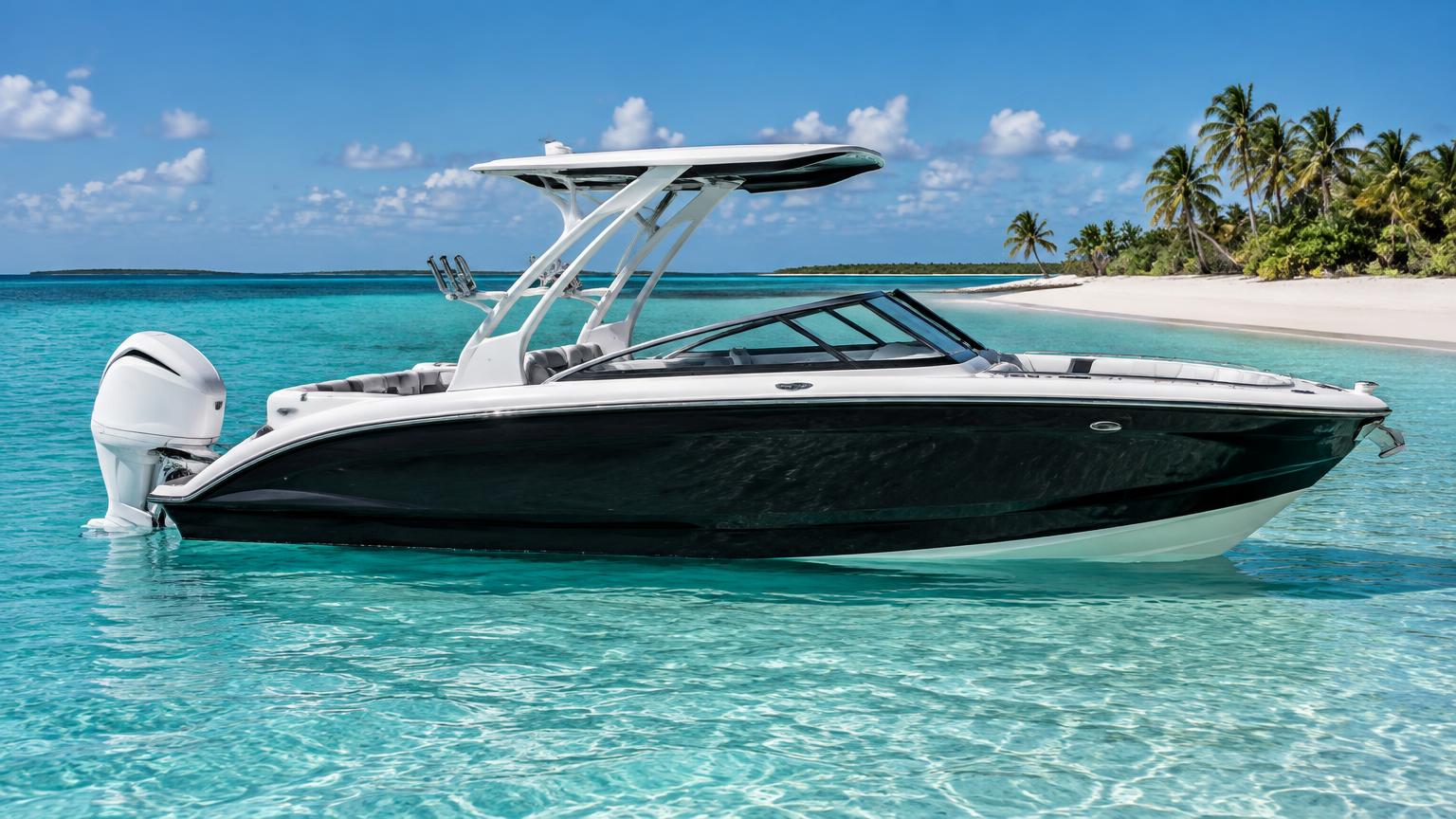
Chaparral 25 SURF — side profile at rest beside a tropical white sand beach
The surf package is the reason the model exists. Depending on year and specification the boat is offered with ballast, a surf-shaping system and a tower or hardtop-style overhead structure with board racks and speakers, so the driver can set a clean, rideable wave on either side and switch it over without turning the boat around. That gear does not turn the 25 SURF into a dedicated inboard tow boat, but it does produce a genuinely surfable wave from a deep-V bowrider hull, and that combination is rare.
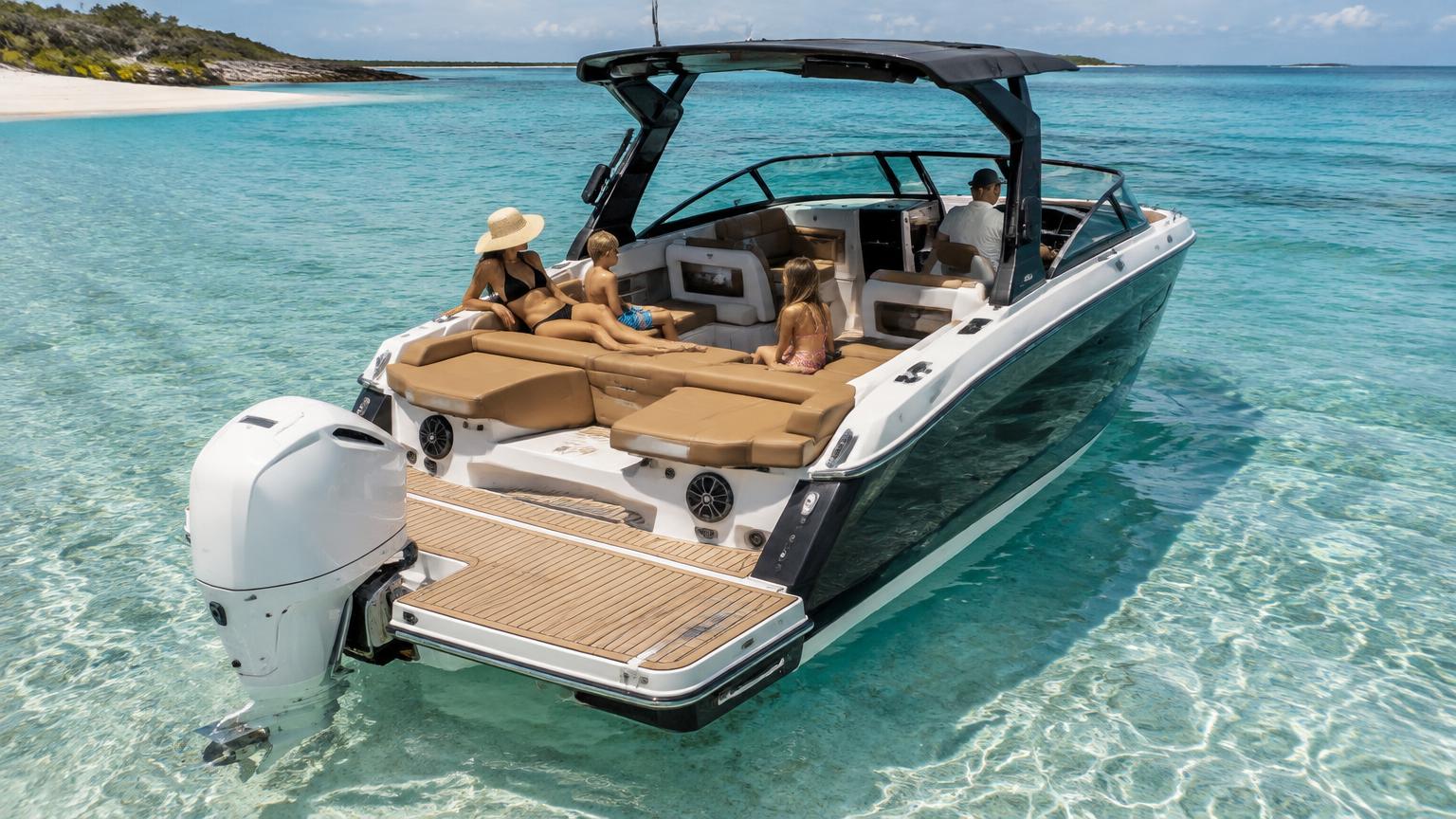
Chaparral 25 SURF — aerial rear three-quarter view of the aft lounge and swim platform
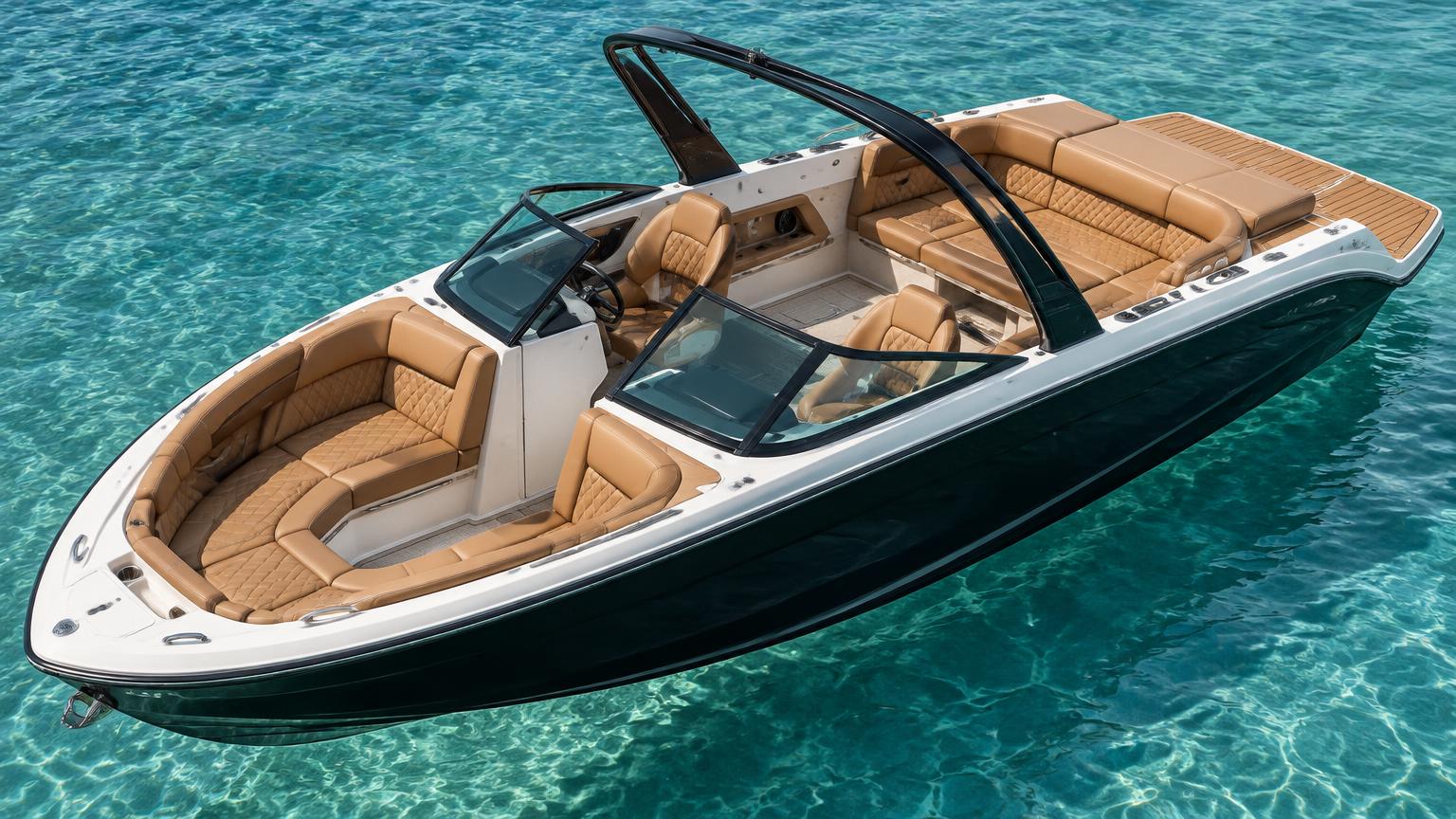
The bow is finished to the standard of a small sport cruiser. Wraparound lounges with quilted upholstery and deep coamings let adults stretch out rather than perch, a wide centre walkway with an opening windshield panel keeps traffic off the cushions, and the footwell drains so a morning of swimming does not leave water sitting inside. Under the seat bases there is real volume for life jackets, towels, dry bags and the ropes and handles a surf session needs.
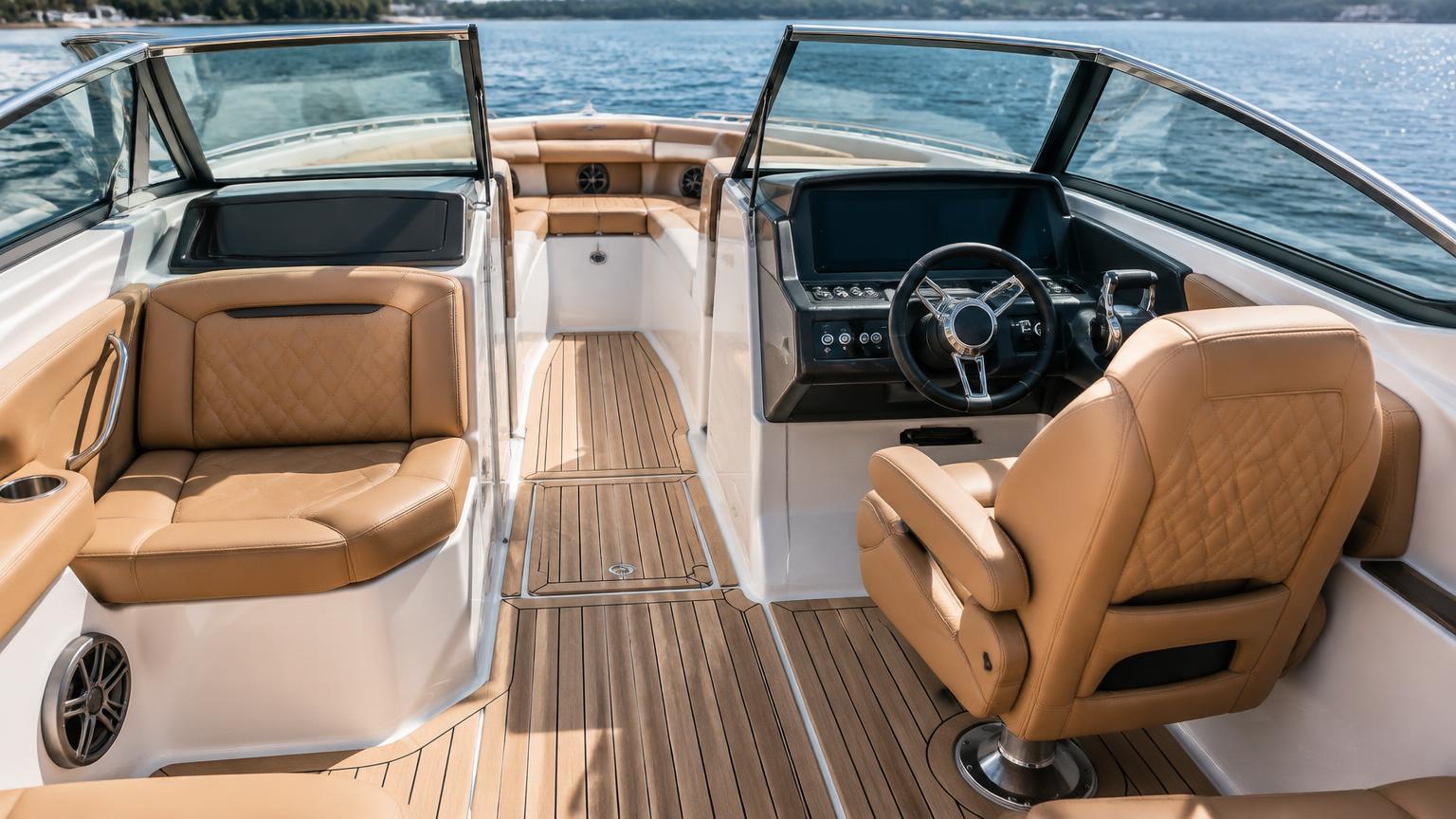
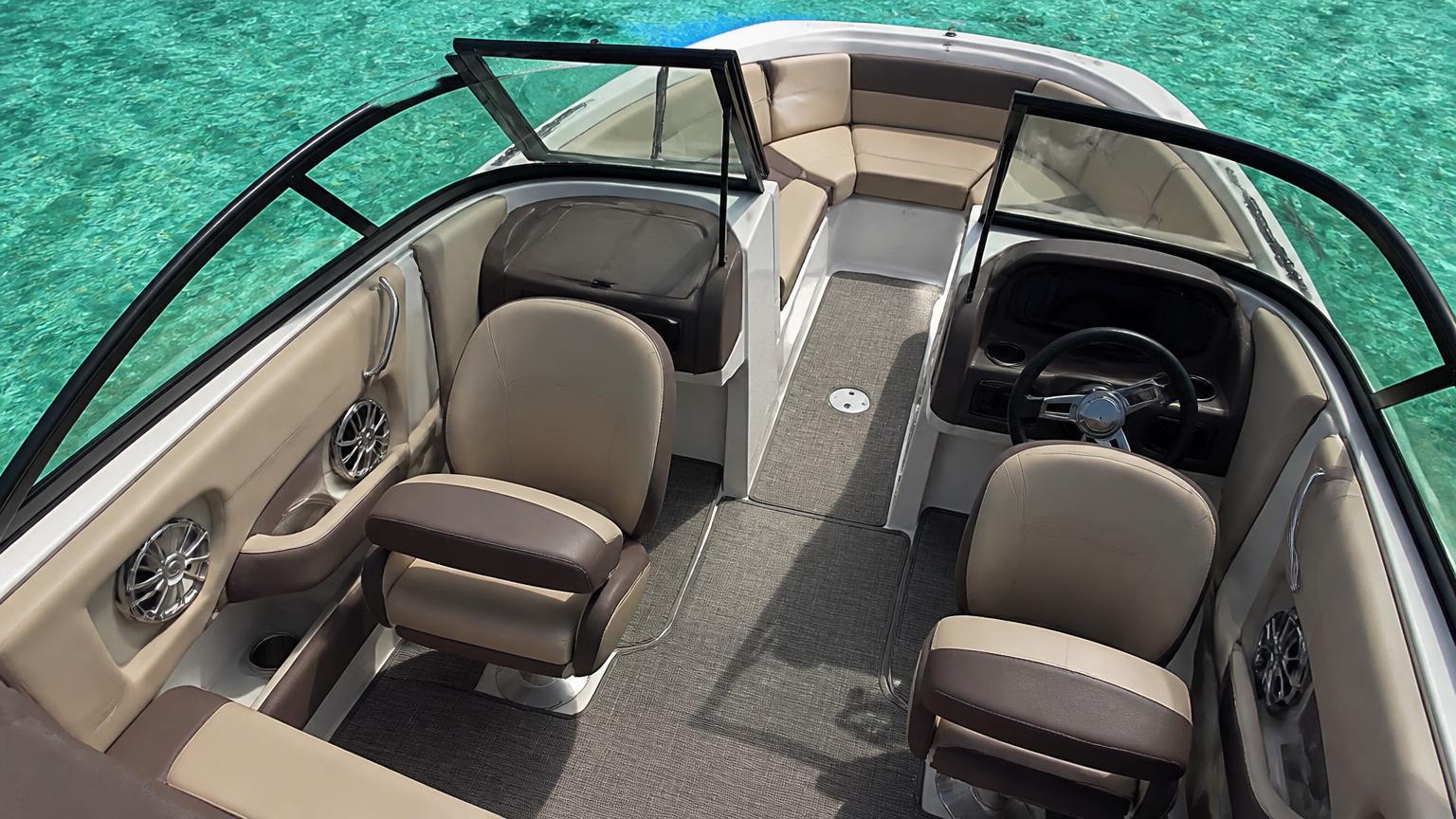
Chaparral 25 SURF — aerial view of the complete bow, cockpit and aft seating layout
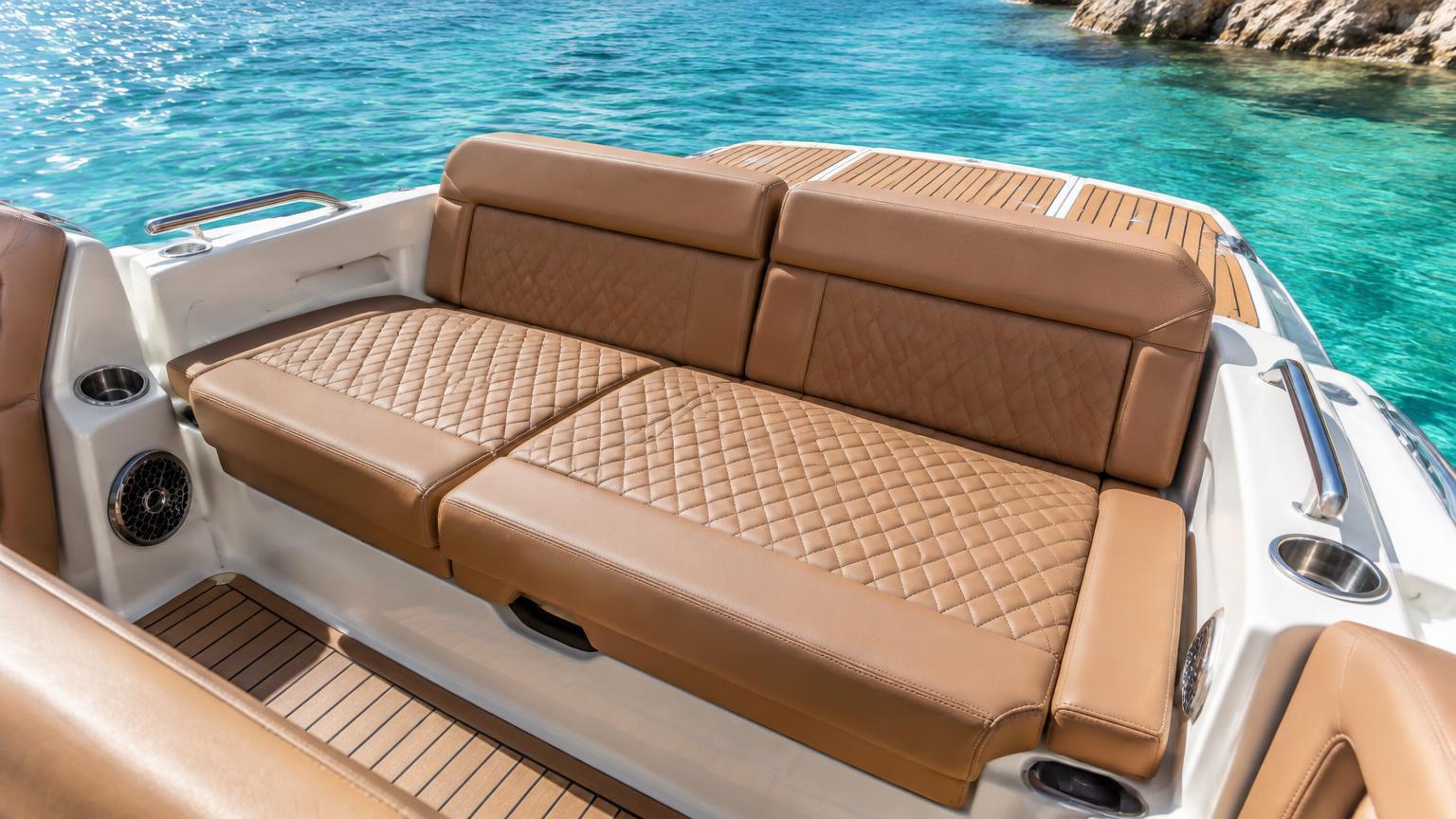
The cockpit is the social heart of the boat. Twin adjustable helm and companion chairs with flip-up bolsters sit ahead of a wide walkthrough, and the aft seating converts between forward-facing bench, aft-facing lounge and a broad sun pad over the transom, which is where everyone ends up when the boat is anchored. An insulated chiller, deep wet locker and in-floor watersports storage keep boards, skis and ropes out of the footwells rather than underfoot.
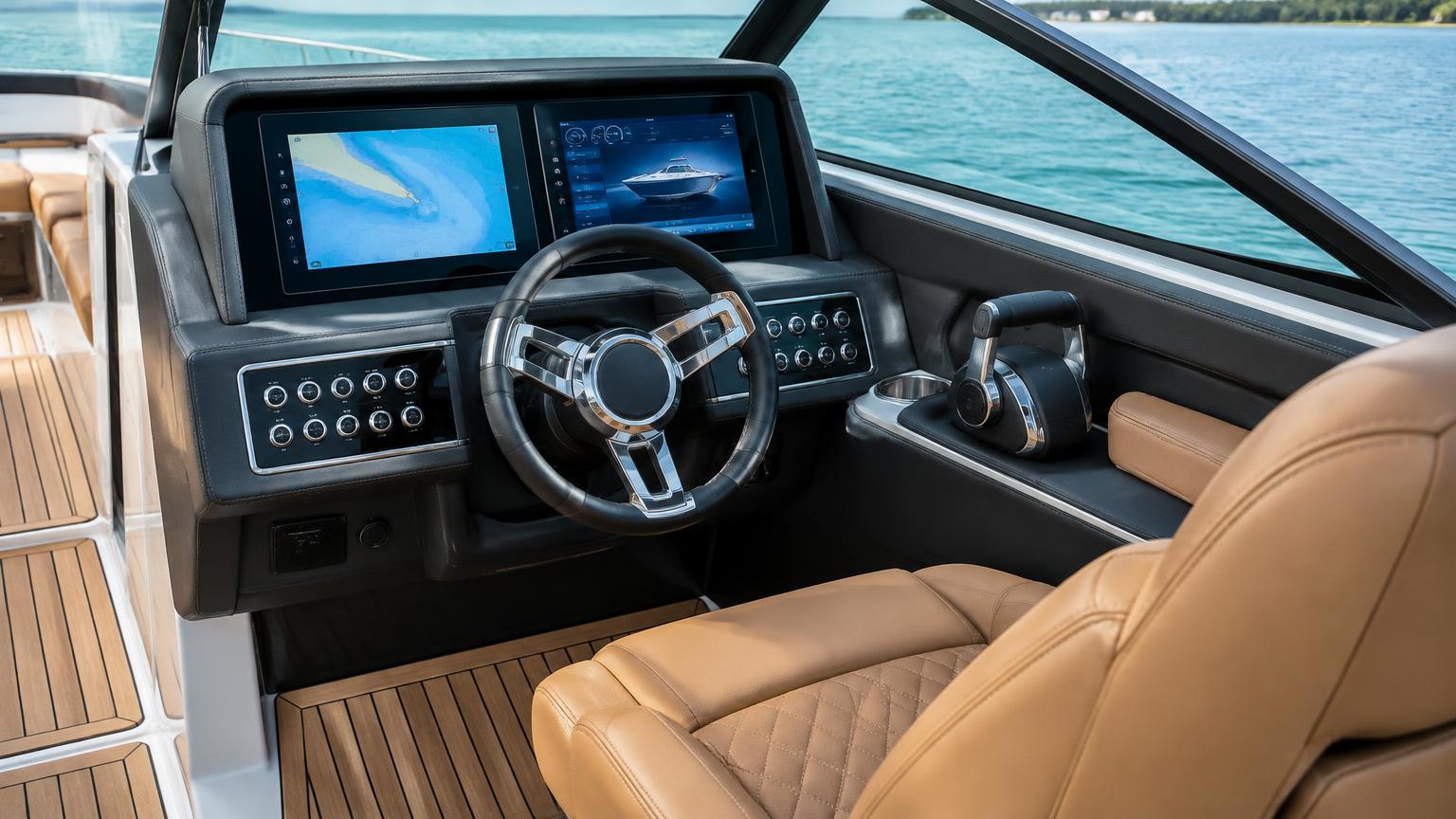
Chaparral 25 SURF — twin-screen luxury helm dash with digital throttle
The helm is one of the most impressive parts of the boat. Depending on model year and option package the driver may have twin large glass multifunction displays with chart, engine and system data, digital switching alongside conventional rockers, audio and lighting control, ballast and surf-system control, a tilting sports wheel and a digital side-mount throttle. Coastal owners should still prioritise a proper chartplotter and depth sounder specification over cosmetic extras.
Chaparral 25 SURF — cockpit interior with saddle-tan seating and centre walkthrough
Power is where you need to check the individual boat. Recent examples are commonly rigged with a single large outboard between roughly 300 and 425 hp, which frees the transom, simplifies servicing and flushing and adds usable platform space, while earlier and some market-specific boats use MerCruiser or Volvo Penta stern drives in the 380 to 430 hp range. Surf-focused buyers often prefer the stern-drive package for wave shaping; cruising-focused buyers usually prefer the outboard for its quiet, clean stern.
Chaparral 25 SURF — convertible rear entertaining lounge over the transom
On the water the 25 SURF runs like a heavier, more serious hull than a typical 25-foot day boat. It lifts onto plane without drama, tracks confidently in a beam chop and stays composed at the low planing speeds families use when towing a tube or biscuit. Loaded ballast changes the feel noticeably, so it is worth learning the boat both empty and full. A well-propped larger engine will cruise comfortably in the high 20-knot range and reach the low-to-mid 40s flat out, though propeller, load, ballast, altitude and sea state matter far more than any brochure figure.
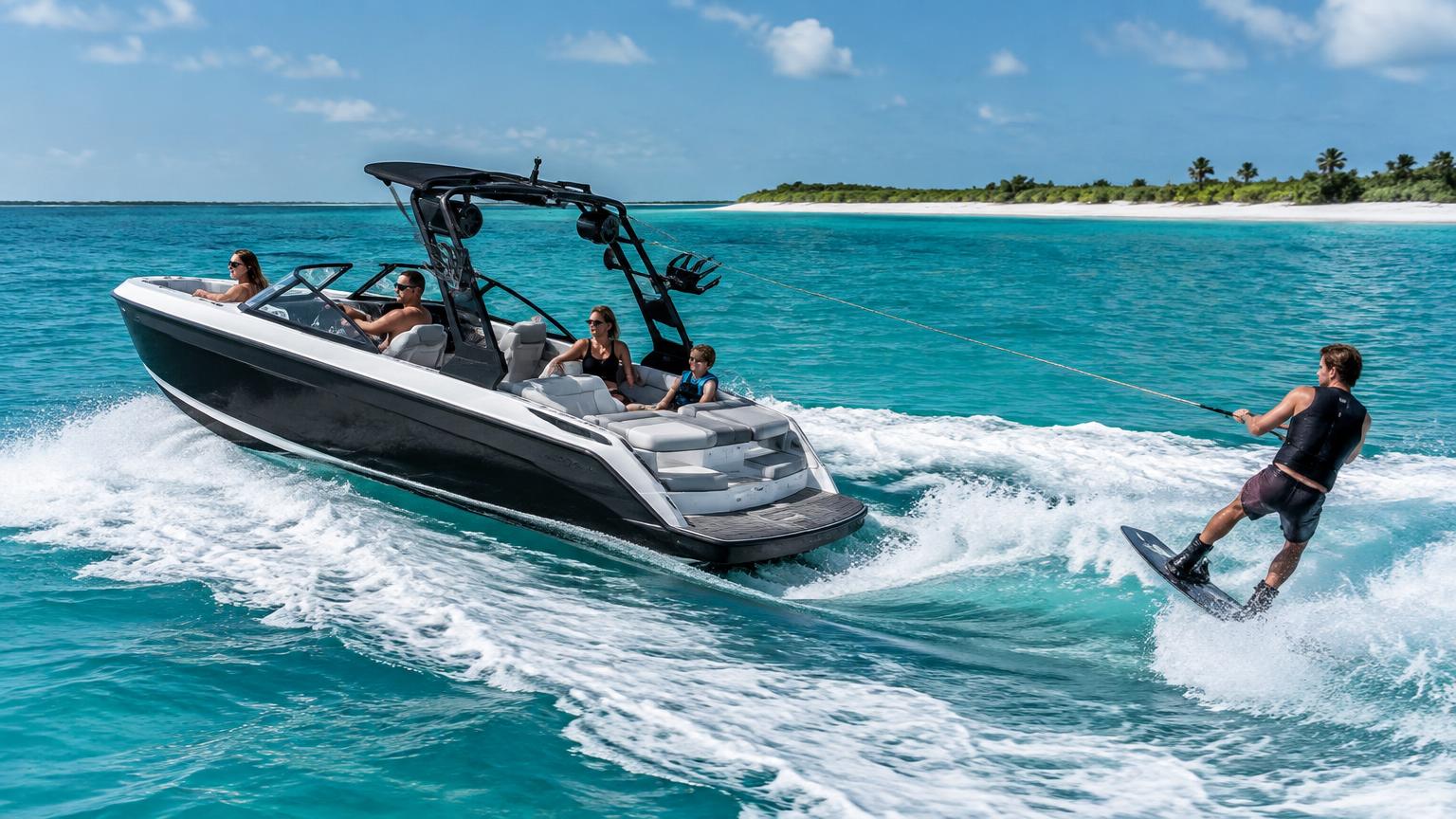
Chaparral 25 SURF — towing a wakeboarder behind the surf tower
For watersports it is genuinely versatile. Surf, wakeboard, kneeboard, tube and recreational slalom skiing are all within reach, and the tower and elevated tow point make a real difference to rope height and rider comfort. The extended platform and telescoping ladder handle constant re-boarding, and the aft lounge keeps a supervising adult close to the rider, which matters more than any equipment list when children are in the water.
Ownership is a step up from a 21 or 23. You are into tandem-axle trailering with a properly rated tow vehicle and working trailer brakes, and you should measure your garage or storage bay before purchase rather than after. Fuel use is moderate at cruise and heavy with ballast full at wide-open throttle. Worthwhile options include the surf and ballast package, tower with racks and speakers, premium amplified audio with subwoofer, upgraded navigation, transom freshwater shower, teak-look flooring, filler cushions and table, underwater lighting and a full mooring cover set.
Treat the figures on this page as an informed comparison rather than factory documentation. Overall length, dry weight, fuel capacity, seating count and maximum rated horsepower all vary by production year, market and engine package, and only the capacity plate fitted to the boat carries legal weight. Dealer trailer weights normally exclude fuel, ballast water, batteries, boards and family gear, so check the real loaded mass against your tow vehicle's rating before you commit.
On the used market the 25 SURF holds value well because surf-capable boats are in demand and Chaparral build quality is very close to the best-known American brands. Ask for engine hours, a diagnostic report and full service history, and test the ballast pumps and surf system through a complete cycle on both sides. On stern-drive boats inspect the transom shield, bellows and drive anodes for corrosion; on outboard boats check mounting bolts, hydraulics and steering. Look for stress cracking around fittings and tower mounts, test every pump, light, gauge and speaker, confirm the flooring and cover set are complete, then sea-trial the boat loaded the way your family will actually use it.
Standard features
• Fibreglass deep-V hull with wraparound safety-glass windshield
• Overhead tower or hardtop structure with board racks and tower speakers
• Ballast and surf-shaping system (specification dependent)
• Deep wraparound bow lounges with drainage and under-seat storage
• Wide centre walkthrough with opening windshield panel
• Adjustable captain and companion chairs with flip-up bolsters
• Convertible aft seating with aft-facing lounge and transom sun pad
• Extended swim platform with telescoping stainless boarding ladder
• In-floor watersports equipment locker
• Insulated chiller storage and deep wet-storage locker
• Glass multifunction helm display with digital engine data
• Trailerable 8 ft 6 in beam with matched tandem-axle trailer availability
Popular options
• Higher-output outboard or 380-430 hp stern-drive package
• Full surf package with additional ballast and shaping tabs
• Second glass multifunction display and upgraded navigation
• Premium amplified marine audio with subwoofer and tower speakers
• Bow and cockpit filler cushions with removable table
• Woven or synthetic teak-look cockpit and platform flooring
• Transom freshwater shower and cockpit sink
• Underwater and configurable cockpit lighting
• Bimini or hardtop shade with storage boot
• Bow, cockpit and full mooring cover package
• Board racks, ropes, handles and watersports accessory package
• Matched tandem-axle trailer with brakes and swing-away tongue
A premium 25-foot bowrider renowned for its deep seating, convertible lounges, refined ride and exceptional finish.
Length
24 ft 3 in (7.39 m)
Drive
Outboard
Seats
Up to 14 people (configuration and model-year dependent)
US$155,000 - US$210,000 new
Featured Boat of the Week
Bayliner Bayliner DX2000 — Our Featured Bowrider This Week
Bayliner Bayliner DX2000 — three-quarter bow view on crystal clear water. Images Created by www.Bowrider-Boats.com
This week we are putting the Bayliner Bayliner DX2000 in the spotlight, and it earns the spot. At 20 ft 2 in (6.16 m) long on a 8 ft (2.44 m) beam, this is a bowrider that reads the water well and still feels roomy enough for a full day out. A 20-foot deck-boat-width bowrider with outboard power and a huge social cockpit. Power comes from 115-150 hp mercury fourstroke outboard through a outboard package, and the fibreglass hull keeps the ride settled when the afternoon breeze puts a chop on the surface.
Seating is rated for 8 people, so there is space for family, friends, towels, eskies and the tow rope without anyone climbing over gear. Owners tend to buy it for family, water ski, leisure — which is exactly where it shines. Fuel is 30 us gal (114 l), and on the second-hand and new market you should expect to land somewhere around US$42,000 - US$58,000 new depending on hours, trailer and options.
Our full deep dive covers the layout in detail: bow lounge comfort, helm ergonomics, the rear entertaining area, storage that actually swallows a weekend, plus standard features, popular options and honest notes on where the boat compromises. If the Bayliner DX2000 is on your shortlist, start there — and check back next week, because the featured boat changes every week as we complete more full model reviews.
The Best First Bowrider for Beginners — Images Created by www.Bowrider-Boats.com
Your first boat teaches you what you actually want in your second. The trick is to make that lesson cheap. A first bowrider should be easy to launch, easy to drive, cheap to keep and simple to sell — everything else is a bonus. For most first-time buyers, 4.8-5.8 m (16-19 ft) is the sweet spot. Boats this size tow behind ordinary vehicles, fit in a standard garage or side yard, launch single-handed, and carry four to six people comfortably. They are also forgiving to dock, because you can push them off a pontoon by hand. Resist the urge to buy 7 m as a first boat. Bigger boats cost more to store, need more capable tow vehicles and heavier trailers, and are far less relaxing to manoeuvre while you are still learning. Plenty of owners upsize later; almost nobody regrets starting smaller. A single modern four-stroke outboard is the easiest introduction to boat ownership. It starts reliably, services simply, tilts clear at the ramp and can be flushed in minutes. Aim for a mid-range engine option rather than the smallest one offered — an underpowered boat struggles to plane with a full load, which is when boats feel worst.