The world's best-selling bowrider size, in its most accessible form: light, simple and easy to tow.
Length
19 ft 9 in (6.02 m)
Beam
8 ft 1 in (2.46 m)
Capacity
8 people / 1,150 lb
Drive
Outboard
Power
115-150 hp Mercury FourStroke
Fuel
30 US gal (114 L)
Hull
Fibreglass
Price guide
US$38,000 - US$52,000 new
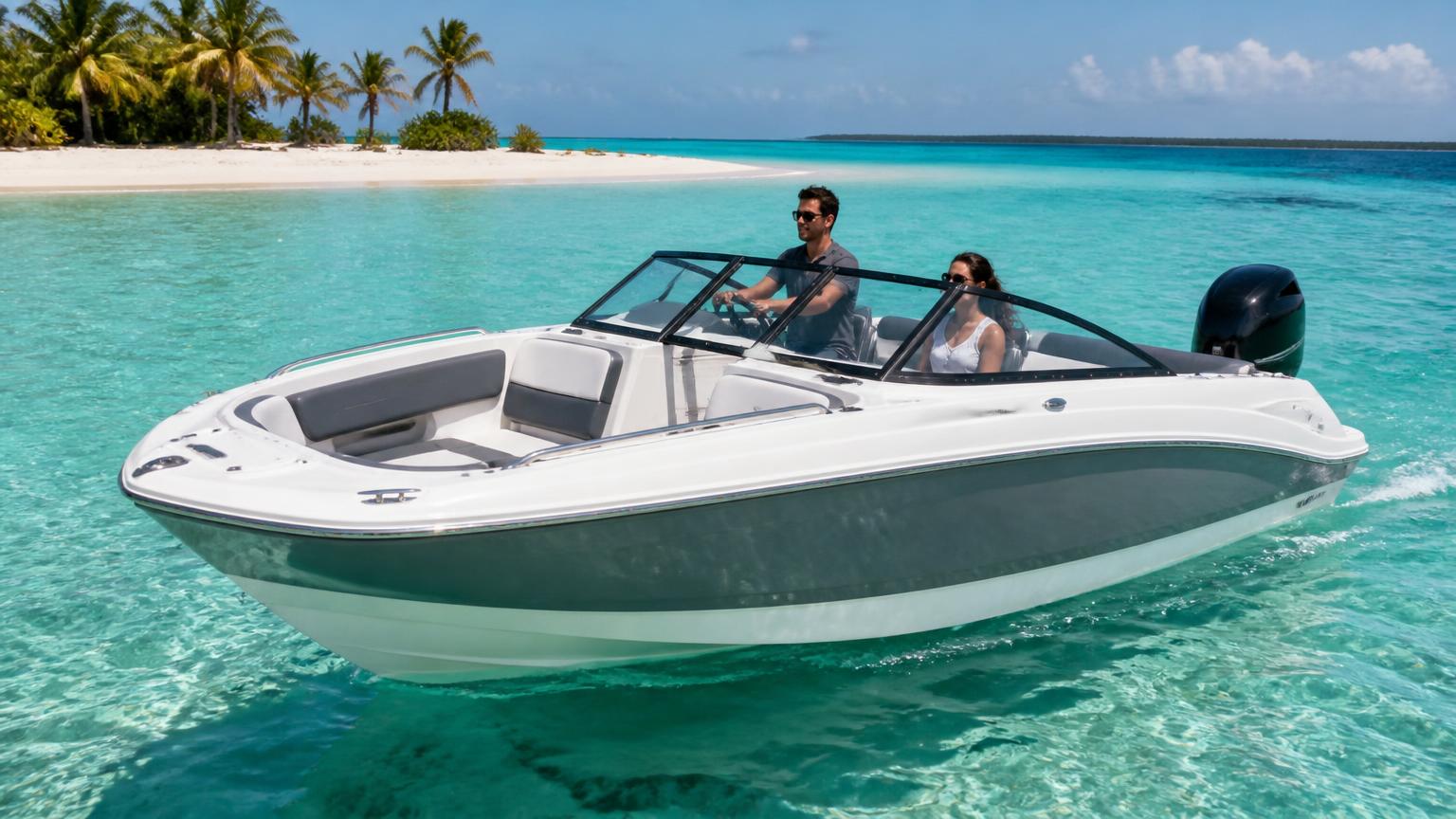
The Bayliner VR5 is, by volume, one of the most successful bowriders ever built, and the reason is simple: it delivers the entire bowrider promise at the lowest realistic price of entry. At just under 20 ft (6.02 m) with an 8 ft 1 in (2.46 m) beam, it sits in the size band that a mid-range SUV can tow, a single-axle trailer can carry, and a suburban garage can usually swallow.
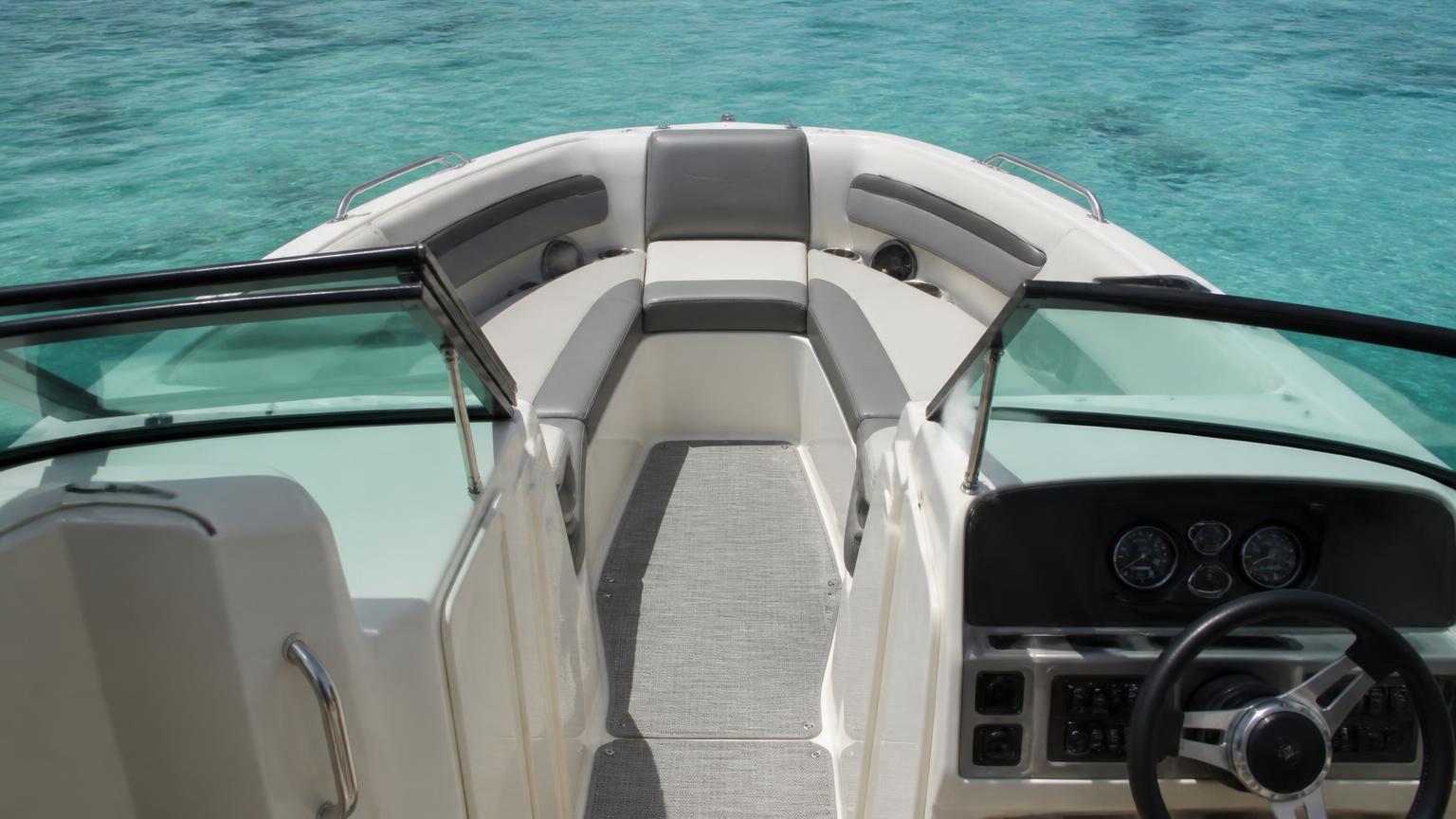
Bayliner VR5 — helm and open bow lounge
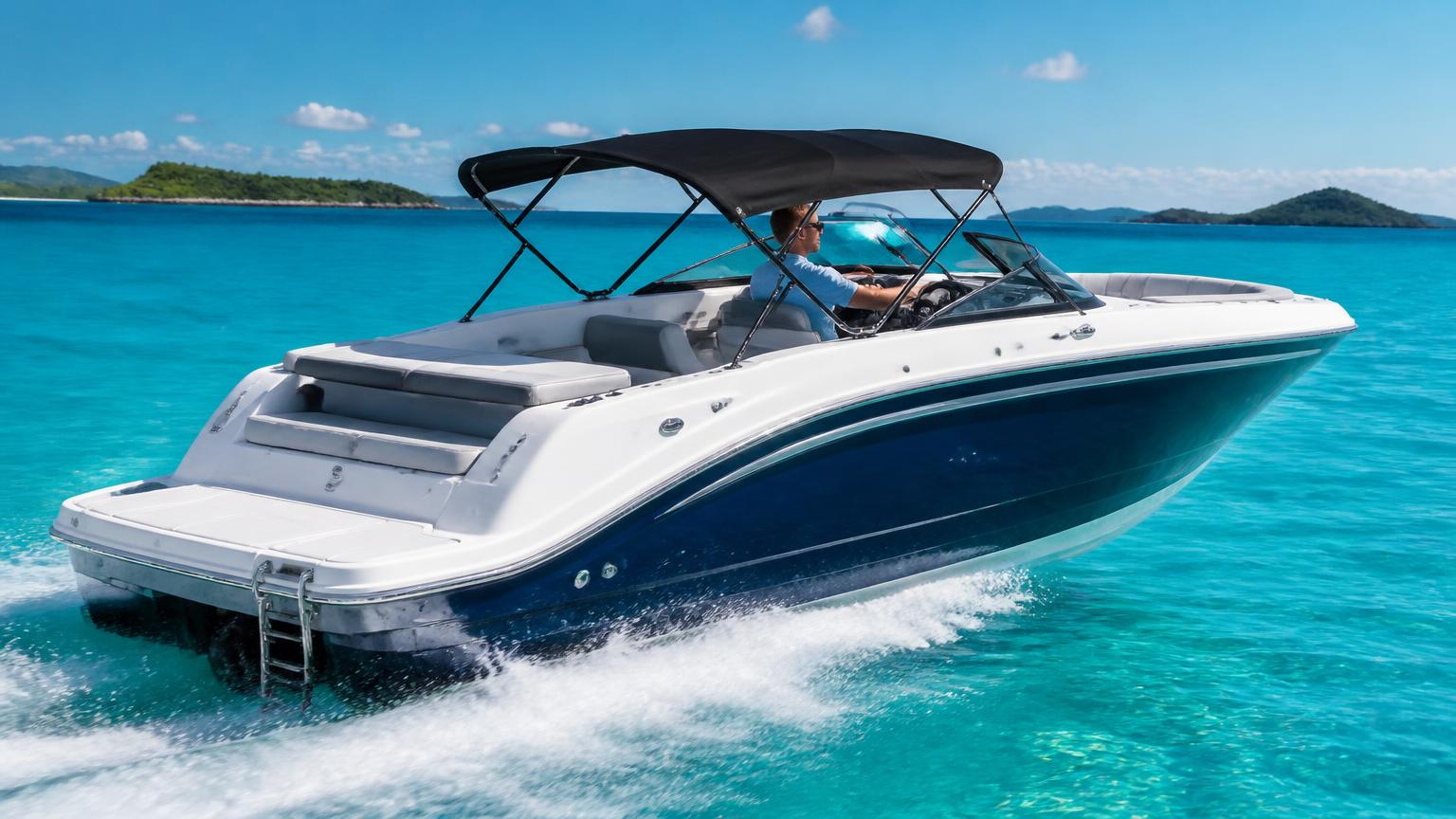
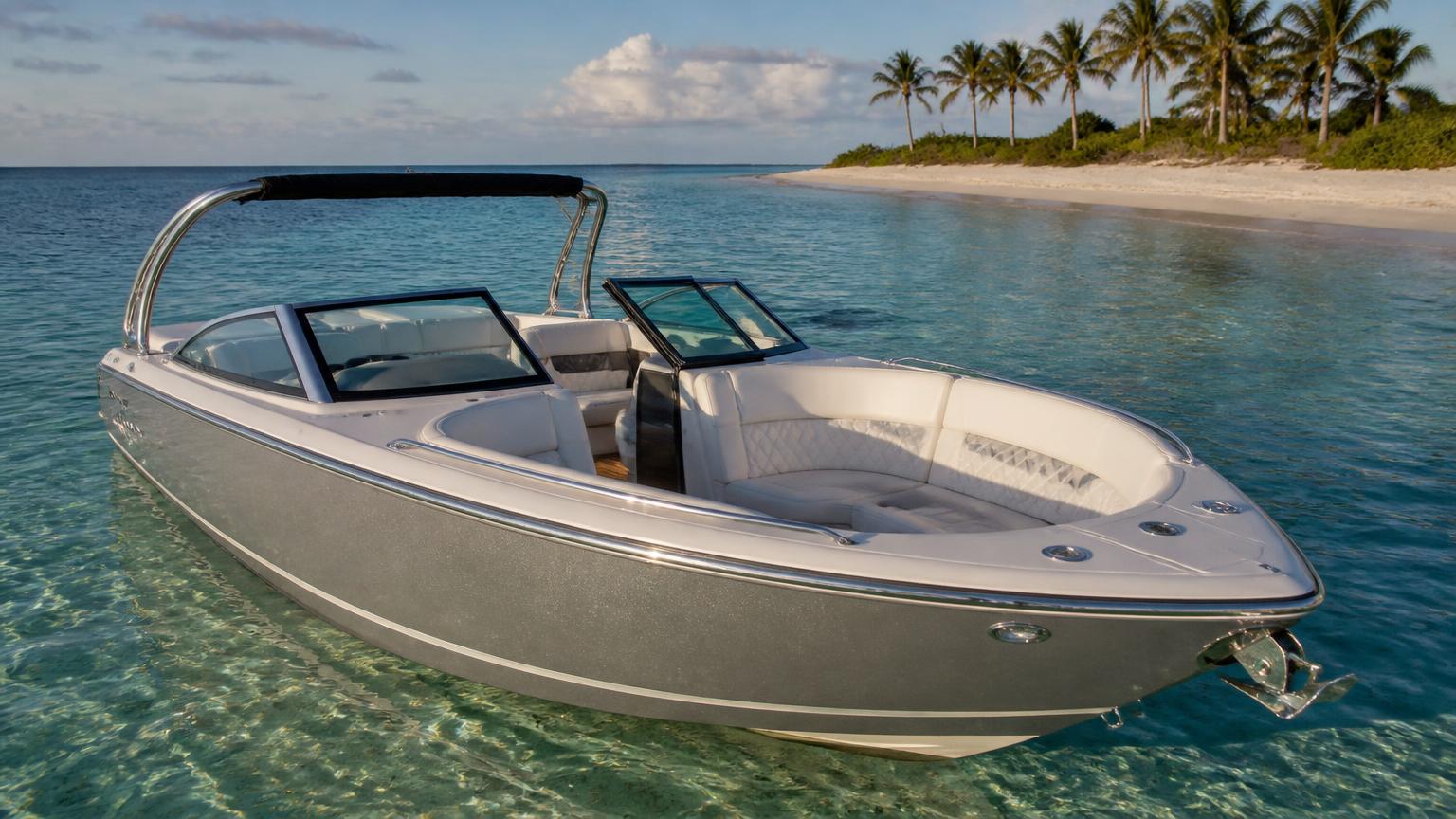
The layout is textbook bowrider. Two forward lounges with moulded backrests run from the anchor locker to the walkthrough windscreen, twin bucket helm and companion seats sit amidships, and a full-width bench spans the transom with a convertible sun lounge cushion. Under almost every seat there is a locker, and the deepest of them will take skis, a wakeboard or a folded biscuit tube.
Bayliner VR5 — cockpit and seating layout
Bayliner's M-hull is a modified-V with a relatively flat run aft, which is exactly what a family boat wants: it planes early, holds plane at low tow speeds and feels stable when everyone stands up on one side to watch a skier. It is not the boat for genuinely rough open water, and Bayliner has never pretended otherwise, but in bays, estuaries and lakes it is well mannered and predictable.
Bayliner VR5 — bow lounge from the front
Outboard power is the VR5's biggest advantage over the older stern drive Bayliners. A Mercury FourStroke between 115 hp and 150 hp keeps all the machinery outside the hull, which frees up stern storage, cuts winterising costs, makes servicing simple and removes the bellows and gimbal wear items that plague neglected sterndrive boats. Expect a comfortable 25-30 knot cruise and roughly 2.5-3.5 nautical miles per gallon at that pace with the 150 hp option.
Bayliner VR5 — stern and propulsion
As a used purchase the VR5 is one of the safest bets on the market, because there are always comparable boats listed and prices are therefore honest. Check the transom and stringers for softness, confirm the outboard's service history and hours, and inspect the upholstery seams, which are usually the first thing to fail on a boat that lives outside without a cover.
Standard features
• Twin forward bow lounges with storage beneath
• Convertible transom sun lounge
• Walkthrough windscreen with lockable centre pane